All posts by Financial Independence Hub

Investing in the Cannabis Market

Five months into the legalized marijuana market, it’s a good time to remind ourselves of basic investment principles. Get good advice you trust.


By Kevin Greaves, MyResolver.ca

Special to the Financial Independence Hub

Perhaps not since the dot com boom of the 1990s have we seen the kind of investor interest in a sector that we’re now seeing in the marijuana market.  Seasoned investors and newcomers alike are excited by the prospects of this nascent market and risk is rampant.  In the months leading up to, and the four months following legalization in Canada, there has been huge volatility in stock prices for some of the major players and the valuations of many of these companies is often characterized as ‘out of whack’.   For instance, market leader Tilray (TSX:TLRY) was valued greater than American Airlines Group in September 2018.  That is high! (Pun intended)

So, if you’re looking to add marijuana stocks to your portfolio, there’s a lot to take in at the moment.  It’s not easy to keep on top of the news of mergers, partnerships, earnings reports and growth forecasts in an emerging sector, and you could find yourself caught up in the hype.  So first and foremost, it’s good to work with a trusted investment advisor.  An advisor can help to put disclosure documents in perspective and assist in choosing an investment that suits your financial goals. Even if you are an experienced investor, accustomed to doing your own research and trades, having an advisor to confirm or correct your strategies, even just initially, could help you avoid some costly mistakes.  There are plenty of articles on the value of an advisor, and how to find one, so that’s not a topic we will cover in depth here.

Investor or Speculator?

Warren Buffett’s mentor, Benjamin Graham believed it was crucial to determine whether you are acting in the market as an investor or a speculator.  The distinction is fairly simple.  As an investor, you buy a stock in a company you believe will be successful and that stock represents ownership in the company.  You have a stake in the future of that company.  As a speculator, your only concern is what someone will pay for that stock down the line.

Some would argue that all investment is a combination of the two but it’s an important differentiation to make when you are working with an emerging market sector.  It allows you to clarify your expectations and often, the timeline for your ROI and the amount of risk you are prepared to take.

It’s important to remember that marijuana is a commodity: plain and simple.  And as a commodity it is subject to the same booms and busts as other commodities.  As an agricultural commodity it holds additional risks.  Think of all the uncertainties of growing any crop:  the introduction of a single pest can wipe out an entire harvest.

Consider ancillary products and players

There are opportunities beyond investing in producers of marijuana and if you’re considering investing in this sector, you may want to look beyond the obvious.  Certainly, Biotech stocks have been around for decades but with more and more information available regarding the medical uses of cannabis, there will be expanded opportunities for companies to develop drugs and treatments for various diseases, conditions and illnesses.  For instance, creams and oils derived from CBD, the non-intoxicating compound of the marijuana and hemp plants, have shown great promise in the treatment of epilepsy and arthritis.
Continue Reading…

U.S. Economy Watch: Searching for Clues


By Kevin Flanagan, WisdomTree Investments

Special to the Financial Independence Hub

After at least a month-long delay, fixed income investors have finally been receiving economic data. With a number of government agencies closed due to the recent shutdown, 2019 began with a data vacuum, but now it looks like we are making up for lost time. Unfortunately, these “data delays” render some of the economic information potentially old or stale. Nevertheless, the data still offers insights as to how 2018 ended and can provide clues on any possible springboard effects for the current year.

A perfect case in point is last month’s release of the Q4 2018 real GDP report. Yes, the data is three months old, but the underlying components in this release can offer insights for the future. First, let’s go high level and look at some headline numbers. For Q4, the Bureau of Economic Analysis’ (BEA) initial estimate for growth was pegged at +2.6%. While this was a drop-off from the Q3 pace of +3.4%, it beats consensus forecasts by nearly half a percent. For 2018 as a whole, real GDP came in at +2.9%. This rate of expansion has been reached only two other times since 2005. On a Q4/Q4 basis, growth was pegged at +3.1%, finally eclipsing the elusive 3% threshold.

U.S. Real GDP

US Real GDP q4 2018

While recession fears have been a part of the economic dialogue, the ongoing debate seems to be more centered on what type of slowdown we should expect in 2019. The accompanying graph illustrates that growth has trailed off a bit after reaching its most recent high-water mark of +4.2% in Q2. Some further deceleration is likely. In fact, Q1 2019 real GDP will likely be held down by the aforementioned shutdown, but then snap back in Q2 as those negative effects are reversed. Overall, real GDP in the area of +2¼% is my base case for this year.

Let’s take a look at the GDP engine cylinders:

Personal consumption expenditure (PCE): Household spending rose at a +2.8% annual clip in Q4, which translated to a 1.9 percentage point (pp) contribution to growth. This component should continue to be a positive force for the economy this year. Continue Reading…

What do home buyers want from the Federal Budget?

By Penelope Graham, Zoocasa

Special to the Financial Independence Hub

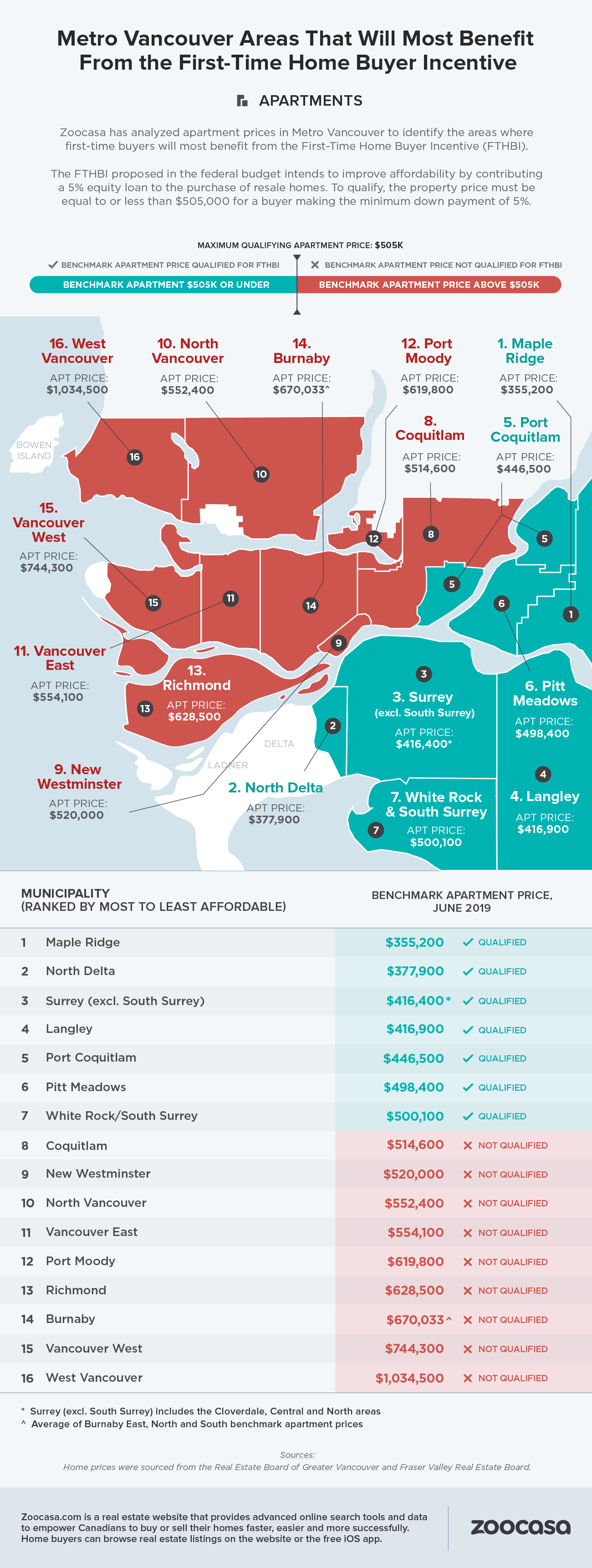
The Federal government’s budget reveal is tomorrow, and all eyes  are on what kinds of goodies will be included for beleaguered first-time home buyers.

While Finance Minister Bill Morneau has strongly hinted that some sort of measure would be unveiled to alleviate the home affordability challenges facing Canadians, it remains to be seen what that will entail. In the meantime, the government has been on the receiving end of proposals from various members of the housing industry, including local and regional real estate boards as well as Mortgage Professionals Canada, as to what would best address the issue.

Industry wants Stress Test, Amortizations, reeled back

Much of the focus has been placed on two key areas: the federal mortgage stress test, which was implemented just over a year ago in January 2018, as well as the length of maximum amortizations for first-time buyers.

Relaxing the criteria around both would improve buyers’ chances of qualifying for a mortgage, experts argue, and therefore should be the priority of the feds when implementing change. The result of the stricter threshold has effectively cooled demand in even the largest Canadian markets, and has pushed a greater percentage of buyers to high-rise living across the nation, from Vancouver condos for sale, to Hamilton and Ottawa condos, rather than single-family detached options.

Survey results yield other priorities

However, home buyers aren’t necessarily in agreeance with that approach. According to a recent survey conducted by Zoocasa, while 82% of Canadians feel that housing affordability continues to be a major issue, they’re not so sure the government is in a position to improve the situation. A total of 55% of respondents do not believe that affordability can be fixed via government measures alone, while 21% don’t feel it’s possible for new policies to exact change within the next five years.

Respondents also had different opinions about what measures would be of biggest help to their pocket books. When asked specifically about the mortgage stress test, for instance, only 57% said they were aware of what it was – and of that group, just half felt reducing the test’s rate threshold (currently the Bank of Canada’s five-year rate of 5.34% or 2% on top of the borrower’s contract rate, whichever is higher) would be of help. Only 15% of all respondents felt such a measure would be effective.

They also weren’t sold that extending maximum amortizations for high-ratio borrowers (those paying less than 20% down) or first-time buyers would be of service either; doing so would reduce monthly mortgage payments, making home financing easier on household budgets, and also ease the stress test’s affordability criteria. Continue Reading…

Real Estate Investing: The good and bad of investing in real estate

By David Miller, CFP, RFP

Special to the Financial Independence Hub

Real estate can be a differentiator in a diversified investment portfolio. But when you watch the pundits in the media and certain TV network shows, as seen on HGTV, buying, flipping or renting a property seems like a sure way to increase your income or get rich quick. As glamourous as it seems when you take a sledgehammer to a useless wall to ‘open up the space’, the reality of making it a marketable investment is often much more daunting. What really is daunting is the sheer number of options you have when it comes to investing in real estate, and the obvious question is:

Does it make financial sense to add real estate to your portfolio?

The Positives

Real Estate does make sense in most investment portfolios but let us back up a little bit here and provide some context:

What are the primary reasons people choose real estate as an investment?

There is something reassuring about investing in real estate, as in the case of owning a rental property. You own a tangible asset and you may feel like you can see the value and the risks just by walking through the property. You may own your home, and assuming you are mortgage free, brings an incredible feeling of security and freedom.

Real estate investing can offer a stable, reoccurring income; after all, ‘who doesn’t pay their mortgage or rent?’ It also carries a fairly high certainty of a higher value over the long term; after all, “they are not making more land” (unless you’re in the South China Sea or Dubai). These are two common positive arguments.

If you look specifically at Canada, there can be times when your rate of return can be incredibly high. We experienced this with Calgary’s real estate boom from 2005-2007. The Greater Toronto Area and Greater Vancouver area from 2015-2018 have seen incredibly high growth and price increases that have been covered extensively through the media.

Real estate investing provides an interesting option that is not directly tied to overall stock market risk, which can provide you with increased diversification. Whether the stock market goes up or down, your real estate price may move independently.

The wealthy endowment funds, private pensions, institutional money and the Canada Pension Plan invest heavily in real estate, private equity and infrastructure projects that average Canadian investors either don’t know about, can’t invest or don’t invest into.

To summarize, the benefits of a real estate investment are that it is a tangible, generally stable income producing, ‘always goes up’ investment and offers other benefits not seen in the stock market. Ready to jump in with both feet? Not so fast. There are some serious pitfalls to understand and multiple options to choose from.

How can I invest into real estate?

  • Buy a rental property (putting at least 20% down)
  • Buy a commercial building
  • Real Estate Investment Trusts (REITs)
  • Exchange Traded Funds (ETFs) of REITs
  • Mutual funds specializing in real estate
  • Private equity or debt (Mortgage pools/investment corps)

Primary Issues

Price Risk

Can real estate values fluctuate? The real answer is yes. Nationally, Canadian housing prices reduced by 4.9% on average in 2018, the worst performance since the 2008 financial crisis. Toronto and Vancouver skew the average price to high side, but even they are starting to fall off their 2017/18 highs and there are obvious concerns of a bubble bursting.

Prices for real estate are difficult to gauge as every property is different and value is in the eye of the beholder. To sell your property, you likely need to employ a realtor to get a starting price and you need to find someone else who agrees on the price to buy. Real estate negotiations can go awry quickly, which causes further delays regarding the liquidity. For this service, there is a sales cost paid to the realtor, usually 7% of the first 100,000 and 3% after, although this can be sometimes negotiated.

In an example of how poor the Calgary commercial real estate market is; this*is an article that explains how the city of Calgary is losing over $300 million in tax revenue every year as downtown core commercial property values have decreased by a collective $12 billion. This is an example of how real estate values can fluctuate to the downside and how unstable a source of income a real estate investment could be.

See the chart below for the relative volatility of the selected Calgary, Toronto and Vancouver markets when compared with the US Equity and Canadian Equity markets. While the annual volatility in the S&P 500 and TSX has been much higher relatively, this chart shows that you could lose out if you sell your real estate holding at the wrong time or pick the wrong city or neighbourhood to invest in.


Calgary data via CREB Monthly Average Sale Price “Attached, Detached, Apartment”, Jan 2005 to Dec 2018. Vancouver Data via CREA.ca HPI Tool Greater Vancouver Composite historical price data Jan 2005 to Dec 2018. Toronto Data via CREA.ca HPI Tool Greater Toronto Composite historical price data Jan 2005 to Dec 2018. TSX data via tmxmoney.com price history. S&P 500 data via http://www.multpl.com/s-p-500-historical-prices/table/by-year. The chart above only looks at price change and does not factor the effects of leveraging or reinvestment of interest or dividends.

Liquidity Risk

Liquidity refers to how quickly you can get your money out if you change your mind about your investment. Are you prepared to invest money into a residence only to find out it’s a money pit? What happens when you struggle to sell it when the market turns, and you could really use the extra money for something else? What if there is an emergency and you need those funds and there is no liquidity? If you are buying a stock or ETF on a major open market, the level of liquidity can be measured in volume of shares bought or sold and shares usually change hands instantaneously. While investing in stocks should be a long-term investment, at least you have the option to get out at any time almost instantly. The same is generally true in real estate; however, the liquidity premium is significantly higher. Continue Reading…

Enable, don’t label … but whatever you do don’t call them ‘seniors’!

By Yvonne Ziomecki, HomeEquity Bank

Special to the Financial Independence Hub

When you are a marketer you tend to look at advertising through a different lens than everyone else – sometimes you are critical, sometimes curious, and sometimes you just admire the genius.  But it’s hard to assess your own advertising through the same lens, especially when you are in your mid forties and the product you market is for people who are retired.  That’s when you call for help!

Last summer our company HomeEquity Bank, provider of CHIP Reverse Mortgages, launched new advertising campaign through a series of humorous ads developed and based on research insights, addressing the fact that older Canadians see themselves as active and able and completely in control of financial decisions related to their home.

Specifically: staying in the home they love.  Our research showed that 93%+ of older Canadians want to age in place.  We also learned that 80% of older Canadians don’t want to be called ‘Seniors’ and most prefer no labels to describe them or their peer group.

In order to better understand if our ads were hitting the mark we engaged the neuroscience research firm Brainsights to study the unconscious brain activity of 300 Canadian Boomers. Research participants were presented with approximately 1 hour of advertisements including our ads, other ads, movie trailers, promotional videos, etc.  Brainsights analyzed participants’ responses to all the content they saw. The findings revealed not only that many marketers were engaging in unconscious age bias, but also that Boomers were pushing back against offensive labels and aging stereotypes.

Research revealed 4 insights to help marketing resonate with Boomers:

•  Say goodbye to old age stereotypes. Today’s Boomers see themselves as being cheeky, mischievous, adventurous and capable. Old age stereotypes depicting 55+ Canadians as frail and fumbling will miss the mark. Continue Reading…