Hub Blogs

Hub Blogs contains fresh contributions written by Financial Independence Hub staff or contributors that have not appeared elsewhere first, or have been modified or customized for the Hub by the original blogger. In contrast, Top Blogs shows links to the best external financial blogs around the world.

Why you need a Financial Planner

By David Miller, CFP, RFP

Special to the Financial Independence Hub

When you start to look for help with your finances, whom do you ask first? Your best friend, parents, or a banker? By asking for a financial planner first, you are more likely to keep more of your money, save your time, and reduce your financial risks to help you reach your goals.

Here are my three favorite reasons you should look for and hire a financial planner:

  • Increased Financial Confidence
  • Accountability of Actions
  • Advancing Your Financial Literacy

Before I dive into these three reasons, I need to acknowledge that there seems to be some serious confusion for most of the Canadian public about who is advising them and what a financial planner is. Most people either don’t understand or don’t have enough information about who is advising them on their financial matters. This is an especially difficult task as everyone will have a slightly different experience with an advisor, given the advisor’s level of experience, education, skill, registration requirements, ethical requirements, personal biases, employment requirements and specialisation within the industry.

The complexity in the industry, with slight differences between advisor titles, is staggering. You may be meeting with a financial adviser, financial advisor, investment advisor, portfolio manager, investment counsellor, financial consultant and wealth coach among others. They may each do different things, target different niches, and/or specialize in different areas but may not actually provide financial planning services. Adding to the complexity is the lack of legislation for the term financial planner in all provinces except for Quebec.

“There is no legislated standard in place for financial planners or for those who offer financial planning services. In fact, in every Canadian province except Quebec, people may call themselves financial planners without having any credentials or qualifications whatsoever” Financial Planning Standards Council.

I bring this up because I want to be clear that people looking for financial advice should look to hire and pay for the right type of financial advice. This is in the form of Certified Financial Planning professionals (CFP®) registered with the Financial Planning Standards Council (FPSC, now called FP Canada) and/or Registered Financial Planners (R.F.P.) from the Institute of Advanced Financial Planners (IAFP). These are the people I call financial planners with a nod to the IAFP for placing a higher level of ethical and planning experience requirements upon registrants.

I understand how valuable it can be when you meet the right advisor and get the right advice. Yet the value of financial planning has been described as incredibly difficult to quantify and you may see it as a secondary benefit and a waste of money or time. After all, there is great information on the internet, and your parents, best friend, banker etc. must know how best to help you, right?

Without further ado, here are my top reasons you should look to hire a financial planner instead:

  • Increased Confidence – Know your WHOLE picture

The statistics speak loudly:

Utilizing the FPSC’s most recent survey is maybe the best way to quantify how financial planning can increase levels of confidence. People feel much more on track with their financial affairs than compared to those without a financial plan.

Let’s look at an example of someone looking to plan their retirement. In preparation, a person must understand not only that they have enough money to last through their retirement but go through a laundry list of to-do items and complex decisions to make. Just to list a few: Continue Reading…

Almost half of North American Boomers may delay Retirement over Savings Concerns

Almost half of North American’s young baby boomers would consider postponing retirement because of Savings concerns, a survey out Wednesday finds. Even so, more than half  surveyed had to retire early, often because of circumstances beyond their control.

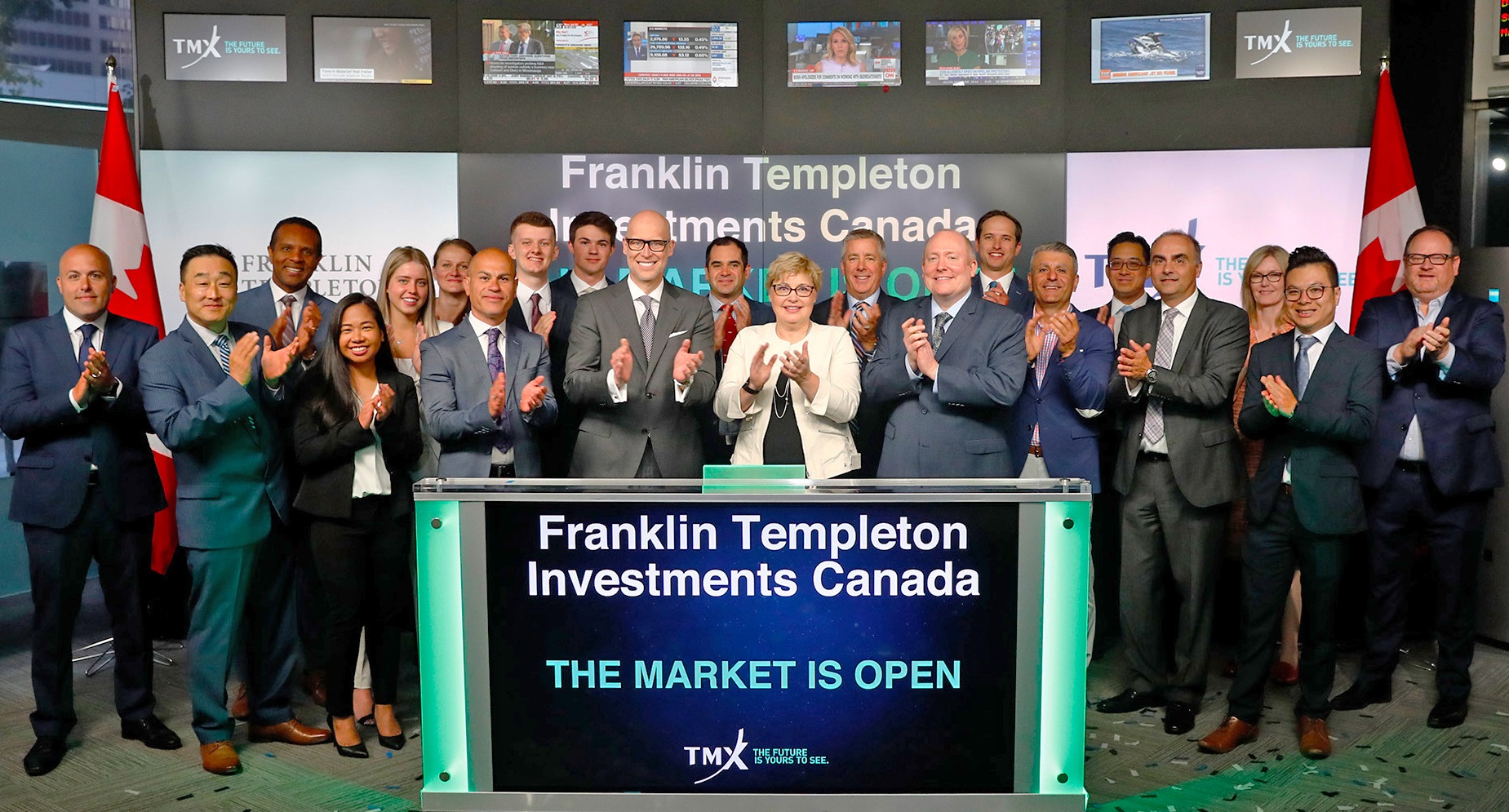
Franklin Templeton’s 2019 Retirement Income Strategies and Expectations (RISE) survey found that 21 per cent of Canadian young baby boomers (ages 55 to 64) in pre-retirement have not saved anything for retirement. And in the United States, 17 per cent of young boomers are in a similar predicament.

13 to 15% expect to work until they die

As a result, 46% of young Canadian boomers and 48% of young American boomers are considering postponing retirement, with roughly 15% of Canadians and 13% of Americans expecting to work until the end of their life. Furthermore, 22% of self-employed Canadians don’t ever plan to retire.

However, things don’t always go as planned: 54% of young Canadian boomers and 60% of their American counterparts retired earlier than expected, compared to 32% and 37% of Canadian and American older boomers aged 65 to 73.

More Canadian young boomers retired due to circumstances beyond their control than Canadian older boomers (34% versus 20%, respectively). There was a slightly wider gap amongst Americans: more American young boomers retired due to circumstances beyond their control than American older boomers (33% vs 17%, respectively).

Boomers in different life situations after post 2009 bull run

“In 2009, when equity markets started to recover, many young boomers were moving up the career ladder; whereas older boomers were approaching retirement at the top of their earning years,” said Duane Green, president and CEO, Franklin Templeton Canada. “A decade later, after a long bull market run, young and older boomers are in different life situations once again. We see many older boomers benefitting from the transfer of wealth from their parents, yet the young boomers have had a challenging experience balancing more expensive lives – due to caring for elderly parents and still having financially dependent children – all while saving for that increasingly elusive retirement.”

Nearly a quarter (24%) of Canadian young boomers in pre-retirement currently support a dependent family member, compared to 9% of retired older boomers. The top three sacrifices young boomers made for dependents were: saving less money, cutting back personal spending and withdrawing from personal savings. They were least likely to use employer vacation time or take unpaid time off work for caregiving.

“With life expectancy increasing and retirement savings becoming ever more challenging, due to the high costs of living, we are seeing increased concern over having enough money for retirement across all generations,” said Matthew Williams, SVP, Franklin Templeton Canada. “Although it’s never too late to start saving, the best time to start contributing to retirement savings vehicles is when a person starts out in their career and may not have big financial commitments like a mortgage or childcare costs: and to find a way to maintain healthy savings habits as they age.”

Those employed by companies offering group RSP or pensions that allows employees to make contributions directly from their paycheque — and perhaps receiving a company match to their contributions — should fully take advantage of this and potential ‘free’ money, as it will assist their retirement nest egg in compounding over time, Williams said.

Americans more concerned about medical expenses in Retirement

Of those Canadians who plan to retire within five years, 86% expressed concerns about paying expenses in retirement. 27% of these Canadians nearing retirement ranked lifestyle as their top concern, compared to 17% of Americans.

Continue Reading…

When did Retirement Income Planning get so complicated?

By Ian Moyer

(Sponsor Content)

Retirement planning used to be easy: you simply applied for your government benefits and your company pension at age 65. So when did it get so complicated?

Things started to change in 2007 when pension splitting came into effect. While we did have Canada Pension Plan (CPP) sharing before that, not too many people took advantage of it. Then Tax Free Savings Accounts (TFSA) came along in 2009. At first you could only deposit small amounts into your TFSA, but in 2015 the contribution limit went to $10,000 (it’s since been reduced to $6,000 per year). Accounts that had been opened in 2009 were building in value, and the market was rebounding from the 2008 downturn. Registered Retirement Savings Plan (RRSP) dollars were now competing with TFSA dollars and people had to choose where they were going to put their retirement money.

In 2015 or 2016 financial planners suddenly started paying attention to how all of these assets (including income properties) were interconnected. There were articles about downsizing, succession planning, and selling the family cottage. This information got people thinking about their different sources of retirement income and which funds they should draw down first.

Of course there is more to consider, such as the Old Age Security (OAS) clawback. When, where, and how much could this affect your retirement planning? People selling their business are often surprised that their OAS is clawed back in the year they sell the business, even if they’re eligible for the capital gains exemption. Not to mention what you need to do to leave some money behind for your loved ones. Even with all this planning, the fact that we pay so much tax when we die is never discussed, although the final tax bill always seems to be the elephant in the room. We just ignore it, and hope it’ll go away.

Income Tax doesn’t disappear at 65

Unfortunately, income tax doesn’t disappear at age 65, and you need time to plan ahead so you can reduce the amount of tax you pay in retirement. A good way to do this is to use a specialized software that takes all your sources of income and figures out the best strategy to get the most out of your retirement funds. Continue Reading…

How a Small Business can maximize Invoice Approval and Accounts Payable

By Darren Wilson

(Sponsored Content)

Accounts payable. Don’t run away yet! Most people don’t like accounts payable or handling invoices. However, they are a necessary evil of any business no matter the industry.

Bills have to be paid after all.

One of the biggest issues companies face with accounts payable is their invoicing process. A slow invoice approval rate can lead to late payments, duplicate invoices, and lost or missing invoices.

Taking time to evaluate and maximize your invoice processing and approval workflow can save not only time but money as well.

Automate wherever possible

One of the best things that a business can do for the accounts payable department is to automate. The benefits of an automated invoicing process seemingly grow by the day.

An automated system reduces the risk of duplicate, lost or missing invoices, as well as providing fraud detection. Where invoices can become misplaced due to trading so many hands, or mistakes could be made during comparisons of shipment orders and invoices because of human error, automation mitigates all of that.

If it’s possible to look to outsource entirely, however, as that may not always be the case, it helps to find similar benefits to automation elsewhere.

Evaluate

Evaluate the current invoice approval and processing workflow for any problem areas. The more transaction and invoice history available the better chance there is of noticing things like invoices that are always late, or get duplicated.

Once the more common and prominent trouble areas have been identified a root cause analysis can be done to determine the cause of the problem. And a solution can begin to develop from there. Continue Reading…

How are changes to Renewable Energy affecting our daily lives?

By Sia Hasan

Special to the Financial Independence Hub

One of the biggest changes to the energy industry has been the introduction of renewable energy. The idea that energy could be produced without having to burn fossil fuels was extremely foreign to the industry at its inception. Luckily, more and more consumers have made the switch to solar and other renewables to build a greener and more sustainable energy infrastructure. This gradual switch to solar has affected more than just large utilities. So, how have changes to the renewable energy sector affected the daily lives of most citizens?

  • Average Energy Bills Are Falling
  • The Cost Of Installing Solar Is Lower Than Ever
  • More Legislative Actions Are Being Taken To Support Renewable Energy

Average energy bills falling

Homeowners who make the switch to solar will immediately see that they now have lower energy bills. This is because fewer kilowatt hours must now be pulled from the grid because many are already being supplied for free by the sun via your rooftop solar system. These lower bills mean keeping more money in your pocket to spend on other things like better food on the table or a fun weekend getaway for the family. Over the 30+ year lifetime of a solar system, the savings can be massive. Additionally, those who install a solar system usually begin to value electricity more than those who don’t. This can cause homeowners to take additional measures such as installing energy efficient appliances and undertaking LED lighting upgrades which can even further lower energy bills.

Cost of installing Solar lower than ever

Thanks to improved manufacturing processes and higher demand for home renewable energy systems, the average solar panel cost has been falling at a fairly predictable rate over the years. In fact, it is estimated that the cost of solar is falling even faster than some experts expected. So what does this mean for consumers? Continue Reading…