Reviews

We review books that deal with everything from financial independence topics to politics, and anything in between. We may sometimes stray into films and music if there is a “Findependence” angle.

Aman Raina’s 3-year review of his Robo Advisor portfolio

By Aman Raina, Sage Investors

Special to the Financial Independence Hub

PLEASE NOTE: This review was written in early February before the big correction started in the market.

I can’t believe it has been three years since I opened up my Robo Advisor account. For those new to investing, a Robo Advisor is a new wave of wealth management companies that invest on behalf of others using an online platform and a combination of algorithms and computer coding to identify and manage portfolios. About three years ago these firms were in their early days, but since then they have mushroomed and even traditional investment companies are now offering some flavor of online investment  management services. It seemed quite appealing; however, there was one thing that many marketing materials, blogs, and mainstream media were avoiding (and still are I might add) … do these types of services make money for investors?

Three years ago I decided to try an experiment and find out for myself. I set up an account with one of the big Robo Adviser firms and invested $5,000 of my own money into it. My goal was to go through the process and blog about my experience and more importantly, the results. I said that we need a good five years to really get a handle on how effective these services are compared to traditional wealth management services. Well, we’ve now crossed the 3-year anniversary of my ROBO account, so let’s take a look at how it’s doing now. Continue Reading…

Retired Money: How to boost Retirement Income with Fred Vettese’s 5 enhancements

 Once they move from the wealth accumulation phase to “decumulation” retirees and near-retirees start to focus on how to boost Retirement Income.

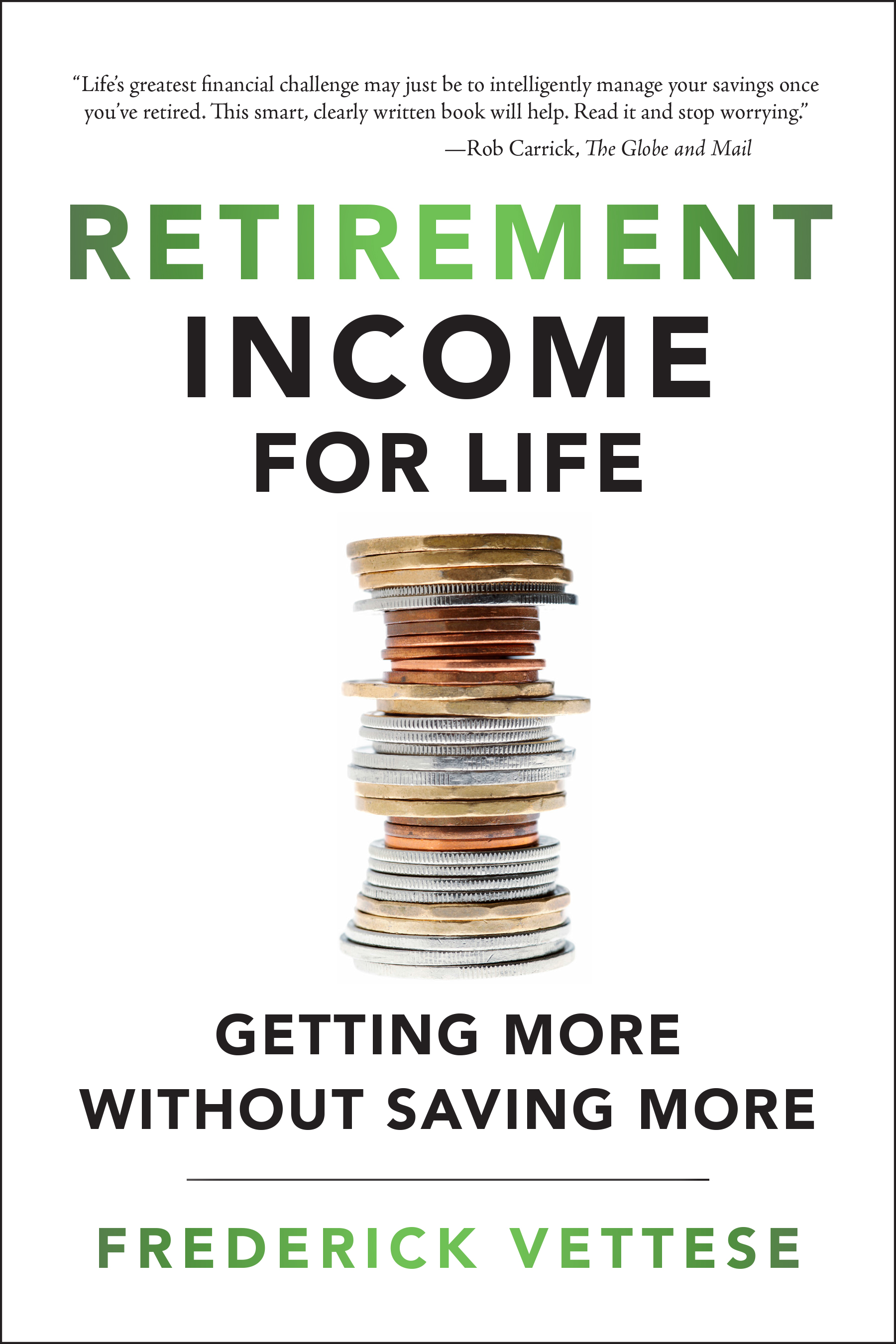
The latest instalment of my MoneySense Retired Money column looks at five “enhancements” to do this, all contained in Fred Vettese’s about-to-be-published book, Retirement Income for Life, subtitled Getting More Without Saving More. You can find the full column by clicking on this highlighted headline: A Guide to Having Retirement Income for Life.

You’ll be seeing various reviews of this book as it becomes available online late in February and likely in bookstores by early March. I predict it will be a bestseller since it taps the huge market of baby boomers turning 65 (1,100 every day!): including author Fred Vettese and even Yours Truly in a few months time.

That’s because a lot of people need help in generating a pension-like income from savings, typically RRSPs, group RRSPs and Defined Contribution plans, TFSAs, non-registered investments and the like. In other words, anybody who doesn’t enjoy a guaranteed-for-life Defined Benefit pension plan, of the type that are still common in the public sector but becoming rare in the private sector.

The core of the book are the five “enhancements” Vettese has identified that help to ensure that those seeking to pensionize their nest eggs (to paraphrase the title of Moshe Milevsky’s book that covers some of this ground) don’t outlive their money. Vettese says many of these concepts are current in the academic literature but have been slow to migrate to the mainstream, in part because few of these “enhancements” will be welcomed by the typical commission-compensated financial advisor. That in itself will make this book controversial.

Each of these “enhancements” get a whole chapter but in a nutshell they are:

1.) Enhancement 1: Reducing Fees

By moving from high-fee mutual funds or similar vehicles to low-cost ETFs (exchange-traded funds), Vettese explains how investment fees can be cut from 1.5 to 3% to as little as 0.5% a year, all of which goes directly to boosting retirement income flows. One of his takeaways is that “Tangible evidence of added value from active management is hard to find.”

2.)  Enhancement 2: Deferring CPP Pension

We’ve covered the topic of deferring CPP to age 70 frequently in various articles, some of which can be found here on the Hub’s search engine. Even so, very few Canadians opt to wait till age 70 to collect the Canada Pension Plan. Because CPP is a valuable inflation-indexed guaranteed for life instrument — in effect, an annuity that you can never outlive — Vettese argues for deferral, although he (like me) is fine with taking Old Age Security as soon as it’s available at age 65. He argues that for someone who contributed to CPP until age 65, they can boost their CPP income by almost 50% by waiting till 70 to collect.  “You are essentially transferring some of your investment risk and longevity risk back to the government, and you are doing so at zero cost.” Continue Reading…

2 powerful New Year’s resolutions for a wealthy and healthy 2018

This will be a VERY short blog; nonetheless if you take the two resolutions seriously, you might well transform both your Wealth and Health. As Sandy Cardy wrote in a Hub blog, last week, Health IS true Wealth.

Resolution 1: Health

If I haven’t done it already, I will embark on a lifelong program to improve my nutrition and exercise daily, along the lines of the last Hub blog of 2017: Younger Next Year.

Resolution 2: Wealth

As of January 1st (if I have an online discount brokerage account, otherwise January 2nd or later this week), I will top up my Tax-free Savings Account (TFSA) by a further $5,500: the “new” TFSA contribution room that all adult Canadians qualify for as of the new year. This resolution applies to everyone from age 18 to seniors: especially to seniors and those in semi-retirement or approaching full retirement. The Hub’s second last blog of the year explains why: Retired Money — How TFSAs can give seniors more tax-free retirement funds.

That’s it: one short blog, two simple resolutions; yet with the potential to transform almost all aspects of your existence. So to all who read or contribute to the Hub, a very happy, healthy and wealthy new year. See you in 2018!

P.S. New Younger This New Year 2018 Facebook Group

I’d like to spread the word that this weekend’s Younger Next Year blog triggered via Twitter the creation of a new Facebook group called Younger Next Year – 2018. I believe I am member #5: thanks to Vicki Peuckert Cook for taking the initiative to create this. As with the Hub, the group consists (at least initially) of both American and Canadians. Hope to see you there!


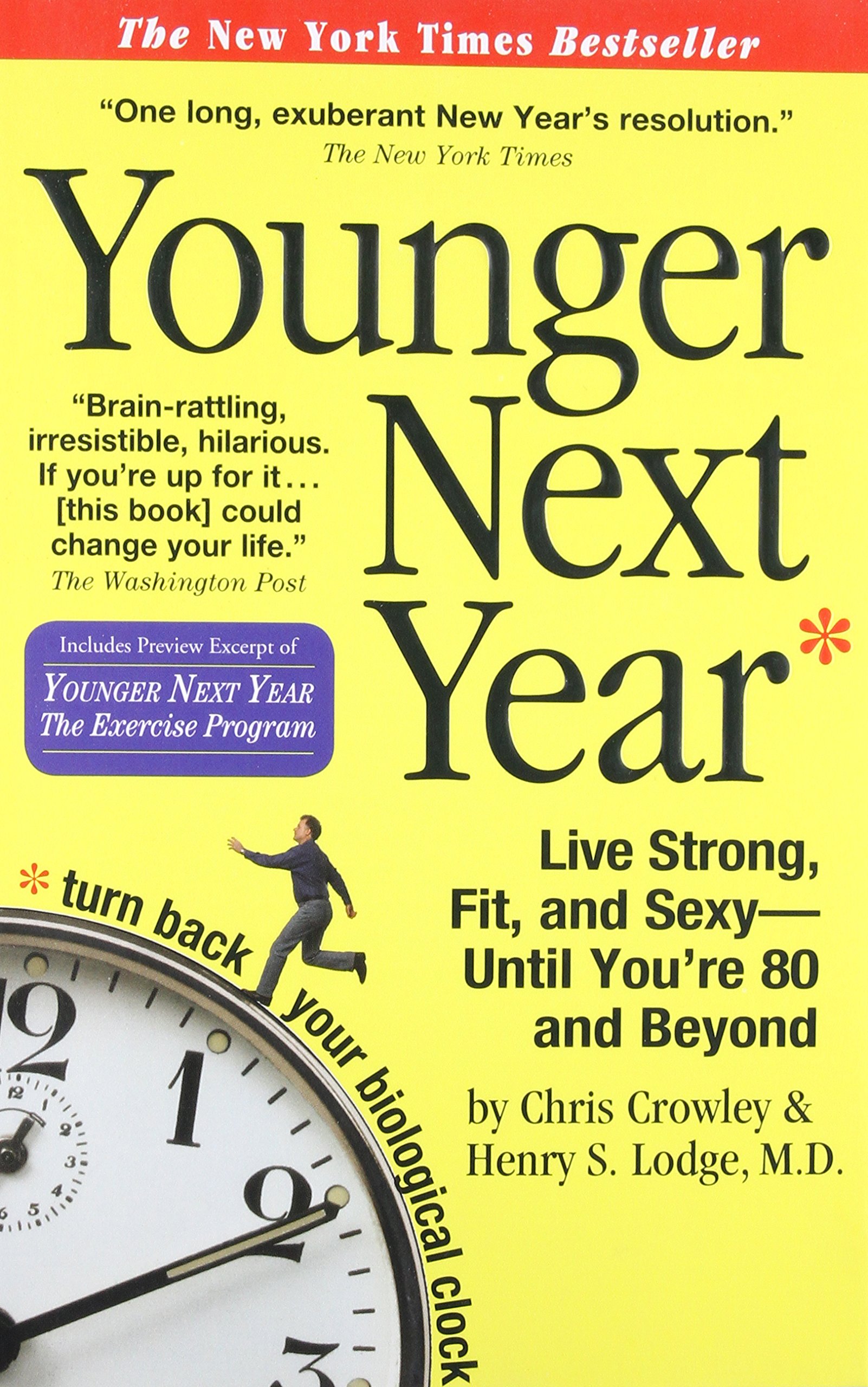
Younger Next Year (& creation of Younger Next Year – 2018 Facebook group)

Younger Next Year. How’s that for a New Year’s Resolution?

Seriously, as we head into 2018, who wouldn’t want to be younger in 2018 than they were in 2017?

Impossible, you scoff? Clearly, you haven’t read the New York Times bestselling book, Younger Next Year, or its spinoff titles, including Younger Next Year for Women.

The authors are a vibrant 70-year old (at the time of writing) and ex New York litigator Chris Crowley and his personal physician (25 years his junior), named Henry Lodge (Harry in most of the text; I should clarify that this is the late Henry Lodge, since he passed await at age 58  early in 2017 of prostate cancer. Ironic.)

The subtitle says it all: Live Strong, Fit and Sexy — Until You’re 80 and Beyond. I’m grateful to one of my sources — Hub contributor Doug Dahmer of Emeritus Retirement Strategies — both for twigging me to the book’s existence and to supplying me a copy. (He appears to have laid in a good stash of the book).

Take control of your Longevity

And for good reason. The book is all about taking control of your personal longevity, chiefly  through proper nutrition but first and foremost by engaging in daily exercise: aerobic activity at least four days a week and weight training for another two days a week. Week in and week out, for the rest of your life. And the payoff is what is promised in the subtitle.

Apart from daily exercise and “Quit eating crap” (to use the authors’ phrase, one of Harry’s 7 Rules reproduced below) the authors urge readers to “Connect and Commit,” which means staying engaged even after formal retirement. In fact, as we argue in our own book Victory Lap Retirement, there’s a case to be made for never entirely retiring. Leaving the corporate workplace, probably, but semi-retirement and self-employment from home are certainly viable alternatives.

While Younger Next Year only touches on retirement finances, it certainly reinforces the main theme of this web site (FindependenceHub.com). It’s encapsulated in Harry’s 4th Rule: Spend Less Than You Make.

Harry’s Rules

I can see at this point that it’s best to simply list Harry’s 7 Rules, which formally appear in the book’s appendix (page 305 of my copy): Continue Reading…

Retired Money: the case for laddering Annuities

“The more bells and whistles, the lower the monthly income,” from annuities, says Caring for Clients’ Rona Birenbaum,

My latest MoneySense Retired Money column looks at the case for laddering annuities in order to avoid the problem of committing funds to annuities at interest rates that are only now coming off their historic lows. You can retrieve the whole article by clicking on the highlighted text: A low-risky annuity strategy to beef up your retirement cash flow.

Many investors are already acquainted with the concept of “laddering” guaranteed investment certificates (GICs), or bonds with different maturities. Maturity dates are staggered over (typically) one to five years, so each year some money comes due and can be reinvested at prevailing interest rates. This minimizes the likelihood of investing the whole amount at what may turn out to be rock-bottom interest rates, only to watch helplessly as rates steadily rise over time.

The same applies when it comes time for retirees or near-retirees to annuitize. At the end
of the year you turn 71 you must decide whether to convert your RRSP into a RRIF,
cash out and pay tax (few do this), or thirdly to annuitize.

Fortunately, annuitization isn’t an all-or-nothing decision. You can convert some of your RRSP to a RRIF and some to a registered annuity. You can take a leaf from the GIC laddering
concept and buy annuities gradually over five, ten or even more years. As regular Hub contributor Patrick McKeough observes in the piece, laddering annuities can reduce the potential downside: “You could buy one annuity a year for the next five years. That way, your returns will increase if interest rates rise, as is likely.”

Tally up how many annuities you may already have

Mind you, few observers believe in converting ALL your disposable funds into annuities. After all, as another Hub contributor — Adrian Mastracci — notes, you need to take inventory of the annuity-like vehicles you already may have, or expect to have: such as  employer-sponsored Defined Benefits, CPP or OAS. Some investors may have a high component of annuity-like income without realizing it, and many families may already have five or six such sources of annuity-like income.

Certainly you need to consider both the benefits and drawbacks of annuities. The main benefit is they are a form of longevity insurance: making sure you never outlive your money no matter how long you live. There’s a case for having enough annuities that your basic “survival expenses” (shelter, food, heat, transport etc.) are taken care of no matter what. Finance professor Moshe Milevsky is also quoted in the article to the effect there are compelling financial and psychological reason to at least partly convert to annuities. And Milevsky is famous for making a distinction between “REAL” pensions (like DB pensions) that behave like annuities, as opposed to vehicles like RRSPs and TFSAs, which provide capital that only have the potential to be annuitized. Hence the title of Milevksy’s excellent book, Pensionize Your Nest Egg.

But annuities are not perfect. Apart from the common reluctance to commit to buying annuities at today’s still-low interest rates, there’s also the matter of the irreversible nature of the decision to convert some capital to an annuity. You’re handing over a large chunk of change to an insurance company and should you die earlier than expected, they in effect “win,” to the partial detriment of your estate. If on the other hand you live to 120, then YOU “win.”

Continue Reading…