Reviews

We review books that deal with everything from financial independence topics to politics, and anything in between. We may sometimes stray into films and music if there is a “Findependence” angle.

Early days with the Apple Watch: so far so good

Here’s my latest MoneySense blog, which tells the story of my first week with the Apple Watch. I’ve added some photographs below that show the packaging.

IMG_4288

By Jonathan Chevreau

Over the years, I’ve been both an early adopter of technology devices as well as, on occasion, a late adopter. Early with notebook computers and the first Macintosh in 1984, but late with the Blackberry and the iPhone.

As someone who didn’t even wear a traditional watch, the hype over Apple’s new Watch intrigued me. As I wrote a few weeks ago here at MoneySense.ca, I decided I’d become an early adopter of the Apple Watch, preordering it the day after it was permitted. Continue Reading…

Gail Bebee releases third edition of No Hype book

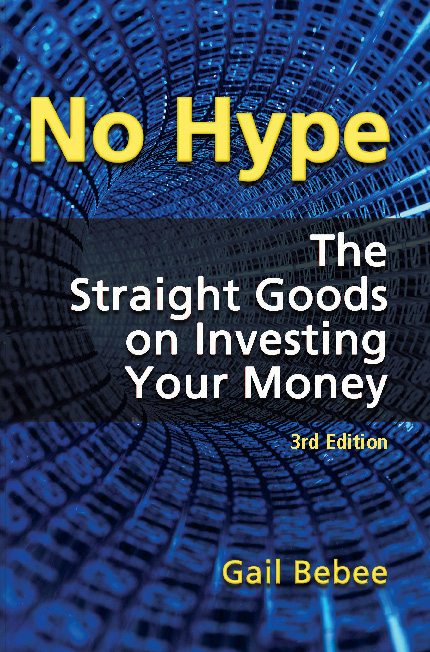
NoHypeCoverToday’s Hub review is a bit unusual in that we’ve allowed an author to review her own book. I originally reviewed No Hype: The Straight Goods on Investing Your Money when it came out almost a decade ago and found it a useful addition to the genre, seeing as so many financial books these days are written by financial professionals.

It was refreshing to see a book written by a pure financial consumer like Gail, who like the rest of us has to sort the financial wheat from the chaff and has no real axe to grind. As she says on her web site, she’s an independent voice.

Hopefully we’ll review it in the more traditional manner over the coming weeks or months but in the meantime, it’s nice to know the book is still out there and has been revised.

Incidentally, and as noted in Saturday’s weekly wrap, Gail and I are among six speakers at The Financial Show in Mississauga later this month. Joining us will be Gordon Pape,  Pat Bolland, Jim Ruta and Scot Blythe. — Jonathan Chevreau

By Gail Bebee,

Special to the Financial Independence Hub

Gail_Bebee_Soft_editing_copy
Gail Bebee

When I set out in 2006 to write the original No Hype – The Straight Goods on Investing Your Money, my goal was to create a readable book that set down all the investing basics for Canadians, without a financial industry bias. It was born from my frustration at not finding such a book when I decided to take control of investing my money.

Thousands of books and two sold-out editions later, the students taking my Investment Planning night school course at Toronto District School Board still need a good reference, and retail investors are still looking for an objective, understandable book on all the investing basics written expressly for Canadians. Continue Reading…

How to achieve “Flow” — or optimal experience

flowBy Jonathan Chevreau,

Financial Independence Hub

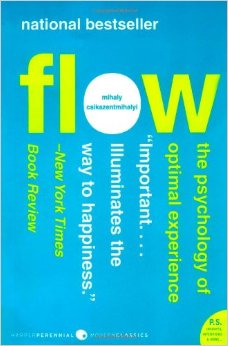
In a book on happiness we reviewed here recently, I came across a book called Flow, billed in the subtitle as “The psychology of optimal experience.”

This book, first published as a hardcover way back in 1990, became a New York Times bestseller and has spawned several followup titles elaborating on the concept of flow and creativity. The author’s name is not easily recalled: Mihaly Czikszentmihalyi, a psychology professor at California’s Drucker School of Management and also director of the Quality of Life Research Center at Drucker. (Incidentally, if you find the name unpronounceable and unmemorable, as I do, one of his books helpfully suggests the surname can be pronounced “chick-SENT-me-high.”)

Here’s what Wikipedia says about Flow and the author who coined the term.

I must say that I was a bit skeptical about the term at first: Continue Reading…

The 5 money secrets of happy retirees

Mature couple sitting back to back on a sofa with laptop computers

My latest MoneySense column in the print edition of the magazine is now available online, entitled 5 Money Secrets to a Happy Retirement. Click on the link for the full column but note that Wes Moss is no stranger to the Financial Independence Hub.

Several of the books mentioned in the column, or books like them, have been featured here in the Hub’s Review section. They include (with links to the Hub reviews): Continue Reading…

Book Review — Tony Robbins’ Money: Master the Game

We’ve been reviewing books about financial independence here at the Hub since our launch early in November 2014 and long before that at FindependenceDay.com, as well as the Financial Post, MoneySense and Maclean’s. Up until now, the books reviewed on this site have been read and reviewed by me. But it’s almost impossible to read everything, even if the focus is as narrow as financial independence and the author is someone as prominent as Tony Robbins. So starting with this guest post, we’re going to widen the net with this review of Robbins’ new book by Tea at Taxevity’s Promod Sharma. We will certainly consider reviews of other financial books by objective sources. If you’re an author looking to be reviewed and willing to supply a review copy of your book, contact me at jonathan@findependencehub.com. If you’d like to try reviewing other books at the Hub, contact me at the same email. As for the review of the new Robbins book, you can find the original review on Promod’s site here. You also can find two interviews Promod conducted with me over at Findependence.TV, before and after the site launch. Over to Promod! — Jonathan Chevreau
Promod
Promod Sharma

By Promod Sharma,

Special to Financial Independence Hub

There are many reasons to read a book about money and there are lots of books about money. Tony Robbins has a new one, Money: Master The Game. Unfortunately, not many people read books. Even fewer read nonfiction. Only a small sliver read books about money. Be an exception and join them.

Not Perfect

robbinsbookThere are various criticisms of the book, such as:

  • being an outsider: but being outside the traditional financial community gives Tony a different perspective
  • contradicting advice: but that’s common in life. He interviews 50 money experts with varying views.
  • over-simplified: but isn’t that better than over-complicating and confusing? Complexity can be added once the A-B-Cs (or 1-2-3s) are known.
  • conflicts of interest: Tony recommends companies in which he might have financial interests (see dealing with biased financial advice). That doesn’t mean the choices are bad but they but warrant more investigation.
  • too long: yes … I got the audiobook, which runs over 21 hours and sped up the playback by 30%
  • US-centric: yes but the general ideas apply everywhere

Tony responded to some criticism in this interview for The Wall Street Journal.

At the other extreme, you’ll find gushing praise.

Tony’s Advantage

Do celebrities give better financial advice? Maybe not but Tony reaches the unreachable: people who get missed by conventional financial education. Even when Tony says things you’ve heard before, you might be more likely to believe them now. For instance, I’ve covered things like

We often know the keys about money (e.g., spend less than you earn, disaster-proof your life, save for the future). That doesn’t mean we do. Tony helps people change. He might get you to change too. He has a knack for making financial education engaging. He explains his terms and uses many examples.

Differently

Instead of writing a book, Tony could have created videos and an app. That’s what I thought before getting the book. I don’t see videos, but he has a free app (if you’re willing to give your contact information).

Instead of using a conventional publisher, Tony could have self-published. He could have made the book cheaper. He could have narrated the full audiobook, rather than portions.

Overall, what he did is fine.

Free Meals

Tony is paying for 50 million free meals. Besides donating all his book royalties, he’s made an additional personal financial contribution. That’s rare. Chances are good that you’ll end up on his mailing list, though. That gives him the opportunity to sell you his other stuff with the money you’re saving.

Caution

Tony tackles tough topics such as the conflicts of interest rampant in the financial sector. He gives solutions too. Think before you leap.

The stories from successes like Richard Branson are interesting but may not provide much practical guidance (e.g., how Honest Ed turned $212 into $100 million). Look for patterns rather than a guaranteed formula to financial independence.

I wasn’t expecting much from Tony’s book but because he’s popular, I knew that I had an obligation to read it. Overall, I’m impressed and highly recommend Money: Master The Game. There’s lots of practical advice.

Money books get stale. Tony’s book is new, which means now is the best time to read it.

Links

PS Another must-read (or re-read) is Warren Buffett’s biography, The Snowball.