Victory Lap

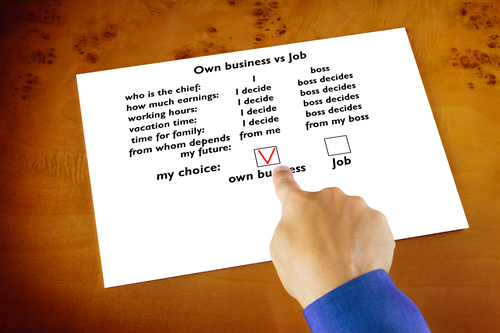
Once you achieve Financial Independence, you may choose to leave salaried employment but with decades of vibrant life ahead, it’s too soon to do nothing. The new stage of life between traditional employment and Full Retirement we call Victory Lap, or Victory Lap Retirement (also the title of a new book to be published in August 2016. You can pre-order now at VictoryLapRetirement.com). You may choose to start a business, go back to school or launch an Encore Act or Legacy Career. Perhaps you become a free agent, consultant, freelance writer or to change careers and re-enter the corporate world or government.

GreedyRates.ca: The 5 degrees of Financial Freedom

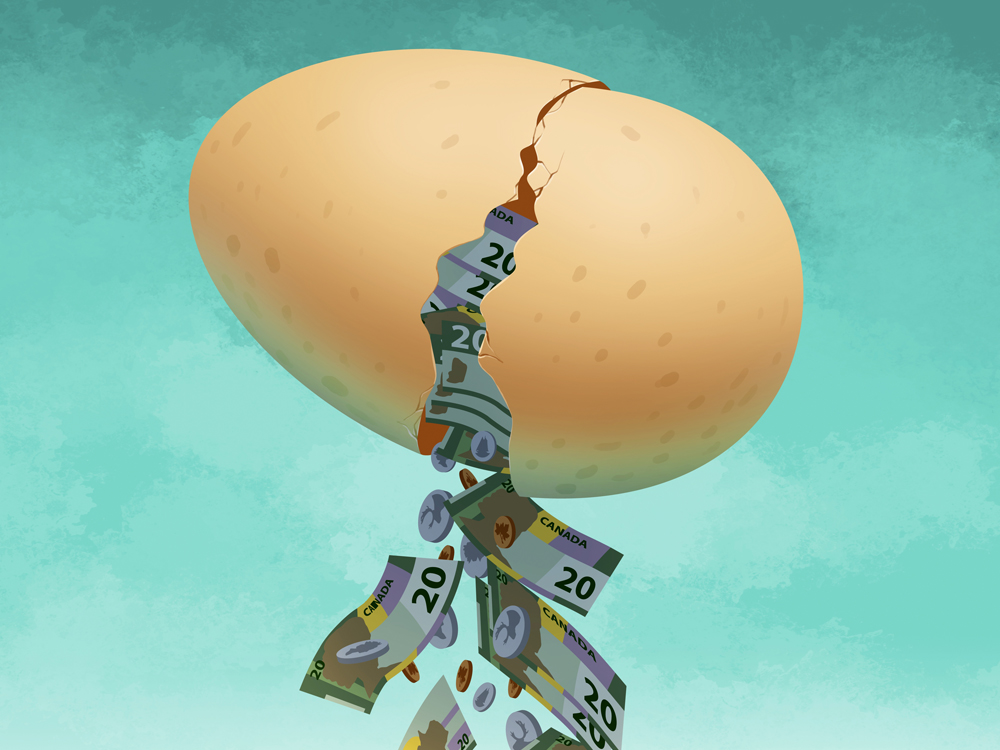
Image: GreedyRates.ca/Shutterstock

My first article for GreedyRates.ca ran over the weekend. Click on The 5 Degrees of Financial Freedom for the full article. It talks about how many terms in personal finance are used interchangeably, and often imprecisely: financial security, financial independence, retirement and especially financial freedom.

I suggest that most of us travel through a financial life cycle as predictable as the human life cycle, and there is a corresponding hierarchy of growth stages that we need to keep in mind in order to continually meet and exceed our financial goals. But because the term financial freedom can apply to so many stages, I argue it’s better to use more precise terms to identify the various degrees of Financial Freedom.

From the 5-stage hierarchy below, I argue that the key milestone in our financial lives is Findependence (a contraction of Financial Independence), a turning point that I define as the moment all sources of passive income exceed your monthly living expenses. Note that the full version at GreedyRates.ca contains three key bullet points for each of the stages, for a total of 15. Below, I summarize just the stages themselves.

Stage (Sub) 0: Indebted Wage Slavery

We may start out our financial lives with student debt, credit-card debt or mortgage debt in the early years of forging careers and raising families. Whatever its nature, debt keeps you chained to employment or work of some type.  Since those starting their financial journey in debt haven’t really begun their financial journey at all, I call the preliminary stage Stage 0. As a character in my financial novel, Findependence Day, tells a young Millennial couple still in debt: “You can’t climb the tower of wealth while you’re still mired in the basement of debt.”

Stage 1: Financial Security

The next level to aspire to in the ascending hierarchy is Financial Security. In this stage you have eliminated your debts and have accumulated enough wealth so that your absolutely necessary monthly expenses (rent/mortgage, food, utilities, travel and basic entertainment) are taken care of for the near future.

Stage 2: Financial Vitality

It can take a long time just to establish a modicum of financial security but I argue you need to aim higher than mere financial survival and embrace what Tony Robbins dubs Financial Vitality. You want enough flexibility in your cash flow that, after the necessities are taken care of, you can enjoy little luxuries like new clothing or intangibles like gym or yoga memberships, and attend the occasional sporting or cultural event. It’s the difference between financially surviving and financially thriving.

Continue Reading…

Retired Money: The Four Phases of Retirement

As anyone who has left full-time employment probably knows, these days Retirement is seldom a one-time sudden event. Just as an airplane doesn’t vertically descend instantly in order to land but begins its descent hundreds of kilometres away, so too do formerly fully employed workers usually gradually cut back. In fact, as my latest MoneySense Retired Money column says, there are at least four phases of Retirement. Click on the highlighted text to retrieve the full online column: The Four Phases of Retirement.

That’s according to former financial adviser and retiree Riley Moynes, who has prepared thousands of clients for retirement over his long career. His views are encapsulated in a short booklet titled just that: The Four Phases of Retirement. The subtitle is What to Expect When You’re Retiring, which is a clearly a nod to the bestselling book on pregnancy. 

Having just reached the traditional retirement age of 65 earlier this month, I can attest to the gradual nature of Retirement, which in earlier Retired Money columns referred to the glide path analogy made above.

So what are the 4 phases?

Phase 1: Extended Vacation

This is the classical honeymoon phase that full-time workers imagine amounts to a permanent vacation. It typically involves extended travel, the chance to indulge in hobbies, spend more time with the family and (especially!) one’s spouse.

Phase 2: The plunge into the abyss of insignificance

This “drop from the top” can be one of the top ten traumas human being faces in their lives. With it comes the reality of five “unavoidable losses”: structure, identify, relationships, a sense of purpose and a sense of power.

Phase 3: Trial & Error

The retiree starts to realize the sands of time are starting to slip rapidly away and that if you are to accomplish anything with what time remains, it had better be soon. The dominant question here is “How can I contribute?” You tentatively start a few ventures and eventually commit to one but are prepared to go back to the drawing board if it doesn’t work out.

Phase 4: Reinvent and Repurpose

Not everyone reaches this stage (indeed, some may go back to Phase 1 and just kick back and enjoy themselves again) but for those who yearn to  leave a legacy, Phase 4 is the place to do it. The retiree ask three questions designed to identify one’s unique ability: What do you absolutely love to do? What do you do very well? And what attributes or skills have led to success in the past?

Moynes now gives workshops on Retirement (see www.thefourphases.com) and also published a companion book in 2017 titled The Ten Lessons: How You Too Can Squeeze All the “Juice” Out of Retirement (see www.thetenlessons.com).

The 10 worst mistakes that new Entrepreneurs are likely to make

By Abby Vonda

Special to the Financial Independence Hub

When you’re starting your own business for the first time, it’s all about learning from your mistakes. But it can save you a lot of time, effort and money if you manage to avoid them altogether. Here are some of the 10 worst mistakes you can make as a beginner entrepreneur:

1.) Being too inflexible

Your business idea may look great on paper but in practice things rarely go as predicted. You may come across unexpected challenges and opportunities once your business gets off the ground. Don’t be so inflexible that you fail to recognise them.

2.) Forgetting your Vision

While flexibility is key, you don’t want to move in too many different directions at once. It will spread your time and resources too thinly. Keep your vision clearly in mind. It may adapt over time. But you should always have a reference point to come back to.

3.) Beating yourself up over Setbacks

When you’re just starting out, any setbacks can really dent your confidence and motivation. It’s important to remember that every business experiences these setbacks. And it’s learning to move forward and do things differently next time that will make your business stronger in the long run.

4.) Thinking you can do it all yourself

Very few people are able to master all aspects of entrepreneurship. Try to be aware of your own strengths and weaknesses. If you struggle with business administration or copywriting or keeping track of the numbers, get somebody on board to help you. This doesn’t even need to be a full time employee: freelancers and contract workers give you flexibility as well as the necessary expertise.

5.) Failing to consider Investment implications

When searching for initial investment, it can be tempting to jump at any offer. However, it’s worth taking your time to consider investment implications. What will it mean if investors have voting rights? And how would you feel if family members lose money, even in the short term, as a result of their investment?

6.) Keeping your idea too close to your chest

When you have a great idea, it’s tempting to keep it close to your chest. You don’t want anyone else to run off with it and get there first. But unless you are able to share your vision with others you may struggle to get it off the ground. Continue Reading…

Tools and platforms for would-be Webpreneurs

By Linda Binklage

Special to the Financial Independence Hub

So you need your own website? Whether you’re a small business, a budding webpreneur or just someone with a message to share, a website is a great way to reach your audience.

Nevertheless, many people are put off starting a website for fear of the costs and expertise involved. What they don’t know is that there are loads of amazing tools and platforms out there that can help them to design an effective website at an affordable price.

Here are some of the best tools and platforms for making a website:

Duda

Duda is a responsive website builder. Choose from a range of ready-made templates then use the drag and drop editor to create the look and the layout you want. You can integrate your site with the likes of PayPal, OpenTable and Disqus. And there are some great website personalisation features, allowing you to adapt your site for different customers.

WordPress

WordPress is a favourite amongst rookie and professional web designers for a reason. It’s great for everything from a basic blog to a fully-fledged e-commerce site. It’s really easy to use. And this is one platform where the cost of a website needn’t be a worry. Free packages cover all of the basics. And if you’re looking for more templates, greater customisation or full control over how your website looks and behaves, there are very reasonably priced upgrades you can sign up for. Continue Reading…

Generating Retirement cash flow from your Investments

Here are some strategies for getting cash flow from your retirement portfolio:

1.) Income only

This option is popular with retirees who want to maintain the value of their assets. Using this strategy, the retiree subsists on whatever income their bond and stock holdings generate.

Pros: As it doesn’t involve tapping into principal, this approach provides some insurance that a retiree won’t outlive assets. Investors tend to be more relaxed with short-term market volatility while receiving regular payouts.

Cons: Days are long gone where you could buy GICs and bonds yielding a safe 10 or 12%. Retirees in the 1990s were dismayed to see the interest on renewals drop from double-digit to mid-single digit rates, and now you may not get much more than 2%.

More investors are leaning towards dividend-paying stocks. A basket of dividend-paying stocks might generate 3% or 4% without taking on too much risk. Given these current low returns, the securities in a portfolio may have trouble generating a livable yield. Depending on your income requirements, you’ll likely need quite a large amount of invested capital to generate the income you desire.

Related: Why Living Off The Dividends No Longer Appeals To Me

Be careful when hunting for yield. Dividends are not guaranteed. Changes to a company’s dividend policy could occasionally result in payouts being reduced or eliminated altogether.

In reality, most investors will need to dip into their principal anyway to meet unexpected large expenses.

2.) Total return strategy

Here, retirees reinvest all income, dividends and capital gains back into their holdings at their target allocation after taking the amount they need for annual living expenses.

Pros: By rebalancing, it forces the investor to sell appreciated assets on a regular basis while leaving underperforming assets in place, or adding to them.

Cons: If there is a prolonged market downturn, withdrawals can drastically erode capital and reduce future return potential. That argues for holding a comfortable cushion of at least 3 –5 years worth of living expenses in liquid form – cash or cash alternatives. Continue Reading…