Victory Lap

Once you achieve Financial Independence, you may choose to leave salaried employment but with decades of vibrant life ahead, it’s too soon to do nothing. The new stage of life between traditional employment and Full Retirement we call Victory Lap, or Victory Lap Retirement (also the title of a new book to be published in August 2016. You can pre-order now at VictoryLapRetirement.com). You may choose to start a business, go back to school or launch an Encore Act or Legacy Career. Perhaps you become a free agent, consultant, freelance writer or to change careers and re-enter the corporate world or government.

Two notable books to guide your ‘Retirement’ journey

“Books are the bees which carry the quickening pollen from one to another mind.” — James Russell Lowell, poet and author

This week I highlight one of my best recommendations for Retirement. Invest in self-education with some quality reading. The critical factor is how to select just a couple of books.

Investors have a thirst for knowledge about their precious retirement journey. They seek detailed information to assist in navigating the capital accumulation process to achieve retirement. Then comes the desire of making that capital outlast the spending phase.

Walk into any well-stocked bookstore and the retirement section will seem like a maze. There are plenty of titles competing to become permanent occupants of your precious bookshelf space.

My two book selections provide insight and understanding into the design and management of the retirement nest egg. The authors are well known. The books complement one another.

The emphasis is understanding long-term principles, policies and best practices that steer the family’s retirement goals from dreams to realities. Getting fully acquainted with these two books helps craft better decisions about retirement. Something for everyone’s retirement toolbox.

Photo: Kia Meiklejohn

Falling Short: The Coming Retirement Crisis and What To Do About It, by Charles D. Ellis, Alicia H. Munnel, and Andrew D. Eschtruth

This century has clearly shown that we are living longer, health costs are rising and employer pensions are diminishing. That is the big picture applicable to retirees in the USA. However, similar arguments also exist for the Canadian retirement landscape.

The good news is that what is seemingly a dire retirement situation can be easily rectified by implementing a few coordinated steps. This book makes you appreciate the scope of that big picture. Working a little longer, saving a bit more, judicious use of government benefits and being smart about portfolio draws are some of the key answers that deliver.

The message for every retiree is that a successful retirement is about being empowered to look after the personal situation. At age 60, it is not unusual for retirement to last into the 90’s for at least one spouse.

Yes, long term retirement that spans decades is expensive. Sensible and methodical decision making is sound advice for all ages. It renders the scope of the big picture into realistic solutions.

Retired Money: Cashing RRSP to pay off debt is a poor strategy

Should you cash in your RRSP to pay off debt? While some prospective retirees may be tempted to do so, this is one of a score of damaging financial myths, according to insolvency trustee and author Doug Hoyes.

I mention this in my latest MoneySense Retired Money column, which has just been published. You can retrieve it by clicking on the highlighted headline here: The wrong way to pay off Debt.

As I say in the article, Cashing in your RRSP to pay off debt is Myth #9 of 22 common financial misconceptions outlined in Hoyes’ new book, Straight Talk on Your Money (cover shown adjacent: we share a common publisher.)

Hoyes is particularly concerned about senior debt in Canada and how these myths can affect their retirement. Myth #10 often afflicts retired seniors: that Payday Loans are a Short-term Fix for a Temporary Problem.

Seniors racking up debt faster than other age groups

Earlier this week in the Financial Post, columnist Garry Marr reported that Seniors in Canada are racking up debt faster than the rest of the population. Over the past year, senior debt grew by 4.3%, according to a survey published Tuesday by Atlanta-based Equifax Inc. Continue Reading…

How to plan for a Victory Lap Retirement: Advice from the authors

By Richard Eisenberg, Work Editor, Next Avenue.org

Special to the Financial Independence Hub

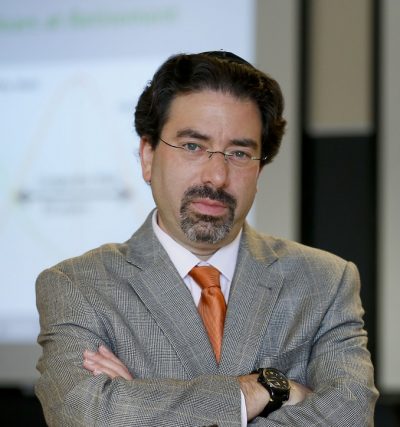
Mike Drak and Jonathan Chevreau, authors of the new book, Victory Lap Retirement, are on a crusade to change the way society thinks about retirement. Their book is actually, as Drak says, “a retirement book about not retiring.”

A Victory Lap Retirement — Drak, 62, coined the term — means spending years combining work and leisure between the time you quit a full-time job and stop work entirely. In the book, the authors say a Victory Lap Retirement lets people change from a “surviving mentality” to a “thriving mentality.” The Toronto-based duo would know: They’re both taking Victory Laps right now.

Previously, Drak spent nearly 40 years working in commercial banking. He quit in 2014 to protect his health and personal well-being. Now, when he works, he  is a retirement coach, public speaker and writer (next up: a retirement transition guide). Chevreau, 64, is a veteran financial columnist, blogger and author of the book Findependence Day; I interviewed him for Next Avenue in 2013 about “findependence” — his term for having enough money so you can work because you want to, not because you have to. He still writes about personal finances, but on his schedule.

I recently spoke with Drak and Chevreau about how and why to have a Victory Lap Retirement. Highlights: Continue Reading…

CPP Survivor Benefits not what many were hoping for

Enhancements to the CPP are always being suggested, largely to address the fact that fewer Canadians now have workplace pensions. The latest deal made by provincial Finance Ministers in June 2016 will boost CPP income from one quarter of pensionable earnings to one-third. The change will phase in slowly from 2019 to 2025 (when the pensionable earnings target will be $82,700), so it will be a while for these changes to be felt by future retirees.

Related: Canada Pension Plan expansion and why it matters

Of more pressing concern to current retirees, and not addressed – or even on the radar – is the issue of CPP survivor benefits.

As noted in this Globe and Mail article, if you find yourself widowed, you may not get the survivor benefit that you expected.

CPP Survivor Benefits calculation

Continue Reading…

Old Age Security (OAS) explained

Old Age Security (OAS) was originally intended to be a universal program to provide income support payments to Canadian seniors. It is one of the cornerstones of Canada’s retirement income system.

It is not a pension plan. You don’t make contributions. OAS is a government benefit program that is financed out of general revenue.

Related: Is our Old Age Security Program Sustainable?

Employment history is not a factor in determining eligibility. You can receive OAS benefits even if you have never worked, or are still working.

Residency requirements have to be met. The amount you receive is determined by how long you have lived in Canada after the age of 18.

Everyone who has been a resident of Canada for at least ten years (after age 18) is eligible to collect OAS starting at age sixty-five. Normally, you qualify for the full amount only if you have been a resident for at least forty years after turning 18.

You may still qualify for full or partial payments if you meet certain other requirements.

Up to September 2017, the maximum monthly benefit is $583.74. This rate is reviewed four times a year and may be adjusted based on the cost of living measured by the Consumer Price Index. OAS is taxable income.

OAS for low income seniors

Anyone who receives OAS and whose income falls below a certain level may be eligible to receive additional non-taxable monthly payments.

  • The Guaranteed Income Supplement provides a monthly benefit to low income OAS recipients. It is an income tested benefit. This means your total income from the previous year (combined income for couples) is used to determine your eligibility.
  • Allowance is available to 60-64-year-old spouses/common-law partners of OAS recipients who also receive GIS.
  • If you are sixty to sixty-four years old and are widowed, you may be eligible to receive the Allowance for the Survivor.

Continue Reading…