Victory Lap

Once you achieve Financial Independence, you may choose to leave salaried employment but with decades of vibrant life ahead, it’s too soon to do nothing. The new stage of life between traditional employment and Full Retirement we call Victory Lap, or Victory Lap Retirement (also the title of a new book to be published in August 2016. You can pre-order now at VictoryLapRetirement.com). You may choose to start a business, go back to school or launch an Encore Act or Legacy Career. Perhaps you become a free agent, consultant, freelance writer or to change careers and re-enter the corporate world or government.

4 truths Business Ownership will teach you

By Sia Hasan

Special to the Financial Independence Hub

Running your own business is equal parts exciting and stressful. No one is telling you what to do, and instead, you need to make the correct decisions if you want your company to be successful. And it won’t just be your life that’s riding on those decisions – if you have employees, they depend on your business’s success, as well.

The responsibility of business ownership brings several important life lessons with it. Here are four of the most significant.

1.) Surround yourself with the right people

This advice is applicable to business success in two ways. The first is that you need the right people around you as either employees or business partners to build and maintain your business. You can’t expect to be successful if you try to do it all. As the business owner, you can’t spend valuable time learning every skill under the sun. Instead, you’ll need to outsource certain things.

The second is that you need to hang out with the right people in your personal life. It’s said that you’re the average of the five people you spend the most time with. If those are driven individuals, they will help raise your game. If they’re unambitious and lazy, they’re just going to hold you back when you’re with them.

2.) Fast, good and cheap: you can have two out of three

So you know you need to outsource certain areas of your business, and you’re thinking of hiring either full-time help, part-time help or a freelancer to work for you on a per-project basis. When you do this, you need to decide what kind of results you want, how quickly you want them and how much you’re willing to pay.

It’s best to look for people who can provide high-quality work quickly, and then pay them what they deserve. If you try to pinch pennies, it will likely end up costing you more in the long run.

3.) Everyone has limits

You’ve probably heard a few crazy stories about famous entrepreneurs and how they work 80 or 100 hours per week. Continue Reading…

2 powerful New Year’s resolutions for a wealthy and healthy 2018

This will be a VERY short blog; nonetheless if you take the two resolutions seriously, you might well transform both your Wealth and Health. As Sandy Cardy wrote in a Hub blog, last week, Health IS true Wealth.

Resolution 1: Health

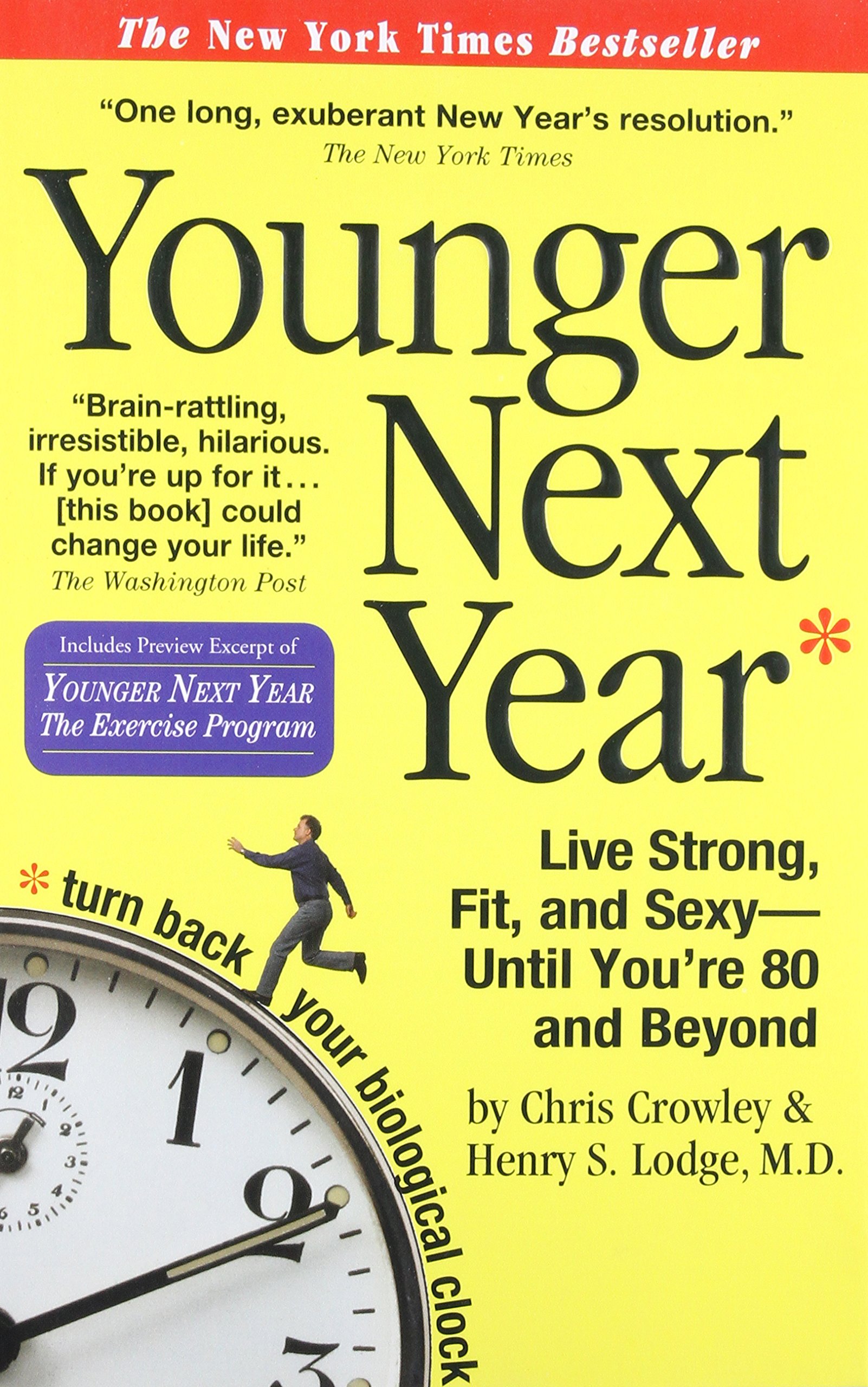
If I haven’t done it already, I will embark on a lifelong program to improve my nutrition and exercise daily, along the lines of the last Hub blog of 2017: Younger Next Year.

Resolution 2: Wealth

As of January 1st (if I have an online discount brokerage account, otherwise January 2nd or later this week), I will top up my Tax-free Savings Account (TFSA) by a further $5,500: the “new” TFSA contribution room that all adult Canadians qualify for as of the new year. This resolution applies to everyone from age 18 to seniors: especially to seniors and those in semi-retirement or approaching full retirement. The Hub’s second last blog of the year explains why: Retired Money — How TFSAs can give seniors more tax-free retirement funds.

That’s it: one short blog, two simple resolutions; yet with the potential to transform almost all aspects of your existence. So to all who read or contribute to the Hub, a very happy, healthy and wealthy new year. See you in 2018!

P.S. New Younger This New Year 2018 Facebook Group

I’d like to spread the word that this weekend’s Younger Next Year blog triggered via Twitter the creation of a new Facebook group called Younger Next Year – 2018. I believe I am member #5: thanks to Vicki Peuckert Cook for taking the initiative to create this. As with the Hub, the group consists (at least initially) of both American and Canadians. Hope to see you there!


Younger Next Year (& creation of Younger Next Year – 2018 Facebook group)

Younger Next Year. How’s that for a New Year’s Resolution?

Seriously, as we head into 2018, who wouldn’t want to be younger in 2018 than they were in 2017?

Impossible, you scoff? Clearly, you haven’t read the New York Times bestselling book, Younger Next Year, or its spinoff titles, including Younger Next Year for Women.

The authors are a vibrant 70-year old (at the time of writing) and ex New York litigator Chris Crowley and his personal physician (25 years his junior), named Henry Lodge (Harry in most of the text; I should clarify that this is the late Henry Lodge, since he passed await at age 58  early in 2017 of prostate cancer. Ironic.)

The subtitle says it all: Live Strong, Fit and Sexy — Until You’re 80 and Beyond. I’m grateful to one of my sources — Hub contributor Doug Dahmer of Emeritus Retirement Strategies — both for twigging me to the book’s existence and to supplying me a copy. (He appears to have laid in a good stash of the book).

Take control of your Longevity

And for good reason. The book is all about taking control of your personal longevity, chiefly  through proper nutrition but first and foremost by engaging in daily exercise: aerobic activity at least four days a week and weight training for another two days a week. Week in and week out, for the rest of your life. And the payoff is what is promised in the subtitle.

Apart from daily exercise and “Quit eating crap” (to use the authors’ phrase, one of Harry’s 7 Rules reproduced below) the authors urge readers to “Connect and Commit,” which means staying engaged even after formal retirement. In fact, as we argue in our own book Victory Lap Retirement, there’s a case to be made for never entirely retiring. Leaving the corporate workplace, probably, but semi-retirement and self-employment from home are certainly viable alternatives.

While Younger Next Year only touches on retirement finances, it certainly reinforces the main theme of this web site (FindependenceHub.com). It’s encapsulated in Harry’s 4th Rule: Spend Less Than You Make.

Harry’s Rules

I can see at this point that it’s best to simply list Harry’s 7 Rules, which formally appear in the book’s appendix (page 305 of my copy): Continue Reading…

Retired Money: How TFSAs can give seniors more tax-free retirement funds

If you’re a senior, the holy grail in retirement is to have as much tax-free retirement funds as possible.

My latest MoneySense Retired Money column looks at this goal: Click on the highlighted text to access the full piece:  How Seniors can use TFSAs to have more in retirement.

This site has always been a strong proponent of Tax-free Savings Accounts (TFSAs) for young people. Starting at age 18, TFSAs are great vehicles for accumulating short-term savings for goals like saving a down payment for a home, buying a new car, or even going on to post-graduate studies or starting a business. And unlike RRSPs, the $5500 annual contribution room for TFSAs does not require having earned income the previous year. So as of next week, with the arrival of 2018, it’s highly advisable to add another $5,500 to your TFSAs. But not just if you’re young!

The MoneySense column makes the point that TFSAs are equally desirable for seniors in retirement, or for those in semi-retirement who are preparing for full retirement.

Why? First, unlike the RRIFs that many RRSPs become, and which generate taxable income, TFSAs generate no taxable income: neither on the withdrawals nor the investment income (whether dividends, capital gains or interest). In addition, TFSAs do not trigger clawbacks of means-tested government retirement income programs like Old Age Security or the Guaranteed Income Supplement.

But there’s another big benefit TFSAs confer on seniors and retirees: ongoing tax-sheltering of investment income well beyond age 71. In contrast, you can no longer contribute to RRSPs after the year you turn 71 and cannot contribute new money to RRIFs: they’re strictly vehicles that shelter what you’ve got until the next forced annual withdrawal limit, which escalates over time from 5.28% at 71 to 20% a year once you reach 95.

Unlike RRSPs and RRIFs, seniors can continue to add to their TFSAs each and every year even after age 71. Even if you live past 100, as my friend Meta has (and who, as the column relates, continues to use the TFSA herself!)

Two ways seniors can get money for TFSAs without having to find “new” money

Continue Reading…

Your (last) greatest show on earth

By Heather Compton

Special to the Financial Independence Hub

What do you envision when it comes to your final wishes? Would there be a formal service? If so, who would officiate? Do you wish to be cremated or buried or donate your remains to science?

I get it, end of life conversations are difficult and even if you are prepared to have the discussion, dollars-to-donuts your kids or responsible family members don’t want to go there.

Regretfully I’ve been involved with funeral planning for a number of relatives, and even some clients, and these are the decisions families find most difficult. When the time comes —  and it will —  the question inevitably asked is some variation of “What do you think mom would have wanted?”

If those closest to you know your personal wishes they don’t have to make it up in the funeral director’s showroom while debating between the grand showcase coffin and the budget version you might have preferred!

Bless Mom — she was very clear — cremation by the most frugal means possible, and a nice lunch for our friends.  My Scottish depression-era mother liked the memorial society option because they negotiate funeral cost discounts.

The Memorial Society Association of Canada’s website identifies contacts across the country. A modest membership fee gets you an information package to help document decisions plus they pre-negotiate cost-conscious plans with funeral homes. You can file your wishes with the funeral home or with a memorial society but keep a copy with your other important documents.

Fire Drill Conversations

Because these are difficult conversations, I suggest you treat them like a fire drill: keep it short, discuss what’s needed, make sure everyone understands, document and call it done.  Have another fire drill if your thoughts or wishes change.

Here goes:

Style of service Continue Reading…