Victory Lap

Once you achieve Financial Independence, you may choose to leave salaried employment but with decades of vibrant life ahead, it’s too soon to do nothing. The new stage of life between traditional employment and Full Retirement we call Victory Lap, or Victory Lap Retirement (also the title of a new book to be published in August 2016. You can pre-order now at VictoryLapRetirement.com). You may choose to start a business, go back to school or launch an Encore Act or Legacy Career. Perhaps you become a free agent, consultant, freelance writer or to change careers and re-enter the corporate world or government.

What financial help is available to American seniors?

Photo by Alexandre Debiève on Unsplash

By Jessica Walter

Special to the Financial Independence Hub

As we approach retirement, we hope financial strains will be a thing of the past and that we’ll be able to enjoy our senior years by focusing on the things that make us happiest. However, the reality for many of us in North America is quite different.

According to SeniorLiving, nine out of ten Americans who are 65 and older, receive Social Security and the average senior citizen, aged 65-74, has an income of just $36,320 [all figures $US]; a figure that drops to $25,417 for those aged 74 and over. As confirmed by the most recent U.S. Census Bureau, 9.3% of Americans aged 65 and older are living in poverty; an increase from 4.2 million to 4.6 million between 2015 and 2016.

With such worrying circumstances to contend with, many senior citizens will want to find out what kind of financial assistance is available to them in order to better plan for the years ahead.

Housing

Meeting mortgage payments or having enough money to cover rising rental costs can be one of the most pressing financial concerns for senior Americans. The U.S. Department for Housing and Urban Development (HUD) offers financial assistance and resources related to reverse mortgages, federal housing programs, affordable rents and units for the elderly.

Healthcare

Continue Reading…

How Millennials can learn from the seniors in Grace & Frankie

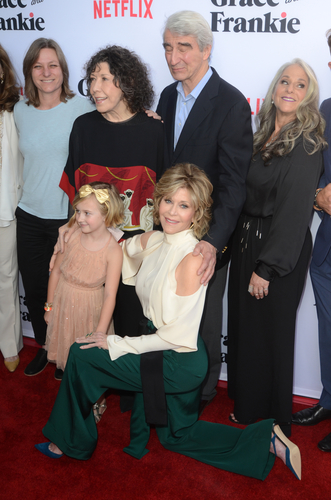
Lily Tomlin, Sam Waterston, Jane Fonda at the Grace & Frankie Season 2 Premiere Screening in Los Angeles.

Can Millennials learn life lessons from seniors? I think so, or at least from TV depictions of them.

As an avid watcher of anything Netflix is showing, I came across Grace and Frankie when the first season came out in 2015.

I wouldn’t usually choose this show for myself, seeing as all the main characters are over 70, I figured I wasn’t exactly in the target market. This was a show geared toward people my parents’ age or more, and what could I possibly gain from watching something made for old people!?

However, it was a slow weekend, and I’d already caught up on Orange Is the New Black, so what did I have to lose? If it was good, I’d find a new show to watch, and if it was too far out of my wheelhouse, I’d email my parents and pass on the ‘new show you’d like’ info to them.

I think a lot of the time people my age tend to take for granted that most media is aimed at us, with characters from all walks of life but generally in the same age range. This has the unfortunate consequence of leading us to believe that:

a) we’re the only generation that matters and

b) we will continue to be young and adventurous and the only generation that matters.

If you haven’t yet marathon-ed Grace & Frankie, allow me to break it down for you. Grace Hanson and Frankie Bernstein’s husbands are law partners, and, as it turns out, life partners. The husbands — played by two veteran actors who are 75 or older, Martin Sheen and Sam Waterston — have decided after 20 years of hiding their love that it’s time they get on with it, which leaves the wives in quite an unfortunate predicament. ‘Grace & Frankie’ revolves around these two women — played by Jane Fonda (79 years young) and Lily Tomlin (77) respectively — rebuilding their lives and learning to live their ‘new normal’.

One of the most important lessons millennials should take away from this show is that no matter how much we plan for our financial futures, nothing is set in stone. It is always important to plan for the un-plan-able. We are not invincible, and we are not immune to hardship.

A Victory Lap for both the 70-ish actors and the characters they play 

Though both the lead characters had successful careers in their pasts, what I find most inspiring about these women is that they aren’t allowing themselves to feel obsolete. They find new relationships, new hobbies, and most interestingly, a new business venture that they’re passionate about pursuing.
Continue Reading…

Retired Money: Equities in Retirement — you may need more than you think

Contrary to what some may feel, equities in retirement is not an oxymoron. If you’re retired or almost so, you may be thinking it’s time to lighten up on your equity exposure.

The problem with rules of thumb is that some of them get quite dated and nowhere is this more relevant than in the maxim that a retiree’s fixed income exposure should equal their age. (So, the guideline goes, 60 year olds would be 40% in stocks and 90 year olds only 10% in them).

My latest MoneySense Retired Money column looks at this in some depth, via reviews of two books that tackle both the looming North American retirement crisis and this topic of how much equity retiree portfolios should hold. You can find the full article by clicking at the highlighted text: How to Boost Your Returns in Retirement.

As the piece notes, the single biggest fear retirees face is the prospect of outliving your money. Unfortunately, retiring in this second decade of the 21st century poses challenges for just about any healthy person who lacks an inflation-indexed employer-sponsored Defined Benefit (DB) pension plan. We’re living longer and interest rates are still mired near historic lows after nine long years.

The two books surveyed are Falling Short, by Charles Ellis, and Chris Cook’s Slash Your Retirement Risk. I might add that regular Hub contributor Adrian Mastracci twigged me to the Ellis book when he compared and contrasted it to my own co-authored book, Victory Lap Retirement. See Adrian’s review here: Two notable books to guide your “Retirement” journey. Continue Reading…

Always show up for a free lunch!

By Heather Compton

Special to the Financial Independence Hub

Always show up for a free lunch!

That’s the tongue-in-cheek advice I give all “soon to retire” folks but, frankly, taking advantage of free lunches is key for every investor.

I use the term “free lunches” for all manner of benefits and it’s alarming to me how many people pass them by. Many employers offer employees matching contributions to Retirement Savings accounts that require the employees to pull out their own wallet too.

One major corporation I worked with gave all employees a contribution of 6% of their salary to the Defined Contribution Pension Plan.  The employer would contribute a further 4%, contingent upon the employee also contributing 4%. That’s a great free lunch! A shocking number of employees felt they couldn’t afford to participate:  they said they couldn’t meet all their other financial obligations without that 4% of salary. Actually, by making the 4% RRSP contribution they also earned a tax deduction, so the after-tax, out-of-pocket expense was even less.

Don’t overlook the daily Special

Many companies offer employees the convenience of group savings programs, even where there are no company-funded contributions. That too has value; the investment choices available in these plans often have significantly below market rate MERs (management expense ratios) and no account fees or cost to buy or sell. One company with which I am familiar has a savings plan offering a solid range of investment funds with MERs ranging from a low of 0.10% to a high of 0.58%.

Only a knowledgeable investor, capable of building a low cost ETF (exchange traded fund) portfolio, could match this low-cost option. If the contributions are made to a group RRSP, the employer can also add the convenience of reducing the tax paid at source. Since the contributions and investments are made regularly, often monthly, we can add the benefit of dollar cost averaging to the mix.

What other free lunches are often overlooked?

Continue Reading…

Getting unstuck: How to live the life you want with the money you have

By Sheila Walkington, Money Coaches Canada

Special to the Financial Independence Hub

Money does not buy happiness. You’ve heard that before. Many studies of happiness have shown that relationships, a positive attitude, working towards goals and helping others, are at the core. Even exercise and pet ownership are considered contributing factors. How much money is in your bank account doesn’t even make the list.

On the other hand, constant struggle and worry about money can certainly rob you of happiness. Luckily, whether or not you struggle with money has less to do with how much you have and much more to do with your mindset. That’s why being a Money Coach brings me so much happiness. I have the opportunity to help people stop struggling and gain mastery over their money.

I also have the opportunity to dispel the misconception that money mastery is synonymous with giving up all the fun stuff you enjoy, and thinking only of a distant retirement or being prepared for a “rainy day.” As a Money Coach, I don’t set your priorities; I help you determine what matters most to you. The approach Money Coaches Canada, co-founder Karin Mizgala and I developed in our book Unstuck, is focused on the concepts: Dream, Plan, Live.

We believe that to live the life you want, you need a clear vision of what that life will look like. Once you have a dream, you develop an action plan with steps you can take immediately. In that way, your dream isn’t some far off wish; it becomes an active part of your daily life and you are able to recognize—and celebrate—the progress and victories along the way.

Here are some ideas to get you started living according to your goals.

Use your dreams to set your priorities

What do you really want in your life? More travel? Early retirement? More time with your children? To start a business? Of course, there is no right or wrong answer. It’s your life. Never assume that the life you want is out of your reach. A clear vision of what you want is an amazing source of motivation to make things happen. Because once you have uncovered what you really value, you can take actions that support your dreams becoming reality.

Continue Reading…