Victory Lap

Once you achieve Financial Independence, you may choose to leave salaried employment but with decades of vibrant life ahead, it’s too soon to do nothing. The new stage of life between traditional employment and Full Retirement we call Victory Lap, or Victory Lap Retirement (also the title of a new book to be published in August 2016. You can pre-order now at VictoryLapRetirement.com). You may choose to start a business, go back to school or launch an Encore Act or Legacy Career. Perhaps you become a free agent, consultant, freelance writer or to change careers and re-enter the corporate world or government.

Should I start CPP early? Real-Life Examples

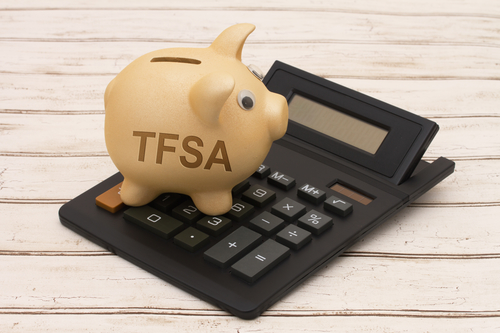
Piggy bank with national flag of CanadaBy Ed Rempel, CPA, CMA, CFP 

Special to the Financial Independence Hub

The most common Canada Pension Plan question I am asked is: “Is it smart to take my CPP early?”

A quick review of the facts:

  • The maximum CPP benefit in 2017 at age 65 is $1,092.50 per month, or $13,110 per year.
  • You can start as early as age 60, but you get 7.2% less for every year before age 65. If you start at age 60, you get 36% less, so the maximum is $8,390 per year.
  • New rules in 2012 increased the penalty for starting early, but you can start CPP even if you are still working.

The simple breakeven calculation misses many important factors. For example, if John starts receiving $8,390 per year at age 60 and Jane starts receiving $13,110 at age 65, it will take her nine years to catch up. The simple breakeven is age 74. John gets more before age 74 and Jane gets more after.

This implies that if you expect to live past 74 (and most people will), you should delay your CPP. But this is not the full answer.

The answer depends on five main factors:

Continue Reading…

Considering a Sale Leaseback on a principal residence

Quiet street with new houses and condo buildings on the background.This idea came to me while away fishing and the more I think about it the more appealing it becomes.

Sale leasebacks are common in the commercial property arena but I can’t recall seeing it discussed with respect to residential property.  I googled “sale leaseback residential property” and was pleasantly surprised to find that some people are already doing it.

Based on what I know, and my own particular situation, here is how it should work in theory.  My wife the Contessa would like to live downtown by the waterfront in Toronto one day. Austin is our only son still living with us, with our other two boys somehow managing to escape. So when Austin eventually, leaves the house will be largely empty. There is a good chance that Austin will move into residence in downtown Toronto when he goes to university in three years.

My mother, who is 92, is in a nursing home close to my house and I wouldn’t consider moving while she is there. Why move, complicate my life further and create unnecessary pressure?

My idea is to sell in the spring if residential real estate prices stay high and the market stays hot. I would negotiate a minimum five-year lease, which will allow me ample time to simplify and de-cumulate, getting rid of a lot surplus stuff accumulated over the years.

My Options

Continue Reading…

My recent blogs: KIPPERS, insecure retirement, annuities, post-Trump investing

depositphotos_30337045_s-2015
KIPPERS. Should parents dip into retirement savings to help their kids?

As regular Hub readers may know, I often write financial articles for other (mostly) digital media, usually the Financial Post, MoneySense.ca and Motley Fool Canada. Here’s some of the most recent blogs or columns, with links via the headlines.

Nearing Retirement and still insecure about your finances? Sadly, you’re not alone. (FP, Nov. 17)). This came out of a survey released this week by Mackenzie Investments that suggested many of us actually feel less secure financially about retirement the closer the actual date arrives. One reason is grey divorce and another perhaps related one is dipping into retirement savings to help adult children.

The latter idea was explored In an earlier FP blog I wrote this week: When Boomers should turn the taps off (or on) when it comes to financial assistance for their kids. (FP, Nov 15). There I pass along a term I learned from occasional Hub guest blogger Doug Dahmer of Emeritus Retirement Solutions: KIPPERS, also mentioned in the photo caption above.

KIPPERS stands for Kids in Parents’ Pockets Eroding Retirement Savings.  I also mentioned this in a short segment on this topic on Tuesday with Peter Armstrong on CBC’s On the Money show.

A few weeks earlier, the CBC aired another segment between me and Armstrong titled You’ve never going to retire, and Here’s Why.

Canadian Personal Finance Conference this weekend

That of course touched on the new book I’ve coauthored with Mike Drak, Victory Lap RetirementThe FP has also been running excerpts of the book the last several Mondays. You can find the first four here. Number 5 is slated for next Monday. By the way, co-author and fellow blogger Mike Drak and I both plan to attend the Canadian Personal Finance Conference 2016 this weekend in Toronto. Hope to see other financial bloggers there!

Last weekend, the FP ran a my column on Locked-in Retirement Accounts (LIRAs): The RRSP’s less flexible cousin: Everything you need to know about the LIRA.  Watch for a followup column that addresses reader queries on this topic.

Earlier this week, Motley Fool Canada ran my take on investing in the post-Trump-victory world: Don’t dump your long-term investment plan over Trump’s victory. And it’s just published my latest quarterly report for Stock Advisor Canada, this one on CRM2 and Best Interest (only subscribers with a user name/password combo can access this).

Over at MoneySense.ca on November 11th was the online version of my most recent column from the November issue of the magazine, which is on annuities: How to win using annuities in retirement.

Hey, no one promised my Victory Lap Retirement would be easy!


Investing for the Trumpocalypse; Review of Trump bio, Never Enough

trumpbookEditor’s Note. The Hub originally ran the book review that appears below last February but in light of last night’s shocking defeat of Hillary Clinton by Donald Trump, it seems timely to rerun it now, when the world is thinking of no other topic.

In the meantime,for the possible financial implications of the Trump victory: see my FP blog today on what investors should do in light of the feared “Trumpocalypse.

In brief, and as I noted in my Twitter feed last night, those overweight stocks could reasonably have expected a major plunge on the major US and stock indexes at this morning’s open. Markets elsewhere started to plunge as soon as the historic result became clear well before midnight. However, this did NOT occur once the American markets opened at 9:30 this morning: instead, US markets were mostly positive almost from the get-go and by the close, the Dow Jones Industrial Average was up 257 points, while the Canadian market was up more than 100 points.

Things could change over the coming days but as always diversification and asset allocation offers a degree of protection under such uncertain conditions. Those with cash, gold or precious metals, bonds, real estate and who are in some way partly hedged by being short certain equity ETFs should find themselves partly cushioned should markets go south. 

The unexpected election outcome was predicted in certain circles: documentary maker Michael Moore and currency expert James Rickards come to mind. But of course, very few would have heeded these warnings, so unbelievable did this outcome appear. While the expectation was that Clinton was good for markets and Trump was not, Wednesday’s market action confounded this notion. Still, if you’re an investor, definitely consult your financial advisor. 

I’d argue that if you didn’t take steps to hedge against this outcome before, the horse has already escaped the barn and it may be best to sit aside, try not to panic and wait for things to stabilize in a day or two. If you’re with a robo-adviser service, hopefully your asset allocation reflects your true investment personality and no major actions should be necessary. 

As advertised,  here’s the (very short) book review, as I originally wrote it:

Book Review: Never Enough — Donald Trump and the Pursuit of Success

The title of Michael D’antonio’s new biography of Donald Trump — Never Enough: Donald Trump and the Pursuit of Success — was enough to get me to order the book from the library and read it from cover to cover. After all, I was a big fan of John Bogle’s book with a similar but diametrically opposed title: Enough.

Perhaps my view of Donald Trump was long coloured by my late mother’s assessment that if I ever turned out like the Donald, she’d disown me, or words to that effect. After all, Trump epitomizes the main worldly goals of our era: his career was all about pursuing the holy triad of fame, money and power: in that order. And add a fourth, his admission that his main vice has been sex, even though he was largely an abstainer from other popular vices like drinking or drugs.

The original Wealthy Boomer

Continue Reading…

LIRAs — the RRSP’s less flexible cousin

depositphotos_73608599_s-2015
Locked-in Retirement Accounts (LIRAs) differ from RRSPs in that you usually can’t “unlock” the funds in them before age 55.

I guess the annual RRSP season is just around the corner, based on some of my most recent writing assignments. Earlier in the week, for MoneySense.ca, I made the case for semi-retirees in their Sixties (like me!) for starting the process of withdrawing money from RRSPs early. Click on the headline Retirement Tax Tips. The Hub summary ran here under the headline The case for Early RRSP withdrawals.

Then at the end of the week, the Financial Post ran my column titled The RRSP’s less flexible cousin: Everything you need to know about the LIRA, which is also available in the Saturday print edition.

As TriDelta Financial wealth advisor Matthew Ardrey told me for the FP article, you’re going to see a lot more about LIRAs in the coming years. Whether you’re leaving a classic Defined Benefit pension plan or a more market-tied Defined Contribution pension plan, the job market these days is in such flux that a lot of people are going to have to start learning about what happens when you leave an employer pension plan earlier than you might once have envisaged.

LIRAs will multiply as Boomers reach Findependence

Continue Reading…