Once you achieve Financial Independence, you may choose to leave salaried employment but with decades of vibrant life ahead, it’s too soon to do nothing. The new stage of life between traditional employment and Full Retirement we call Victory Lap, or Victory Lap Retirement (also the title of a new book to be published in August 2016. You can pre-order now at VictoryLapRetirement.com). You may choose to start a business, go back to school or launch an Encore Act or Legacy Career. Perhaps you become a free agent, consultant, freelance writer or to change careers and re-enter the corporate world or government.
The other day I was at my local bank branch doing some business and the teller asked me how I was enjoying my retirement.
Hearing that surprised me but then I realized they had a message on their computer system that identified me as a retired employee of the bank.
For some reason I felt the need to defend myself and started to explain that I in fact was not retired, that I was busier than ever running my blog, selling my book, serving as a retirement coach and doing public speaking. But then I had a sudden change of heart and decided to stop what I was doing. I realized that defending myself was the OLDME raising its ugly head again and I don’t like OLDME anymore.
Label Me Anything But Retired!
The word retirement is being thrown around these days, describing so many things from the old style “full stop” retirement to everything but the kitchen sink. I believe lack of clarity is causing confusion for a lot of people these days.
Why should we automatically label someone retired just because they decided to leave a job which in my particular case lasted for 36 years? Continue Reading…
The average monthly 2016 Social Security check is US$1,341, which is US$45 per day, or a little over $16,000 per year.
Stories abound about how people are not able to live – or only struggle to get by – on their Social Security income in the United States. Even if they can manage to walk the budget tightrope, it’s not much of a retirement to look forward to and usually it’s one that is supplemented with work.
You can do better
Now is the time for you to take control of your finances so that you are financially fit for your retirement..
First you need to learn what your benefit will be upon your retirement age. You can do this by contacting social security .gov, opening an account and seeing your work history and future earnings. This can also be done via phone and snail mail but why? It’s much more convenient to do it online.
Once you know your estimated payout you can get to work doubling it by building a portfolio of dividend paying growth stocks. Or you can use an ETF such as DVY ( iShares Select Dividend ) which yields over 3% at its current price. Mix that with VTI ( Vanguard Total Stock Market ) and SPY ( S&P 500 Index ), both paying over 2% and you have a solid dividend growth portfolio.
While you wait for your retirement date
You can reinvest the dividends while you are in your accumulation phase thus compounding them for faster results. Over time you will see your quarterly dividend payments grow and grow as well as your portfolio value.
Based on the widespread media coverage of the 2016 Canadian census this week, Canada’s baby boomers are going to be just as much of a demographic force as ever once they enter their golden years. For the first time, our seniors now outnumber our kids, the CBC reported.
Not all seniors are baby boomers, of course, but sadly the reverse will soon be true: most if not all baby boomers will be seniors. For this generation retirement (or semi-retirement) is a huge looming event, as a quick browse of this site will establish. Hey, just this week I got a package from Service Canada advising me that I will be able to draw Old Age Security (OAS) when I turn 65 next April. And I intend to take it then too, as I wrote in MoneySense last August: Why I’m taking OAS right at 65.
Boomers need to face up to their own mortality
All of which suggests it’s time for Canadian boomers to start looking more seriously at their own mortality and the admittedly dreary topic of estate planning. I covered this Thursday in my latest MoneySense Retired Money column: Retirees need to start thinking ahead.
In my Financial Post article that ran on Wednesday, I looked at estate planning from a different perspective: how the original “Wealthy Boomer” — Donald Trump — is tapping his family members for senior roles in his administration and possibly for his business succession planning. Click on Donald Trump is upping the ante in the Wealth Transfer game.
Ian Campbell
One of the sources for the FP piece was business transition and valuation expert Ian Campbell, pictured. (He himself admits to his strong resemblance to investing legend Warren Buffett!). By coincidence I reached out to Ian about the Trump piece just as he had published a blog on that very topic. It ran on the Hub Wednesday under the headline Generational Business Transaction: The Apprentice. Check the links to his site for his free newsletter.
The Truth about Working in Retirement
Our best-selling (G&M, Amazon among others) book, Victory Lap Retirement, continues to get some positive reviews. Earlier this week Ellen Roseman of Toronto Star fame wrote the following review on Golden Girl Finance: The Truth about Working in Retirement. As Ellen recounts, she herself has retired from her full-time newspaper gig but continues to be fairly busy in the semi-retirement described in our book.
Mutual fund companies Excel Funds, Franklin Templeton enter ETF business
Finally, some big news in the asset management industry, where it was announced that two Canadian mutual fund companies — Excel Funds Management and Franklin Templeton Investments — are entering the ETF business. The Globe & Mail’s Clare O’Hara reported this on May 2nd. Click on Franklin Templeton, Excel Funds to enter Canadian ETF market.
We’ve all heard of domain names purchased 10 years ago for $10 dollars and selling for $20 million today — or some other story of similar nature. As a result, you might be interested in buying and selling domain names either full-or-part-time for profit. It seems so easy and simple: just pick the right domain name, hold on to it for a while then sell for profit.
But is it really that simple? Well, since everyone is online –you can imagine that the ocean is wide. And you don’t want to start with a bit of research. You need a map, and we’ve created one for you here.
Stay focused
There are millions of domains already registered, especially the easiest ones that consist of one word such as apple.com, Facebook.com and so on. On the other hand, there are countless combinations of available domain names to register, especially if you consider the thousands of new domain name extensions such as .ng domain or .eu domain names.
As you can see, it is critical to keep your focus narrow. What subjects are you already familiar with, which can make the process much simpler? Do you have experience with animals or tech? Have you worked in the entertainment or service industry? Think about the industries you are most familiar with first, and start with that. Why is this important? Well, you don’t want to target prospective buyers based on their potential for sales if you don’t have insight into the industry you are aiming at.
In other words, don’t just rush to buy multiple domain names you think would appeal to health care clinics you’ve identified as potential buyers. You might not be aware of any industry-specific rules that govern facets of legal advertising. You won’t make much of a profit, if any, if you buy domain names your target audience can’t use. This is where it pays off to take the time to understand your audience.
A successful retirement begins with a successful retirement income strategy.
One of the things that investors of all ages fear is that they won’t have a good financial plan in place so that they have enough retirement income to live on once they’ve stopped working.
Here are some ways to ease that anxiety:
In retirement, try to even out (equalize) your income with your spouse’s income, to lower overall taxes. Here’s how:
1.) Have the higher income spouse pay the household bills
The easiest way to even out income between two spouses is to have the higher-income spouse pay the mortgage, grocery bills, medical costs, insurance and other non-deductible costs of family life.
2.) Set up a spousal RRSP
Registered retirement savings plans, or RRSPs, are a form of tax-deferred savings plan designed to help investors save for retirement. RRSP contributions are tax deductible, and the investments grow tax-free.
3.) Pay interest on your spouse’s investment loans
If the lower-income spouse takes out an investment loan from a third party, such as a bank, the higher-income spouse can pay the interest on that loan.
RRIFs are a great long-term retirement income strategy


 Posted By
  The other day I was at my local bank branch doing some business and the teller asked me how I was enjoying my retirement.
 Posted By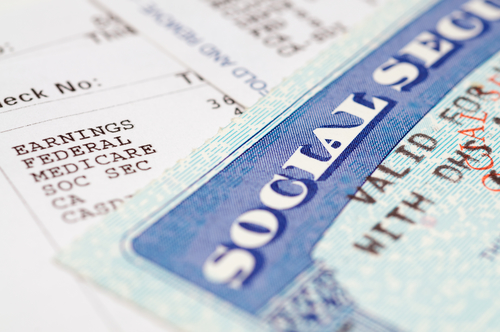
 Posted By


 Posted By