Victory Lap

Once you achieve Financial Independence, you may choose to leave salaried employment but with decades of vibrant life ahead, it’s too soon to do nothing. The new stage of life between traditional employment and Full Retirement we call Victory Lap, or Victory Lap Retirement (also the title of a new book to be published in August 2016. You can pre-order now at VictoryLapRetirement.com). You may choose to start a business, go back to school or launch an Encore Act or Legacy Career. Perhaps you become a free agent, consultant, freelance writer or to change careers and re-enter the corporate world or government.

Life after Employment: what’s your Encore act?

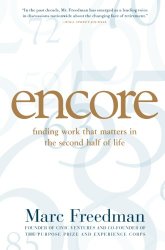
Encorecover

By Jonathan Chevreau

I’ve been reading several books on Encore Careers, second acts and the like. A few weeks ago, we reviewed Marc Freedman’s The Big Shift. Over a one-week break in Florida, I read Freedman’s earlier book, Encore, subtitled Finding Work That Matters In the Second Half of Life.

Last year, on our sister site, we also reviewed Stephen Pollan’s 2003 book on the same topic:  Second Acts.

All these books start with the premise that the baby boom generation may end up living a lot longer than they may have once imagined, which goes double for their own children and the generations coming after them.

Work that matters

If you believe that living to 100 is a distinct possibility rather than a one-in-a-thousand outlier event, then it follows that financial planning needs to take these extra years into account. Continue Reading…
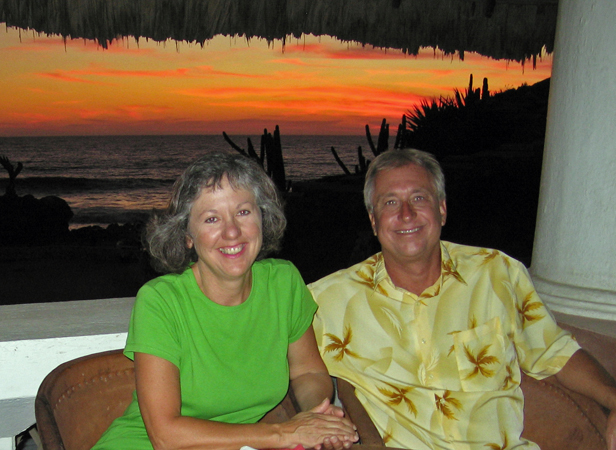

At age 62, couple celebrating 25 years of Financial Independence

billy-akaisha-puerto-escondido
Billy and Akaisha Kaderli

By Billy and Akaisha Kaderli,

Special to the Financial Independence Hub

At the age of 62, we are beginning our 25th year of financial independence. That is quite a feat!

From the beaches on Nevis, West Indies, to the shores of Phuket, Thailand we have travelled extensively through these decades, and what a ride it’s been!

Young and strong in those early years, we were willing and able to tackle just about anything. Now we tend to be a bit more cautious but we’re not letting up. We still climb into the backs of pickup trucks, ride the chicken buses and soak in volcanic hot pools. The time has passed quickly from when we were the youngest, grayless couple in a group of retirees, to now where we blend in with the retiree crowd.

Still, no one can take away the dance we danced and we are filled with gratitude for all the miles and smiles. Continue Reading…

Weekly wrap: a Financial Independence Index, Death by Golf, Big OAS and more

silhouette of a man swingingIt seems our labours here at the Financial Independence Hub have not been totally in vain. At the Globe & Mail, Ian McGugan has introduced something he calls The Financial Independence Index, which he says was inspired by Scott Burns’ Financial Freedom Index. McGugan — who was the founding editor of MoneySense magazine — says his index is not about retirement readiness but about financial independence and estimates couples need $4.5 million to be truly findependent (of course he doesn’t use that term, yet). Ian, if you’re reading this, why not shorten it to the “Findex?,” a term coined by certified financial planner Fred Kirby in a little inside joke with me. You can find Fred’s coordinates at the Getting Help section here at the Hub.

Whether it’s Findependence, Retirement or Unretirement, an article in Inc. — Death by Golf — argues Retirement is a bankrupt industrial age idea anyway. The article introduces the term Conation, which it defines as “Committed Movement in a Purposeful Direction.”

At Retirement Redux, Sheryl Smolkin asks the intriguing question whether the government should expand OAS instead of CPP. Or go to the original article here. In the past, proposals to expand the Canada Pension Plan have been referred to as “Big CPP” so I guess we should refer to an expanded OAS program as “Big OAS.”  You heard the term first here at the Hub!

Do you own too many mutual funds? Hard to top the US$1.5 million spread among 35 mutual funds mentioned by Roger Wohlner in his blog at the Chicago Financial Planner. Continue Reading…

Twice as many retirees now rely on home equity: Fidelity survey

By Jonathan Chevreau

House made of money in handSeniors are now twice as likely  to rely on their home equity to fund their retirement than before the financial crisis, says a Fidelity retirement survey. They’re also more likely to work in retirement, provided they can find employment.

Since 2005, the number of Canadian retirees relying on home equity to fund retirement has more than doubled from 14% to 36%, says the survey, commissioned by Fidelity Investments Canada ULC.

Conducted by The Strategic Counsel, the 10th Fidelity Canadian Retirement Survey of retirees or workers 45 or older also finds:

•  Since the financial crisis, the number of retirees saying it has been more difficult than expected to retire has dropped from 28% in 2009 to 20% in 2014

• More pre-retirees expect to work full or part-time in retirement (62% in 2014 compared with 55% in 2005) Continue Reading…

Longevity changes everything — why you should think twice about Early Retirement

Here’s my latest MoneySense blog, entitled Why you should re-think Early Retirement. This is a topic I’ve been researching for several months, going back to some blogs I wrote on Mark Venning’s ChangeRangers.com, which challenges readers to “envision the promise of longevity.” He also sensibly counsels that we should “plan for Longevity, not for Retirement.”

As you can see by clicking through to the blog (also reproduced below), some of this message was articulated in a speech delivered Wednesday evening at the Financial Show, and which I also gave Monday night at the Port Credit chapter of Toastmasters.

By Jonathan Chevreau

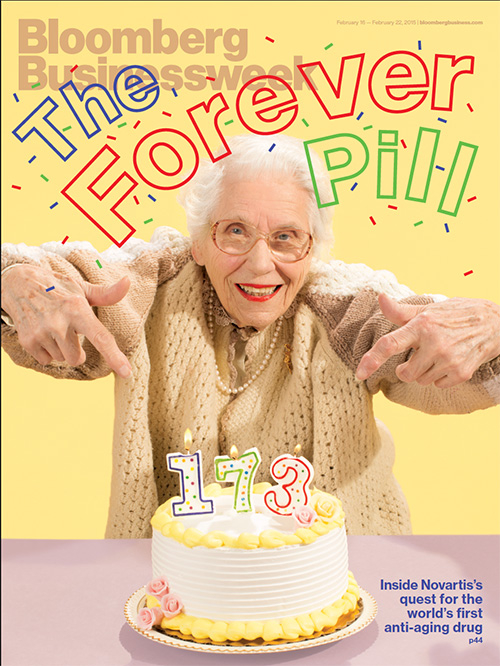
foreverpillcover

I recently delivered a talk about how longevity changes everything. I began by showing the front cover of the latest Bloomberg Business magazine, which shows a woman celebrating her 173rd birthday. Continue Reading…