Victory Lap

Once you achieve Financial Independence, you may choose to leave salaried employment but with decades of vibrant life ahead, it’s too soon to do nothing. The new stage of life between traditional employment and Full Retirement we call Victory Lap, or Victory Lap Retirement (also the title of a new book to be published in August 2016. You can pre-order now at VictoryLapRetirement.com). You may choose to start a business, go back to school or launch an Encore Act or Legacy Career. Perhaps you become a free agent, consultant, freelance writer or to change careers and re-enter the corporate world or government.

Tax season doesn’t have to be taxing with proper and timely planning

Image from Pexels

By Aurèle Courcelles

Special to Financial Independence Hub

Tax time can be overwhelming, but a financial advisor can help simplify the process and ensure you’re maximizing all the credits and deductions available to you and your family. While financial planning should take place year-round, there are important considerations, strategies and dates that should be top of mind at year-end to help reduce your taxes and keep more of your hard-earned money in your pocket.


Year-End Tax Planning Checklist for Individuals 


      • Saving for retirement with a Retirement Savings Plan (RSP)

Most of us know making an RSP contribution is generally a sound decision if you have unused room available. Once you’ve decided to contribute settled on how much, you should then determine whether it’s best to contribute to your own plan or a spousal RSP for your spouse or common-law partner. Making a spousal contribution before the end of the year rather than waiting until the first 60 days of next year could affect who pays tax on eventual withdrawals.

  • Planning your retirement income

Speak with a financial advisor to discuss retirement income options, including basing your Retirement Income Fund (RIF) withdrawals on the age of your younger spouse or common-law partner. Determine if you qualify for the pension income credit, which may allow you to significantly reduce federal taxes (provincial credit amounts vary) on the first $2,000 of your pension or RIF income. If you have or will reach age 71 this year and have unused RSP contribution room, you should make your RSP contribution by December 31 or you may lose that option.

  • Tax-Free Savings Accounts (TFSAs)

You should always consider contributing to a TFSA to take advantage of tax-sheltered savings. The contribution limit for 2023 is $6,500 and rising to $7,000 for next year, but don’t forget about any unused contribution room that is carried forward from year to year. Gifting money to your spouse or common-law partner to make their contribution can also provide additional tax advantages. The sooner you contribute to a TFSA, the faster your investments can grow tax-free. Meanwhile, if a TFSA withdrawal is in your plans, doing so before year-end rather than early in the new year gives you back your contribution room a lot sooner.

  • Registered Education Savings Plans (RESPs)

Contributions to an RESP entitle you to a Canada Education Savings Grant (CESG) of up to $500 per year, or $1,000 if there is unused grant room from previous years. If you’ve accumulated even more than $1,000 of room, making an RESP contribution prior to year-end will allow for more combined grants this year and next. Speak with a financial advisor to help you maximize your CESG.

  • Home Buyers’ Plan (HBP)

The Home Buyers’ Plan allows you to borrow funds from your RSP to purchase your first home, so long as you purchase the home before October 1 of the year following the withdrawal and all withdrawals are made in the same calendar year. Repayment of the withdrawals begins two years following the year of the withdrawal. Delaying your withdrawal to next year rather than late this year will allow more time to purchase a new home, make more withdrawals if necessary and delay the start of required repayments.

  • Considering taxes when realizing gains or losses on your investments

If you have or will realize capital gains in 2023, consider triggering capital losses prior to the end of the year. Losses can offset gains, reducing any taxes that could otherwise be associated with those gains.  If your 2023 capital losses exceed your capital gains, they can be applied against gains in any of the previous three years to help you recover taxes paid on those gains.  Speak to your financial advisor prior to repurchasing any investment you sold at a loss, as doing so too quickly puts the loss at risk of being denied.

Key Strategies to Enhance Charitable Giving

December is synonymous with the season of giving, but many Canadians miss out on giving in the most tax-efficient way. Whether it’s a continuation of donations made throughout the year or an initial donation, there are several strategies to consider when donating prior to year-end.

  • Maximize the value of donation tax credits

The first $200 of donations you claim on your tax return receive a lower donation tax credit rate than donations claimed above $200 (except in Alberta). To limit donations subject to the lower $200 credit rate outside Alberta, consider bringing forward donations planned early in the new year and make them prior to December 31st.  Not only will the charity get the funds sooner, but you’ll get the tax benefit a full year earlier. Continue Reading…

Retired Money: Some upsides of inflation for retirees

Image by istock

My latest MoneySense Retired Money column looks at one unexpected upside of inflation; the government’s indexing to inflation of tax brackets, retirement savings limits and OAS thresholds. You can find the full column by clicking on the link here: Inflation a scourge for retirees? Ottawa’s silver lining(s)

TFSA room rises to $7,000

Fans of the popular Tax-free Savings Account (TFSA) will experience this as early as Jan. 1, 2024, when the annual maximum contribution room rises to $7,000, up from $6,500 in 2023. As of January 2024, someone who has never before contributed to a TFSA now has cumulative contribution room of $95,000.

In November Kyle Prevost’s weekly Making Sense of the Markets column included an item titled Make inflation work for you.  “We shouldn’t ignore or discount the more advantageous aspects of inflation, such as increased government benefits and more contribution  room in our RRSPs and TFSAs.”

Prevost linked to a spreadsheet posted on X (formerly Twitter) by financial advisor Aaron Hector, posted late in October, after the CPI announcement that Ottawa’s official inflation indexing rate for 2024 would be a sizeable 4.7%. While below 2023’s 6.3% indexation rate, it’s well above 2022’s 2.4% and 2021’s 1%.

Also quoted in the MoneySense column is Matthew Ardrey, wealth advisor with Toronto-based TriDelta Financial. “One of the main benefits is paying less taxes.” Income tax brackets increase with inflation each year. For example, in 2021 the lowest tax bracket in Ontario ended at $45,142 of income. “Starting in 2024, this lowest tax bracket now ends at $51,446. This is a 14% increase over just a few years.” Continue Reading…

Becoming an Entrepreneur in Retirement: Is it for You?

By Devin Partida

Special to Financial Independence Hub

With people living longer than ever, retirement now makes up a significant portion of our lives. Could it be the perfect time to start a business? Here are the pros and cons of becoming an entrepreneur in your golden years.

Important Considerations

Entrepreneurship can enrich your life in immeasurable ways. However, before launching your own business, you should consider the following challenges.

Financial Risk

According to a 2018 study by Harvard Business Review, older entrepreneurs tend to run more successful companies. The businesses that financially thrive in their first five years are, on average, started by 45-year-old entrepreneurs, probably due to this cohort’s experience and willingness to take risks.

Although the odds may be in your favor, it’s still important to consider whether you have the capital to run a business — and to pick up the pieces if it doesn’t work out. Over 80% of small businesses fail because of cash flow problems. Decide how much money you’re willing to invest and potentially lose in your new venture.

Time Commitment

How do you envision retirement? If you’re considering entrepreneurship, you’re probably not the type of person who wants to lounge around sipping drinks on a beach.

If you do want a more relaxed retirement, however, you might find the time commitment required to run a business overwhelming. Entrepreneurs often put in long days to get their businesses up and running. Even after your company gets off the ground, you may find yourself having to work longer hours than you were expecting.

Of course, as a business owner, you also have a lot of sway over how big you want to let your venture get. If things start getting out of hand, you can always scale back.

Social Security Deductions

If you’re younger than full retirement age in the U.S. — which can range from 66-67, depending on when you were born — becoming an entrepreneur during retirement can affect your Social Security benefits.

Before you reach full retirement age, the IRS will deduct one dollar from your benefit payments for every two dollars you earn above $21,240. The year you reach full retirement age, the IRS will subtract one dollar from your Social Security benefits for every three dollars you earn above $56,520.

Consider whether these fees will impact your ability to retire comfortably. You might find you’re earning more money from your business than you would from Social Security anyway, so the deductions may be of little consequence.

Benefits of Entrepreneurship

Although it may be challenging, starting your own business will likely enrich your life. Here are some ways it could positively affect your retirement: Continue Reading…

Movements to Minimize Taxable Income in Retirement Accounts

Money management is essential to help your savings thrive and benefit your [U.S.] retirement accounts. Discover movements to minimize taxable income.

By Dan Coconate

Special to Financial Independence Hub

Navigating the path to a financially secure retirement can often seem like navigating a labyrinth with no exit. With so many potential strategies and considerations, it’s easy to feel overwhelmed. However, efficient tax management is key to unlocking a financially comfortable retirement.

By adeptly managing your taxable income, particularly through individual retirement accounts (IRAs) [or in Canada, RRSPs], you can pave a clear path through the complexities of retirement planning, positioning yourself for a secure, worry-free future. Understanding the necessary movements to minimize taxable income in a retirement account will help you optimize and maximize your retirement savings.

Contribute to a Traditional IRA

Investing in a traditional IRA can be a smart move to effectively reduce your taxable income. Your contributions may be tax deductible, depending on your income and whether your work’s retirement plan also covers your spouse.

The more you contribute to your traditional IRA within the IRS contribution limits, the more you can reduce your taxable income for the year.

Consider a Roth IRA Conversion

A Roth IRA conversion is a strategic financial decision that can secure tax-free income during retirement. When you convert from a traditional IRA to a Roth IRA, you pay taxes on the converted amount in the year of conversion. [Roth IRAs are the U.S. equivalent of Canada’s Tax-Free Savings Accounts or TFSAs] Continue Reading…

Harnessing Findependence: The Power of Podcasts

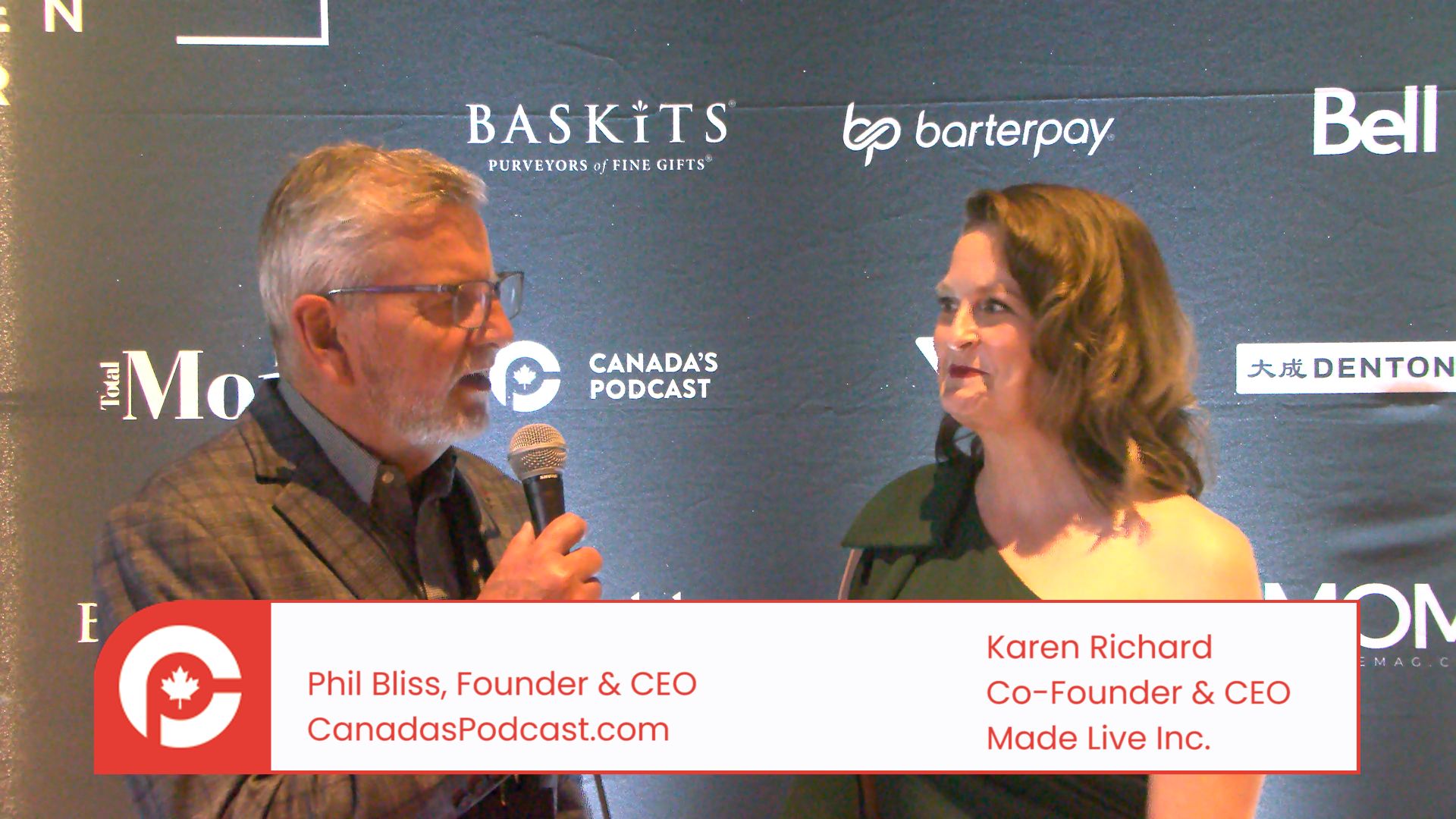
Jon Chevreau and Canada Podcasts’ Philip Bliss:  https://canadaspodcast.com/findependencehub/

By Philip Bliss

Special to Financial Independence Hub

In an age where knowledge is easily accessible, podcasts have emerged as one of the most potent tools for personal development.

Findependence [aka Financial Independence] is a goal many aspire to, but achieving it often requires a solid understanding of money management, investments, and entrepreneurship. This is where podcasts shine, providing a wealth of knowledge and inspiration that can be instrumental in your journey towards financial freedom.

This new tool is particularly valuable in the fast-paced world of entrepreneurship, where the quest for knowledge and inspiration is ceaseless. In this digital age, Canada’s Podcast has emerged as a game-changer, becoming a cornerstone for Canadian entrepreneurial development and a key to enabling Findependence. Let’s explore why these audio/video gems are so critical to the journey of every aspiring entrepreneur.

1.) Education at your Fingertips

Podcasts offer a wide array of financial knowledge, from personal finance basics to advanced investment strategies. By tuning into podcasts, you can learn about budgeting, saving, and investing while going about your daily routine. Whether you’re commuting, exercising, or doing household chores, these audio programs allow you to convert idle time into a valuable learning opportunity.

Some popular finance podcasts like “The Dave Ramsey Show” and “BiggerPockets Money” offer practical advice on budgeting, getting out of debt, and achieving financial freedom. These shows are like having a personal finance mentor guiding you through the intricacies of money management.

2.) Diverse Perspectives and Ideas

Findependence is not a one-size-fits-all goal. Everyone’s journey is unique, and podcasts reflect this diversity. Podcast hosts often bring their personal experiences and perspectives to the table, offering a rich tapestry of ideas and approaches to achieving financial success.

You can listen to real-life stories of people who have achieved findependence, learning from their triumphs and pitfalls. This diversity of experiences can help you tailor your approach to fit your own circumstances and goals.

3.) Investing Insights

For those looking to grow their wealth through investments, podcasts can be a treasure trove of valuable insights. Whether you’re interested in stocks, real estate, cryptocurrencies, or other investment avenues, there’s likely a podcast that caters to your interests.

Podcasts like “Invest Like the Best” and “The Motley Fool” provide deep dives into various investment strategies, market analysis, and expert interviews. By regularly listening to such shows, you can stay updated on market trends and make informed investment decisions.

4.) Motivation and Inspiration

Findependence can be a long and challenging journey. At times, you may find yourself discouraged or unsure about your financial decisions. Podcasts can serve as a source of motivation and inspiration, reminding you of the benefits of findependence and keeping your goals in focus.

Many findependence podcasts share stories of people who have achieved their financial goals against all odds. These tales of perseverance and success can fuel your determination and keep you on track, even when the path seems daunting.

5.) Building a Supportive Community

Podcasts often come with dedicated communities. These communities provide a space to discuss financial topics, share experiences, and seek advice from like-minded individuals. Engaging with these communities can be a valuable source of support as you work towards findependence. Continue Reading…