Victory Lap

Once you achieve Financial Independence, you may choose to leave salaried employment but with decades of vibrant life ahead, it’s too soon to do nothing. The new stage of life between traditional employment and Full Retirement we call Victory Lap, or Victory Lap Retirement (also the title of a new book to be published in August 2016. You can pre-order now at VictoryLapRetirement.com). You may choose to start a business, go back to school or launch an Encore Act or Legacy Career. Perhaps you become a free agent, consultant, freelance writer or to change careers and re-enter the corporate world or government.

An answer to “Can you help me with my investments?”

By Michael J. Wiener

Special to Financial Independence Hub

Occasionally, a friend or family member asks for help with their investments.  Whether or not I can help depends on many factors, and this article is my attempt to gather my thoughts for the common case where the person asking is dissatisfied with their bank or other seller of expensive mutual funds or segregated funds.  I’ve written this as though I’m speaking directly to someone who wants help, and I’ve added some details to an otherwise general discussion for concreteness.

Assessing the situation

I’ve taken a look at your portfolio.  You’ve got $600,000 invested, 60% in stocks, and 40% in bonds.  You pay $12,000 per year ($1000/month) in fees that were technically disclosed to you in some deliberately confusing documents, but you didn’t know that before I told you.  These fees are roughly half for the poor financial advice you’re getting, and half for running the poor mutual funds you own.

It’s pretty easy for a financial advisor to put your savings into some mutual funds, so the $500 per month you’re paying for financial advice should include some advice on life goals, taxes, insurance, and other financial areas, all specific to your particular circumstances.  Instead, when you talk to your advisor, he or she focuses on trying to get you to invest more money or tries to talk you out of withdrawing from your investments.

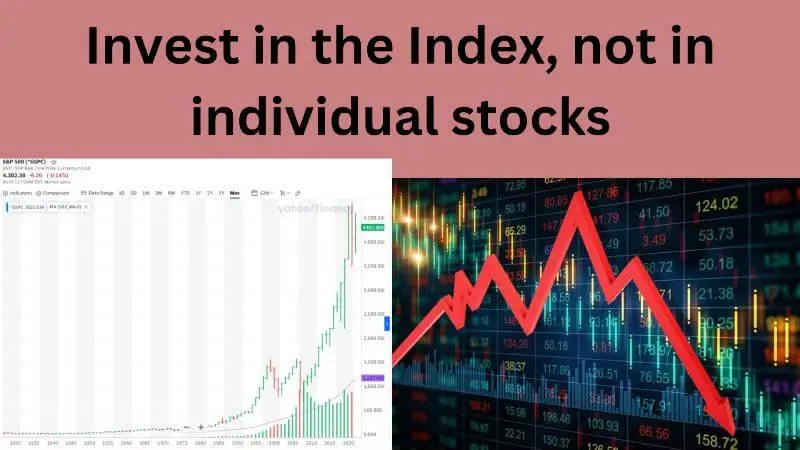
The mutual funds you own are called closet index funds.  An index is a list of all stocks or bonds in a given market.  An index fund is a fund that owns all the stocks or bonds in that index.  The advantage of index funds is that they don’t require any expensive professional management to choose stocks or bonds, so they can charge low fees.  Vanguard Canada has index funds that would cost you only $120 per month.  Your mutual funds are just pretending to be different from an index fund, but they charge you $500 per month to manage them on top of the other $500 per month for the poor financial advice you’re getting.

Other approaches

Before looking at whether I can help you with your investments, it’s worth looking at other options.  There are organizations that take their duty to their clients more seriously than the mutual fund sales team you have now. Continue Reading…

Is Fat FIRE realistic?

By Mark Seed, myownadvisor

Special to Financial Independence Hub


Weekend Reading - is Fat FIRE Realistic
Image Source: Pexels, Gantas Vaičiulėnas

Is Fat FIRE realistic?

Before my answer to that question, for those outside the personal finance, devout FIRE (Financial Independence, Retire Early) bubble, a primer based on what I know …

What is FIRE?

I would like to provide a universal definition from the personal finance community today but there isn’t one. There are, however, some general thoughts/themes when it comes to FIRE and those who follow the philosophy around it:

  • Financial Independence, Retire Early (FIRE) is a movement related to extreme/aggressive savings rates and investment tactics that allow individuals to retire sooner than potentially any traditional budgeting or retirement planning approach might permit.
  • When it comes to savings rates: in some circles, by saving up to 70% of your annual income, some FIRE enthusiasts aim to retire early (and live off small portfolio withdrawals from their accumulated assets).
  • When it comes to portfolio withdrawals: in some circles, by withdrawing a small % of the accumulated assets (e.g., 4% of the portfolio), said FIRE enthusiasts may expect their portfolio to last a lifetime without fear of running out of money.

The FIRE movement – new term, old concept

The FIRE movement takes direct aim at some traditional retirement ages, such as age 60, 65 or even later on but there is no consensus on what is / is not a retirement age, of course.

The theory and movement goes: by dedicating the majority of your after-tax income to savings and specifically saving for retirement, well, you could “retire” sooner than most. Probably true.

From this perspective, FIRE is not a new concept even though the moniker is somewhat newish.

I’ve written multiple times about the FIRE movement and my thoughts on FIRE.

I’ll link to those thoughts here for additional reading as well.

I’m hardly anti-FIRE; this movement/approach/philosophy has always resonated how I live for the most part:

  • To live within your means or slightly below what you make as income.
  • To save early and often.
  • To avoid long-term debt that is not used for wealth generation.
  • To optimize your investing (i.e., keep your costs low and diversified, and avoid money managers).

Several FIRE retirement variations have emerged over the years to frame a particular lifestyle expectation that could come with FIRE. I’ll rank them in order of cashflow significance although these terms also vary based on the FIRE enthusiast you’re talking to:

1. Lean FIRE

As the first word suggests, lean is a strict adherence to a minimalist lifestyle. Many Lean FIRE adherents live on $25,000 per year, or less per year. Here are a few examples:

Jacob Fisker – Early Retirement Extreme. How he used to live on just $7,000 per year. Not a typo.

There is Jessica from Financial Mechanic, who spent less than $20,000 in 2020.

In more recent years, A Purple Life, wrote about a nomadic life earlier this year, living off less than $25K USD.

These are certainly jaw-dropping low numbers …

2. Barista FIRE

Not that you have to become a barista, rather, the term is used to highlight a combination of work-life balance that can be juggled – a form of semi-retirement if you will.

Barista FIRE is a type of semi-retirement whereby you can consider part-time work or work on your own terms, and still enjoy the benefits of some income and workplace benefits. (The term was coined as such since Starbucks offers benefits to part-time workers … something to consider for your semi-retirement plans!?) Continue Reading…

Achieve Financial Independence with a Franchise

By Joel Bissitt

(Sponsored Post)

Are you looking for a smart and easy way to achieve financial independence?

Investing in a franchise may be the perfect solution. Franchises offer an established system with great potential for success and are a great way to get into the world of business ownership.

With the proper support, a franchise can help you reach your financial goals and provide a secure future for you and your family. This blog post will discuss why investing in a franchise is a great way to achieve financial independence.

The Benefits of Investing in a Franchise

Investing in a franchise is a smart way to achieve financial independence because it has many benefits. Firstly, you will have a low-risk, high-reward investment. Franchisors provide an established business model that has been proven to work. You also have access to resources and support from the franchisor, including training, marketing, and ongoing assistance. Building a resilient business with a proven track record increases your chances of success. Finding franchise opportunities is relatively easy, as many franchisors are actively looking for new investors.

●     Low-Risk, High-Reward Investment

Investing in a franchise is a low-risk, high-reward investment opportunity. Franchisees benefit from a proven business model, an established customer base, and ongoing support from the franchisor. The initial investment required to start a franchise may seem high, but the risk is significantly lower compared to starting a business from scratch.

●     Established Business Model

The established business model is one of the biggest advantages of investing in a franchise. This means the franchise has already figured out what works and what doesn’t, saving you the time, money, and effort required to establish a business from scratch. Franchisors have honed their processes and systems to create a winning formula that franchisees can easily replicate. This saves you time and effort and ensures that you start your business on a solid foundation with a proven track record of success.

●     Access to Resources and Support

Investing in a franchise comes with the unique advantage of accessing a network of resources and support. Franchisors provide extensive training and support to ensure franchisees have the necessary knowledge and skills to run their businesses effectively. Continue Reading…

My 5 picks for classic books on Financial Independence and Retirement

A book discovery service called Shepherd.com has just published a multi-book review by me about my recommendations for some of the best all-time books on Financial Independence and Retirement. You can find the full review by clicking here. Shepherd.com is a year old; an alternative to older services like Goodreads, it helps readers and authors share and discover books in various genres.

Picking just five books is of course a tricky exercise and having seen this published late in July, I soon thought of several other books I might have included as well or instead, notably David Chilton’s classic The Wealthy Barber. But it’s safe to say that with more than 2 million copies sold, that would not exactly be a ground-breaking new recommendation.

Chilton of course created a monster with the genre of the financial novel: a hybrid that combines a story and characters with an overlay of enduring financial insights and strategies for achieving financial freedom. He has spawned many imitators, such as Robert Gignac’s Rich is a State of Mind and my own Findependence Day, which is also flagged in the Shepherd reviews.

For this exercise, however, I opted to go with straight non-fiction financial books. My thinking was what books influenced me in my own journey to Semi-Retirement and Financial Independence, or the so-called FIRE movement, for Financial Independence Retire Early.

Here are the 5 books I did pick: go to the original link to get my analysis and reasons for each pick. Below I offer just a line each but each explanation is closer to 400 words so be sure to click on the original Shepherd link to get the full take on each. The five titles below each include hypertext to the Shepherd book store where you can order directly.

1.)

Your Money or Your Life: 9 Steps to Transforming Your Relationship with Money and Achieving Financial Independence

By Vicki Robin & Joe Dominguez

Probably first for most other proponents of the FIRE (Financial Independence Retire Early) movement is this classic, subtitled Transforming Your Relationship with Money and Achieving Financial Independence.


2.)

Enough: True Measures of Money, Business, and Life

By John C. Bogle

The late Jack Bogle, founder of Vanguard Group, published this excellent book in 2009. To me, the title speaks for itself. The sooner you realize you have “enough,” the sooner you can quit the rat race.


3.)

How to Retire Happy, Wild, and Free: Retirement Wisdom That You Won’t Get from Your Financial Advisor

By Ernie J. Zelinski

Edmonton-based author Ernie Zelinski is probably best known for this self-published international bestseller and several others, all on the theme of escaping from full-time employment as soon as possible.


4.)

Pensionize Your Nest Egg: How to Use Product Allocation to Create a Guaranteed Income for Life

By Moshe A. Milevsky, Alexandra C. Macqueen

This book by the famed Finance professor and a certified financial planner caters to anxious would-be retirees who do not have the luxury of having an inflation-indexed, guaranteed-for-life Defined Benefit pension plan offered by an employer.


5.)

Work Optional: Retire Early the Non-Penny-Pinching Way

By Tanja Hester

The phrase “Work Optional” describes the state of being financially independent enough that you don’t have to work for money anymore, but nevertheless choose to for reasons like having a purpose, or structure. As the subtitle suggests, it’s about retiring early without having to be a miserly penny pincher.

A Financial Guide for the Sandwich Generation: Navigating the Challenges of Caregiving

By Aman Raina, MBA

 (Special to Financial Independence Hub)

As an investment coach, my job is to educate and empower people with the knowledge to make informed investment decisions and set them on their journey towards financial freedom. However, over the last several years, I’ve found myself on a unique financial journey of my own.

Several years ago, my father was diagnosed with dementia. As his ability to manage his and my mother’s financial affairs began to diminish, I stepped into the role of their primary caregiver. This responsibility, layered on top of raising my two young boys, growing my investment coaching practice, and navigating a global health emergency, placed me firmly within the Sandwich Generation.

The Sandwich Generation refers to those caught in the middle of caregiving, balancing the needs of aging parents with the needs of their own families. According to a report by the Pew Research Center, nearly half (47%) of U.S. adults in their 40s and 50s fall into the Sandwich Generation. They are responsible for a parent who is 65 or older and either raising a young child or financially supporting a grown child.

In Canada, according to a 2020 report from Statistics Canada, around one in four Canadians aged 15 and older (7.8 million people) provided care to a family member or friend with a long-term health condition, a disability, or problems associated with aging. However, these figures likely underestimate the true prevalence of caregiving, especially in the context of the COVID-19 pandemic, which has increased the demand for home care.

With an aging population, these percentages are predicted to increase in the coming years, further magnifying the importance of addressing the challenges faced by the Sandwich Generation and all caregivers. It has been and continues to be an experience that has been for me mentally, emotionally, and physically stressful, filled with difficult conversations, worries about the future, and moments of feeling overwhelmed.

Despite my financial background, there were times when the responsibilities felt like a juggling act. The multitude of financial decisions to be made, from managing cash flow and long-term care planning for my parents to ensuring the financial stability of my own family, felt daunting. If I was experiencing this, I shudder to think what others who were not as well-versed financially were trying to cope?

Support from Caregiver Groups

In seeking support, I turned to various caregiver groups. It quickly became apparent that many others were grappling with the same challenges. They, too, were struggling to tackle the unique financial demands of being part of the Sandwich Generation.

From my experience, I found the core areas caregivers need to focus on revolved around these critical financial issues: Continue Reading…