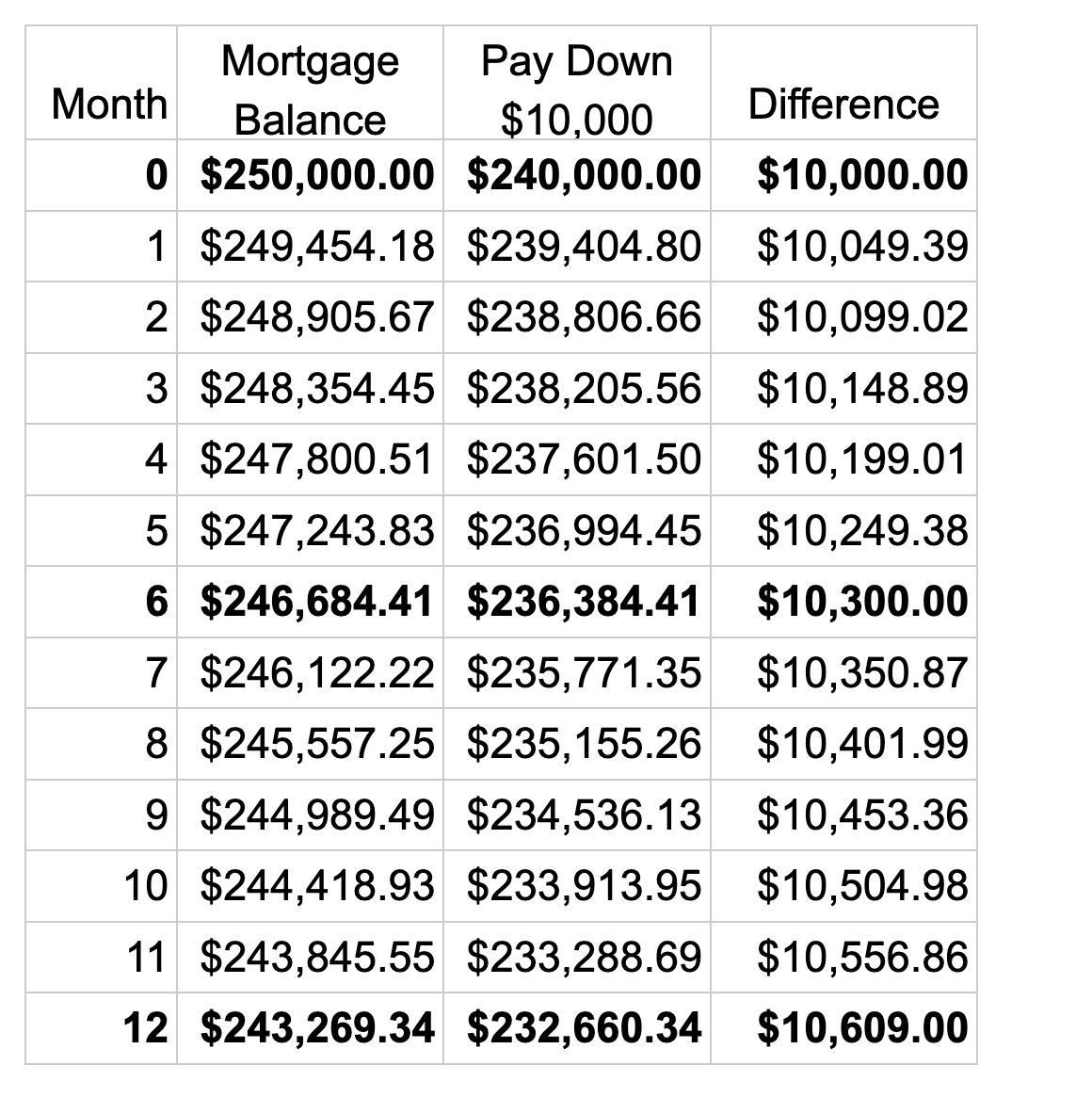
As Didi says in the novel (Findependence Day), “There’s no point climbing the Tower of Wealth when you’re still mired in the basement of debt.” If you owe credit-card debt still charging an usurous 20% per annum, forget about building wealth: focus on eliminating that debt. And once done, focus on paying off your mortgage. As Theo says in the novel, “The foundation of financial independence is a paid-for house.”
In the realm of personal finance, understanding where your money goes is essential for financial success. Tracking expenses provides valuable insights into spending habits and empowers individuals to align their finances with their goals. Whether you’re a seasoned budgeter or just starting your financial journey, mastering expense management is key.
Most people have multiple financial institutions, credit cards, store cards, etc., making expense tracking complicated. It’s also easy to lose track of automatic subscriptions that renew on a monthly basis, like that local gym you joined but have got out of the habit of using.
Luckily, there are tools available to simplify our ever-increasing complex financial lives. For many years Mint was a popular budgeting tool owned by Intuit. But as of March 23, 2024, Mint is being decommissioned, leaving many people searching for a free replacement.
One tool that has recently launched as a replacement for Mint in Canada is Wilbur, a free budgeting app that automatically connects to your bank account. In addition, Wilbur allows people (at no obligation) to answer surveys for a little extra side cash.
The personal finance experts at Wilbur have put together the following series of tips to help people get a handle on their finances.
1.) Assess Your Accounts
Begin by reviewing your financial accounts, including bank statements and credit card transactions. Take note of recurring expenses and identify patterns in your spending. Understanding your financial habits lays the groundwork for effective expense tracking. Wilbur has a handy feature in that it automatically identifies those recurring subscriptions, giving you the necessarily information to plan for the payment or simply cancel it to save money!
2.) Categorize Your Expenses
Organize your expenses into categories to gain clarity on your spending habits. Categories may include essentials like housing and utilities, as well as discretionary spending on entertainment and dining out. Utilize features in apps like Wilbur to automatically categorize transactions and simplify the process.
3.) Craft Your Budget with Wilbur
Once you’ve categorized your expenses, create a budget that reflects your financial priorities. Allocate funds for necessities, wants, and savings/debt repayment using the 50/30/20 budgeting method. Use the budgeting app to track expenses and set budgeting goals for each expense category.
4.) Consider a Side Gig
If you find you’re not making ends meet, find a side hustle. A survey by H&R Block in March 2023 found that 28% of Canadians had some kind of side gig. Side hustles are found everywhere, even in the Wilbur budgeting app. Wilbur offers the opportunity to earn between $1 and $5 by answering a survey, simply by clicking a link from within the app. It’s a convenient way to monetize a spare 10 minutes of your day. Clearly not going to get rich off it, but in today’s inflationary times, every little bit counts. Continue Reading…
Years of capital appreciation due to decades of compounding and proper money management has paid handsomely in the growth of our net worth and financial wellbeing. Now, 33 years later, do we still need to be diligent in monitoring our spending and outflows, or is now the time to seize the day and go first class? Eat in trendy restaurants, be seen and show off our wealth?
This is definitely not our style …
Flying under the radar living abohemian lifestyle is more like us, and we’re still herelivin’ the dream.
In fact, some family members and friends consider us “poor” as compared to their consumer-based standards. That’s fine with us. We have not owned a car for years and we tend to live in foreign countries where we can geographically arbitrage value for money spent. We prefer experiencing cultures and cuisine as compared to a shiny new car, club membership and debt payments.
We are just trying to make it to Friday
There are many ways to live a life, and our choice is unique to us. It’s a lifestyle not a vacation and our approach is one that we created based on our personal values and interests.
We now use more private drivers than chicken buses, stay in pricier hotels (not always a better choice), and we’ve set up a stable, semi-permanent home base in Chapala, Mexico.
We donate freely, giving our time and money, helping others less fortunate, as well as teaching people better money management and life skills.
There are needs everywhere and we do our best to contribute. As always, we want results rather than throwing money at a problem to feel good and brag about it.
Checking back in with the 4% rule, we took a look at what that number would be for us today and both of us asked “How would increasing our spending to that amount change our lives?” Granted, it’s not Bill Gates’ level, but how much more can we eat, drink, travel, be merry and give away?
But that’s us.
What about you?
Is it time for you to flip the switch from saving and being frugal for your future – to enjoying a higher standard of living and giving back to the community?
Below are a couple of suggestions which might clarify this question for you.
Know where you are
Life circumstances change.
None of us know our exit date from this planet. As each day passes, we are one day closer to the end of our adventure. But you could check some actuarial tables to see where you stand in general. We are not saying throw caution to the wind and start “X-ing” out days on your calendar. Rather, utilize this bit of information to get a clearer picture of where you might be.
Imagine if you knew your Date of Death. Would that change your spending habits or the way you live?
Other thoughts
Have you or your spouse had an awakening in regards to health? Do you want to open a foundation that produces results and wealth? Begin a new business or leave a particularly handsome legacy for your grandchildren? Continue Reading…
Exploring the critical role of budgeting in debt reduction and the journey to financial independence, we’ve gathered insights from founders and CEOs among others.
From the disciplined approach of discipline and frugality through budgeting to the strategic perspective of budgeting and debt management for independence, here are the diverse experiences of ten professionals who’ve successfully navigated their finances.
Discipline and Frugality
Debt Reduction and Savings
A Financial Compass
Fiscal Success
Navigating Finances
Clarity and Control
Financial Stability and Empowerment
A Roadmap to Financial Freedom
Enhanced Financial Control
Debt Management for Independence
Discipline and Frugality
Being in a financial crisis is not uncommon for the average person; we have all seen people in our lives suffer under the massive weight of debt and how it subsequently affects our quality of life. To get out of debt, you need to be disciplined and frugal. Following a budget needs to become a regular part of your life so that you can achieve financial freedom sooner rather than later.
When you budget, following a rule like 50/30/20, it helps you manage your income in a way that reduces your debt and allows you to live a fulfilled life while still preparing for any unexpected hiccups in the future.
When you budget following a ratio rule, you need to be flexible with the money allocated for “wants,” i.e., the 30 in the ratio. This means cutting out anything in your life that isn’t necessary—such as buying the extra coffee, eating takeout daily, or subscribing to services that you don’t use.
So, don’t allow yourself to fall into the lifestyle-creep trap. By cutting these non-essentials out, you can funnel the extra money into your essentials and debt repayments—which loosens the burden for you and your future.
That being said, you don’t have to make yourself burnt out from budgeting; it’s okay to treat yourself and splurge a little as a reward for doing well with your financial goals. You just need to know your limits and where to draw the line. — Zach Robbins, Founder, Loanfolk
Debt Reduction and Savings
Budgeting is hugely important for reducing debt and achieving financial independence because it can help you determine how much you can contribute each paycheck toward these goals. For instance, with a budget, you can learn exactly how much you have left over each month after essential expenses, such as rent, groceries, and electricity. Once you have this number, you can allocate a portion of your remaining income to reducing debt and savings.
For me, personally, budgeting helps me realize when I’ve overspent in certain areas and need to rein it in so that I will have enough to put towards savings or debt payoff. — Meredith Lepore, Content Strategist/Editor/Writer, Credello
A Financial Compass
Budgeting plays a crucial role in reducing debt and achieving financial independence. By ensuring you spend within your means, it acts as a financial compass.
For instance, when I faced a mounting credit card debt, which mirrored the national average of around $6,000, budgeting became my lifeline. It wasn’t just about tracking expenses but making conscious choices about spending.
This approach helped me not only clear my debt but also build a savings habit, leading to a more secure financial future. — Tobias Liebsch, Co-Founder, Fintalent.io
Fiscal Success
Budgeting is the financial roadmap to success. As a tech CEO, it’s been my steering wheel on the road to fiscal independence. An example would be when we faced a financial bottleneck. We reevaluated our costs, cutting back on non-essential company perks, and reallocated those funds towards paying down our debt.
Thanks to strategic budgeting, we were debt-free in less than a year. Therefore, proper budgeting isn’t just number-crunching; it’s crucial for cuts, savings, and gains, propelling us toward the land of fiscal freedom. — Abid Salahi, Co-founder & CEO, FinlyWealth
Navigating Finances
The importance of budgeting in the journey toward reducing debt and achieving financial independence cannot be overstated—it’s the financial equivalent of a compass on a voyage across the open sea. Without it, you’re essentially navigating blind, at the mercy of the winds and currents. But with it, you can chart a course to your destination, making informed decisions that keep you on track.
There was a time when my financial situation felt like a sinking ship—credit card debt and personal loans were the water flooding in, and I was desperately bailing it out with a leaky bucket. I realized that if I wanted to reach the shores of financial independence; I needed a better strategy.
That’s when I embraced budgeting with open arms. I started by laying out all my expenses and income, categorizing them with the meticulousness of a librarian. It was eye-opening to see where my money was actually going, rather than where I thought it was going. I discovered leaks in my spending—money trickling away on things that, frankly, weren’t adding much value to my life, like a gym membership I barely used or subscription services that just piled up.
Armed with this knowledge, I began to plug these leaks, reallocating those funds toward paying off my debt. Every dollar saved was like a bucket of water thrown overboard, lightening the load and bringing my ship higher in the water.
But budgeting did more than just help me manage my debt; it empowered me. It transformed my relationship with money from one of anxiety and scarcity to one of control and abundance. Through disciplined budgeting, I was able to pay off my debts significantly faster than I had thought possible. More importantly, it laid the foundation for building savings and investments, guiding me toward the ultimate goal of financial independence.
The journey wasn’t always smooth sailing. There were months when unexpected expenses threw me off course, but because I had a budget, I could adjust my sails and get back on track. Budgeting gave me the flexibility to deal with financial storms without capsizing. — Michael Dion, Chief Finance Nerd, F9 Finance
Clarity and Control
Budgeting is absolutely critical for getting out of debt and achieving financial independence. When I first started trying to pay down my student loans and credit card debt in my early 20s, I felt completely overwhelmed. I was living paycheck to paycheck and had no idea where my money was going each month. Continue Reading…
When cash, high quality bonds, and other safe assets offer little yield, investors get caught between a rock and a hard place. They can either (1) accept lower returns and maintain their allocation to safe assets or (2) liquidate safe assets and invest the proceeds in riskier assets such as equities, high yield bonds, private equity, etc.
Using history as a guide, when faced with this dilemma many people choose the second option. This decision initially produces favorable results as the increase in demand for stocks pushes prices up. However, as this reallocation progresses, prices reach levels which are unreasonable from a valuation perspective, and the likely returns from risk assets do not compensate investors for their associated risk. At this juncture, committing additional capital to risk assets becomes akin to picking up pennies in front of a steam roller. For the most part, this narrative is what played out across markets following the global financial crisis of 2008.
Following the global financial crisis, near-zero rates pushed investors to take more risk than they would have in a normal rate environment, which entailed making outsized allocations to stocks and other risk assets.
Unable to bear the thought of receiving negligible returns on safe assets, people continued to pile into risk assets even as their valuations became unsustainable.
Had central banks not begun raising rates aggressively in 2022 to combat inflation, it is entirely possible (and perhaps even likely) that stocks would have continued their ascent, valuations be damned!
Instead, rising rates provided risk assets with some worthy competition for the first time in over a decade, which in turn caused investors to rethink their asset mix and shed equity exposure.
The Equity Risk Premium: A Stocks vs Bond Beauty Contest
The equity risk premium (ERP) can be loosely defined as the enticement which investors receive in exchange for leaving the safety of Uncle Sam to take their chances in the stock market. More specifically it is calculated by subtracting the 10-year Treasury yield from the earnings yield on stocks. For example, if the P/E of the S&P 500 is 20 (i.e. earnings yield of 5%) and the yield on 10-year Treasuries is 3%, the ERP would be 2%.
Historically, stocks tend to produce higher than average returns following elevated ERP levels. Intuitively this makes sense. When valuations are cheap relative to the yields on safe assets, investors are getting well compensated for bearing risk, which tends to portend strong equity markets. Conversely, at times when stock valuations are rich relative to yields on safe assets and investors are getting scantily compensated for taking risk, lower than average returns from stocks have tended to ensue.
Chart courtesy Outcome
At the end of 2020, the S&P 500 Index’s PE ratio stood at 20 (i.e. an earnings yield of 5%), which by no means can be considered a bargain. However, stocks were nonetheless rendered attractive by ultra-low rates on cash and high-quality bonds. It’s easy to look good when you have little competition!
By the end of 2021, the Index’s PE ratio was above 24 (i.e. an earnings yield of 4.2%). Stocks were even less enticing than valuations suggested, given that 10-year Treasury yields had risen from 0.9% to 1.5%. This set the stage for a decline in both prices and valuations in 2022.
From an ERP perspective, 2022’s decline in valuations did not make stocks less stretched vs. bonds. The contraction in multiples (i.e. increase in earnings yield) was more than offset by a rise in bonds yields, thereby causing the ERP to be lower at the end of 2022 than it was at the start of the year.
In 2023, the S&P 500’s PE ratio expanded from approx. 18 to 23, which was not accompanied by any significant change in 10-year Treasury yields. By the end of the year, U.S. stock multiples had nearly regained the lofty levels of late 2021, despite the fact that Treasury yields had actually increased by over 2% during the two-year period.
In contrast, the relative valuation of Canadian stocks vs. bonds currently lies at levels that are neither high nor low relative to recent history.
Low Rates: The Growth Stock amphetamine
Growth companies, as the term implies, are those that are projected to have rapidly growing earnings for many years. Whereas an “old economy” stock such as Clorox or General Mills might be expected to grow its profits by 2%-10% per year, a juggernaut like NVIDIA could be expected to double its profits every year for the foreseeable future. Continue Reading…
Understanding the Importance of the Debt-to-Market-Cap Ratio in Stock Analysis
Image courtesy TSINetwork.ca
When evaluating stocks, it’s crucial to assess their resilience during economic downturns and their potential for future prosperity. While the commonly used debt/equity ratio offers insights into a company’s financial leverage, it fails to capture certain nuances. In this article, we explore the significance of the debt-to-market-cap ratio in stock analysis and why it surpasses the debt/equity ratio.
By understanding the intricacies of this approach, investors can make more informed decisions and increase their chances of identifying companies poised for long-term success.
I was recently asked why I use debt-to-market-cap in my analyses, which is different from the debt/equity ratio seen in most other reports. My answer is two-fold. In analyzing a stock, you need to form an idea of how much it would get hurt in a recession. To put it another way, how likely it is to survive a business slump and go on to prosper when good times return? To do that, you need to look at a number of factors. These include the interest rate on its debt, how sensitive it is to the economic cycle, its pluses and minuses in relation to competitors, its vulnerability to adverse legal and regulatory decisions, its credit history and current credit rating … and so on.
Analyzing Debt-to-Equity Ratio
Many successful investors start by looking at the debt/equity ratio. This ratio comes in several variations, but the basic idea is that you measure a company’s financial leverage by comparing its debt with its shareholders’ equity. You assume an attractive company can earn a higher return on its total capital than the interest rate it pays on the debt portion of its capital. If so, the excess goes to shareholders’ equity, raising the total return to shareholders.
But leverage works both ways. If the total return falls short of the interest costs, the difference comes out of shareholders’ equity. When a company loses money, it still has to pay the interest and one day settle the debt. Generally, it does so by dipping into shareholders’ equity. In extreme cases, losses wipe out shareholders’ equity, and the stock becomes worthless. Then bondholders and lenders take over the assets to try to get back their investment. A high ratio of debt to equity increases the risk that the company (that is, the shareholders’ equity in the company) won’t survive a business slump.
However, this ratio can mislead because it compares a hard number with a soft one. Debt is usually a hard number. Bonds and other loans generally come with fixed interest rates, fixed terms of repayment and so on. Equity numbers are softer or ‘‘fuzzier.’’ They mostly reflect asset values as they appear on the balance sheet (minus debt, of course). But the balance-sheet figures may be misleading. They may be too high, if the company’s assets have shrunk in value since the company acquired them (that is, lost more value than the company’s accounting shows). In that case, the company may need to correct its balance sheet figures by cutting them or “taking a writedown.”
Or the equity value may be too low if the company’s assets have gained value since the company acquired them. This can happen with real estate, patents and other assets (which we refer to as “hidden assets”).Much of a company’s real value may rest in its “goodwill” — its brands, or the reputation and relationship it has built with customers over the years. This value would only appear on the balance sheet if it was bought rather than built up by the company’s operations.
Analyzing Debt-to-Market-Cap
Efficient market theory also leads us to favour debt-to-market-cap over debt-to-equity. This theory says that it’s impossible to beat the market, because the market is efficient and eventually reflects all information, good or bad. This idea had a lot to do with the creation of index funds. Market cap — the value of all shares the company has outstanding — benefits from the “wisdom of crowds.” Continue Reading…