As Didi says in the novel (Findependence Day), “There’s no point climbing the Tower of Wealth when you’re still mired in the basement of debt.” If you owe credit-card debt still charging an usurous 20% per annum, forget about building wealth: focus on eliminating that debt. And once done, focus on paying off your mortgage. As Theo says in the novel, “The foundation of financial independence is a paid-for house.”
Whether you’re just starting out or planning for retirement, there are ways to build wealth at any age. There is no golden age when building wealth; the wealth gap is reducing. If you want to grow your savings and assets, you must take action regardless of your life stage. Here are five easy tips for increasing your assets at any stage of life.
Start Saving early
If you start saving early, you’ll have plenty of time to compound your interest and grow your savings. Even small amounts of money can make a big difference over time. The earlier you start saving, the less you have to save each month from reaching your goal. If you start saving at 25, you’ll have to save $100 each month to have the same amount saved at 65. If you start saving at 35, you’ll have to save $300 each month to reach the same amount saved at 65. While it’s never too late to start, the earlier you start saving, the less you have to save each month from reaching your goal.
Pay off High-interest Debt ASAP
Credit cards can be dangerous because they’re easy to use for small purchases, and you may not notice the interest growing. If you don’t pay off your credit card in full each month, you’ll pay the credit card company more than the original purchase price. You can pay off your debts with a debt consolidation plan, and you can speak with a specialist like Harris & Partners to learn more about how debt consolation works. Debt consolidation helps you achieve a balanced and focused loan payment that is adjusted to your financial situation. In this way, you can free up more funds for investments and get out of debt faster. Continue Reading…
When the going gets tough and your bank account gets lighter, for many young people, having your parents on speed dial is a go-to solution. But with inflation rates not seen since the 1980s, and interest rates reaching their highest point since 2008, Canadians – including parents – are facing unprecedented financial realities, and may not be in a position to pick up the call. The impact of this for many younger adults and students is that borrowing from the ‘Bank of Mom and Dad’ isn’t the option it once was.
The numbers show that parental support has been significant for their children: a recent study last year found that parents gave over $10B in down-payment help over the past year to younger Canadians in the housing market. With the average cost of a down payment climbing from $52,000 in 2015 to $82,000 in 2021, that help is needed more than ever.
While down payments represent one big ticket item on the spending list, there’s also tuition, rent and other living expenses, etc. all to help young people make ends meet. And in a year that marks a major financial plot twist, those same parents are facing their own challenges to do just that.
According to a new study, four-in-five (80 percent) Canadians have begun cutting back on spending—some ways include trimming discretionary spending, delaying major purchases, or deferring saving for the future. This is up from 74 percent in February, showing that more Canadians are feeling pressure financially.
With less cash to support their kids, sound advice from Mom and Dad may be the next best thing. Below are a few places to start.
Keep ALL your money
Fees are a slippery slope. Whether it’s subscription fees for things you’re not using or day-to-day avoidable fees on things like banking, it’s important to look at the cumulative effect of small, ongoing fees. At Simplii, we offer a no-fee chequing account, with no monthly fee, unlimited bill payments, e-transfers and more. Additionally, you have free access to over 3,400 CIBC ATMs throughout Canada, saving people from paying service fees. When times are tighter, it’s worth looking at every spending category to see where efficiencies can be found. Continue Reading…
The double whammy of Inflation and rising interest rates are starting to be reflected in higher debt levels for Canadians, according to data released by TransUnion on Tuesday.
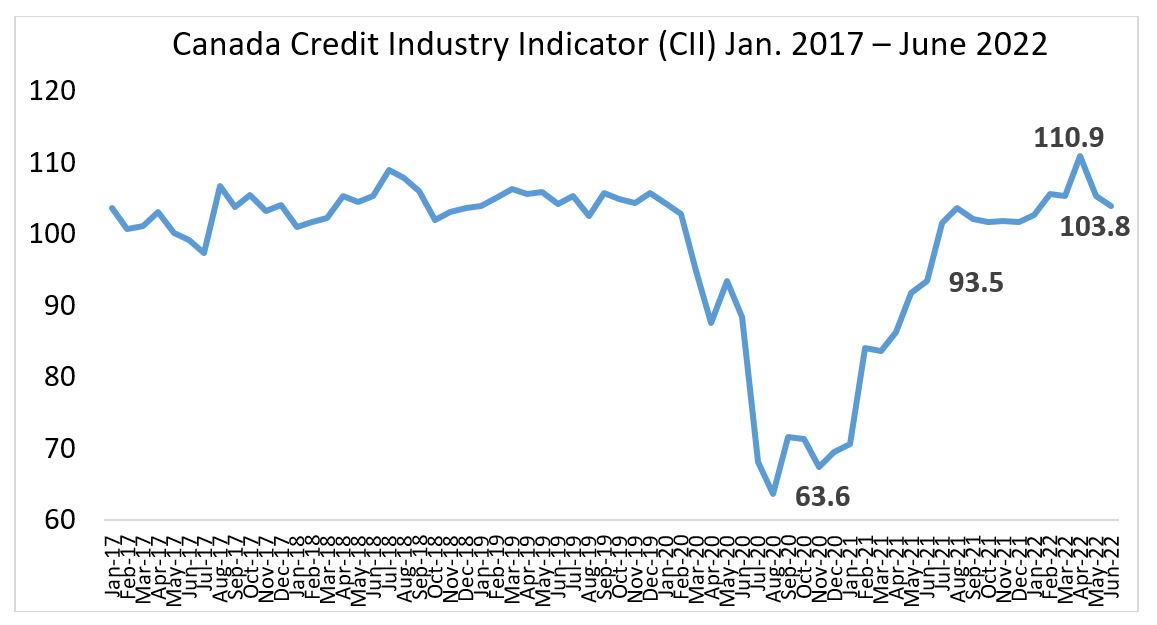
The Q2 2022 Credit Industry Insights Reportreveals that Canadians are vulnerable to payment shock as a result of high interest rates and inflation challenges: “While there have still been gains in GDP growth and low unemployment, they are being offset by higher interest rates and cost of living. This lead to higher credit balances and increased costs of mortgages and loans.”
The report shows total debt grew to an all-time high at $2.24 trillion, up 9.2% year-over-year (YoY) and up 16.4% from pre-pandemic levels observed at the end of 2019. The number of consumers with a credit balance has increased by 2.1% YoY to 27.6 million and is up 2.5% from pre-pandemic levels (Q4 2019).
Household finances were worse than planned for 41% of consumers, with 48% reporting they had cut back on discretionary spending. A startling 26% of consumers expect to be unable to repay their bills and loans.
Total debt grew to an all-time high at $2.24 trillion, up 9.2% from the same time in 2021 and up 16.4% from pre-pandemic levels at the end of 2019.
Consumer delinquency on personal loans has returned to pre-pandemic levels, up 19 base points (bps) YoY to 0.93%. Credit card delinquency is also up six bps from the prior year same quarter.
Increased balance growth was observed across all risk tiers, with super prime consumers continuing to build overall outstanding balances (+5.1% YoY).
In the release, TransUnion director of financial services research and consulting Matt Fabian says: “With the combination of higher cost of living and higher spend driving up credit balances, along with the recent surge in mortgages and auto loans, many Canadian consumers are under pressure from higher debt service obligations … We’ve seen an increase in miminum payment amounts of up to 10% in the first half of 2022, depending on the combination of products consumers hold, along with a slight deterioration in payment behaviours.”
As shown in the chart below, all major credit products saw an increase in average balance per borrower, which TransUnion says indicates the consumer need to leverage credit.
Fabian added that “During the pandemic we saw a decline in credit participation among below prime consumers, so this marks a re-engagement of this segment as potentially the effects of inflation and interest rates have driven demand, while lenders have increased their risk appetite in this space.”
The report shows that overall, consumer-level delinquencies (borrowers more than 90 days past due on any account) increased by four basis points (bps) over the prior year same quarter, but still remain below pre-pandemic levels. “Consumer delinquency on personal loans has returned to pre-pandemic levels, up 19 bps YoY, to 0.93%.” Credit card delinquency (90 days or more past due) is higher by six bps from the prior year same quarter.
TransUnion says the increase in consumer delinquencies is partially explained by accelerated lender origination activity, especially in the below-prime space: “The YoY rises in delinquencies are generally small and not a major concern, given the increased credit activity observed post pandemic. As credit activity recovers and grows further, consumer credit performance is expected to return to near pre-pandemic levels.”
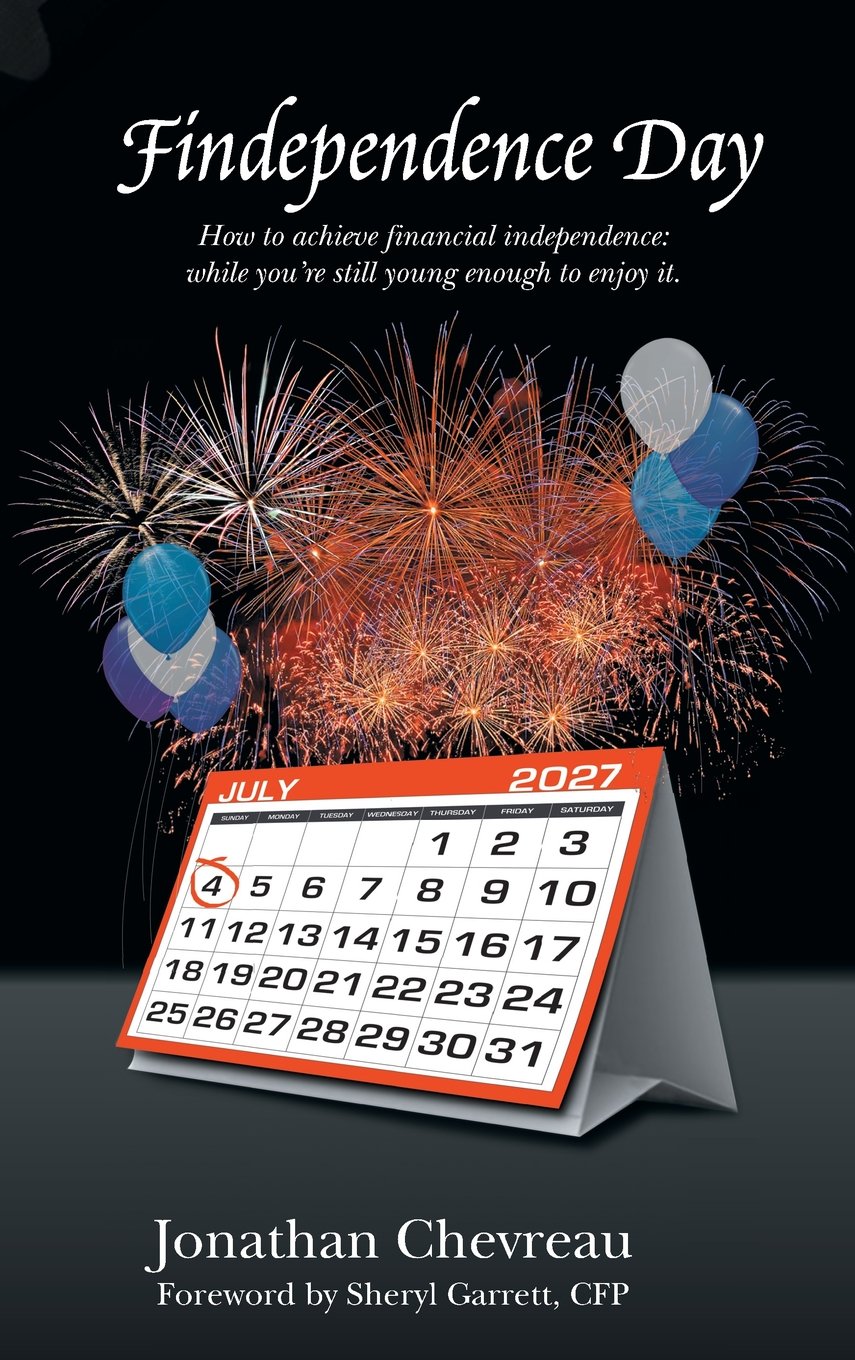
Regular readers of this site [FindependenceHub.com] probably know that it sprang from another site that was created in 2008 to help sell copies of the original Canadian edition of my financial novel, Findependence Day. I am writing this blog somewhat sheepishly as it turns out that that site is no longer available under the original URL. That URL was the title of the book followed by .com but this post is to warn anyone that the new site currently residing on that domain has nothing to do with me or the Hub. Sadly, we no longer own that URL.
I won’t even provide a link here because I can’t vouch for what may occur there: earlier this week we took down the link to it from the Hub, as it took casual browsers to a different site that appears to originate from India. I realize some readers may out of curiosity be tempted to click on the link but if they do would urge them to heed any warnings that may generate; it may or may not be a legitimate site, and therefore could compromise the computer or device of anyone who visits the site and clicks on any portion of it.
Second US edition via Best Buy Books (updated in 2021)
How to buy the original book and subsequent US edition
That said, there are still ways to purchase the original book and subsequent revised U.S. editions. You can find used copies of the original Canadian edition as well as the latest US edition at Abe Books. They also sell copies of some of my other books, including The Wealthy Boomer and the co-authored Victory Lap Retirement.
We do not sell the two US editions directly but they are available directly from either Trafford.com [published in 2013] or Best Books Media [updated and published in 2021.] Hard-cover, paperbacks and e-book versions of the U.S. Trafford version are available at Trafford or via Amazon Canada. In addition, Chapters Indigo offers hardcover or paperback versions as well as a Kobo ebook version.
I introduced the newest US edition on July 1st, 2021 here on the Hub. See why by clicking on An interview with myself. The Best Books Media edition is also available in hardcover, paperback and ebook formats at Barnes & Noble.
The hardcover version is also available at The Book Depositary. Here is the publisher blurb from that site:
Findependence Day presents personal finance in a “can’t put down” story format easily digested by young adults entering the workforce and the world of money. Because money problems often cause marital breakups, it focuses on the financial journey of a young couple who experience the usual ups and downs of job loss, buying homes, raising children, investing and pensions, starting businesses, coping with stock market volatility, and more.
The secrets of financial independence are critical wherever you are in the financial life cycle:
– Newlyweds embarking on family formation will discover the importance of financial planning.
– Debt-plagued graduates will be motivated to embrace “guerrilla frugality.”
First U.S. edition from Trafford, 2013
How to get the original Canadian edition directly from me
While used copies of the 2008 edition can be had for as little as $4 or $5 on some of the sites flagged above, shipping charges will put the final tab well above $10. But you can still buy brand new copies of the original edition directly from me for $16, postage included, and I’d be glad to sign them and write a short message.
We hope to build a landing page from the Hub in due course that will let interested readers buy the original book through PayPal or credit cards, as was the case on the now-disappeared site.
In the meantime, copies of the 2008 Canadian edition can be purchased directly from me by emailing me at jonchevreau8@gmail.com or mailing a cheque for $16 payable to J. Chevreau Enterprises Inc., 22 Thirty Sixth St., Etobicoke, Ont., M8W 3K9. The $16 price includes GST.
Make sure you include your own mailing address so we can send it via Canada Post. That email can also be used for e-transfers. We absorb the GST. Cartons of 36 copies are also still available for $105 plus postage (roughly $30): some financial advisors find this to be a cost-effective giveaway for clients and prospects.
With higher rates arriving sooner than expected, Canadian’s finances are certainly being stress tested. In this article we’ll look at the history of the mortgage stress test and how higher rates are impacted it.
History of the Mortgage Stress Test
The mortgage stress test was introduced by the federal government several years back to stop homebuyers from overextending themselves. Previously, Canadians homebuyers only had to qualify based on the mortgage rate at the time of application. This was problematic for a couple of reasons.
First of all, mortgage rates could be higher when your mortgage came up for renewal. This could mean that you could face a much higher payment at renewal if mortgage rates were a lot higher then.
Most Canadians choose a five-year mortgage term. However, for those who chose a shorter mortgage term, that means the payment shock can be that much more if your mortgage comes up for renewal sooner.
The second reason it was a problem is that if someone chooses a variable rate mortgage, there’s really no limit to how high mortgage rates can go. You’re only asked to prove that you can qualify at the date that you applied. You’re not being asked to qualify again later on if and when rates rise.
What is the Mortgage Stress Test?
To avoid a similar meltdown as Americans experienced in the real estate market, the mortgage stress test came to be.
With the mortgage stress test, the borrower must prove that they can qualify at the greater of the stress test rate or your mortgage rate at application time plus 2%. The idea was to better protect homebuyers, but this came at a cost. Homebuyers saw their home purchasing power drop by 15% to 20% overnight. This is a direct result of having to qualify at a much higher rate.
Where we are Today
We’re in an interesting situation today. The mortgage stress test is still here. We’re seeing it put to good use, as interest rates are increasing faster than expected. Continue Reading…


 Posted By

 Posted By