As Didi says in the novel (Findependence Day), “There’s no point climbing the Tower of Wealth when you’re still mired in the basement of debt.” If you owe credit-card debt still charging an usurous 20% per annum, forget about building wealth: focus on eliminating that debt. And once done, focus on paying off your mortgage. As Theo says in the novel, “The foundation of financial independence is a paid-for house.”
Financial literacy isn’t an innate skill. Like most skills in life, financial literacy must be learned – the problem is who teaches it? Parents know they play a part, but they may lack the confidence, or the knowledge.
Helping your children develop good money habits as they enter their teen years is a great place to start their financial literacy journey. Teenagers are eagerly seeking out financial independence and may be earning money through an allowance or an after-school job.
As they look to spend their hard-earned money, it’s crucial to set them up for success. After all, money isn’t just about dollars and cents, it’s about the choices we make with it. Parents want to teach their children to be money-smart – to have skills to earn, budget and spend, but they also want to share the value, emotions and experiences that come with money.
This notion of early financial literacy is what motivated me to create Mydoh, the Smart Card for kids.
Check out my best tips below for raising money-smart kids with the help of Mydoh:
Leverage technology that helps your kids learn how to save, and spend, their money
Kids today are more tuned in to technology than ever before – so why not use tech to teach them financial literacy?
Mydoh is a Smart Card for kids that comes with a money management mobile app, available on iOS and coming soon to Android. Kids gain financial skills by earning money through tasks and an allowance (set up by their parents) and by making their own purchases (wherever Visa is accepted) using their Smart Card issued by RBC through the app, with a physical card coming soon. This gives kids the autonomy, competency, and confidence to make their own earning and spending decisions – learning values that help build a strong foundation for the future.
Through the app, kids can manage their own money in the real world, making decisions to spend and earn, while parents get visibility to their spending and can have better money conversations. Continue Reading…
Today’s Simple Investing Take-Away: Simple investing mistakes can result in bad investments that can derail your long-term financial goals and erode your emotional well-being. One of the biggest missteps, amplified by our behavioural tendencies, is to ignore the many hidden costs of DIY investing. Even if the price paid isn’t obvious, it still takes a toll on your results.
Lowrie Financial
By Steve Lowrie, CFA
Special to the Financial Independence Hub
Eager to embrace DIY investing? Or have you at least wondered whether you’ve got what it takes to succeed on your own?
I understand the appeal. When you engage a personal financial advisor, you’ll see their advisor fees, loud and clear. The financial regulators require us to disclose them. Plus, at least here at Lowrie Financial, we want you to see them. How else can you tell if you’re getting a fair shake?
But therein lies a dilemma. Thanks to behavioural finance, we know about a multitude of murky costs that can slip in when investors allow their rational resolve and simple investing strategies to be hijacked by their complex instincts and emotions. Some of these self-inflicted costs include:
The cost of chasing past returns by getting caught in a “fad” during up markets; or by panicking and selling out during scary times
The cost of ignoring tax ramifications of frequent trading in taxable accounts
The cost of investing as a form of entertainment, or experimenting with your financial future while learning the ropes
Once you factor in the bad investments and other prices paid by so many DIY investors, financial advisor fees start to seem well worth it. A reputable advisor should help you focus on your personal financial goals while avoiding these and other DIY investing pitfalls.
The cost of chasing Past Returns
Have you heard of “FOMO” or “Fear of Missing Out”? It’s that itchy feeling you get when you long to get in on a red-hot popularity contest, regardless of whether it fits into your financial plan.
Most recently, others seem to be making millions on all sorts of “silly season” exotica: from SPACs and Reddit-fueled stock runs, to cryptocurrency and NFTs. In real time, these may seem like simple investing decisions; jump on the bandwagon and make a ton of money, fast. Unfortunately, by the time you’re aware of a trend on a tear, you’ll be hard-pressed to buy in low enough, sell out high enough, and do both consistently enough to come out ahead in the long run. This means odds are heavily stacked against FOMO-driven investors who try to come out ahead (but usually fail) by chasing after winning streaks.
There are reams of academic inquiries pointing to the merits of more patient simple investing strategies for capturing expected long-term market growth. Recently, a University of British Columbia/Emory University study found (once again) that individual investors in Canada and around the globe tend to underperform the same stocks and markets in which they’re invested. Digging into why, the study’s co-authors found investors created extra self-inflicted investment volatility (nearly 50% higher) by piling into the market “after superior stock returns and before inferior returns.”
These findings only add to a volume of past studies into similar return-chasing adventures. By succumbing to FOMO investing and similar bad investment habits, DIY investors unnecessarily sacrifice available market returns.
The cost of ignoring Tax Ramifications
These days, many people are working from home, with more time to spend consuming financial media or social media forums. A simple look at these investing forums would lead you to believe that everyone from your co-worker, to your favorite sports hero, to popular financial gurus like Canada’s own Chamath Palihapitiya are supposedly seizing big profits and cutting losses in rapid-fire trades day after day. It seems so easy.
Again, if we look at the evidence, the after-cost, after-tax results usually fall short of a simple buy-and-hold approach. In a recent extreme example, a U.S. day-trader used $30,000 in cash, placing 10–50 trades daily, to come out $45,000 ahead in 2020. Not bad. Unfortunately, by failing to understand U.S. tax regulations, like the wash-sale rule, he also generated an $800,000 tax bill on the realized gains. Continue Reading…
Over the past several months, much has been said about the stock market, and for good reason. What can be lost in the shuffle is what has been going on concurrently in the bond market. It’s at least as bad. Therefore, if you’re worried about stock valuations, you should probably be really, really worried about bond valuations. There are, in my view, a lot of borderline reckless income ‘investors’ out there who hold bonds simply because of industry dogma. Bullshift applies to bonds, too.
Some observers fear inflationary pressure on the horizon. I’m less convinced, but still, real yields have moved higher due to both an improved growth outlook and additional expected fiscal stimulus. Today, many people seem comfortable in referring to the environment as the ‘end of the bull market’ in bonds. The obvious next question is: ‘does that mean we are at the beginning of a bear market in bonds?’. To me, this is a distinct possibility.
After 40 years, interest rates can’t go much lower
For nearly 40 years, interest rates have been dropping throughout the western world. Now, we’re at the point where, as a practical matter, they can’t really go lower. We’re also at a point where, policy guidance from central bankers notwithstanding, rates might have to rise sooner than we thought if the inflationary pressure some expect begins to materialize. Continue Reading…
Many pastors struggle to preach about the topic of money. However, talking about money is more valuable than ever before. The coronavirus pandemic has led to a huge increase in the number of people finding it hard to manage financially. Thanks to this, it is important that pastors talk about money and what the bible has to say about it. Not only will this improve the spiritual health of your congregation, but it can also improve the health of the church. If you want to preach about money, then here are some of the things you need to keep in mind:
1.) Don’t apologize for talking about Money
Money is an important part of the discipleship process. Jesus said that people’s finances and people’s hearts were connected. So, when you create your sermon, it is important to remember that you are preaching a discipleship sermon and not simply a sermon about money. You should never say sorry for encouraging your congregation to follow Jesus.
2.) Make it normal to talk about Money
We talk about money daily, to our friends, our family and other important people in our lives. However, although money is an important topic that needs to be discussed, it is not a regular topic discussed in church. Pastors need to start talking about money with their congregation. They should talk about things like retirement, savings, debt, and insurance. They can also talk about giving money to people who need it.
3.) Help people with their Finances
One of the best ways to preach about money and gain the respect of your congregation is to help your congregation improve their finances. Continue Reading…
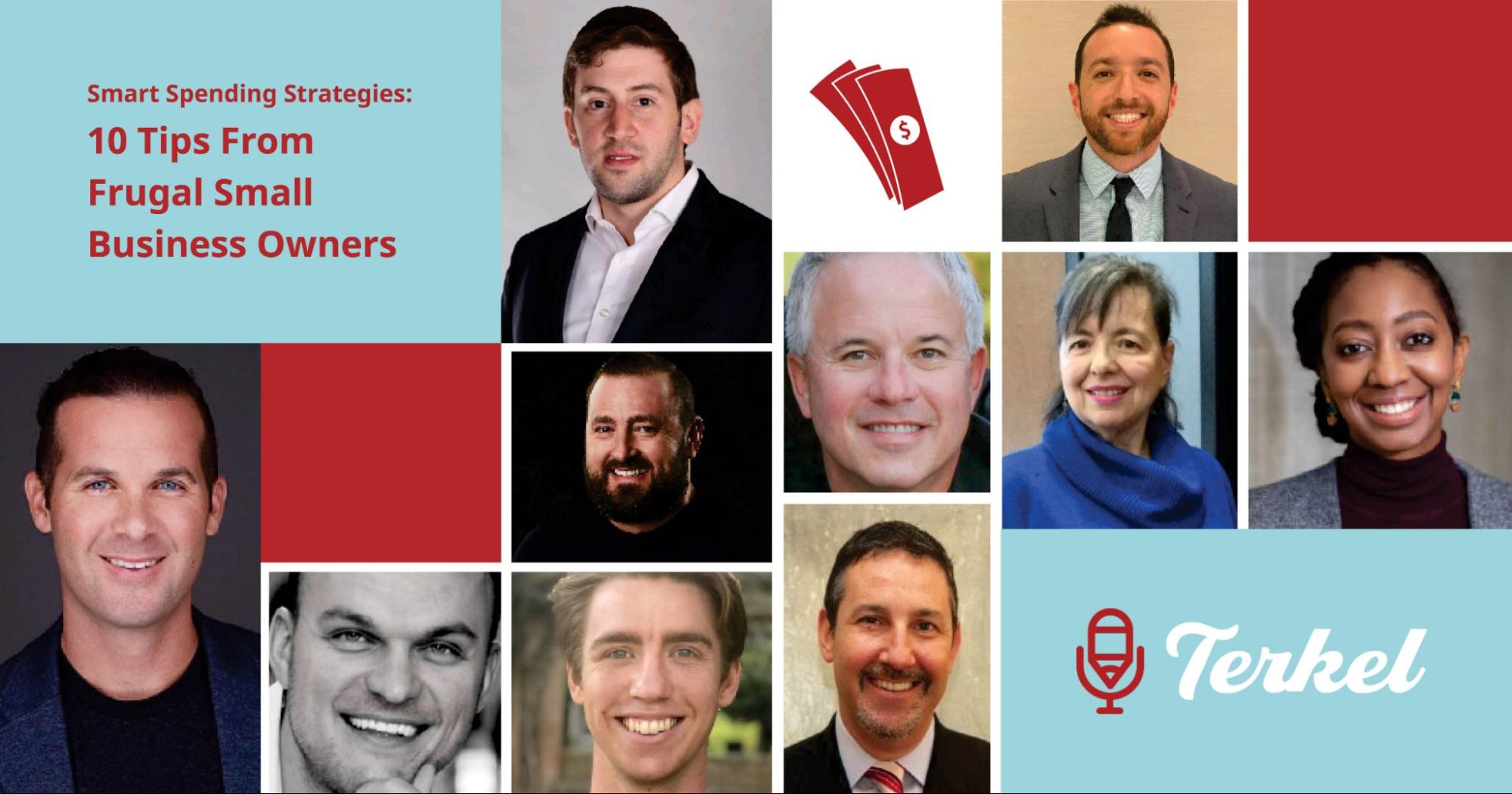
How can small business owners be more frugal and spend smarter?
To help you and your small business to be more frugal and spend smarter, we asked small business owners and financial experts this question for their best advice. From polyphasic sleep to developing your IT skills, there are several tips to help your small business to be more frugal and to spend smarter.
Here are ten ways your small business can be more frugal and spend smarter:
Google my Business
Unsecured Loan or Line of Credit
Outsource to Experts
Free Trials
Check annual discounts for Services
Reevaluate your Digital Marketing Strategy
Budgeting ahead to Avoid Impulsive Spending
Use Free Software
Automate and Delegate
Only Spend if it adds more Value than it Costs
Google my Business
Google Ads offers small businesses a great opportunity to develop visibility in search result pages. By expressing a willingness to bid on keywords relevant to a business, small business owners can pay per click to attract potential customers to their website. However, as competition amongst advertisers increases, so does the cost per click. In our industry, keyword costs can be $50 – $100 per click. With rising advertising costs, small businesses have less and less margin for profits. To spend smarter, small businesses can invest in an organic search presence to increase their visibility for keywords without paying for each click. One simple step for small businesses is to start a Google My Business page to increase visibility on the local level. Alternatively, businesses can blog about topics similar to keywords in a Google Ads account to reduce paid ad costs and increase organic traffic. — Dan Reck, MATClinics
Unsecured Loan or Line of Credit
Pre-revenue businesses still need to spend in order to launch a new venture. Sometimes the best time to be frugal is when a small business owner is seeking financing and needs to pay extra attention to the interest rate that comes with an unsecured loan or line of credit. Many funding sources tout simple application processes and short pre-approval turnaround times. Be careful not to move too fast on a loan that carries a higher interest rate. Instead, take the time to do your due diligence because some upfront work can save on long-term frugality. — Craig Johnson, Unsecured Funding Source
Outsource to Experts
Let’s say that you’re a small business owner who wants to invest in something like SEO (search engine optimization). You can pay an SEO agency like us $2,500 per month, or $30,000 per year to perform SEO at an expert level. Or, you can hire an SEO manager internally for $65,000 to $85,000 annually to perform SEO for a company. Sometimes, it saves to outsource certain services to experts instead of hiring internally for a business need. Consider the alternatives before posting a job description to a career page. –– Brett Farmiloe, Markitors
Free Trials
Sending secure communications typically comes with a cost to ensure security and compliance. However, some communications companies offer free trials to test their service. For example, our company offers small businesses the ability to send a free fax. If a small business owner is looking to be frugal when it comes to communications, seek out these free trials as a way to save money and discover services that can truly support your business. — Eli Patashnik, iFax
Check Annual Discounts for Services
If you know that you are going to be using a service for an entire year, see if you can pay the entire year in advance for a discount. This often netted us 10-20% discounts on services that we were already paying for. Even if a service doesn’t appear to offer this type of discount, you should inquire as some companies will offer quarterly or semi-yearly discounts as well. I also recommend a quarterly review of your small expenses and ensure that everything is being used. There were many times, we were able to cut costs by simply realizing that we no longer properly utilized a specific service. — Matt Blake, Entrepreneur, Investor and Partner
Reevaluate your Digital Marketing Strategy
Look at your digital marketing ad spend, analytics and metrics. Are you meeting goals and objectives? There is a lot that can be done organically (non-paid) with content marketing — blogging, videos, podcasts — in conjunction with social media marketing, that will help with Search Engine Optimization (SEO) and drive traffic to your website without spending money. Continue Reading…


 Posted By