Most of your investing life you and your adviser (if you have one) are focused on wealth accumulation. But, we tend to forget, eventually the whole idea of this long process of delayed gratification is to actually spend this money! That’s decumulation as opposed to wealth accumulation. This stage may also involve downsizing from larger homes to smaller ones or condos, moving to the country or otherwise simplifying your life and jettisoning possessions that may tie you down.
By Jeff Johnstone, National Bank Financial Wealth Management
Special to Financial Independence Hub
In my world, financial planning is a lot like building a home. You can spend decades refining the interior — growing revenue, managing cash flow, building something you are proud of — but without a strong foundation, the entire structure remains vulnerable. For the roughly 500,000 small business owners across Ontario, that foundation isn’t only the balance sheet; it’s a clear, well-structured succession plan.
We’re standing on the edge of what many call a “silver tsunami.” By 2030, more than one in five Ontarians will be 65 or older. It represents one of the largest transfers of leadership and wealth in history. Today, nearly 75% of business owners are planning to exit within the next decade. For founders, that creates a new reality because it’s no longer about finding just a buyer, it’s about being a business worth finding and buying. Yet while many expect to exit, few have a clear plan for what happens next.
When entrepreneurs sit down with us, three themes tend to surface:
Concentration risk — the majority of their net worth is tied to a single asset: the business
Tax complexity — not whether tax will be paid, but how much can be preserved
Uncertainty — stepping away is not just financial, but deeply personal
These challenges are all interconnected. For incorporated business owners, personal and corporate wealth need to be aligned: linking how value is created inside the business with how wealth is ultimately realized outside of it. The goal isn’t to extract value at the end, but to translate it gradually into long-term financial independence. Without that bridge, the business risks becoming not a means to an end, but the end itself.
Founders often underestimate Timing
One of the biggest misconceptions we see is timing. Many founders believe they can decide to sell and complete the process within six months. When in reality, a successful, high-value transition rarely follows a short-term timeline. The average timeline is closer to five years from initial planning to final sale. Understanding this matters because, if you wait until you’re ready to exit — or until you’re burned out — and believe it can be all closed quickly, you’ve already lost leverage and, in many cases, left value on the table. Buyers don’t just assess financial performance; they assess risk. A business heavily dependent on its founder carries a very different profile than one that can operate independently.
The earlier you start, the more control you have. That’s the takeaway here. Early planning changes what buyers see. It creates time to strengthen management, reduce key-person risk, and professionalize operations. It also allows for what I often describe as a “financial clean-up”—organizing financials, addressing shareholder loans, and ensuring the business can run without you at the center. Because ultimately, it’s about being profitable, as well as it’s being sellable.
One of the most complex parts of succession is rarely financial, and happens outside the boardroom and round the dinner table. We call this “dinner table math,” when assumptions are made but haven’t (or rarely) been discussed. For example, parents may assume the children will take over the business, but they do not want to. Yet, the children may feel obligated to, even if their interests lie elsewhere. Beneath it all are unspoken expectations about what feels fair.
Where many transitions begin to unravel
This is where many transitions begin to unravel. Nearly 70% fail because of breakdowns in communication and trust, versus market conditions. For example, in one case we had one family assume the business would pass to the next generation. Through structured conversations, it became clear that while the children respected what had been built, none of the kids wanted to run it. That honesty was difficult, but the clarity was necessary. It opened the door to a different path that was focused on a structured sale to an external buyer, alongside a plan to distribute proceeds in a way that felt fair and transparent. Just as importantly, it preserved the family relationships.
These are not decisions founders should navigate alone. With the right advisory team — wealth advisors, accountants and legal professionals — we can help create space for better conversations and more thoughtful decisions. In our experience, the best work happens alongside a dedicated M&A and investment banking team who can help deliver a more coordinated approach. Preparation becomes more intentional, buyer selection more strategic and outcomes — across valuation, structure, and legacy — more aligned with what matters most. Continue Reading…
My latest MoneySense Retired Money column looks at a handful of FIRE bloggers who should be familiar to readers of this site, Findependence Hub: notably Mark Seed of myownadvisor and Bob Lai of Tawcan.
As you can see by clicking on the column headline, How are FIRE adherents making out?, Seed recently announced he has reached his Financial Independence in his early 50s. Bob Lai, meanwhile, is still working in his 40s but blogged on how he hopes to reach Findependence before 2030.
The MoneySense column also updates the status of veteran personal finance columnist Rob Carrick, who ended full-time employment at the Globe & Mail last year, the subject of an earlier Retired Money column. And we mention a good blog by The Retirement Manifesto’s Fritz Gilbert about the 12 Good Years between age 60 and 72. As I ironically close the column with, it seems I have just used up my own 12 good years!
The real focus of the MoneySense column is however Mark Seed, just as it was Carrick last summer. In both cases, we exchanged views in Zoom or GoogleMeets over the course of an hour or so.
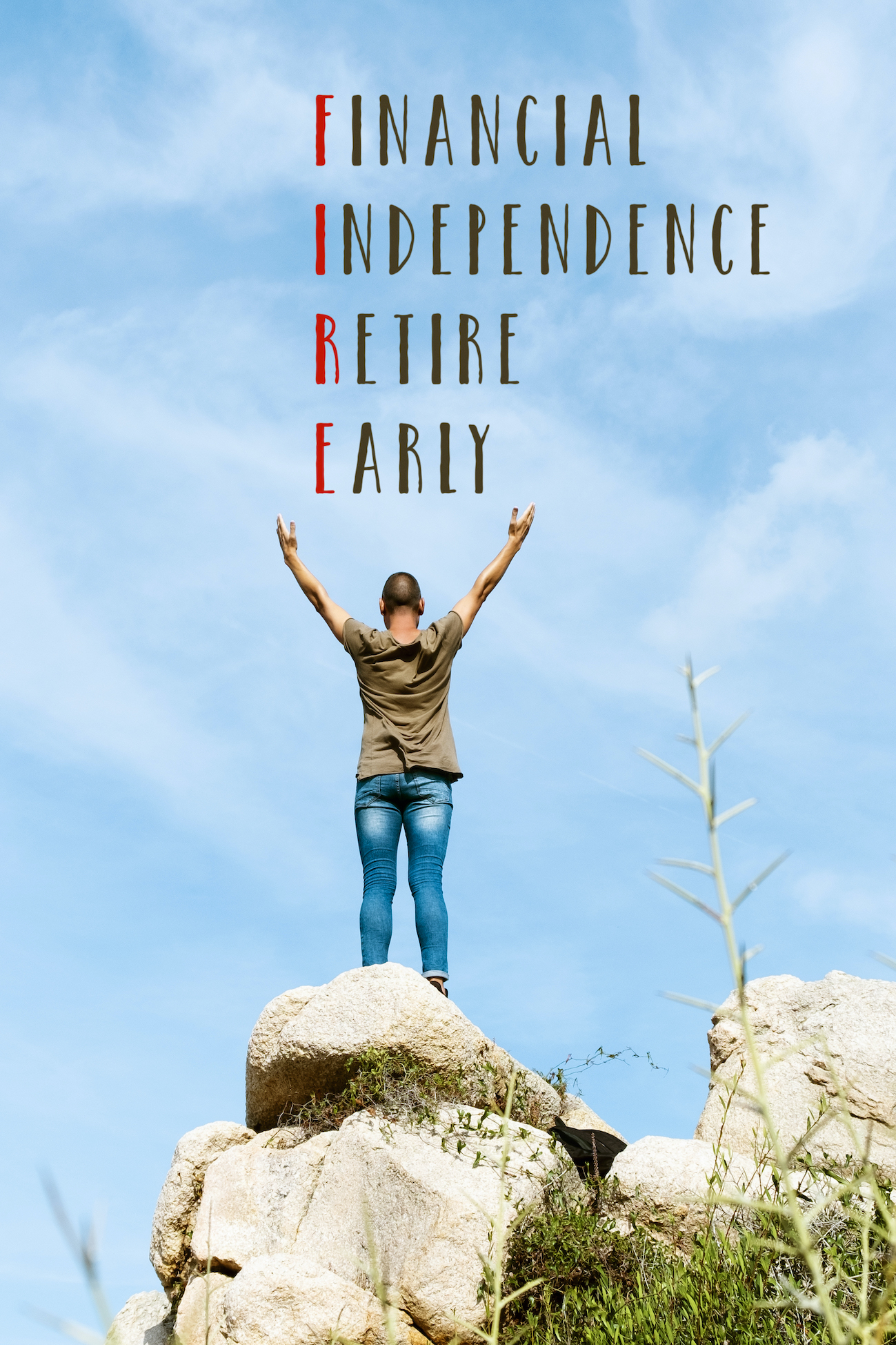
By now, it’s hardly necessary to remind readers that the FIRE acronym stands for Financial Independence Retire Early, as the image above illustrates.
Note that our FIRE subjects in the column span four decades: Lai his 40s, Seed his 50s, Carrick his 60s and I am in my 70s, evidently still running this website and writing for MoneySense, a former employer.
The end of Salaried Employment does not mean no more Working
The observant reader will note that none of the bloggers mentioned here have actually begun the traditional “Full-Stop Retirement.” When FIRE proponents describe Early Retirement, they usually mean leaving the comfort of full-time salaried employment and all that it entails: commuting, bosses, endless meetings, tax deducted at source, annual performance reviews and so on. Continue Reading…
Life is uncertain. We are living our day-to-day lives with a certain level of uncertainty, but that’s part of the fun. Some people don’t like having too many uncertainties, so they take actions and precautions to reduce uncertainty.
The same thing can be said for early retirement and living off one’s investment portfolio. There are many steps you can take to increase the margin of safety of your investment portfolio to ensure it can sustain your lifestyle and you don’t run out of money.As we draw closer to achieving Financial Independence through dividend income, also known as living off dividends, we are spending more time on the steps needed to prepare ourselves for this significant financial and life milestone.
I thought it would be interesting to explore the steps we are taking in 2026 when it comes to our early retirement planning.
Building up our Cash Reserve
Along our Financial Independence journey, we have been extremely focused on building up our dividend portfolio. As a result, we have been working hard to grow our savings gap and invest the saved-up money to buy dividend stocks and index ETFs.
For the most part, we don’t keep a lot of cash in our chequing and savings accounts, because we see too much cash sitting around as opportunity cost.
But as we get closer to Financial Independence, it is important to start building up our cash reserve. Cash reserve is important because it provides flexibility and prevents us from having to sell off our investments during a sudden market crash because of some unexpected need.
Last year, we managed to save enough money so that we had over $25,000 in our Long Term Savings for Spending account. Unfortunately, at the time of writing, we are below that number because of the yearly RESP contributions and having to buy a new fridge. Since one of our financial goals is to have more than $35,000 in our cash reserve, this means we need to save up more to first bring the amount in our LTSS account to above $25,000 first, then try to save more to hit the $35,000 market.
But building up our cash reserve is more than just having cash sitting around in our bank account. It’s also about having cash available in our investment accounts, too, as I’ll explain in the next section.
Turning off DRIPs
We are currently investing 100% of our dividend income. We enroll in dividend reinvestment plans (DRIPs), so dividends are automatically used to get additional shares. Years ago, when fractional DRIPs weren’t available, we could only drip full shares (i.e. dividends received were more than the share price). We’d let the remaining dividends accumulate in our accounts until we had over $1,000 before we bought more dividend stocks or index ETFs (we did this so the trading commission was less than 1% of the overall transaction).
Nowadays, with the existence of fractional DRIPs from brokers like WealthSimple and TD, most of our dividends are reinvested right away. Before fractional DRIPs were enabled with TD, and because TD charges $9.99 per trade, we would move the remaining dividends collected in our taxable account with TD to WealthSimple to take advantage of the no-commission trading. We no longer have to do this.
Questrade still doesn’t support fractional DRIPs (and only fractional share purchase on certain securities), so we can only drip full shares and the remaining dividends get deposited in our accounts. Since Questrade no longer charges trading commissions, we don’t need to wait for dividends to accumulate to over $1,000 before reinvesting the money. Lately, we would use dividends to buy more stocks & ETFs when there’s a red day in the markets.
As we get closer to Financial Independence, we plan to change the way we utilize DRIPs. We want to drip selectively. We plan to turn off drip in our taxable accounts and RRSPs by the middle of this year (or by Q3). We will keep DRIP on in our TFSAs to allow investments/dividends to compound.
That’s step one in building up a cash wedge in our taxable accounts and RRSPs for the eventual withdrawals when we do live off dividends. But we certainly don’t want money sitting in cash and not doing anything for us.
So what’s our plan with the dividends received in taxable accounts and RRSPs?
This is where investing in safe Cash Alternatives comes in.
Investing in safe Cash Alternatives
For dividends received in taxable accounts and RRSPs, we want to put them to work. But we don’t want to reinvest them into dividend-paying stocks, then have to sell stocks when we start withdrawing. Nor do we want to be waiting for dividends to accumulate before withdrawing.
Turning off DRIPs will allow us to start accumulating cash. Ideally, we want to accumulate enough money to cover 100% of our expenses for the next year, so we don’t need to sell any stocks. This is one way to increase our margin of safety in early retirement. Another benefit to having sufficient cash for next year’s expenses is that it is easier to budget, since we would know how much money we would have at the beginning of the year.
With the money accumulating in our taxable account, RRSPs, and savings account, we need to look at alternative ways to grow the money so we are not losing purchasing power due to inflation.
Since distributions from these high-yield HISA ETFs are taxed as 100% interest income, they are not overly tax-efficient. Therefore, it makes sense to invest in these HISA ETFs inside of our RRSPs.
Note: I know that withdrawals from RRSPs are taxed as working income as well so there may not be too much of a difference, but income inside RRSPs is tax-deferred so we can let the interest grow until withdrawals. This is a lot better than taking the tax hit in the same year as when you receive the interest.
For dividends sitting in our taxable accounts, if we invest in “safer” investments like GICs, HISAs, HISAs ETFs, bond ETFs, or even money market, all the interest earned would be taxed as 100% interest income, and not very tax efficient. Unfortunately, there’s no other way around it. If we really want, I suppose we can invest the money in dividend-paying Canadian stocks, but that’d go against the idea of building up a cash reserve in our taxable accounts.
Therefore, it probably makes the most sense for us to just take the tax hit and invest dividends in our taxable accounts in one of the HISA ETFs or move the money and start building a GIC ladder if the rates are attractive. (Knowing the low interest rates environment we’re in, probably hard to find attractive rates for short term GICs).
What would we do with the cash sitting in our LTSS? Well, we may consider parking some of it in cash inside a flexible high-interest savings account for planned expenses. To make sure money is working hard for us, it probably makes sense to invest the money in a high-yield HISA ETF.
Our plans with money in taxable accounts and LTSS aren’t 100% decided. More tax calculation and planning is needed, considering I will be working full-time and earning income in 2026 and Mrs. T is generating income via her side hustles.
If any readers have other suggestions or recommendations on what to do with cash in our LTSS and taxable accounts, I would love to hear them.
Alternatively, we can consider turning DRIP off first in our RRSP and invest the money in one of the HISA ETFs. Then, in the latter half of 2026, turn off DRIP in our taxable accounts to minimize tax consequences. This approach, however, means we won’t have as big a cash reserve.
It’s complicated to plan everything and that’s part of the fun of planning for early retirement!
Planning extended healthcare coverage
We currently have extended healthcare benefits through my employer. The extended healthcare benefits allow us to get coverage on prescription drugs, out-of-country trip medical coverage, paramedical services like massage, acupuncture, counselling, physiotherapy visits, vision care, and dental care. Continue Reading…
Regular readers of this site are probably well aware of ETFs (Exchange Traded Funds). Indeed, many blogs here have covered their role either as Core holdings of Retirement portfolios or portfolios still in the Wealth-building phase. Some espouse ETFs as a Core holding but play around at the fringe with so-called “Explore” investments either in high-conviction individual stocks or in more tactical specialized ETFs. Many espouse a “hybrid” strategy of mixing ETFs with individual stocks, perhaps by “skimming” the same ETFs for particular stocks that appeal at some level, whether for income, growth or other reasons.
Roughly once a month for much of the existence of this site, Featured.com has provided useful content on investing and retirement. In the past year, it changed its strategy so editors like myself could have more input into the creation of its blogs. Now the process is one of posting a question or general request to its site, soliciting input from a wealth of largely US-based financial experts and business owners.
Today’s blog focuses on various strategies on ETFs and variants of using them as Core or Explore holdings, plus the pros and cons of the “hybrid” approach mentioned above. Most of these experts are on LinkedIn, as you may see by clicking on their company names below each entry.
Here’s how we posed the opening question for respondents:
When it comes to managing your personal Retirement Funds or that of clients, what role do ETFs (Exchange Traded Funds) play: Core, Explore, Tactical or what? If you do use ETFs, do you prefer to use them exclusively or do you like hybrid strategies where you also pick individual dividend-paying or growth stocks; or do you also cherry-pick individual stocks from favorite ETFs?
So with no further ado:
Hybrid Strategies of mixing ETFs with individual stocks can lead to trouble
When it comes to the role of ETFs, for the vast majority of people — especially the ones I see in my practice trying to build stable long-term wealth — they belong in the “Core” position. ETFs are a brilliant legal and structural innovation: they provide instant diversification, they are incredibly low-cost, and they are tax-efficient. They allow you to own the market rather than trying to guess which individual company will win, which is essentially an impossible game for most humans to play consistently over 30 years.
The hybrid strategy — mixing ETFs with individual dividend or growth stocks —is tempting, but it is often where people get into trouble. “Cherry-picking” individual stocks is not investing; it is gambling with better marketing. I have represented clients who lost their retirement savings because they became over-concentrated in a single “favorite” stock that cratered. When you cherry-pick, you aren’t just betting on the company; you are betting against the market, the sector, the economy, and your own lack of inside information.
If you are a professional investor with the time to research, the discipline to rebalance, and the stomach for volatility, go ahead. But for the average person, or even the professional focused on their own career, the most successful strategy is usually the simplest: Core, boring, broad-market index ETFs.
The most successful retirement portfolio is often the one you forget you own, not the one you tinker with every week based on a “hot tip” or a gut feeling. I’ve never seen a client file for bankruptcy because they were too boring with their index funds. I have seen clients file because they tried to get clever with individual stocks and got decimated by a market downturn. Complexity is rarely your friend in long-term wealth building. Keep it simple, keep costs low, and let time do the heavy lifting. That isn’t just good investment advice; it’s sound risk management. — Lyle Solomon, Principal Attorney, Oak View Law Group
ETFs are foundational to my plan for retirement. The consistency and broad market exposure that they represent allow them to be at the core of all of my other investment decisions. I use a blended model. In order to achieve this blend, I have selected low cost indexed products (that provide for consistency) in addition to specific dividend producing stock selections to provide additional income. — Zack Moorin, Founder, Zack Buys Houses
ETFs as Core with individual Satellite positions like Crypto
My personal approach to retirement portfolio construction uses ETFs as the core, with a satellite allocation to individual positions including crypto assets.
The core ETF layer serves a specific purpose: broad market exposure at near-zero cost, with automatic rebalancing and no single-company risk. For U.S. equity exposure, a total market or S&P 500 ETF handles this. For international exposure, a developed-markets ETF. For bonds, a total bond market ETF scaled by risk tolerance and time horizon. This core doesn’t require active management or conviction: it just needs to capture beta.
The satellite layer is where I allocate capital I’m willing to analyze actively and hold with genuine conviction. For me, this includes individual positions in companies I’ve studied deeply and blockchain assets backed by whitepapers I’ve read and evaluated (through ChainClarity’s own research process). The satellite allocation is sized so that a complete loss wouldn’t materially affect the core goal.
Why I don’t go pure ETF: I find that having no individual positions reduces my engagement with the market as a learning mechanism. Tracking companies or protocols I own forces me to read earnings reports, understand industry dynamics, and notice when my thesis was wrong. That active attention makes me a better analyst, which has compounding value beyond the direct investment return.
The hybrid strategy I’d caution against: owning both an S&P 500 ETF and individual U.S. large-cap stocks. The ETF already owns those companies: you’re just adding concentration risk and management overhead without meaningful diversification. If you’re going to pick stocks, pick categories the ETF doesn’t cover adequately.
Roman Vassilenko is the founder of ChainClarity (chainclarity.io), an AI platform that makes blockchain whitepapers accessible to investors and developers. — Roman Vassilenko, Founder, ChainClarity
Active Strategies only work if you a demonstrable Edge
The statistics don’t favor an active equity allocation strategy. Over the 10 years ending 2021, 84% of U.S. large-cap growth funds lost to their benchmark, the S&P 500. Even if we add back some of those funds to the universe that died along the way, the failure rate only drops to 91%. You might still have to explain why you’d invest money for a 0.66% expense ratio, which is what active equity funds average compared with 0.03% for their passive alternatives (SPY, VOO). On $500K invested for 30 years that grows at a real rate of 7% annually, you can expect to have spent nearly $387K in fees over your investment horizon. Half of this goes to the active funds manager, whether they perform well or poorly.
The exception to this advice comes if you feel an edge exists. Perhaps you work in Silicon Valley and have insight into Netflix or perhaps have engineer-level technical understanding on why a company’s underlying product will prevail over competitors, but unless you genuinely possess such an asymmetric advantage, most of the advice below comes from investing in low-cost ETF cores, keeping a few per cent in cash or cash alternatives and picking one or two individual stocks that you’re willing to lose money entirely, without jeopardizing your Financial Independence. I think anything beyond that could fit onto one side of a sheet of paper. — Jere Salmisto, Founder, CalcFi
ETFs remove the big risk of your own Decision-Making
Most investors treat ETFs as a convenience tool, but their real power is that they quietly remove the biggest risk in portfolios: your own decision-making.
I think of ETFs as a “behavioral anchor.” In most retirement strategies, they should be the core, not because they outperform everything else, but because they reduce the chances of overtrading, emotional decisions, and concentrated mistakes. They create a stable base you’re less tempted to interfere with.
In practice, I’ve seen this play out repeatedly. Clients who built portfolios purely on individual stock picks often drifted into overexposure or reactive selling during volatility. In contrast, those with ETF-heavy cores made fewer impulsive changes and stayed aligned with long-term goals. When we added individual stocks, it was deliberate and limited, more of a satellite layer than a competing strategy.
The takeaway is simple. ETFs are not just about diversification, they’re about discipline. Use them as your foundation, then layer in individual stocks only where you have conviction and a clear reason. The goal isn’t to outperform the market every year, it’s to avoid the mistakes that quietly destroy returns over time. — Omer Malik, CEO, ORM Systems
ETFs are my core. Period.
ETFs are my core. Period. I don’t have the time or the ego to think I can outpick the entire market with every dollar I own. My retirement strategy is built exactly like our risk models at Insurance Panda: you need a massive, diversified base to survive the outliers. I put the vast majority of my capital into broad-market index funds and let them ride. It’s the only way to ensure you actually have a pile of cash when you’re ready to exit the game.
But I’m a business owner, so I can’t help but look for an edge. I use a hybrid model. I keep the boring foundation in ETFs, then I pick individual growth stocks in sectors I actually understand: specifically digital infrastructure and software. I don’t bother “cherry-picking” individual names from a favorite ETF. That’s just over-analytical busywork. If I see a company we’re actually using in our own tech stack that’s clearly dominating its niche, I buy the stock directly.
And here is the hard truth. Most people mess this up by being too tactical with money they can’t afford to lose. They treat their Retirement fund like a casino. Don’t do that. Secure the base layer first with low-cost funds. Then, and only then, use your actual industry knowledge to take a few shots on individual winners. If you don’t have a clear information advantage, stay in the index. — James Shaffer, Managing Director, Insurance Panda
ETFs should be the core 70 to 80% of your Retirement Portfolio
To any of our MintWit readers who are saving for retirement, my advice will be to build the bulk of your retirement portfolio using ETFs because they provide instant diversification and very low fees. In essence, ETFs will form the basis, or the bread and butter, as part of your investment strategy, making up 70%-80% of your retirement portfolio. The message we always preach is that you use the ETFs as a safety measure; then you explore by buying a few stocks, such as those paid by dividends from companies such as Johnson & Johnson and Coca-Cola, to make up the remaining 10%-20%. –– Scott Brown, Founder, MintWit
ETFs as Core help maintain Target Allocations
ETFs are most useful as core holdings in a retirement portfolio because they offer broad exposure and make it simple to maintain a target allocation. I recommend using ETFs to establish the backbone of a portfolio, then layering in individual dividend or growth stocks only when they serve a clear, specific purpose. Relying exclusively on ETFs can work for many investors, but a hybrid approach lets you target income or single-stock opportunities without losing diversification. Keep the overall asset allocation aligned with your risk tolerance and time horizon. Automate contributions and set a regular rebalancing schedule so ETFs and any individual holdings stay within your intended ranges. Consult a qualified advisor for tax and account-structure considerations before making changes. — Amir Husen, Content Writer, SEO Specialist & Associate, ICS Legal
Hybrid Strategy uses indexing and select individual stocks
I view EFTs (Exchange Traded Funds) as my base of operations for overall market exposure and stability. I prefer to implement an index fund or hybrid strategy which incorporates both index investing and selected individual stock investments into my portfolio. The Hybrid Strategy will allow me to maintain broad based investment diversification by utilizing index fund(s), and also pursue greater returns on investment via selected individual equities. At times, I review the top holdings in the most popular EFTs to see if they are among my potential long-term investment options. — Mike Otranto, Founder, Wake County Home Buyers
ETFs belong in the Retirement core bucket but not a fan of Index Skimming
I’m coming at this as someone who’s been in estate planning since 2008 and now leads operations at Safeguard in Arizona, where retirement planning and asset protection are part of the same conversation every day. My view is that ETFs usually belong in the core bucket because retirement money needs clarity, liquidity, and a structure that’s easier to coordinate with the rest of the estate plan.
What matters most to me is not “ETF vs stock” in isolation, but whether the investment setup works cleanly with beneficiary designations, trust funding, and the reality of incapacity or death. A simple ETF-based core is often easier for a spouse, successor trustee, or family to understand and manage than a scattered collection of hand-picked positions.
I’m generally more comfortable with a hybrid only when there’s a clear purpose for it, not because someone wants more activity. For example, if a family has a living trust and wants long-term retirement assets organized so a successor trustee can step in smoothly, broad ETF holdings tend to create fewer administrative headaches than a portfolio full of one-off stock ideas.
I’m not a fan of cherry-picking names out of favorite ETFs just because they showed up on a list. In retirement and wealth preservation, I’d rather see a plan that accounts for inflation, Social Security timing, healthcare costs, and smooth transfer to heirs than a portfolio that becomes harder to administer when the family needs simplicity most. — Julie Jewett, Director of Operations, Safeguard.
ETFs should have a clear purpose, like Targeted Income or Tactical Exposure
I view ETFs as core building blocks of retirement portfolios, especially for taxable accounts, given their tax characteristics. Asset location is critical, so I often favor index ETFs in taxable brokerage accounts to help control when gains and income are realized.
Dividend-paying stocks and corporate bonds are typically better held in tax-advantaged accounts to avoid current taxation on dividends and interest. ETFs that do not distribute frequent income also give more control over timing because you generally recognize gains when you sell.
However, I do not use ETFs exclusively. I treat them as the foundation and layer individual securities when they serve a clear purpose, such as targeted income or tactical exposure. The precise mix depends on a client’s tax situation, income needs, and retirement phase, with asset location guiding those choices. — Clint Haynes, Financial Planner, NextGen Wealth
The point of ETFs is to provide exposure to an idea without taking single-stock blowup risks
ETFs are immensely diverse, that’s the first thing to clear up. Income ETFs, dividend-growth ETFs, low-volatility ETFs, broad-market index ETFs, growth ETFs, and speculative covered-call funds (YieldMax, Roundhill) are all ETFs, but they serve fundamentally different roles. Their shared job is to express an investment thesis with diversification. The point of an ETF is to give you exposure to an idea without taking the single-stock blowup risks (management, execution, etc.) that come with picking individual names.
For Retirement, low-volatility and dividend-growth ETFs are the natural fit, because they prioritize stability of distributions and capital preservation, which is what matters when you’re drawing down rather than accumulating. Speculative income products like YieldMax or Roundhill weekly-pay funds can play a role, but they’re a speculative income tilt, not a core retirement holding. The high headline yields often come at the cost of NAV erosion that trailing yield figures don’t show. A retiree leaning on these without understanding the option-writing mechanics underneath can find their principal halved over five years even while collecting “income.”
Growth ETFs are a different beast entirely. Their volatility and lower (or zero) distributions don’t suit the liquidity and income needs of someone in retirement, but they’re the right call for accumulators in their 20s, 30s, or 40s with decades-long time horizons. Different season, different tool.
On methodology: the right way to think about an ETF is bottom-up, not top-down. If you research the underlying stocks and like what you see, the businesses, the dividend track records, the valuations … you buy the ETF as a convenient, low-cost container for that thesis. It’s not a common or advised investment strategy to cherry-pick individual stocks out of an ETF you like, without having done the individual fundamental work. That’s reverse-engineering: you’ve already paid for the diversification, picking out individual names just adds concentration risk while losing the structural benefit. If you want concentrated exposure to one or two names, buy the stocks directly. If you want diversified exposure to a thesis, hold the ETF that expresses that thesis.
Across age cohorts and goals, the principle is the same: an ETF is a way to express a stock thesis efficiently, not a substitute for having one. — Ignacio Planas Gonzalez, Founder, YieldMaxCalc Continue Reading…
By Dana Anspach for Fritz Gilbert and The Retirement Manifesto
Special to Financial Independence Hub
Like many teenage girls, I had my high school bedroom walls covered in posters. Actor Rob Lowe took center stage, with a bit of Matt Dillon sprinkled in. (Ladies of the ’80s … any of you relate?)
Mixed in with the heartthrobs were glossy posters of red sports cars. Ferrari. Lamborghini. Later, in college, an Acura NSX.
Looking back, it’s strange. I’ve never been much of a car person: especially not sports cars. I don’t see well out of them. They’re low to the ground. I scrape rims, bump curbs, and the quick handling leaves me feeling slightly queasy.
So why the fascination?
I think those cars represented success. Flashy. Fast. The kind of thing people ‘oohed’ and ‘ahhed’ over.
Defining success by external standards is dangerous business. Thankfully, I outgrew that particular distortion: though I’m sure plenty of others remain.
As an adult, I gravitate toward practical, balanced cars. What I think of as the all-weather vehicle. I don’t need to go 200 mph down the autobahn. But I do want traction in heavy rain. I don’t care about making a statement at the valet. I care about glancing in the rearview mirror and seeing my dog’s smiling face as we head to his favorite place on earth: the park.
That preference for balance turns out to matter far beyond cars. It’s also the way I believe we should approach retirement planning and investing.
The Case for an All-Weather Approach
In hindsight, those sports car dreams and investing have something in common. Sometimes, it’s hard not to hop into the shiny red sports car and drive away.
In investing, a shiny investment (like the shiny red sports car) promises speed and excitement. It may not be as reliable, but for a brief moment, it makes us feel brilliant. Powerful. Maybe even a little invincible. In touch with our inner James Bond. And who doesn’t want to feel like a secret service spy just once in their lifetime?
Often, it shows up as a single stock. Sometimes it’s a real estate deal. Or a business venture. It feels adventurous. Sophisticated. Like we’re seeing something others don’t.
In the late 1990s, tech stocks were the shiny red sports car.
The firm I worked for at the time offered a Science and Technology Fund that rose 99% in twelve months. One day, a middle-aged couple came in and asked me to move their entire portfolio into it.
Durability vs. Speed
Their portfolio had been built for durability:
blue-chip stock funds,
international exposure,
a few bond funds,
and a small allocation to the Science and Tech Fund.
They had spent a year watching the tech fund soar, while everything else stood still.
I balked at their request. I explained the logic of balance. Sure, in perfect weather, the shiny red sports car looked great. But the weather wouldn’t always be so accommodating.
My logic sounded silly to them: like a mom insisting you put on your helmet to ride your bike down the street.
They insisted on the change. I acquiesced on one condition: they sign a disclosure acknowledging that this was against my recommendation. They signed without hesitation.
I left that firm before the dot-com crash and the miserable weather that followed. I’ve often wondered what happened to that couple. The allure of speed was too strong.
Today, I see that allure creep in when retirees keep a “play” account. They go all in on a few stocks and attribute their success to their stock-picking prowess.
You can go all in with a play account. But a professional financial advisor can get sued if they do the same thing with your entire life savings. That should give you pause. Risk and return are sides of the same coin. But each time you flip, if it’s several years of heads, it is all too easy to forget that the coin even has another side.
Beware the Slight Upgrade
Not everyone is tempted by flashy sports cars. Sometimes the pull is subtler.
We start to think maybe a small upgrade will help. Something just a little faster. A little more responsive. Even if it doesn’t handle storms quite as well.
I watched this at the end of 2024 when a long-time client, whose retirement plan and portfolio were in solid shape, left because they felt they should be earning higher returns. Continue Reading…


 Posted By
 Posted By