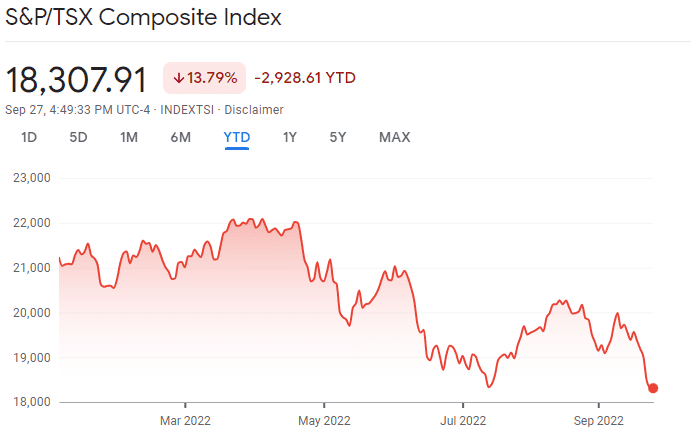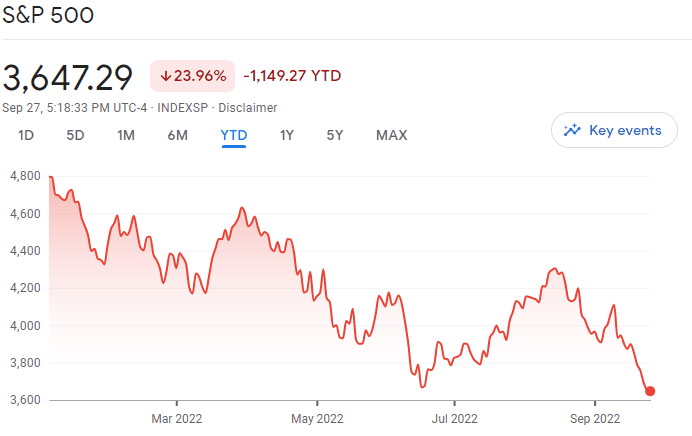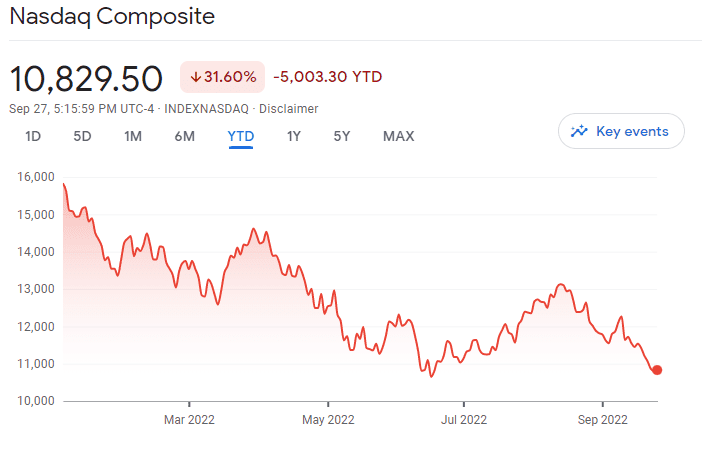
The daily escalation of the war in Ukraine is tragic, and the range of potential outcomes is unsettling. We are seeing a devastating humanitarian crisis and the human toll is immeasurable. Below we speak to some questions we have received and provide insights into how to best manage a portfolio.
Emerging market risks
Russia is one of a group of countries investors call ‘emerging markets,’ which reflects the stage of maturity and development of their economies and financial systems. Collectively, companies in emerging markets are an attractive source of growth for investors, despite their heightened risks. Stock markets in the developed world have comparatively low return expectations resulting from developed markets’ lower economic growth and higher valuations. At CC&L, our emerging markets strategy had a 2% weight to Russian stocks coming into the crisis. When considering this in the context of clients’ overall portfolios, this equates to less than one-tenth of one percent. Client portfolios have no exposure to companies in Ukraine.
What impact has the war had on portfolios?
While direct exposure to Russian and Ukrainian assets may be minimal, portfolios have not been immune to the volatility of the recent weeks caused by the war. Russia and Ukraine are important countries in the supply of commodities. Russia supplied approximately 12% of world oil and about 38% of Europe’s natural gas until the start of the war. Additionally, Russia and Ukraine — known as the breadbasket of Europe — provided roughly 25% of the world’s grain. Since the war began, commodity prices, particularly oil and gas, have shot up, acting like a tax on the global economy. This will put downward pressure on economic growth in many regions.
Context is key
It is important to understand the global economic landscape that was in place before the onset of aggression. The world was experiencing inflation levels not seen in decades, exacerbated by commodity underinvestment and global supply disruptions caused by the COVID-19 pandemic. Economic growth was riding high, boosted by the massive fiscal stimulus to offset COVID-19-related demand weakness. Continue Reading…
What is one question to ask when buying a used car? To help you buy a used car, we asked business leaders and sales professionals this question for their best insights. From “What Are Your Used Car Financing Options?” to “How Many Previous Owners?”, there are several questions you should ask to get the best deal out of buying a used car.
Here are 12 questions to ask when buying a used car:
What Are Your Used Car Financing Options?
Do the Heat and Air Conditioning Work?
Can I See the Carfax?
What is this Used Vehicle’s Service History?
Will the Car Need a Fluid Change Soon?
Clean Or Salvage Title? Don’t Buy Someone Else’s Lemon
Can I Inspect and Test Drive the Car?
Can it Drive Coast-to-Coast Tomorrow?
What’s the Mileage?
How Are the Safety Features?
Why Are You Selling the Car?
How Many Previous Owners?
What are your Used Car Financing Options?
The focus with vehicle and equipment financing is almost always on new, but used car buyers also have many options. You should never be afraid to ask about used car financing options. Your dealer wants to make the sale, and will do whatever they can to get it. Ask them to explain your options, and what they think is best for you and your situation. This would help to build a relationship with your dealer, especially if you go a month or two in advance of making the actual purchase. While getting financing options from your dealer is great, it’s even better to find a lender or lending institution in advance to get financing options with them first to have an amount that you can negotiate for as good a deal as possible. — Carey Wilbur, Charter Capital
Do the Heat and Air Conditioning Work?
One mistake people make is to check the temperature control based on the season in which they’re buying the car. If buying the car in the summer, they’ll check the air conditioning or they’ll check the heat if making the purchase during the winter. Make sure to ask about, and check, both. Otherwise, when the seasons change in a few months you may be surprised and disappointed. — Logan Mallory, Motivosity
Can I see the Carfax?
As nice as it would be to take people at their word that the vehicle you’re looking at hasn’t been in an accident and has been regularly serviced, you really can’t trust anyone today. Especially in a redhot used car market like we’ve been seeing. So one of the first things you need to ask is: can I see the Carfax? The Carfax is a simple vehicle history report that will show when the car has been serviced, if it’s been smogged, and most importantly, if it’s been involved in any accidents. And this isn’t an unreasonable ask. Carfax reports are cheap to obtain and almost a standard report in the used car world today. I personally wouldn’t buy any used car without confirmation that it’s got a clean title and history report. — John Ross, Test Prep Insight
What is this Used Vehicle’s Service History?
Always ask for the service history of a used car. To best understand how the vehicle may function or disfunction after purchase, you need to collect a copy of the car’s service history detailing its breakdowns, issues, and part history. The last thing you want post-purchase is breaking down on your drive home. Many different car manufacturers are notorious for having issues specific to their brand or in particular models they carry. Check the service history to ensure the car you buy doesn’t have defects common to that model prior to purchase. You don’t want to buy a used car to find out it has serious electrical problems, or whatever else. — Zach Goldstein, Public Rec
Will the Car need a Fluid Change soon?
How close is the car to 50k, 75k, or 100k miles? Many cars require fluid changes at these key milestones, and your used car is close, this can often add a few hundred dollars to your purchase price even if the car isn’t in need of any repairs. It’s important to factor in all additional expenses when purchasing a used car–and upcoming, expected maintenance fees should be included in your assessment of the car’s total cost. — Rob Bartlett, WTFast
Clean or Salvage Title? Don’t buy someone else’s Lemon
Ensure the used vehicle has a clean title. Having a rebuilt or salvage title impacts the value and sales price, as well as additional steps potentially needed in some states such as regular vehicle inspections. Insurance companies may also have different guidelines to cover salvage titles, so it’s important to understand the vehicle’s history and title status before finalizing the sale. While there are benefits to purchasing a used vehicle, looking into the title status can help you avoid costly or surprise expenses later. — Russell Lieberman, Altan Insights
Can I Inspect and Test Drive the Car?
One great question that everyone should ask when buying a used car from any dealership or person is, “can I inspect and test drive the car?” You can usually tell how, “used”, a car is from first glance of the exterior and interior. However, some used cars will look almost brand new and won’t have a scratch, dent, electrical, or cosmetic issue but the seller may be lying about, or is unaware of, an issue with the car that may get worse in the near future. You should always be cautious and ask the seller if you can properly inspect it and drive it around a bit first to see if there are any problems with the engine, steering, brakes, and other important, and expensive, aspects of the vehicle before you even consider buying it. — Bill Lyons, Griffin FundingContinue Reading…
Recently a friend asked, “Pat, I see that several prominent Canadian investor advisors recently wrote articles that said it’s a bad time to buy bonds right now. Do you agree?”
He was surprised when I told him I haven’t bought any bonds for myself since the 1990s. I haven’t bought any for clients in the last couple of decades, except on client request.
In the 1990s, I used to buy “strip bonds” for myself and my clients, as RRSP and RRIF investments. This was the Golden Age of bond investing. Back then, high-quality bonds yielded almost as much, pre-tax, as the historical returns on stocks. In addition, they provided fixed income that simplified financial planning.
Bonds have tax disadvantages, of course. But you can neutralize those disadvantages by holding your bonds in RRSPs and other registered plans.
The big difference back then was that bond yields and interest rates were much higher than usual. That’s because we were still coming out of (or “cleaning up after,” you might say) the inflationary bulge of the 1970s and 1980s.
In the 1980s, government policies pushed up interest rates and took other measures to hobble inflation, and it worked. But interest rates stayed high for a long time after the government polices broke the back of inflation: kind of like finishing the antibiotic after the infection goes away.
High-quality stocks vastly superior to Bonds
Long-time readers know my general view on the stocks-versus-bonds dilemma. When interest rates are as low as they have been in recent decades, high-quality stocks on the whole are vastly superior to bonds. (See below for a further explanation). However, you have to understand the differences between the two. For one thing, stocks are more volatile than bonds. But volatility and safety are two different things.
Volatility refers to sharp price fluctuations, often due to short-term uncertainty and the randomness of short-term market movements. Safety refers to the risk of permanent loss. Continue Reading…
Markets ended the first part of the year on a particularly sour note. Over the past four months, the MSCI All Country World Stock Index fell 12.9% in USD terms. High quality bonds, which have held up well in past episodes of stock market weakness, have failed to provide any relief, with the Bloomberg Global Aggregate Bond index falling 11.3%. Given the “nowhere to hide” atmosphere of markets, even a 60%/40% global balanced stock/bond portfolio suffered a loss of 12.3%. Markets have entered a phase which differs from what we have witnessed over the past several years (and arguably over the past 40). In the following, we have done our best to share some of our most closely held beliefs about markets and investing, which we hope can serve as a guidepost for helping investors navigate the current market regime.
It just doesn’t matter … until it does
Most of the time, it doesn’t matter much whether your portfolio is positioned aggressively, defensively, or anywhere in between. Nonetheless, the fact remains that the big money is made or lost during the most violent bull and bear markets.
Defining a “normal” return for any 12-month period as lying between -20% and 20%, the S&P 500 Index behaved normally during 65.7% of all rolling 12-month periods between 1990 and 2021. Of the remaining 34.3% of periods, 29.0% were great (above 20%) and 5.4% were awful (worse than -20%)
Average 12-Month returns during Normal, Great, and Awful periods:
As the table above demonstrates, during normal periods there has not been a significant difference in average returns between the S&P 500 Index, the Bloomberg U.S. Aggregate Bond Index, and a balanced portfolio consisting of 60% of the former and 40% of the latter. It is another story entirely during the 34.3% of the time when bull and bear markets are in their most dynamic stages. The good news is that there are some key signals and rules of thumb that offer decent probabilities of reaping respectable gains in major bull markets while avoiding the devastation from the worst phases of major bear markets.
Don’t fight the Fed
It is with good reason that the “Don’t fight the Fed” mantra has achieved impressive longevity and popularity. The monetary climate – primarily the trend in interest rates and central bank policies – is the dominant factor in determining both the stock market’s major direction as well as which types of stocks out or underperform (sectors, value vs. growth, etc.). Once established, the trend typically lasts from one to three years. When central banks are cutting rates and monetary conditions become more accommodating, it’s a good bet that it won’t be long before stocks deliver attractive returns. In late 2008/early 2009, central banks responded to the collapse in financial markets by cutting rates aggressively and embarking on quantitative easing programs. This spurred a rapid recovery in asset prices. Similarly, to offset the economic fallout of the Covid pandemic, monetary authorities flooded the global economy with money, which acted as rocket fuel for stocks. Conversely, when central banks are raising rates and tightening the screws on the economy, the effect can range from limiting equity market gains to causing a full-fledged bear market (not an attractive distribution of outcomes). Once the Fed began hiking rates in mid-1999, it wasn’t long before stocks found themselves in the throes of a vicious bear market that cut the S&P 500 Index in half over the next two to three years. Similarly, when the Fed raised its target rate from 1% in mid-2004 to 5.25% by mid-2006, it set the stage for a nasty collapse in debt, equity, and real estate prices. When it comes to stocks, bonds, real estate, or most other asset classes, it’s all fun and games until rates go up, which ultimately causes things to break.
Markets don’t care what you think: NEVER fight the tape
The importance of not fighting major movements in markets cannot be overemphasized. Repeat as necessary: Fighting the tape is an open invitation to disaster. This advice not only applies to the general level of stock prices, but also to the relative performance of different sectors, value vs. growth, etc.
Ignorance, which can cause people to fight market trends, is a valid justification for making mistakes during the earlier stages of one’s investment experience. But after suffering the consequences, there are neither any excuses nor mercy when you fight the tape a third or fourth time. The markets only allow so many mistakes before they obliterate your wallet. The perils of following rather than fighting trends are well summarized by investing legend Marty Zweig, who compared fighting the tape and trying to pick a bottom during a bear market to catching a falling safe. Zweig stated: “If you buy aggressively into a bear market, it is akin to trying to catch a falling safe. Investors are sometimes so eager for its valuable contents that they will ignore the laws of physics and attempt to snatch the safe from the air as if it were a pop fly. You can get hurt doing this: witness the records of the bottom pickers on the street. Not only is this game dangerous, it is pointless as well. It is easier, safer, and, in almost all cases, just as rewarding to wait for the safe to hit the pavement and take a little bounce before grabbing the contents.” To be clear, there is no free lunch in investing. Being on the right side of major market moves necessitates getting whipsawed over the short-term every now and then. Inevitably, you will sometimes be zagging when you should be zigging and zigging when you should be zagging. You can get head faked into cutting risk only to watch in frustration as markets rebound, and you can also get tricked into becoming aggressive just before a decline in stock prices. The stark reality is that only geniuses and/or liars buy at the lows preceding major uptrends and exit the very top before the onset of bear markets. Realistically, you can only hope to catch (or avoid) the bulk of the big moves. Getting whipsawed every now and then is a small price to pay for reaping attractive returns during the good times while avoiding large bear market losses.
You don’t need to be perfect. But you’d better be flexible
It doesn’t matter whether you are an aggressive or conservative investor, so long as you are a flexible one. The problem with most portfolios (even professionally managed ones) is that they are not flexible. Conservative investors tend to stick with defensive portfolios heavily weighted in high grade bonds, utility stocks, etc. They never reap huge gains, but they also never get badly hurt. Aggressive investors, on the other hand, often buy risky stocks or speculate in real estate using high degrees of leverage. They make fortunes in boom times only to lose it all in bad times when the proverbial tide recedes.
Neither approach is sound by itself. Being aggressive is okay, but there are nonetheless times to gear down and be a wallflower. By the same token, there are market environments in which even conservative investors should be somewhat aggressive. Continue Reading…
Non-fungible tokens (NFTs) stepped into the limelight in 2021. As more people began putting their money into them, NFTs became part of our everyday vocabulary. NFT investments gained worldwide popularity to reach a market value of over US$40 billion. But like most financial assets, this new cryptographic asset also presents lucrative opportunities for scammers.
In this article, we’ll dive into the five most common NFT scams and how you can avoid NFT fraud.
1. Phishing scams
You need to sign up for a digital wallet to transact on the Ethereum blockchain. The most popular Ethereum wallet for NFT collectors is MetaMask, which was recently targeted in a phishing scam. The NFT scam involves fake advertisements asking users for their wallet keys or their security seed phrases. These fake pop-ups operate on social channels such as Telegram, Discord, and other forums redirecting users to a landing page that looks like MetaMask or other popular websites. A successful phishing attempt can wipe out all the cryptocurrency in your digital wallet.
How to avoid
Write your seed phrase down on paper. Don’t store a photo of it on your phone, and never give it to anyone.
Always visit the verified website directly for all your crypto transactions – not through links, pop-ups, or emails.
Never enter information into the MetaMask pop-up or any other pop-ups.
2. Pump and Dump NFT scams
Pump-and-dump schemes arise when a group of people buys a bunch of NFTs or currency to drive their demand up artificially. After successfully raising its worth, these experienced scammers cash out by selling their NFTs to the highest bidder.
How to avoid
Monitor, track or follow the project on Twitter and join its Discord channel to see if it has a good number of engaged collectors and investors.
Review the wallet records and transaction history of the desired NFT. If there are several transactions around one date, it can be a red flag.
3. Catfishing
Since NFTs are virtual investments, their marketing happens on social media, making them vulnerable to catfishing. Moreover, popular NFT communities hire social media influencers and celebrities to promote NFTs; this makes it difficult to tell the real NFTs from the fake ones.