General

Reverse engineering your Retirement

I started my university days happily pursuing engineering studies. Then, in my third year, I discovered my new passion and began moving to finance and business.

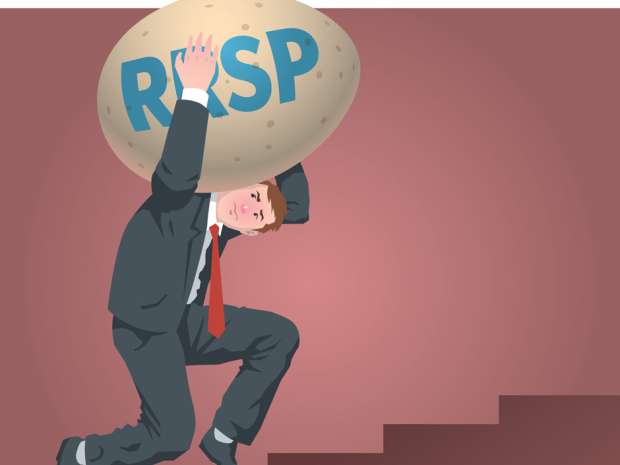
It turns out that engineering has allowed me to assist clients in managing their nest eggs. Mixing engineering concepts with wealth strategies pays off, so let’s look closer.

What is reverse engineering?

Reverse engineering usually involves taking an object apart and analyzing it in detail: something that engineers are skilled at.

I specifically refer to reverse engineering of retirement goals: working backwards from the desired end results to design a prudent plan for each family.

Reverse engineering retirement consists of two main components:

  1. Estimating the size of nest egg that represents the retirement goal.
  2. Ballparking the investment rate of return to achieve or maintain that goal.

Let’s consider this sample situation:

Assume the nest egg to be accumulated is $1,500,000. Say there are 10 years to go until retirement and today’s portfolio value is $700,000. That implies an annual return of over 7.9% to get there. Perhaps optimistic for today’s low-return environment. Continue Reading…

The stress of moving sideways in high-priced housing markets

By Penelope Graham, Zoocasa

Special to the Financial Independence Hub

Think breaking into the Toronto real estate market is tough? Try making a lateral move; there’s a whole new crop of challenges facing those looking to cash in on their home’s equity, according to a recent bank report.

While much has been made over the plight of first-time buyers, they’re not the only ones feeling the pinch. Home owners with a long-term position in the market and who have become considerably house-rich — namely baby boomers — are also put off by the market’s challenges.

And while this generation has received criticism for hunkering down in their family homes rather than adding them back to the supply of low-rise, detached housing, the fact is many would love to cash out: but they face the same hurdles as their millennial counterparts.

According to a recent poll conducted by CIBC, two in five Canadian homeowners planning to sell their homes are poised to profit on their home sale — but 62% are reluctant to put it on the market due to the high cost of buying another home.

“In today’s market, homeowners are facing a conundrum as to whether to buy, sell or stay put,” says David Nicholson, vice-president of CIBC Imperial Service. “Buying or selling your home is one of the biggest decisions you’ll make. That’s why it’s important to make the decision for the right personal and financial reasons and see past the noise in the marketplace. Evaluating the pros and cons as part of an overall financial plan can help you decide what’s best for you.”

Sixty-seven per cent of boomers (aged 55 and up) indicated they wished to downsize to a smaller home, condo or nursing / retirement home.

The search for affordable options

Most downsizing boomers aren’t looking to acquire another million-dollar detached property, but recent price surges within the condo market may leave them feeling as though their options are limited. The Greater Toronto Area market has infamously experienced a 33% year-over-year price increase, and much of that double-digit growth has spilled over into the condo segment.

Continue Reading…

How to profit from the Domain Name business

By Katrina Manning

Special to the Financial Independence Hub

We’ve all heard of domain names purchased 10 years ago for $10 dollars and selling for $20 million today — or some other story of similar nature.  As a result, you might be interested in buying and selling domain names either full-or-part-time for profit. It seems so easy and simple: just pick the right domain name, hold on to it for a while then sell for profit.

But is it really that simple? Well, since everyone is online –you can imagine that the ocean is wide. And you don’t want to start with a bit of research. You need a map, and we’ve created one for you here.

Stay focused

There are millions of domains already registered, especially the easiest ones that consist of one word such as apple.com, Facebook.com and so on. On the other hand, there are countless combinations of available domain names to register, especially if you consider the thousands of new domain name extensions such as .ng domain or .eu domain names.

As you can see, it is critical to keep your focus narrow. What subjects are you already familiar with, which can make the process much simpler? Do you have experience with animals or tech? Have you worked in the entertainment or service industry? Think about the industries you are most familiar with first, and start with that. Why is this important? Well, you don’t want to target prospective buyers based on their potential for sales if you don’t have insight into the industry you are aiming at.

In other words, don’t just rush to buy multiple domain names you think would appeal to health care clinics you’ve identified as potential buyers. You might not be aware of any industry-specific rules that govern facets of legal advertising. You won’t make much of a profit, if any, if you buy domain names your target audience can’t use. This is where it pays off to take the time to understand your audience.

Take the time needed to learn

Continue Reading…

How to create a winning retirement income strategy

A successful retirement begins with a successful retirement income strategy.

One of the things that investors of all ages fear is that they won’t have a good financial plan in place so that they have enough retirement income to live on once they’ve stopped working.

Here are some ways to ease that anxiety:

In retirement, try to even out (equalize) your income with your spouse’s income, to lower overall taxes. Here’s how:

1.) Have the higher income spouse pay the household bills

The easiest way to even out income between two spouses is to have the higher-income spouse pay the mortgage, grocery bills, medical costs, insurance and other non-deductible costs of family life.

2.) Set up a spousal RRSP

Registered retirement savings plans, or RRSPs, are a form of tax-deferred savings plan designed to help investors save for retirement. RRSP contributions are tax deductible, and the investments grow tax-free.

3.) Pay interest on your spouse’s investment loans

If the lower-income spouse takes out an investment loan from a third party, such as a bank, the higher-income spouse can pay the interest on that loan.

RRIFs are a great long-term retirement income strategy

Continue Reading…

Why Baby Boomers like me can’t retire

Mike Drak

After having talked to numerous Baby Boomers lately, I’m convinced more than ever that the majority of we boomers really don’t want to retire, we just need a change, and some help figuring out what to do with the rest of our lives.

In this article I would like to share my thoughts on why some people feel the need for a significant change late in their careers and why traditional retirement is not the answer. I know these feelings because it happened to me. And I’ve been telling the story at a number of presentations Jonathan and I have conducted at various branches of the Toronto Public Library in recent weeks.

The photo shows  one such presentation at the York Woods branch on Victory Lap Retirement, followed by a Q & A session. I love doing these presentations, as it gives me an opportunity to present to my fellow boomers and find out what is going on out there in the real world.

I Started Feeling Antsy Late In My Career

There were a number of reasons for the change I made and here they are in no particular order:

1.) I became very good at doing my job. This naturally happens when you do the same job for twenty plus years. You get comfortable, there is little challenge and you plateau.

2.)  After 36 years of work I was tired of taking orders and being told what to do.

3.) I became bored with my job. That is what happens when you turtle and continue to play safe. I wasn’t learning anything new and I didn’t derive any satisfaction (happiness) from my job. The thrill was long gone and winning more sales contests and trinkets didn’t matter to me anymore. I remembered laughing a lot more earlier in my career. I knew I needed to laugh more before it was too late.

Continue Reading…