


General

The weightlifting Granny

By Jessica Walter

Special to the Financial Independence Hub

A few years ago, Shirley Webb of East Alton, Illinois, was unable to get off the floor without the aid of a piece of furniture. Neither could she climb the stairs without holding onto the railing. Her only source of exercise came from mowing the lawn.

Now, the 78-year-old grandmother has learnt how to lift a 225-pound barbell. She no longer needs furniture or railings to help her. She’s a record breaker, setting records in Illinois for deadlifting at 237 pounds and in Missouri for 215 pounds, both in age and weight groups.

Along with her granddaughter, Webb joined Club Fitness in Wood River and, within six months of work with her personal trainer, John Wright, she was lifting in the 200-pound range.

So, what advice can seniors take from the weightlifting grandmother?

1.) Find a workout partner

Fitness experts believe that working out with someone will help you more than if you were to work out alone. Not only is it easier to set goals with someone and then motivate each other to achieve them, it’s more fun. Exercise shouldn’t be a chore!

2.) Choose a senior-friendly gym

You’re more likely to go to a gym if you like the premises and the staff – the more welcome you feel, the more fun it will be to go. In an interview with ESPN, Webb said the staff at Club Fitness explained all the equipment to her and her granddaughter before they signed up so she knew exactly what was what. Don’t forget to visit a few local gyms before you sign a contract! Continue Reading…

Estate Planning For Couples: You Can’t Take It With You

According to an Ipsos Reid poll commissioned by the CIBC, only 30% of Canadians have a formal estate plan in place. The reasons for not having one vary – some people think they are too young, or don’t have enough assets. Some believe that their belongings will automatically go to their spouse. Many couples think they have lots of time, and some just don’t want to deal with it.

Everyone needs to plan for the inevitable.

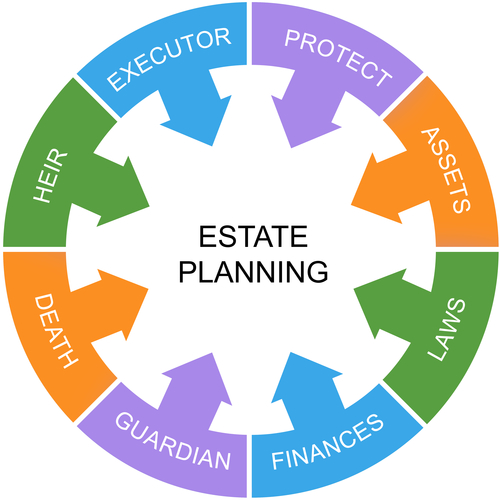
Estate planning is for your loved ones and for your own peace of mind. It means arranging how you leave your money and property when you die and it must follow the laws of the province you live in (or where the property exists).

Estate planning involves:

  • writing your will and naming someone to be responsible for carrying out your wishes
  • distributing assets during your lifetime as well as upon your death
  • arranging insurance to cover costs and provide for your survivors
  • specifying who will handle your affairs if you become unable to manage them yourself, and giving them direction through a power of attorney and medical directive.

Estate planning for young families

When you are raising a family, and are just starting to accumulate assets, consider these steps: Continue Reading…

Raising Retirement Age: Can the Liberals find a way in upcoming Budget to tempt us to wait until 67 for OAS & CPP?

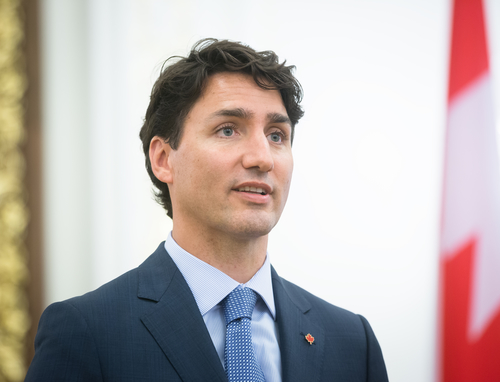
PM Trudeau reversed the Conservatives’ plan to raise OAS from 65 to 67, making it harder to follow advice to raise the Retirement Age going forward.

My latest Motley Fool blog looks at whether the Liberal Government intends to implement any suggestions by its Economic Advisory Council about raising the Retirement Age. See Will the Looming Federal Budget Try to Slip by Another Senior’s Benefit?

Of course, as one source says, the Government officially doesn’t want to raise the age of OAS and CPP eligibility from the current 65 to 67. After all, if it wanted to do that, all it had to do was leave in place the Harper administration’s policy that would have done just that for Old Age Security, albeit phased in gradually by the year 2023.

Even so, they must be sorely tempted, considering the fact that so many other Governments around the world are raising the retirement age to accommodate rising life expectancy patterns. The number of OAS recipients is expected to double over the next two decades, as more and more Baby Boomers take the plunge into Retirement, or at least Semi-Retirement.

Still, there’s more than one way to skin a cat. As I point out in the blog, anything as radical as raising the retirement age needs to be implemented gradually so as not to wreck the well-laid plans of financial advisors and clients who may have been counting on the rules as they now exist.

Delaying retirement age should be voluntary, not compelled by Government

Continue Reading…

“Botched” CRM2 implementation just adding to investor confusion: veteran adviser

Tim Paziuk

By Tim Paziuk

Special to the Financial Independence Hub

After 37 years in the financial services industry I realize I shouldn’t be surprised, and I’m not. I’m shocked. Shocked by the confusion created by the very people who are charged with the responsibility of watching out for us, mainly the Canadian Securities Administration (CSA).

Here is the first paragraph from the overview on the CSA website

The Canadian Securities Administrators (CSA) is an umbrella organization of Canada’s provincial and territorial securities regulators whose objective is to improve, coordinate and harmonize regulation of the Canadian capital markets.

I draw your attention to the words ‘improve, coordinate and harmonize’. In my opinion, they have done more to hinder and confuse the average Canadian than to provide clear and complete information.

Let me give you some background on the recently implemented program referred to as the Client Relationship Management Model – Phase 2 (CRM2).

According to the Ontario Securities Commission:

The Client Relationship Model – Phase 2 (CRM2) amendments to NI 31-103 that came into effect on July 15, 2013 are being phased-in over a three-year period. These amendments introduce new requirements for reporting to clients about the costs and performance of their investments, and the content of their accounts. The requirements apply to dealers and advisers in all categories of registration, with some application to IFMs as well. For more information about these amendments, see CSA Notice of Amendments to NI 31-103 and to 31-103CP (Cost Disclosure, Performance Reporting and Client Statements). Continue Reading…

Retired Money: Pension Splitting is now ten years old

Pension Income Splitting can dramatically lower taxes for senior couples considered as a family unit

The latest instalment of my MoneySense Retired Money column is now available: click on the highlighted text to access the full version of the column: Pay Less Tax with Pension Income Splitting.

As I note, It’s hard to believe but the great boon of pension income splitting has now been available to Canadian retirees for a full decade. Coupled with the 2009 introduction of TFSAs, these two tools have certainly been a welcome addition to the arsenal of retirees and semi-retirees.

Pension splitting can generate many thousands of dollars in additional after-tax income for retired couples, particularly if – as is often the case – one of them enjoys a generous defined benefit (DB) pension and the other does not.  Pension splitting is based on the fact that Canada’s graduated income tax system imposes far higher rates of tax on big earners than on modest or non-existent earners. Pension splitting can result in a highly taxed income and a low-taxed one being merged (conceptually speaking) into what amounts to a modest mid-level amount of tax for the couple as a whole, putting thousands of extra dollars into the family’s collective pocket each year.

The tax benefits vary with the marginal tax rates of both spouses.  With pension splitting, if one spouse has no pension and the other has a $60,000 pension the couple as a whole ends up being treated exactly like a couple with two $30,000 pensions. The bonus is that both spouses can claim the $2,000 pension income s and the higher-income spouse may no longer be subject to clawbacks of Old Age Security.

Pension Splitting is a paper transfer at tax time

Continue Reading…