


General

4 sensible financial literacy books as gift suggestions

Santa Clause putting a shiny Christmas present into a stocking. Isolated on white.Want to give the gift of financial literacy to a loved one this Christmas?

We have a few stocking stuffer ideas,  following the just-completed Financial Literacy Month in Canada. Throughout November,  there were lots of articles out there on the importance of financial literacy and even more opinions about how to improve it.

Some argue for it to be taught in schools:  aren’t our schools stretched enough for resources as it is?  Some say parents should make it a priority to teach their children about money but many parents struggle with money concepts themselves and “do as I say, not as I do” isn’t always convincing.  Many argue very credibly that the financial services industry in Canada generally works to separate people from their money rather than to educate them about how to best grow their money.

We’re not sure what the answer is but agree it’s an important subject.  If you’ve already read David Chilton’s The Wealthy Barber and are ready to move on to the next step, here are a few investment books that are sensible and concise.

*We first published this list in February 2015 and have received positive feedback!

1) The Investment Answer – Daniel Goldie and Gordon S. Murray – 2011
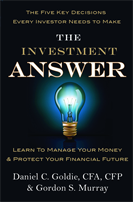
The Investment Answer – Daniel Goldie and Gordon S. Murray – 2011

Publisher summary:

“What if there were a way to cut through all the financial mumbo-jumbo? Wouldn’t it be great if someone could really explain to us–in plain and simple English–the basics we must know about investing in order to insure our financial freedom? At last, here’s good news. Jargon-free and written for all investors–experienced, beginner, and everyone in between–The Investment Answer distills the process into just five decisions–five straightforward choices that can lead to safe and sound ways to manage your money.”

2) The Little Book of Common Sense Investing: The Only Way to Guarantee Your Fair Share of Stock Market Returns – John C. Bogle – 2007
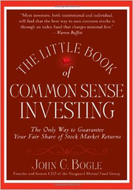
The Little Book of Common Sense Investing- The Only Way to Guarantee Your Fair Share of Stock Market Returns – John C. Bogle – 2007

Publisher summary:

“Investing is all about common sense. Owning a diversified portfolio of stocks and holding it for the long term is a winner’s game. Trying to beat the stock market is theoretically a zero-sum game (for every winner, there must be a loser), but after the substantial costs of investing are deducted, it becomes a loser’s game. Common sense tells us-and history confirms-that the simplest and most efficient investment strategy is to buy and hold all of the nation’s publicly held businesses at very low cost. The classic index fund that owns this market portfolio is the only investment that guarantees you with your fair share of stock market returns. To learn how to make index investing work for you, there’s no better mentor than legendary mutual fund industry veteran John C. Bogle.”

3) The Empowered Investor: A Canadian Guide to Building a Better Investment Experience – Keith Matthews – 2013
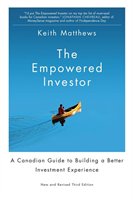
The Empowered Investor- A Canadian Guide to Building a Better Investment Experience – Keith Matthews – 2013

Publisher summary:

“With The Empowered Investor: A Canadian Guide to Building a Better Investment Experience, author and advisor Keith Matthews answers the call for a clear, intelligent guide for Canadians looking to invest wisely. Dispensing with jargon and hype, The Empowered Investor is an easy-to-read finance and portfolio management book that offers a down-to-earth treatment of a complex subject with an accessible style that will appeal to novices and experts alike.”


4) Exchange Traded Funds for Canadians for Dummies – Russell Wild and Bryan Borzykowski – 2013
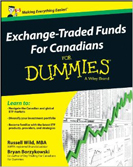
Exchange Traded Funds for Canadians for Dummies – Russell Wild and Bryan Borzykowski – 2013

Publisher summary:

“The fast and easy way for Canadians to understand and invest in ETFs – Exchange-traded funds (ETFs) are an increasingly popular part of the investing landscape, being less volatile than individual stocks, cheaper than most mutual funds, and subject to minimal taxation. But how do you use this financial product to diversify your investments in today’s ever-changing market?

Exchange-Traded Funds For Canadians For Dummies shows you in plain English how to weigh your options and pick the ETF that’s right for you. It tells Canadian investors everything you need to know about building a lean, mean portfolio and optimizing your profits. Plus, the book covers all of the newest ETF products, providers, and strategies, as well as Commodity ETFs, Style ETFs, Country ETFs, and Inverse ETFs. The only book on the market catering specifically to Canadian investors.”

5 more suggestions

Editor’s Note: For a list of  5 more financial book suggestions, read this article from Saturday’s Financial Post: Here’s a look back at some of the best personal finance and economics books of 2016.

graham-bodelGraham Bodel is the founder and director of a new fee-only financial planning and portfolio management firm based in Vancouver, BC., Chalten Fee-Only Advisors Ltd. This blog is republished with permission: the original ran November 29th here. 

Mental health & credit-card debt during the holidays

By Eva Wong

Special to the Financial Independence Hub

It’s the most wonderful time of the year and many of us celebrate by making purchases for our loved ones. Sometimes lots of purchases.

We at Borrowell paused to consider how this time of year might make Canadians in debt feel.

Earlier this year, a survey we commissioned found that 58% of Canadians have carried or are currently carrying a balance on their credit card. That doesn’t include other forms of debt, like student loans, lines of credit, car loans or mortgages. When you factor in that the average consumer owes just over $22,000 in debt in 2015, not including mortgages, we wondered why no one was addressing how Canadians juggle the expectations of holiday shopping with the realities of their debt.

Dr. Oren Amitay, a noted Toronto psychologist, told us the holiday shopping season is a time of year that can cause emotional and psychological distress for people who are in the red.

Financial pressure takes its toll

“A lot of people try to ignore their debt by doing things like not opening their bills,” explains Dr. Amitay. “But you can’t run from it at holiday time. Continue Reading…

15 tax saving tips to end 2016

By David Rotfleisch

Special to the Financial Independence Hub

Want to pay less tax? The year-end brings with it your last chance for legitimate, allowable opportunities for tax planning that can lower your taxes payable to the Canada Revenue Agency (CRA) for 2016.

1.) Timing of Expenses

Taxpayers in business should accelerate expenses to make purchases that can be deducted this year rather than waiting for 2017. Employees can claim tax depreciation (CCA) on cars, planes, and musical instruments. Tradespersons and apprentices are permitted to deduct the cost of their tools up to a limit. Individuals planning on purchases should do so now to enjoy the benefit of depreciation claims this year.

Plan to purchase any capital property before the tax year-end to be able to claim CCA (at 50% of full rate) this year.

2.) RRSPs

RRSPs are a key tool for tax planning and allow Canadians to receive a deduction for the amount contributed, while also allowing the capital to accumulate tax-free until retirement.

Even though the deadline is March 1st, 2017, taxpayers should contribute to their RRSPs as soon as possible for compounded growth.

3.) Open TFSAs

While deposits to a Tax-free Savings Account (TFSA) are not tax deductible like RRSPs, accrued profits in the account are not subject to tax when earned or when withdrawn. Consider lending funds to a spouse or children to allow them to make their own TFSA contributions. Continue Reading…

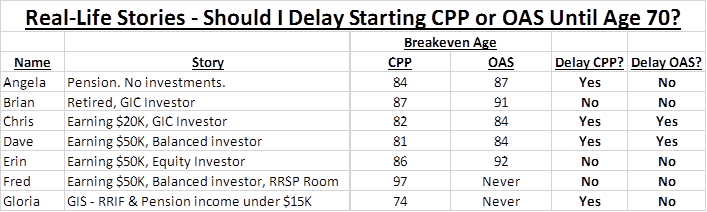
Delay CPP & OAS until 70? – Some case studies

By Ed Rempel

Special to the Financial Independence Hub

Planning the income for seniors often has the coolest opportunities to increase after-tax income.

The government pensions, CPP [Canada Pension Plan] and OAS [Old Age Security], are full of opportunities, because:

  • Seniors often have flexibility in taking taxable and non-taxable income.
  • OAS is subject to several “clawbacks” in addition to income tax.

To see these opportunities, you need to think creatively about pensions, tax and investments.

For example, in my recent article “Should I start my CPP early? – Real-Life Examples,” I found the single most important factor in whether to take CPP early before age 65 is how you invest.

Here you will see that the single most important factor in deciding whether to delay CPP after age 65 is: Will you withdraw more from your investments if you delay starting?

A quick review of the facts:

Delayed CPP Rules

  • The maximum CPP benefit in 2016 at age 65 is $1,092.50 per month, or $13,110 per year.
  • You can delay starting up to age 70 and you get 8.4% more for every year after age 65. If you start at age 70, you get 42% more for life, so the maximum is $18,616 per year.
  • New rules in 2012 allow you to start CPP even if you are still working.
  • If you are over 65 and still working, you can choose whether or not to pay into CPP.
  • Your 8 lowest earning years since age 18 (plus years when you had kids under age 7) are “dropped out” in calculating how much CPP you get.

Delayed OAS Rules

  • The maximum OAS benefit in 2016 at age 65 is $578.53 per month, or $6,942 per year.
  • You can delay starting up to age 70 and you get 7.2% more for every year after age 65. If you start at age 70, you get 36% more for life, so the maximum is $9,442 per year.

Continue Reading…

Americans worried about Retirement, unlikely to save more in 2017

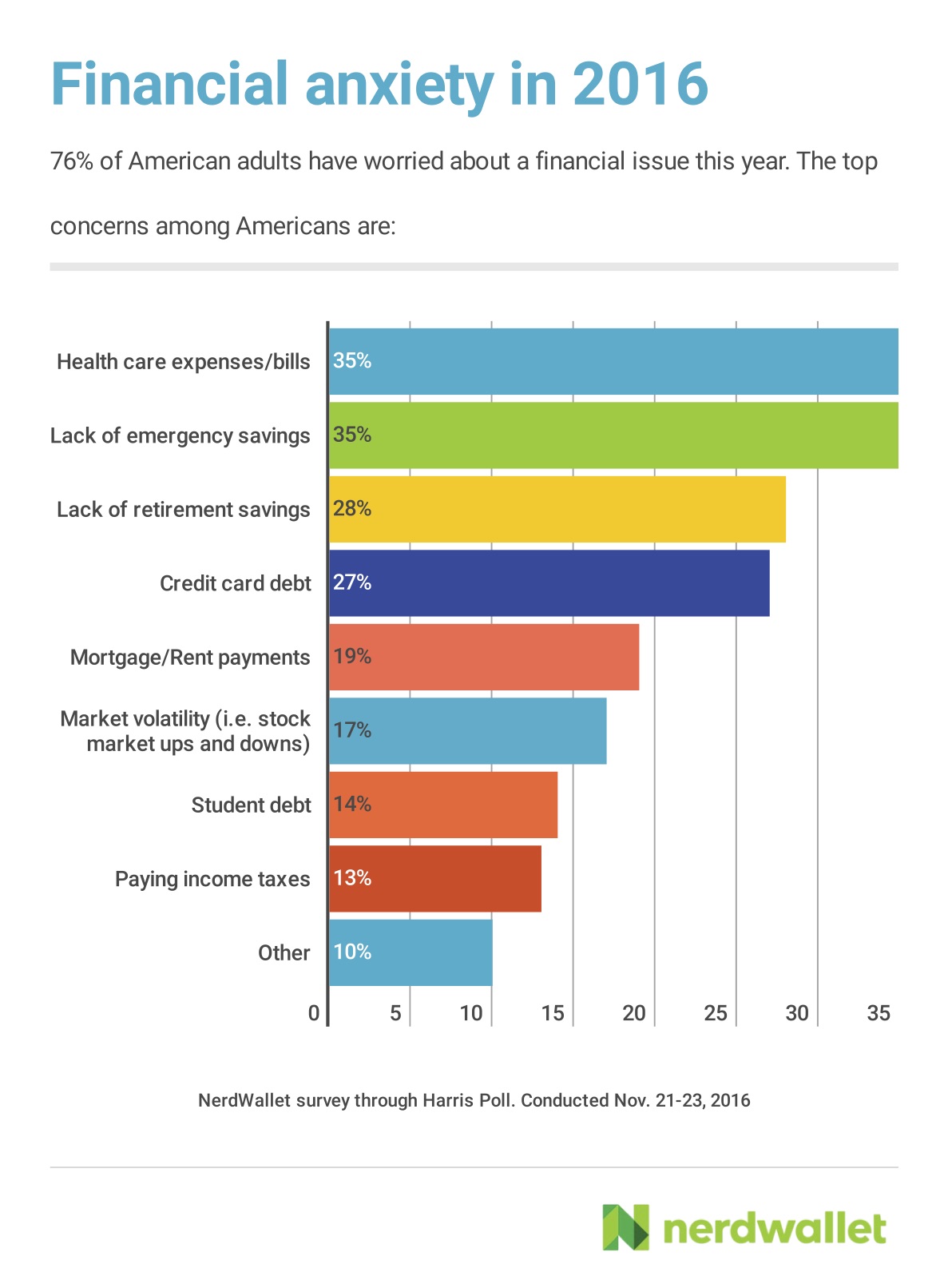
While 70% of Americans say they saved for retirement in 2016, many are anxious about the level of their savings and the need to direct money towards other goals and expenses, says a Harris Poll of 2,000 American adults conducted by the personal finance site NerdWallet. You can find the full results here.

Other major financial concerns include lack of emergency funds (cited by 35%), health care expenses (also 35%)and credit-card debt (27%). Retirement remains the most commonly cited savings priority (mentioned by 28% surveyed) but only 29% feel confident they saved enough in 2016, while one in three aren’t saving for retirement at all (including 43% of Millennials aged 18 to 24). Lesser forms of financial anxiety in 2016 include making mortgage or rent payments (19%), stock market volatility (17%), student debt (14%), and paying income taxes (13%).

Next year may not be much better: of those with workplace pensions, only 32% plan to increase their contributions in 2017. Older Americans aged 45 to 54 are most likely to report concern about lack of retirement savings (40% surveyed), while only 20% are confident they saved enough this year.

Savers should favour tax-advantage accounts over savings accounts

Continue Reading…