

General

The New Case for Gold

Closeup silver ingots and golden bullions in bank vault. Finance 3d illustrationMy latest blog for Motley Fool Canada was posted today: click on The New Case for Gold.

That headline also happens to be the title of a new book by global currency guru James Rickards. You can find the book here.

What does Rickards mean by the NEW case for gold? When I say gold here, by extension I mean silver and other precious metals, preferably in bullion or coin format, not “paper” or electronic substitutes.

Rickards does go beyond the familiar arguments of gold as a combined inflation/deflation hedge, and does so in a 21st century context. He breaks new ground by referring to gold’s role in cyberfinancial warfare, its importance in economic sanctions in nations like Iran, and gold’s future as a competitor to the world money system known as SDRs: the Special Drawing Rights issued by the International Monetary Fund.

G-Day approaching
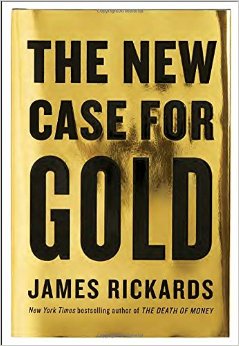
51bmOorQk5L._SY344_BO1,204,203,200_HIs main thesis is that G-Day is rapidly approaching: an ominous day when all the investors with mere paper or electronic claims on bullion actually attempt to procure the actual physical underlying metal. Like a run on the bank, the claims would far exceed the actual amount of the available metal. If and when that occurs, he believes the price of the metal would soar to over US$10,000 per ounce, in which case even a 10% insurance position would nicely cover losses in other asset classes should such a global monetary collapse actually occur.

The Real Crash

The Motley Fool blog also looks at another “bear” book that is similarly bullish on gold: the updated 2016 edition of Peter Schiff’s The Real Crash: How to Save Yourself and Your Country. Continue Reading…

The four Ds to buying your first home

An old wooden house in Dalarna, SwedenBy Sheila O’Hearn, Zoocasa

Special to the Financial Independence Hub

 “If a monkey can be taught to salt away money by sticking it in a sock, so can we.”

That’s what my partner and I told each other the day we decided to start saving for a home. Real estate can be tough, so we started our plan early. In some ways, it was madness. We still had to pay monthly rent and a first baby was on the way. It meant cutting back on activities we enjoyed, little extras and big extras.

But what we had going for us were the four D’s: the dream, the drive, the discipline, and a deadline.

Eventually we hit our target and moved to a small town where houses still cost less than they do in a city. Ours was a modest, century-old farmhouse that would require work, just right for my partner’s creative outlet. It was a cozy fit for our two additional children, but it was home and has been for 28 years.

How a person or couple saves for their first home is not a question of doing it one way, but of having knowledge of the options to make informed choices and a solid plan.

The dream

Continue Reading…

Millennial Blog Wrap: Budgeting now to be debt-free later

Business desk concept - BUDGETBy Helen Chevreau, Hub Staff

As a millennial, it’s important that we begin to create good financial habits to govern our lives, starting with budgeting.

From a healthy morning routine, to being grown-up about money, as we get into this new stage in our lives, we need to make sure to put ourselves on the right track, or risk ending up in serious financial trouble.

From the blog Making Sense of Cents comes a new post that touches on some common bad money habits that are extremely easy to fall into. Whether you’re of the “out-of-sight-out-of-mind” or the “it’ll-never-happen-to-me” mindset, or any of the other bad money habits mentioned, this post is here to help you change your ways before it’s too late.

Now, Not Later

Along the same lines, it seems that the bad habit of paying down debts more slowly to reap the rewards of ‘more cash in hand how’ is springing up, and Bridget Eastgaard of ‘Money After Graduation’ is here to tell us why that’s such a terrible idea. Continue Reading…

Six rules for Foolish investing, as Fools visit Canada

IMG_6616(2)
L to R: Motley Fool’s Gardner, Butler, Muckerman and Gillies (Photo J. Chevreau)

Motley Fool co-founder and CEO Tom Gardner and his team of Canadian stock analysts were in Canada for a members-only event in Toronto on Thursday night.

Pictured is Gardner (in blue on the left) asking for stock buy and sell recommendations from a panel of three Fool analysts. From left to right, they are Stock Advisor Canada’s Iain Butler and Taylor Muckerman, and Pro Canada’s Jim Gillies on the extreme right.

The colourful headgear is of course central to the Motley Fool brand. The stock newsletter publishing company is based in Alexandria, VA. It’s also well known for its daily financial podcasts, with most of the panelists regular contributors.

The 6 Rules

Gardner kicked off the evening with his six rules for succeeding as a Motley Fool investor:

Rule #1:  Everyone should have at least 20 to 40 stocks. That’s a minimum but there’s no need to cap it at 40, Gardner said. Continue Reading…

Index mutual funds or ETFs?

patmckeough
Pat McKeough

By Pat McKeough, TSINetwork.ca

Special to the Financial Independence Hub

Index mutual funds can provide a low-cost way to invest in the stock market. However, they have disadvantages and there are better alternatives.

Index mutual funds are among the better financial innovations to come along in the past few decades. These are specialized mutual funds that invest so as to come close to equaling the performance of a market index, such as the S&P/TSX 60.

Index mutual funds do show better long-run performance than more than half of all actively managed mutual funds with long-term track records. That’s partly because index fund fees run around 1.0% of assets per year, compared to 2.5% or more on many broker-sold mutual funds.

One big advantage of index mutual funds is that they can help you avoid the risk of choosing a fund with a management style that virtually guarantees below-average long-term performance.

For example, mutual funds that pursue a trading or sector-rotation approach to investing belong in this can’t-win category. Managers of these funds try to out-perform the market by betting on relatively short-term trends, rather than putting their investors in a position to profit near automatically from long-term growth in the economy. This can work, but only for limited periods.

In any one year, the top fund is often run by a market timer who is having his or her proverbial “day in the sun.” In any one decade, however, the top funds are generally run by conservative managers who focus on long-term growth in the economy.

Spread investments across five main economic sectors

Continue Reading…