General

Financial Freedom is the “New and Improved” Retirement

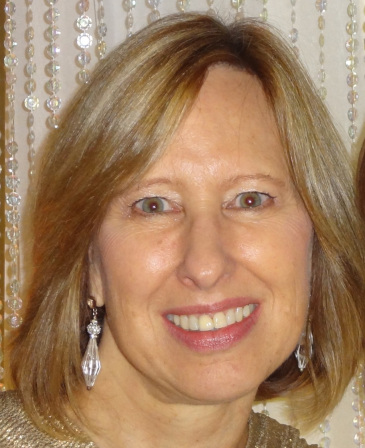
Below is a guest blog by financial educator, Chartered Professional Accountant and money coach Patricia Gass, who tweeted me that “You inspired this” and granted permission to post on the Hub.  I do that below with only slight edits and formatting tweaks because I can use all the help I can get at this stage, but please check out the actual blog at Patricia’s site, Let’s Talk About Money. She is @gasspatricia on Twitter.

Let us indeed talk about money! Naturally, I would have preferred that the title were “Findependence is the ‘New and Improved’ Retirement,” but we’ll have to go with what Patricia actually wrote. We can however agree that we both dislike the word Retirement. We suggested during Launch week that the word Retirement should itself be retired!

And that’s how Patricia begins her blog:

By Patricia Gass, CPA, CA
image
Patricia Gass

I’ve always hated the word RETIREMENT.

For me, this term comes with unpleasant images of failing health, unwanted naps and uninspiring leisure activities without purpose. Ouch! Maybe I’m too sensitive? Maybe it’s because my father lived only a year of his retirement “dream” before his sudden death. And for him, retirement was something he had longed for for quite some time. A hard-earned reward for being a productive and valuable employee for 45 years.

When I voluntarily left my corporate job several years ago, I didn’t know what to call myself. I tried the word “retired” but I would get strange and curious looks from people. “What do you do all day? You look too young to be retired” many would say. While I suppose the latter was meant as a compliment, it still made me feel uncomfortable. Less valuable to society. Idle and no longer needed. I must work on my mindset!

A new life chapter

But here’s the thing; I was happy … VERY happy! I left my job because I had a choice (financially speaking). My job was no longer giving me the satisfaction and fulfillment that I desired. I couldn’t imagine 5, 10 or even one more year of the same stuff. Achieving financial freedom (or close to it) opened up a whole new and exciting chapter of my life. I couldn’t wait to get started!

While I no longer needed to search for paid employment (although a little income is always nice), I knew I wanted to do something meaningful. Does paid employment mean greater value for society? The reality was that I wanted and needed time to figure out what meaningful meant to me. Little did I realize that the opportunity to help people, strengthen relationships, give back or volunteer would give me greater satisfaction than a higher salary!

The Gift of Time

From my own experience, the gift of time is a wonderful thing. That’s what you get when you achieve financial freedom. Money no longer becomes a big factor in your decisions. The world is full of endless possibilities … so many things to see, do, learn, explore and enjoy. Some need money, but not all do.

Financial freedom is a worthwhile goal at any age. I admire the many people today who are doing what it takes to make it happen. Especially the thirty and forty somethings that want it sooner,  not later. Maybe one day, it will become fashionable to build wealth rather than spend it?

I think my husband (who is also happily “retired” and proud of it) said it best …

Retirement (aka financial freedom) is about doing more of what you love and less of what you hate.

I couldn’t agree more.

Thanks to Jon Chevreau and his new Financial Independence Hub (worth a visit!) for the inspiration for today’s post.

Proud founder of the blog, Let’s Talk About Money, Patricia Gass, CPA, CA, provides personal finance coaching and education to improve your money skills. Follow her on linkedin, twitter or pinterest.

 

Meltup? The Coming Global Boom

global warming and meltingInteresting piece from Reuters a few days ago titled Time for a ‘Melt-up’: The Coming global boom.  The writer, Anatole Kaletsky, says this:

There are many fundamental reasons for believing that stock markets may have embarked on a long-term bull market comparable to those in the 1950s and 1960s, or the 1980s and 1990s, and that this process is nearer its beginning that its end.

He presents four arguments for a “structural bull market.”

1.) The worst financial and economic crisis in recent memory has ended and most of the world economy is enjoying “decent, if unspectacular, growth.”

2.) While not perfect, economic and financial policies around the world are predictable and so “unlikely to cause further market disruptions.”

3.) Technology continues to advance and innovation should stimulate investment and consumer demand.

4.) Inflation is “almost nonexistent” in the advanced economies, so “interest rates are guaranteed to stay low for a very long time.”

How to transition to retirement

DavidAston
David Aston

Good piece by David Aston in MoneySense magazine on the big next step for baby boomers and anyone else with sufficient wealth or pension income to stop working full-time. David is one of the best financial writers out there and it’s little wonder he’s won awards that prove it. Note that one of his sources in this piece is Lee-Anne Davies, whose Agenomics blog you can find links for in our Longevity & Aging section.

He also talks to actuary Fred Vettese (author of The Real Retirement) and fee-only planners Money Coaches Canada and Daryl Diamond, author of The Retirement Income Blueprint. Both are also listed here at the Hub’s “Getting Help” section and you can find my review of Daryl’s book in the Reviews section here.

The three levers

My favourite line from David’s piece is “You can make adjustments by pulling on three levers: save more, work longer or spend less in retirement.”

No mention of Findependence although David has mentioned it in the past. Like most mass media outlets, MoneySense is sticking with the word Retirement. Hey, I couldn’t get them to change from Retirement to Findependence even when I was the editor–in-chief!

But also check out Sheryl Smolkin’s guest blog here at the Hub today: she chronicles her ten-year road to Findependence (yes, she used that exact word!) that occurred AFTER she took early retirement at age 54.

As I’ve often said, that’s way too young to retire and do nothing and Sheryl has doubled her retirement savings since her “first” retirement. As she says, it’s all about second or “encore” careers. As is also clear, she finds working on your own terms (aka Findependence) to be lots of fun.

I agree. Sure beats watching daytime television!


My road to Findependence: Guest Blog by Sheryl Smolkin

sherylholdingrufus.
Sheryl Smolkin and Rufus

By Sheryl Smolkin

Special to The Financial Independence Hub 

Almost 10 years ago, at age 54, I took early retirement from my job as a pension lawyer and Canadian research director of an international benefits consulting company. I locked the door of my downtown office for the last time on a Friday; on the following Monday I started my new career as editor-in-chief of an industry magazine.

My new job paid only about one third of what I earned before, but I left with a defined benefit pension (albeit reduced by about 30%) and retiree health benefits so I was prepared to take the risk in order to try something new.

With the benefit of hindsight, I can say it was a totally audacious move. I knew how to write peer-reviewed, factual client publications but didn’t have a clue about the economics of running a trade magazine or how to turn a bunch of disparate articles into a cohesive product.

Hard work but fun, and I learned fast Continue Reading…

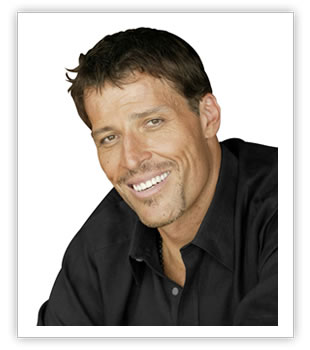
Tony Robbins on how to invest like a billionaire

tonyrobbins
TonyRobbins.com

Via Fred Kirby’s Permanent Alert comes this morning’s piece on Marketwatch written by Tony Robbins (yes, the financial guru with the cameo spot on the movie, Shallow Hal) on how to invest like a billionaire. Fred, by the way, is one of the true fee-for-service advisers listed in our “Getting Help” section.

But back to the Robbins piece. He starts with the premise that the key to gaining financial freedom (aka Findependence?) is to control your money mistakes. The money masters share four traits:

1.) Don’t lose. (remember Warren Buffett’s two rules, the second of which is “Don’t forget Rule 1: Don’t lose money.”)

2.) Risk a little to make a lot.

3.) Anticipate and diversify.

4.) You’re Never Done.

P.S. After this was posted, a few financial advisors griped about whether we should be helping to publicize Robbins’ new book, his first in a long while. But check out this article about ten things one influential writer learned from Robbins.