Longevity & Aging

No doubt about it: at some point we’re neither semi-retired, findependent or fully retired. We’re out there in a retirement community or retirement home, and maybe for a few years near the end of this incarnation, some time to reflect on it all in a nursing home. Our Longevity & Aging category features our own unique blog posts, as well as blog feeds from Mark Venning’s ChangeRangers.com and other experts.

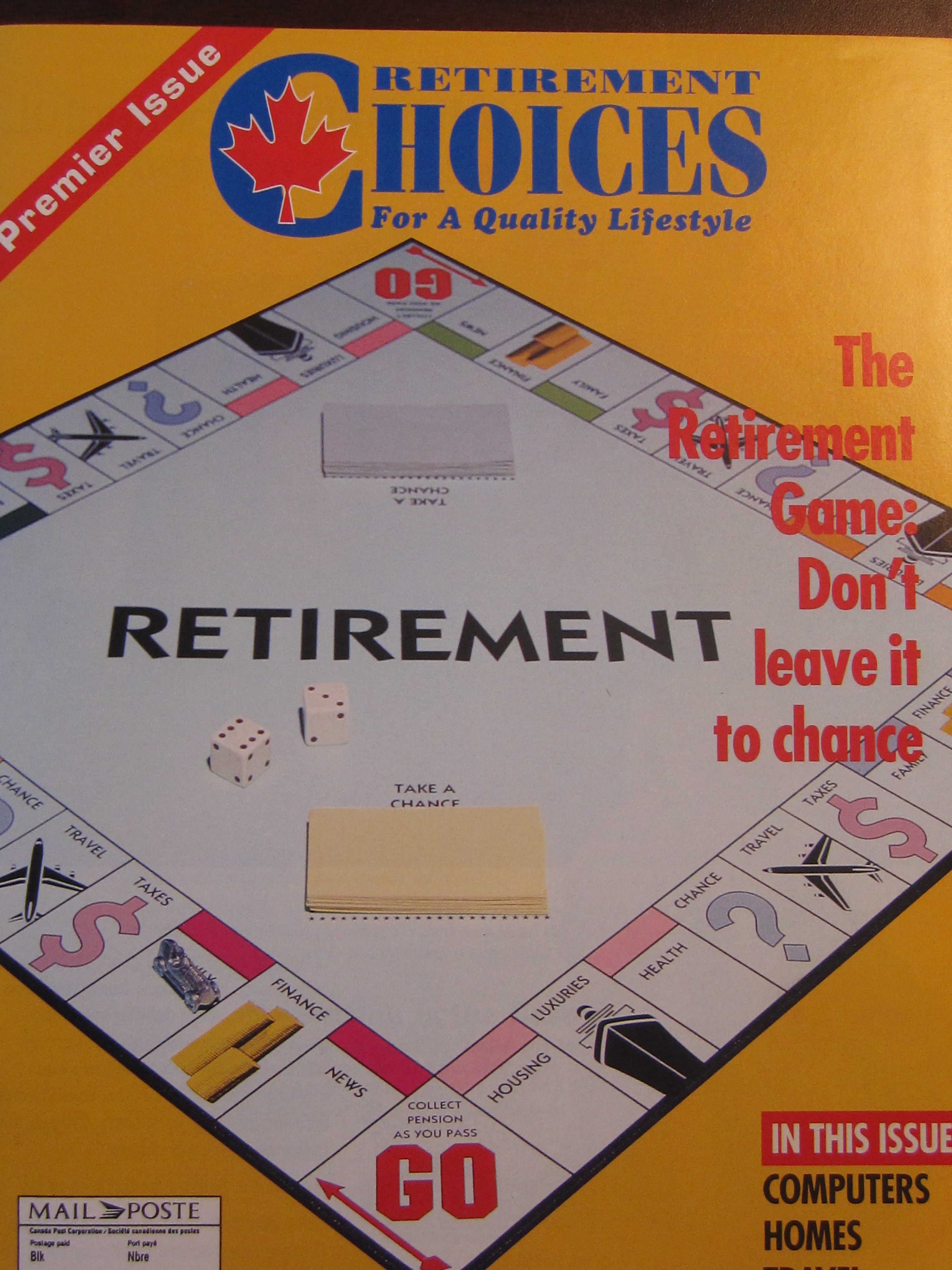
Retirement as a Board Game

img_8015by Mark Venning, ChangeRangers.com

Special to the Financial Independence Hub

At the risk of being too serious over a Labour Day long weekend, I decided to lay out some ideas for future blog posts. In the process, I found my way back to my newly refiled library of articles and reports related to a multitude of topics under the theme of aging and longevity.

This is one of my instinctive ways to begin thinking of the future: appreciate the threads of history and see how far we have come along on a particular subject.

Well, as it happens, when it comes to the subject of “Retirement,” maybe not that far. In some ways, the vocabulary associated with this concept still rests in the same dictionary from thirty years ago in the mid-1980’s to early 90’s. During that period in my retail career, I was setting up exhibits at Seniors consumer shows in Toronto, featuring travel-related products to a 55-plus market (which seemed to be the entry level, as I recall).

If you made the circuit up and down the aisles, you could satisfy all your “lifestyle” needs, from the Craftmatic bed (still going strong), to golf-oriented retirement resorts and back support systems. Twice in the day, you could sit in on a retirement planning seminar, featuring the top ten tips to finding financial security, before you returned to see the rest of the show, from RV sales to cremation services and vacation cruises.

Targeting the Seniors market

Fast forward to 1994, I found myself interviewing for, among other things, marketing positions that targeted this same Seniors market. None of that materialized, but I do recall one interview with the Canadian Snowbird Association in Toronto, where I was given a research project and as part of the process, make a business case to prove I really wanted to work with them. Everybody should be so lucky to be asked to do this. Excellent experience as it turns out.

One of the items the director tossed at me as I was leaving that first meeting was a twenty-page set of US and Canadian articles on the organization. Two main shout-out advocacy points for traveling seniors (notably the “over 65 age group”) were their “threatened” out of country medical coverage, and government clawbacks in health spending. Reading this now, by most press accounts this sounded militant back in 1993.

Thorny after all these years?

Continue Reading…

Never mind a few years more Longevity, what about Immortality?

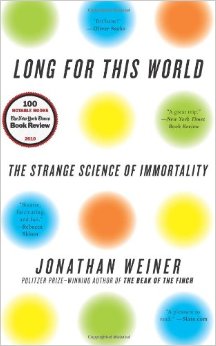
longforthisworldbookWe’ve reviewed several books about Longevity over the nearly two years the Hub has been running, the most recent one being Mark Venning’s review of The 100-Year Life. (See Superlongevity: The 100-Year Life in a Blue Zone).

I mentioned this book in my talk Thursday to T.E. Wealth, in the context of the prospect of an 80-year investment time horizon for Millennials. (Implication of that: 100% stocks!)

But until now, for obvious reasons, we have held off on the “farther out” topic of immortality.

Even so, there is a growing literature on the topic of what I might term “ultra-longevity.” One in this camp is Long for This World: The Strange Science of Immortality.

Published in 2010 by science writing teacher Jonathan Weiner, the book focuses on a real believer in the possibility of human immortality: one Aubrey David Nicholas Jasper de Grey, who he quotes thus: “When you start talking’ about five-hundred year humans, or one-thousan’-year humans, most members of the general public get a li’l bit nervous.”

Indeed, and Weiner himself seems skeptical, despite providing such a platform to Aubrey de Grey. As the back-cover blurb states, “Could we live forever? And if we could — would we want to?”

Continue Reading…

The next Boomer wave: Semi-Retirement

wave-1031216_640As I argue in my latest online column for MoneySense, published this morning, I believe that the next big wave to be surfed by the baby boom generation will NOT be retirement, but Semi-Retirement. Click on highlighted link to access: Why semi-retirement is the future.

See also my October 18th interview on this topic with CBC On the Money’s Peter Armstrong.

I’ve also argued that the boomers are largely going to be responsible for retiring the very word Retirement. This is of course the central theme of the book I co-authored with former corporate banker Mike Drak: Victory Lap Retirement, which MoneySense excerpted in its Summer retirement issue. See Why you wake up each day. (See also links to two recent reviews and a BNN clip listed at the end of yesterday’s blog: Millennials say Financial Independence defines Adulthood.)

Now a cynic might argue that in making the Victory Lap Argument, necessity is the mother of invention. A lot of us haven’t saved enough to retire in the style to which we’d like to be accustomed. Add to that the decline of corporate Defined Benefit pension plans and minuscule interest rates and there’s a lot to be said (at least financially speaking) for sticking at the old grind for five or ten extra years.

But those extra years don’t have to be spent as an employee in a corporate setting, complete with the challenges of coping with bosses, endless meetings, daily commutes and all the rest of it. There has to be a happy medium between corporate wave slavery and the traditional “full-stop” retirement that amounts to a permanent vacation. Some call this new stage between full-time careers and traditional retirement an encore career or a legacy career. We call it the Victory Lap.

The real wild card is extended Longevity

Continue Reading…

Super Longevity: The 100-year life in a Blue Zone

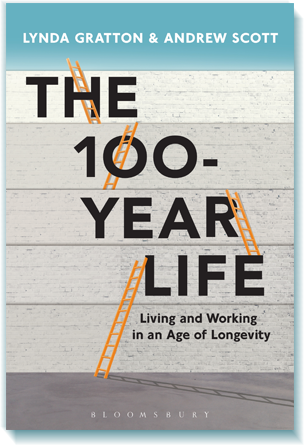
 the-100-year-lifeBy Mark Venning, ChangeRangers.com

Special to the Financial Independence Hub

If you accept the global average life expectancy as tabled by the World Health Organization (WHO), which currently rests at 71.4 (all factors calculated), it’s hard to imagine taking any projections fourteen years out to 2030 up to age 80, let alone 100.

There is no denying that the number of centenarians has increased in certain parts of the world, and I’m sure there’s a spot in a Blue Zone I can sell you on moving to, if you can’t begin one in your own back yard.

Canada, at an average life expectancy of 82.2, may not be a designated Blue Zone, but if you like the WHO’s info graphics colours, I’ll take Canada’s dark green – a lush, promising shade for an age of longevity. How fortuitous then, in the green of early July, that I should happen to be reading The 100-Year Life by Lynda Gratton & Andrew Scott, another volume written in the re-think aging category of a contemporary western world.

100-year life

Continue Reading…

Staying fit can save you money on Life Insurance

vitalityenglishleaderboard

By Syed Razad, LSM Insurance

Special to the Financial Independence Hub

The cost of life insurance increases as you get older. It is also more expensive for people with less than perfect health. Even if you are in perfect health today, you could become ill tomorrow or your fitness level could drop, especially if you live a sedentary life. People generally become less active when they get older. Insurance companies are now launching new incentives to help keep Canadians fit and healthy longer.

Manulife, one of Canada’s top insurance companies, is introducing an innovative new product called the Vitality Program. This product rewards policyholders for maintaining a high level of health and fitness and Goodlife Fitness is going to help with reduced membership fees.

“You make choices every day. With Manulife Vitality, you get rewarded for the healthy ones.”

This is the first time such a program has ever been offered. The Vitality Program combines the benefits of life insurance with two great features:

• The opportunity to save money on your life insurance premiums

• The opportunity to earn valuable rewards for improving your health

Continue Reading…