Building Wealth

For the first 30 or so years of working, saving and investing, you’ll be first in the mode of getting out of the hole (paying down debt), and then building your net worth (that’s wealth accumulation.). But don’t forget, wealth accumulation isn’t the ultimate goal. Decumulation is! (a separate category here at the Hub).

Canadians turn to digital advice amid Covid uncertainties

By Michael Walker, Royal Mutual Funds Inc.

Special to the Financial Independence Hub

In today’s digital world, we haven’t forgotten the importance of ‘old school’ methods to help people keep on top of their finances. Every November, as part of National Financial Literacy month, financial planners across the country talk to Canadians about the importance of having a plan in place to guide their financial future; one that takes into account the unexpected and which can be adjusted as lives change. You can make a plan on a pad of paper, you can create it on your laptop, your tablet or your mobile device. The important thing is to set it down so you can review it and make adjustments as your life changes.

What’s proving to be a real game-changer, however, is the access Canadians now have to financial advice through digital channels: particularly now, when economic uncertainty due to COVID-19 has many Canadians asking what lies ahead for their financial future.

Canadians who have seen their savings and investments negatively impacted by the pandemic have been seeking reassurance about what lies ahead for their financial future. They want to know how their retirement plans have been affected; will they need to work longer than expected? How can they rebuild their ‘just in case’ fund? Will they still be able to contribute to RESPs for their children or their grandchildren?

Increasingly, as physical distancing has meant Canadians are unable to meet in person with their financial advisors, we’re seeing Canadians turn to digital means to get answers to their financial questions. We already had well-established digital channels at RBC providing digitized advice and insights in place ahead of the arrival of the pandemic. When the number of clients seeking digital advice surged, we were able to quickly respond to their needs and not only provide digitized advice, but also connect clients remotely to our advisors.

Free digital advice accessed 24/7 from home or office

MyAdvisor – only available at RBC – is a key example. This free digitized advice service helps clients create a personalized plan online and provides access to the expertise of our advisors – all from the comfort of their homes and workspaces. Clients can readily view a complete picture of their financial accounts – even those held at other banks – on interactive screens. They have real-time, 24/7 access to their personalized plan through MyAdvisor’s digital dashboard and can see the impact of their money decisions before they make them. They also can get the advice they need, when they need it, by connecting with one of our advisors in their local community through live video, phone and, where possible, in person.

To give you an idea of how many Canadians are now seeking digitized advice supported by the expertise of our advisors, there are now over two million clients connected through MyAdvisor: twice the number as last year. Between April and September of this year, the number of clients logging in increased 21% and video appointments jumped to 20% from 2%. During that same timeframe we also saw a huge increase – 80% – in completed appointments, where clients went beyond logging in to look at their financial picture; they booked appointments and then met with our advisors. Continue Reading…

7 Retirement tips for young Savers

By Mikayla St. Clair

Special to the Financial Independence Hub

One might think that planning for retirement while still young is a hindrance and a waste of time. However, the truth is that early planning has its benefits because you are not just planning for your old age but preparing for every other day you live as well. Planning is not easy; you need a few retirement tips on how to go about it regardless of whether you are just thinking about it or already have a plan. Here are seven appropriate for young savers

1.) Focus on financial stability

The real aim of planning for retirement is to ensure one has financial freedom in old age. If having a retirement plan below 30 years seems off, look at it this way, retirement is like saving to ensure you are financially stable. This is feasible through working out your expenses early; save up for the coming month’s expenses.

2.) Live within your means

Often young people tend to live lives that are way beyond their means. With this, most of their earnings go into acquiring things they may not need. As a result, some rarely have anything for saving. While the idea of getting anything you want sounds good, it may only be momentary and poses dangers in the future.

3.) Have a Plan

With a single monthly pay-check, budgeting may be tricky. There are bills to be paid, debts to be cleared, and much more. That is why you need a plan, plan your expenditures, and ensure to leave some for savings. How do you achieve this?

Cut back on unnecessary costs; if your workplace requires long commutes, consider moving somewhere closer. Spending those extra dollars or minutes on the road may not seem harmful, but they accumulate into a significant loss of wealth with time. Start small; often, the ideology people have is that each contribution must be in high number in saving. However, you may invest too much and exhaust everything. Start small, and eventually, things will build up. Continue Reading…

The most under-owned Asset Class

Pretty much every serious investor has a favourite investment thesis or theme that they employ.  Many of these are mainstream, which, by, definition, means that a number of people do something similar.  One such theme is to invest disproportionately in either dividend paying stocks or stocks that have a history of raising dividends.  Some people like to invest in the so-called FAANG stocks.  Some people like to speculate and call it ‘investing’ by putting large percentages of their assets into new ideas like cannabis stocks.  The point is that there are different strokes for different folks and that virtually everyone can justify their own peculiarities.  People seldom resist their own ideas.

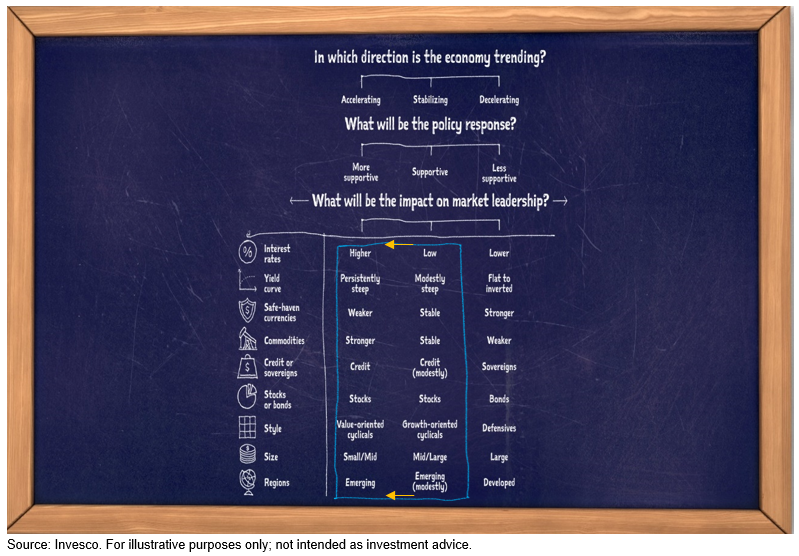
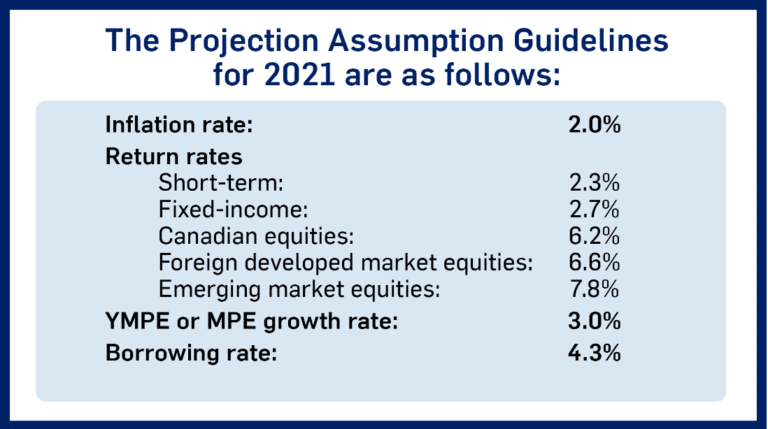
I’m like most people.  For a generation now, I have been pounding my fist on the table about the need to address what I see as a chronic under-investment in emerging market equities.  To me, this asset class makes sense from virtually every meaningful perspective: historical risk, expected return, co-variance, current valuation, prognosis for growth… you name it.

In a world where overall GDP growth is anemic and not likely to improve materially in our lifetimes, emerging economies are the only ones where economic (specifically, GDP) growth remains strong.  These are rapidly industrializing countries which are mostly stable politically, young and full of ambitious strivers who want access to a more western way of life.  Many people are of the viewpoint that the key to a growing economy is a growing middle class. There are far more people entering middle class status in emerging economies than anywhere else. Continue Reading…

8 experts on the first step in Retirement Planning


There are many articles about retirement planning written by qualified financial planners and advisors.

But what about the first step in retirement planning? Where should you even begin? And, what do people like you (small business owners, business professionals) have to say in addition to the advice from a financial planner?

We asked hundreds of people the same question: What is the first step in retirement planning? Here are some of the best tips and answers we received to the question.

Create a Retirement Budget

Retirement planning is about determining how much you need to live the life you want. A smart first step in retirement planning is creating a retirement budget. You’ll need to identify the amount of money you’ll have coming in during retirement, how much it will cost to enjoy the retirement you have in mind and the amount of debt you have. The last thing you want is a financial surprise in retirement, and creating a retirement budget is one healthy step to putting a solid plan in place. — Carey Wilbur, Charter Capital

Determine Retirement Age

In order to set yourself up for success, you should start planning for retirement early. By extending your runway, you can start saving money early and investing that money in areas that will make retirement even more comfortable for you. The best place to start is by determining what age you want to retire and how much money you will need each year to maintain your retirement. — Blake Murphey, American Pipeline Solutions

Get Curious

Reading The Richest Man In Babylon at 19 years old inspired me to start thinking about money. Next came books like Think and Grow Rich by Napoleon Hill, I Will Teach You To Be Rich by Ramit Sethi, The Millionaire Next Door, and many more. I think the first step in retirement planning is getting genuinely curious about the topic. Many people will labor over compound interest calculators and investment decisions, but if you can find something that ignites your interest, doing the hard stuff like saving and sacrificing becomes a little easier. — Brett Farmiloe, Markitors

Figure out where you are now

When planning for retirement, figure out where you are now, or your starting point. Far too many people focus solely on the endpoint (their retirement number) without fully examining where they are today. Imagine you’re taking a road trip and want to get to Kansas. How you get there depends a lot on where you’re starting. If you’re starting in New York, the route will be a lot different than if you’re starting in Montana. The same is true with finance. Overspending, not contributing enough to retirement, contributing to the wrong accounts, or paying too much in fees will add unnecessary headwinds to your trip. As uncomfortable as it may be, you need to examine your financial situation with cold objectivity. — James Pollard, The Advisor Coach LLC

Create Five-year Goals

The first step in planning for retirement is determining where you want to be financially once you hit your retirement age. Continue Reading…

Retired Money: Should Retirees speculate?


My latest MoneySense Retired Money column has just been published, and looks at whether speculation has any place in the portfolios of retirees or those almost retired. Click on the highlighted headline to access the full column: Should retirees speculate? 

As I confess in the piece, even at the ripe old age of 67, Yours Truly has been known to indulge in the odd speculative investment, not always with positive results. You may have seen the oft-used distinction between “Serious Money” and Play Money, aka Fun Money or Mad Money. Mad Money typically means investing money you “can afford to lose,” which usually means relatively small amounts in individual stocks.

No one wishes to lose money, of course; on the other hand, the inevitable trade-off is risk and return. These days, young Millennial day traders congregate at the Robinhood platform: since the Covid crisis hit many of the most popular trades there would strike retirees as unabashed speculations: betting, for instance, that depressed airlines, hotels and cruise line stocks will soar once a Covid vaccine is available. The operative word with this cohort seems to be FOMO: Fear of Missing Out.

The advisors consulted in my MoneySense column say no more than 10% of your total equity portfolio should be allocated to speculations like penny stocks, marijuana, cryptocurrencies or other flyers. To me, speculations should be managed just like a venture capital fund approaches investing in risky startups: Of five specs, they figure one may go to zero, three break even and you hope the fifth results in the proverbial 10-bagger or even 100-bagger, assuming you’ve identified the next Apple, Amazon or Netflix.

Analogy to Las Vegas

While being governed by the 10% rule — which means the more you have the more you have available to speculate — personally I imagine myself in Las Vegas and set limits on what I intend to gamble with. (Let’s use that word, for in a way that’s what it is). Continue Reading…