Building Wealth

For the first 30 or so years of working, saving and investing, you’ll be first in the mode of getting out of the hole (paying down debt), and then building your net worth (that’s wealth accumulation.). But don’t forget, wealth accumulation isn’t the ultimate goal. Decumulation is! (a separate category here at the Hub).

Debunking myths about Smart Beta and ETFs

By Jeff Weniger, CFA , WisdomTree Investments

Special to the Financial Independence Hub

This is part one of a four-part blog series addressing the attacks on smart beta and ETFs. Today we address the supposed academic consensus that the only recourse for investors frustrated with active management is to turn to market capitalization-weighted index funds.

“That’s the way it’s ‘always’ been done”

In much of our research we lay out our case that much of the impetus for trillions of dollars to continue tracking market capitalization-weighted indexes appears to be little more than “that’s the way it’s ‘always’ been done.”

In this blog series, we’ll address the most common lines of attack against smart beta and ETFs.

For clarity, our discussion of smart beta will refer to this excerpt from the Financial Times:

Smart beta strategies attempt to deliver a better risk and return trade-off than conventional market cap weighted indices by using alternative weighting schemes based on measures such as volatility or dividends.1

The truth is that the “active management versus passive market cap-weighted indexing” argument is a classic false dilemma. Continue Reading…

Large taxable foreign portfolio? Watch $100K and $250K thresholds for CRA’s T1135 form

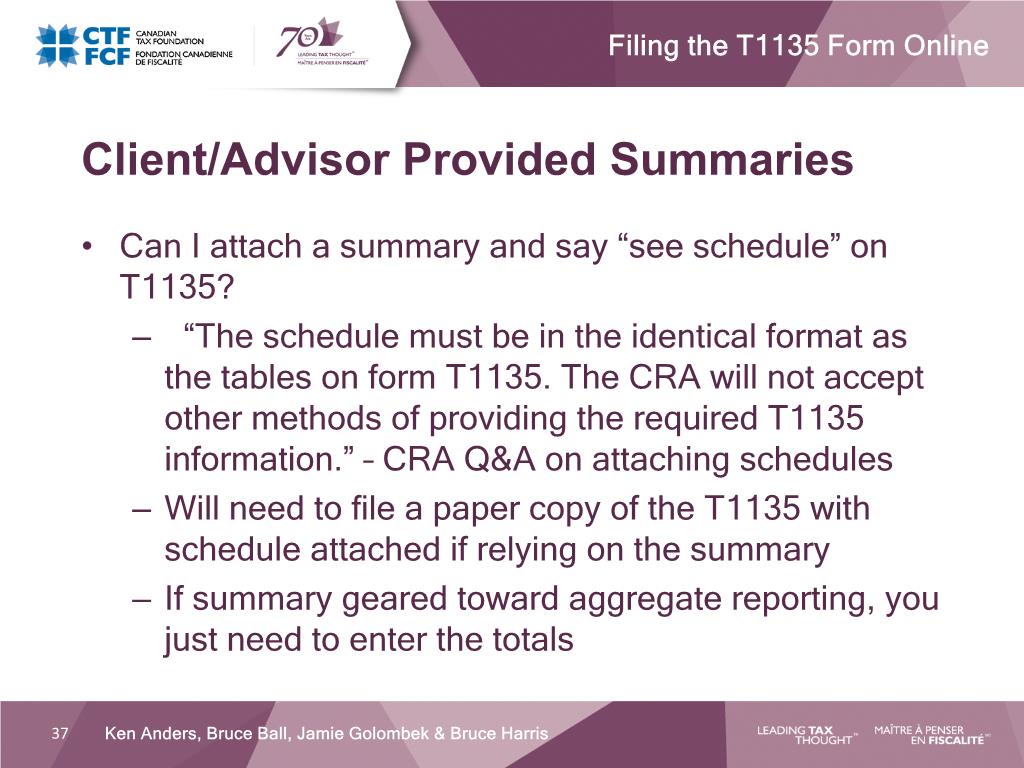
If you’re a Canadian investor with a large taxable foreign portfolio, you need to be aware of your cost base, since exceeding $100,000 of so-called Specified Foreign Property (SFP) has to be reported to the Canada Revenue Agency.

This is examined in my (monthly) High-Net Worth column for the Globe & Mail Report on Business which was published online on Friday and was in the physical paper Wednesday, Nov. 15. You may be able to retrieve it by clicking on the highlighted headline: Pay Close Attention to Your Foreign Assets to Avoid Tax Troubles. (Depending on how often you access the site, access may be restricted to subscribers. I’ve summarized the main points below.)

If you file your own taxes, you may have noticed an innocuous looking “box” you may or may not tick each year that ask whether you own “Specified Foreign Property.” If you have a cost base of more than $100,000 of SPF you have to tick that box and fill out a CRA form called the T1135. For most Canadian investors the relevant investments will probably consist primarily of individual US stocks, ADRs and/or foreign equity ETFs trading on US and other foreign stock exchanges.

There is also a higher threshold of $250,000 you also should be aware of because this entails even more detailed reporting and paperwork, and the article suggests you may wish to avoid reaching that higher threshold. The $100,000 and $200,000 thresholds are per individual, not household, and again, it’s based on cost base not current market value.

Failure to comply can entail serious penalties.

How to stay below the threshold and still have foreign content

If you would rather not deal with more CRA paperwork and capital gains hassles, I’d argue you should try to stay below the $100,000 threshold, in which case you don’t have to tick the box on your tax return. Continue Reading…

How Millennials’ financial priorities differ from previous generations

By Gabby Revel

Special to the Financial Independence Hub

There is some truth and some fiction to the idea that millennials are not responsible with their finances. On the one hand, today’s youth is particularly adept at saving money and meeting their financial responsibilities on a monthly basis. However, millennials appear to have less foresight, as they’re not as interested in planning for their financial future as Generation Xers and Baby Boomers were.

Financial freedom

The most important element of a paycheck for millennials is the financial freedom it offers them. A study by Bank of America and Merrill Edge discovered that this generation is better at saving money compared to other generations, but what they choose to spend this money on differs greatly from older workers.

This same study discovered that 63% of millennials value financial freedom above all, meaning they set aside a certain amount of money to continue living their lifestyle of choice. This means planning for social trips or vacations, eating out at fancy brunch restaurants on Sundays and using Uber as one of their primary forms of transportation.

A survey by BMO Wealth Management found that 26% of millennials  —  ages 18 to 34 — believe “saving more” is their most important priority with finances. A further 25% value reducing and eliminating debt at the top of their list, while 20% want to invest effectively, 17% focus on budgeting and 5% believe in spending on personal needs or goals above all. All in all, millennials are reinventing the wheel in regards to where their finances should go, but they might pay the price moving forward.

Disregard for retirement

 A chunk of today’s youth has yet to begin planning for retirement, as they’re not thinking about what their needs will be in the future. Some believe Social Security (or in Canada CPP/OAS) will get them through their golden years, which only nets the average retiree about $1,300 per month nowadays. Others buy into the carpe diem or YOLO mentality that’s been instilled within millennials.

Continue Reading…

“I’m nearing Retirement and the stock market is at an all-time high. What should I do?”

On October 19 Fortune published an article with the headline:

“30 Years after Black Monday, the Dow Hits an All-Time High”. 

The article goes on to speculate:

“only time will tell if we have another crash ahead of us. But in the meantime, investors seem to think that skepticism and caution may be just what we need to avoid one.”

Connecting the all-time high to the Black Monday crash from over 30 years ago smacks of the kind of fear-driven nonsense that characterizes much of financial markets journalism these days.  The article raises the temperature further by pointing out that:

“this marks the fourth thousand-point milestone for the Dow this year, painting a very different picture than what was seen in 1987.  According to the Wall Street Journal, the Dow had never before hit more than two of these milestones in a year.”

Transforming meaningless data points into blood-pressure-raising insights is a coveted skill for both market journalists and stock market analysts alike.  After all it’s their jobs to get people to act: stock analysts to compel trades, journalists to direct readers/viewers to the skilled money managers that advertise in their pages or on their programs.

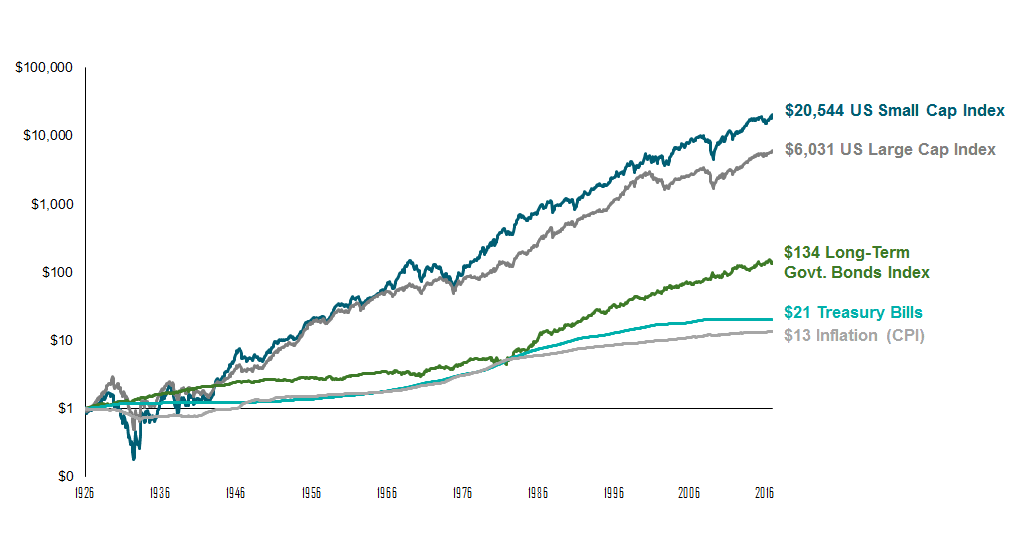
I’d be a poor headline writer.  The first one I came up with, “Dow Hits an All-Time High more than 500 Times Since 1987 Crash” wouldn’t inspire much fear or anything else.  The fact is that markets go up most of the time as is clearly displayed in the index data series shown at the top of this blog,  courtesy of Dimensional Fund Advisors. Continue Reading…

10 ways to spot investment opportunities before the herd piles in

By Dakota Findley

Special to the Financial Independence Hub

If you learn how to spot investment opportunities early, you could significantly increase the profits you make. Fortunately, doing this isn’t as hard as many people believe. Here are the ten essential components of spotting investment opportunities before everyone else jumps on the bandwagon.

1.) Find a Problem Solver

In 2009, Professor Raffi Amit of the University of Wisconsin noted that “Customers don’t buy technology. Customers buy products that add value.” These two sentences are vital to understanding which investment opportunities are worth pursuing.

An effective problem-solver is a company that:

  • Has identified one or more problems that a potential market is experiencing,
  • Has a plan, product, or service designed to address that problem, and
  • Can implement their solution in a scalable and cost-effective manner

In other words, you’re not just looking for companies to invest in: you’re looking for businesses that will be selling what customers are looking for.

2.) Learn to Understand the Criteria for an Investment’s Success

A 2011 study found that firms receiving angel investments (capital provided mainly for business startups) were about 25% more likely to survive for at least four years than companies that did not receive such funding.

The reason this fact matters is that a good early investment is one that gets enough funding to succeed. If your investment isn’t sufficient to help an opportunity succeed and nobody else is buying in, then it doesn’t matter how good their ideas are.

3.) Assess Your Risk Tolerance

How much risk are you willing to take on? We’ll be blunt with you: many early investments fail. Perhaps they didn’t get enough funding to succeed, or they suffered from poor management by people who were good at making products but not so good at running a company.

Whatever the reasons for failures, though, you’ll need to learn how to ass                                ess both how risky a given investment is and how much you can afford to lose.

As a good rule of thumb, you should never invest more than you could safely afford to lose.

4.) Practice Patience

Continue Reading…