Building Wealth

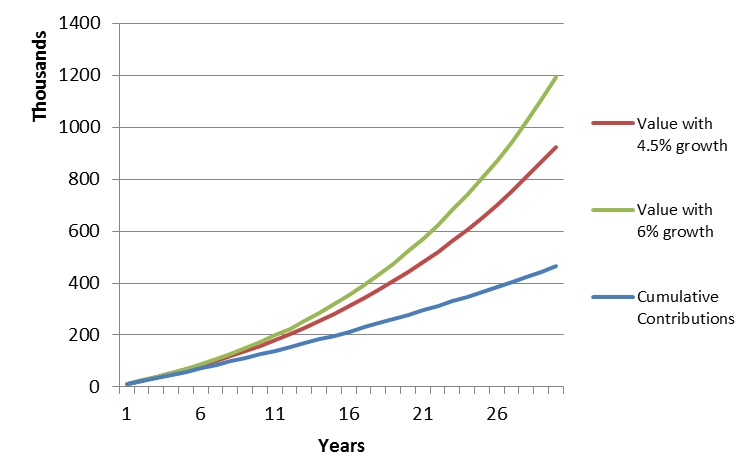
For the first 30 or so years of working, saving and investing, you’ll be first in the mode of getting out of the hole (paying down debt), and then building your net worth (that’s wealth accumulation.). But don’t forget, wealth accumulation isn’t the ultimate goal. Decumulation is! (a separate category here at the Hub).

LIRAs — the RRSP’s less flexible cousin

depositphotos_73608599_s-2015
Locked-in Retirement Accounts (LIRAs) differ from RRSPs in that you usually can’t “unlock” the funds in them before age 55.

I guess the annual RRSP season is just around the corner, based on some of my most recent writing assignments. Earlier in the week, for MoneySense.ca, I made the case for semi-retirees in their Sixties (like me!) for starting the process of withdrawing money from RRSPs early. Click on the headline Retirement Tax Tips. The Hub summary ran here under the headline The case for Early RRSP withdrawals.

Then at the end of the week, the Financial Post ran my column titled The RRSP’s less flexible cousin: Everything you need to know about the LIRA, which is also available in the Saturday print edition.

As TriDelta Financial wealth advisor Matthew Ardrey told me for the FP article, you’re going to see a lot more about LIRAs in the coming years. Whether you’re leaving a classic Defined Benefit pension plan or a more market-tied Defined Contribution pension plan, the job market these days is in such flux that a lot of people are going to have to start learning about what happens when you leave an employer pension plan earlier than you might once have envisaged.

LIRAs will multiply as Boomers reach Findependence

Continue Reading…

Banks repaid Millions to overcharged investors, which got me thinking

Colorful vector infographic financial flowchart for money transfer and transactions from hand to hand as it circulates through the economy and banks

CIBC agreed to repay $73 million to more than 80,000 customers who were overcharged for their investments since 2002. The majority of those affected were in fee-based accounts and were found to have paid double fees on some investments that had embedded commissions. Meanwhile, some 24,000 CIBC clients were not told they qualified for lower-cost mutual funds because of the size of their investments, and were instead sold similar funds with higher management expense ratios.

Incredible, yet not surprising when you consider this is the same bank that makes its senior clients apply for free banking rather than granting it automatically when clients turns 60.

It should be noted that CIBC self-reported the fee problems to the Ontario Securities Commission when it uncovered the issues during an internal review. The OSC has settled similar voluntary cases with three Bank of Nova Scotia divisions, three subsidiaries of TD Bank, and with mutual fund giant CI Funds, which repaid $156 million to 360,000 clients who bought mutual funds over a five-year period.

How many other ways will Canadian investors get fleeced by an industry that cares more about protecting its compensation model than it does about looking out for the best interest of its clients?

When will the Canadian Securities Administrators (securities regulators) finally get around to banning trailer fees – the embedded commissions that puts advisors in a clear conflict of interest and which a mountain of evidence suggest influences fund recommendations?

Since we’re talking about overcharging investors, here’s a thought:

The banks are suddenly feeling so ethical and generous by volunteering to repay fees that were overcharged. So let’s have some fun (or maybe cry a little) and apply that to the more than $1.32 trillion (!) that Canadians have invested in mutual funds.

We already know that Canadians pay some of the highest mutual fund fees in the world – the Investment Funds Institute of Canada estimates the average total cost of ownership of mutual funds for clients is 2.2%.

We also know, thanks to Professor Douglas Cumming’s research on mutual fund fees, that the average trailer fee on a fund is 0.3%.

Let’s say Canadians demand that the average mutual fund fees be reduced to 1.5%. That’s lower than many other countries, but still higher than fees in Australia and the U.S. (according to Morningstar).

To get there we’d have to ban trailer fees (saving 0.3%) and maybe by doing so we’d miraculously find that dealers no longer have the incentive to sell higher fee funds and so the average comes down to 1.5%.

How much will Canadian investors save if this hypothetical scenario came to pass?

  • $1.32 trillion x 2.2% MER = $29,040,000,000 ($29.04 billion) in fees paid by Canadian mutual fund investors.
  • $1.32 trillion x 1.5% MER = $19,800,000,000 ($19.8 billion) in fees paid after lowering the average MER by 0.7%.

That’s a savings of nearly $10 billion. Now the IFIC says that 4.9 million Canadian households invest in mutual funds, so if we divide the amount saved by the number of households then each household should receive a nice $1,885 rebate.

Final thoughts

Mutual fund assets continue to grow because for the Canadians who want to save and invest, the easiest way for them to do so is by visiting a bank advisor or mutual fund salesperson. But those advisors have a conflict of interest, selling their firm’s funds that may be suitable but not in the best interest of their client because of high product fees and incentives that reward the seller.

Lower cost products such as ETFs exist, but investors have to do their research and go it alone (or use a robo-advisor service) to realize the savings. That’s why, despite widespread attention over the last 5-10 years, the total Canadian listed ETF assets is only $107 billion, or just one-tenth of the mutual fund market.

So while investors patiently wait for securities regulators to ban trailer fees, I think Canadians should demand to be repaid the $10 billion that they’re being overcharged each year from mutual fund fees.

 RobbEngenIn addition to running the Boomer & Echo website, Robb Engen is a fee-only financial planner. This article originally ran on his site on October 30th and is republished here with his permission.

Educate yourself about fees and reap the benefits!

tfsa-returns
Impact of high investment fees on a TFSA portfolio. Explanation towards end of this blog.

Last month, the British Columbia Securities Commission (BCSC) launched an investor education campaign targeted at helping investors better understand the fees they pay. There simply can’t be enough education around this issue and we absolutely applaud their efforts.

Its Investright.org website is a great source of information and education and this latest campaign showcases some new tools and guides that any investor would find helpful. There are even some new TV ads which would be kind of funny if the subject matter wasn’t so serious.

New regulations came into effect on July 15 of this year which require investment advisors to provide better disclosure about their compensation. Rather than simply show percentage fees, compensation and other charges will have to be shown in dollars and cents. We expect investors to suffer a fair degree of sticker shock next year when everyone will start receiving these new mandated statements.

New statements won’t show all fees

Continue Reading…

“Scary” Investment moves to avoid

Shocked scared woman with financial market chart graphic going down on grey office wall background. Poor economy concept. Face expression, emotion, reaction

By Fraser Willson 

 Special to the Financial Independence Hub


If you have young children or grandchildren, you know what’s really important. Yes, it’s Halloween time again, which means you’ll see plenty of witches and vampires scurrying around. You’ll no doubt find these characters more amusing than frightening, but you don’t have to look far to find things that are a bit more alarming — such as these scary investment moves:

Paying too much attention to the headlines

Some headlines may seem unnerving, but don’t abandon your investment strategy just because the news of the day appears grim.

Chasing “hot” investments

You can get “hot” investment tips from the talking heads on television, your next-door neighbour or just about anybody. But even if the tip was accurate at one point, by the time you get to a “hot” investment, it may already be cooling down. And, even more importantly, it simply may not be appropriate for your individual risk tolerance and goals.

Ignoring different types of investment risk

Most investors are aware of the risk of losing principal when investing in stocks. But if you shun stocks totally in favour of perceived “risk-free” investments, you’d be making a mistake because all investments carry some type of risk. For example, with fixed-income investments, including GICs and bonds, one risk you may encounter is inflation risk — the risk that your investment will provide you with returns that won’t even keep up with inflation and will, therefore, result in a loss of purchasing power over time.

Another risk you can incur is interest-rate risk — the risk that new bonds will be issued at higher rates, driving down the price of your bonds. Bonds also carry the risk of default, though you can reduce this risk by sticking with bonds that receive the highest ratings from independent rating agencies.

Failing to diversify

If you only own one type of investment, and a market downturn affects that particular asset class, your portfolio could take a big hit. But by spreading your dollars among an array of vehicles, such as stocks, bonds and government securities, you can reduce the effects of volatility on your holdings. (Keep in mind, though, that diversification cannot guarantee profits or protect against loss.)

Focusing on the short term

If you concentrate too much on short-term results, you may react to a piece of bad news, or to a period of extreme price volatility, by making investment moves that are counterproductive to your goals. Furthermore, if you’re constantly seeking to instantaneously turn around losses, you’ll likely rack up fees, commissions and possibly taxes. Avoid all these hassles by keeping your eyes on the future and sticking to a long-term, personalized strategy.

You can’t always make the perfect investment choices. But by steering clear of the “scary” moves described above, you can work toward your long-term goals and hopefully avoid some of the more fearsome results.

0ec7e0fFraser Willson is a financial advisor and insurance agent for Edward Jones Investments. He works closely with families and businesses, helping them achieve their investment objectives in an organized and disciplined manner.


Financial Independence, Zen and the Art of Wealth

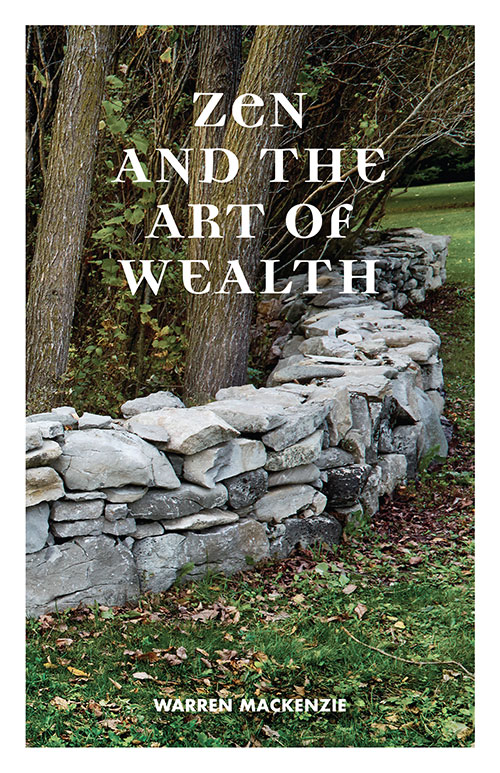
zenw_fr_500_773I was recently asked to review a new book, Zen and the Art of Wealth, by Warren MacKenzie. It’s the story of two friends who chat while one helps the other build his drystone wall.

It’s a good book and reminded me of some important life lessons that I had forgotten over the years. The book also triggered some memories about how I was first exposed to the world of Zen.

My first exposure to Zen was as a child, when I watched the TV show “Kung Fu” starring David Carradine as Kwai Chang Caine. In the first episode, Caine is accepted for training at a Shaolin monastery, where he grows up to become a Shaolin priest and martial arts expert. Caine fights for justice, protects the underdog and has a strong sense of social responsibility, something that is sadly lacking today. Flashbacks were often used to reveal specific lessons from Caine’s childhood training in the monastery, from his teachers: the blind Master Po and Master Kan.

I loved the lessons from Caine’s training in the monastery and those lessons have stuck with me for some reason over the years: Continue Reading…

Powered by the Financial Independence Hub.
© 2013-2026 All Rights Reserved.
Financial Independence Hub Logo

Sign up for our Daily Digest E-Mail!

Get daily updates from the FindependenceHub.com straight to your inbox.