Posted By
 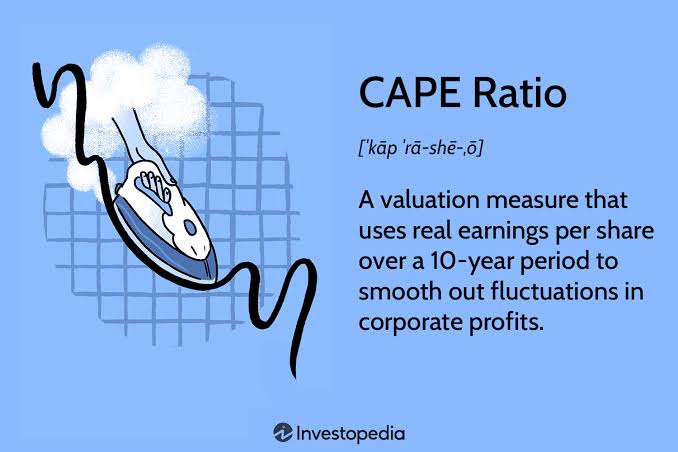 So just how pricey is the U.S. stock market compared to Canada and international stocks? Robert Shiller’s CAPE ratio is the valuation metric that most financial gurus and experts point to in answering this question. In his Michael James on Money blog republished here last week, Michael J. Wiener provided a useful definition of the CAPE Ratio and how he uses it in his own portfolio. See How I handle high stock prices in my portfolio.
In this blog, we once again polled dozens of financial experts and business owners on both sides of the border via Linked In and Connectively.
We’ve picked roughly a dozen of the 34 responses submitted, presented below, with subheads summarizing the main points made in each submission. Linked to their respective websites are contained in the italicized bios that end each contribution.
Here’s how we posed the question at Connectively:
What is your current view of US and global stock market valuations? Based on Robert Shiller’s CAPE ratio do you regard US and global/Canadian stocks as fairly valued or in danger of being overvalued and vulnerable to a major correction? If so, what actions would you suggest investors take, depending on their age and risk tolerance?
Waiting for CAPE ratios to normalize can also cost you
 Based on Shiller’s CAPE ratio, U.S. stock valuations have been quite elevated from their historic average for some time now, but the readers who kept hoping for the CAPE to normalize before buying have basically missed an entire decade of gains, which makes me very skeptical of relying solely on CAPE ratios to time the market.
What I recommend telling the people is that high CAPE implies certain things about low future return on investment over the following 10 years, but nothing can be said about the upcoming months or the upcoming year: that’s the most important point for those building a strategy for the future, and not reacting to the headlines.
Those who still have decades to go before reaching Retirement should probably just keep all the money invested and use dollar cost averaging as the main way to get through the volatility period. In case of those approaching retirement (within 5-10 years), it would be wise to reassess the allocations, have enough cash to survive at least one or two years without investing anything, and maybe increase the allocation in non-US markets, as they currently trade at relatively more attractive multiples (Canada and Europe).
My concern with MintWit readers is not overvaluation itself: but that people would panic-sell during the upcoming market correction due to ignoring their risk tolerance for many years during the growth period. — Scott Brown, Founder, MintWit
Rebalance away from high-multiple growth equities into defensive dividend assets, short-duration bonds, and cash equivalents

Based on the Shiller cyclically adjusted price-to-earnings ratio, I view United States equity valuations as historically elevated and vulnerable to a correction. Conversely, international and Canadian equities trade at more reasonable multiples, offering comparatively defensive valuation buffers.
In this environment, asset allocation must align with individual horizons and risk tolerance. Younger investors with long horizons and high risk tolerance should maintain disciplined dollar-cost averaging into global indexes while tilting toward undervalued non-US markets. Meanwhile, older investors and conservative individuals nearing retirement should actively de-risk portfolios. I recommend rebalancing away from high-multiple growth equities into defensive dividend assets, short-duration bonds, and cash equivalents to preserve accumulated wealth against drawdown risk. — RUTAO XU, Founder & COO, TAOAPEX LTD
A high CAPE is not a signal to panic or exit, it is a signal to temper expectations and rebalance toward your actual targets
 The number tells the story better than any opinion could. The Shiller CAPE ratio for the S&P 500 sits at roughly 42 as of August 2026, more than double the long run historical median of 17, and only 18 months in over a century of data have ever read higher, all of them clustered around the year 1999. That is not moderately expensive, that is rare territory, the kind the market has visited only once before.
History does not treat a high CAPE as a countdown clock. It has almost no power to call the next 12 months, and the market spent most of the 1990s looking expensive by this same measure while doubling anyway. What it does predict, fairly consistently, is weaker average returns over the following decade, not a specific crash date.
Globally the picture is not uniform either, since markets like Taiwan, South Korea, and Japan currently show some of the richest valuations after a sharp rally, while earnings growth there has kept ordinary P/E multiples looking more reasonable than CAPE alone suggests. The lesson I would offer is this: A high CAPE is not a signal to panic or exit, it is a signal to temper expectations, rebalance toward your actual targets, and make sure your risk exposure matches your time horizon, not the headline. — Swayam Doshi, Founder, Suspire
“The U.S. stock market is undeniably skating on historically thin ice.”
 Let’s get the legal record straight first: I am a consumer finance and bankruptcy attorney, not a Wall Street portfolio manager or a licensed investment advisor. My daily work involves helping people survive the financial wreckage of bad decisions, not predicting market tops. But after thirty years watching market cycles pop and drop, I know exactly what overvaluation looks like right before it hits my desk in the form of Chapter 7 bankruptcy petitions.
If we look at Robert Shiller’s Cyclically Adjusted Price-to-Earnings (CAPE) ratio, the U.S. stock market is undeniably skating on historically thin ice. With the U.S. CAPE ratio consistently hovering well above its long-term historical average of about 17, equities are priced for absolute perfection in a world that is notoriously messy.
While global and Canadian stocks are valued somewhat more reasonably, a severe correction in New York will inevitably drag Toronto, London, and Tokyo down with it. The market is vulnerable, and ignoring this is a luxury only the financially reckless can afford.
The action you should take depends entirely on your financial runway:
For Boomers and those near retirement, “sequence of returns risk” is your mortal enemy. If the market corrects 20% tomorrow and you are forced to sell equities to fund your daily life, your portfolio may never recover. My advice? De-leverage aggressively. Enter retirement completely debt-free. Build a two-year cash or short-term Treasury cushion completely outside the stock market. This ensures that if the market takes a dive, you can live off your cash buffer without being forced to sell your depreciated stocks at clearance-sale prices.
For Gen Z and Millennials, a major market correction is actually a gift. You have the ultimate asset on your side: time. If the market drops, do not panic, do not look at your account balance, and under no circumstances should you sell. Keep your job, protect your emergency fund, and continue dollar-cost averaging into broad, low-cost index funds. You are simply buying world-class assets on sale, and your future self will thank you.
Valuations tell us about the market weather, but your personal debt levels and emergency reserves determine whether your financial house will survive the storm. Do not let market greed outpace your common sense. — Lyle Solomon, Principal Attorney, Oak View Law Group
This is “not a market screaming for a correction. It is a market with very little margin of safety left …”
 I’d rather answer this with our own numbers than with a CAPE reading, because CAPE describes an index and says almost nothing about the company someone actually owns.
Across the 881 U.S. and European companies we cover, our valuation model currently rates 67% fairly valued, 24% undervalued and 9% overvalued. Of the 487 names where we publish a fair-value estimate, 31% already trade above it, and the median remaining upside on the rest is 14.5%.
That is not a market screaming for a correction. It is a market with very little margin of safety left, which is a different and less dramatic problem. A high CAPE has preceded flat decades and strong ones; as a timing signal it has been unreliable enough that acting on it has cost more than ignoring it. What it does tell you reliably is that a dollar invested today buys less future earnings than it used to.
On what investors should do about that, split by age and risk tolerance: I can’t answer that responsibly. Those decisions turn on income stability, time horizon, existing holdings and tax position, none of which I can see, and one answer covering everyone would be worth less than no answer.
The discipline that survives the question is narrower and duller: when the median name carries thin upside, the edge comes from refusing to overpay, not from predicting the turn. That is a rule about your own behaviour, and it needs no forecast. — Razvan Luca, Founder, Talval Research
“Nobody, at any age, should bet money they need within five years on today’s prices.”
 The honest read: Shiller’s CAPE ratio has been sitting well above its long-term historical average for years, and when valuations stretch that far, forward returns over the next decade tend to disappoint.
That doesn’t guarantee a crash next quarter, but it tells you the margin of safety is thin. US stocks look expensive; Canadian and broader global markets trade at meaningful discounts, which is exactly why diversifying across geographies matters more than conviction in one hot market.
My advice by age and risk tolerance is straightforward. If you’re under 40, stay invested, keep buying through any correction, and let time do the heavy lifting; volatility is your friend when you’re accumulating. If you’re 40 to 55, this is the window to rebalance, trim concentrated winners, and shift some exposure toward undervalued international markets and bonds so a 30 percent drawdown doesn’t wreck your timeline.
If you’re near or in retirement, you can’t afford to ride out a lost decade, so hold two to three years of expenses in cash and short-term instruments and keep the rest diversified. Nobody, at any age, should bet money they need within five years on today’s prices.
I run the free QR code generator at Scale By SEO, and the discipline transfers more than people think. We never promise clients outcomes we can’t measure; that’s why our SEO plans carry a six-month performance guarantee where work continues for free if KPIs aren’t met. I bring that same skepticism to markets: demand evidence, demand accountability, and never confuse a bull market for skill. Before we publish guidance, we research it, and before you act on valuation fears, you should too.
Overvalued markets don’t have to crash; they can simply grind sideways for years, and the investors who win are the ones who sized their risk properly long before headlines turned negative. Position for the world as it is, not as you hope it becomes. — Melissa Basmayor, Marketing Coordinator, Freeqrcode.ai
“CAPE should influence portfolio construction, not dictate market timing.”
 My current view is that U.S. equities look expensive, and CAPE is flashing a genuine long term warning, but I would not use it as a signal to call the next crash.
The S&P 500 CAPE is around 41 to 42, far above its long-term average and close to historically extreme levels. That suggests future real returns from U.S. equities could be much lower than investors have become accustomed to. Vanguard also currently describes U.S. equity valuations as effectively at their highest historical percentile.
I would be more comfortable with international and Canadian equities than simply owning more U.S. mega cap technology, although they are not immune to a correction. The Bank of Canada itself says Canadian equity valuations remain elevated and increasingly stretched compared with history. So I would call the US clearly expensive, Canada and many international markets less extreme, but not cheap. Continue Reading…
 Posted By