Tag Archives: debt

5 surefire ways to stay out of Debt

By Gary Bordeaux

Special to the Financial Independence Hub

In the modern world, there are two types of debt: good bad and bad debt. Good debt would be considered financing something that has the potential to go up in value, like a home or a small business. Bad debt would be considered consumer debt like jewelry, designer clothes, and luxury cars. These things tend to depreciate. People typically get into trouble financially when they start going into debt with consumer goods or things they really don’t need.

1.) Create a budget

Unless you are already financially well-off, you are going to need to create a budget for you and your family. This is the single biggest way not to go into debt. Why? Because you are tracking every dollar you spend. Start out by listing your monthly income after taxes at the top of the budget, then list your expenses below that. If you don’t have a surplus of money after all your expenses are accounted for, you are either spending too much money or you are not making enough money. Whatever the case may be, adjust your budget accordingly.

2.) Quickbooks

The Quickbooks online platform by Intuit is probably one of the best online financial tools you can use for your business. In general, it is an online accounting software that helps manage your finances for you. With an easy Quickbooks online payment, you can pay people and you can receive money too. In the end, business finances can get pretty confusing. Quickbooks allows you to track your finances more easily. Also, Intuit has a budgeting app called Mint. I use Mint quite often and it tracks all my transactions and spending activity. It also tracks your budgets, monthly cash flow, and your credit score along with many other investments and other accounts.

3.) Emergency fund

Let’s face the fact that bad things happen to good people. When these setbacks occur, people need money set aside to protect themselves from debt. This is what an emergency fund can do. First, start by putting away a simple $1,000 just in case an emergency happens. Continue Reading…

U.S. Fixed Income: Looking at U.S. High Yield, by Default


Kevin Flanagan, WisdomTree Investments

Special to the Financial Independence Hub

Has the fixed income arena entered a new phase? While the lion’s share of attention has been given to interest rate developments for quite some time now, another topic for discussion has been where we are in terms of the U.S. credit cycle. Specifically, the debate has centered on whether the corporate bond market has entered the bottom of the ninth inning of the current cycle or whether the time frame is more akin to being in the sixth or seventh inning. Interestingly, in sticking with this baseball analogy, there does seem to be agreement that credit is not in the first few innings.

For this blog post, the focus will be on U.S. high yield (HY), particularly because if one was to see the first signs of stress, the argument could be made that this is the sector where investors should turn their attention. Over the last six months, investors have witnessed two episodes where HY spreads have visibly widened. The first of these episodes occurred during late October to mid-November of last year, when spreads rose 53 basis points (bps).1 The second occurrence was more recent, as HY differentials moved from more than a decade low of 311 bps on January 26 up to 369 bps two weeks later, representing a widening of 58 bps.2

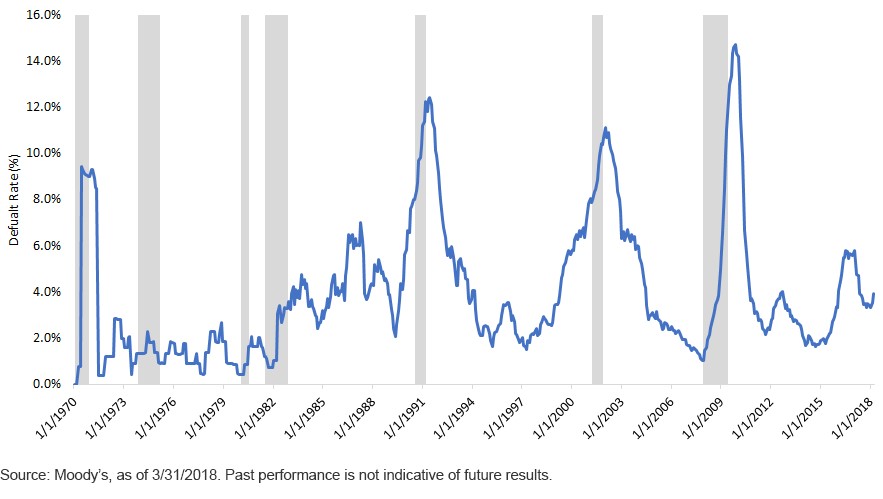
U.S. Speculative-Grade Issuer Default Rate vs. Recessions

It is interesting to note that in both cases the widening trends were rather brief (two to three weeks) and of similar magnitudes. In addition, both times the sell-off was short-lived, as buyers re-emerged and compressed spreads back down.

Continue Reading…

Debt avalanche vs. debt snowball: When math trumps behaviour

John and Erica Mullen are in their mid-thirties and have two young children at home. Together they earn well over $100,000 per year, but a combination of poor choices and unlucky circumstances have left them buried in debt.

Their substantial income affords them the luxury of not having to turn their life upside down by selling their home and vehicles; however, they will need to make some tough sacrifices in order to dig themselves out of this hole.

Creditor Balance Rate Payment Interest-only
Store credit card $6,800.00 26.00% $200.00 $147.34
Consolidation loan $23,000.00 8.00% $430.00 $153.34
Line of credit #1 $20,000.00 6.34% $105.67 $105.67
Tax bill $1,700.00 5.00% $200.00 $7.09
Car loan #1 $36,000.00 3.90% $460.00 $117.00
Line of credit #2 $16,000.00 3.00% $40.00 $40.00
Car loan #2 $23,000.00 0.90% $317.00 $17.25
$126,500.00 $1,752.67

After a close look at their budget, the Mullens decide they can afford to put $2,000 per month toward their non-mortgage debt. They want to know how best to allocate the extra cash so they can be debt-free faster and pay the least amount of interest.

Two popular debt repayment strategies are the debt snowball and the debt avalanche. Let’s look at each method and apply it to the Mullen’s situation:

Debt Snowball

Dave Ramsey, American author of The Total Money Makeover, suggests an unusual strategy for getting out of debt by using something called the debt snowball method.

With the debt snowball, you’re throwing math out the window, focusing instead on the psychological advantage that comes from making progress with quick, successive wins.

Related: Should you pay off your partner’s debt?

Start by arranging your debts from lowest balance to highest. It feels better to rid yourself of your smallest debt, and the idea is that the snowball effect builds enough momentum so that you’ll be more inclined to stick with the strategy on your way toward debt freedom.

This chart shows how the Mullens would use a debt snowball approach to tackle their debt. Remember, they’re throwing an extra $2,000 per month over-and-above their minimum payments:

Creditors in Original Total Interest Months to Month Paid
Chosen Order Balance Paid Pay Off Off
Tax bill $1,700.00 $7.08 1 May-15
Store credit card $6,800.00 $405.61 4 Aug-15
Line of credit #2 $16,000.00 $301.35 11 Mar-16
Line of credit #1 $20,000.00 $1,572.90 19 Nov-16
Consolidation loan $23,000.00 $2,929.50 25 May-17
Car loan #2 $23,000.00 $390.39 30 Oct-17
Car loan #1 $36,000.00 $3,270.27 37 May-18
 Total Interest Paid: $8,877.10

You can see how the strategy works: the tax loan is killed off in the first month and from there the Mullens can focus on the department store credit card, which will be paid off three months later. Altogether it’ll take 37 months to pay off all their non-mortgage debt and the total interest paid over that time is $8,877.10.

Debt Avalanche

Continue Reading…

What is a Mortgage Vacation?

By Sean Cooper

Special to the Financial Independence Hub

Do you enjoy going on vacation? Who doesn’t? So, the term “mortgage vacation” has to be something similar, right? When you hear mortgage vacation, you’re probably picturing yourself laying on a warm, sandy beach, drinking an umbrella drink. Well I hate to break it to you, but although you got the vacation part right, you forgot the most important part: the mortgage part.

A mortgage vacation is a feature that lets you skip paying mortgage payments for up to a few months, but with a catch. You have to prepay the amount in advance. In an era where savings rates are near record lows and household debt is near a record high, mortgage vacations have become a popular feature with mortgage lenders. Who needs to save for a rainy day when you have a mortgage vacation?

A mortgage vacation can help you out when you run into financial difficulty or when you want to use your cash flow towards something else. But as the saying goes, there’s no such thing as a free lunch. By planning ahead of time, you can avoid taking a mortgage vacation and still be on your way to burning your mortgage.

What is a Mortgage Vacation?

If you’re like most homeowners, you’re introduced to mortgage vacations in this way. You get a letter in the mail from your lender letting you know that you’ve been approved for a mortgage vacation. Yippee! The banks market mortgage vacations like they’re a privilege for their best clients, but as I mentioned earlier, there’s a catch. Hidden in the fine print is what happens when you skip your mortgage payment. Continue Reading…

Canadians miss out on $1,000 a year from Credit Card rewards, RateHub says

By Alyssa Furtado, RateHub.ca

Special to the Financial Independence Hub

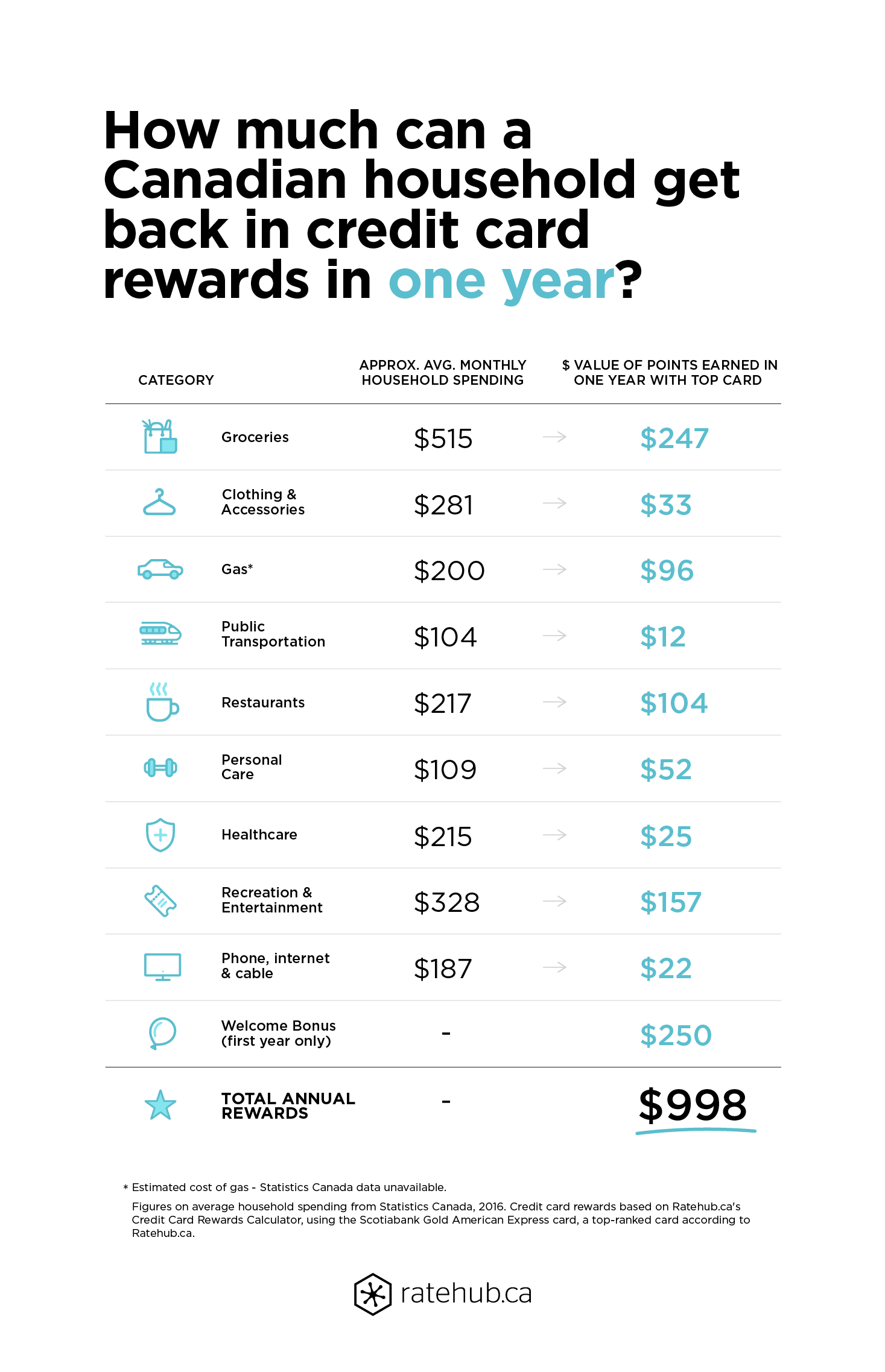
A whopping 86 per cent of Canadians say one of their top reasons when choosing a new credit card is earning rewards points or cash back, this according to a recent survey done by Ratehub.ca. 42% of those surveyed said they’ve never searched or compared credit cards to ensure they’re getting the maximum return.

Based on spending averages from Statistics Canada, that means Canadians could be giving up almost $1,000 rewards by not using one of the best credit cards available.

How is that possible? Well, when you look at some of the best credit cards in Canada, they offer up to 5% in cash back or rewards for certain categories. In addition, many cards offer a big sign-up bonus that could be worth anywhere from $250 to $500, so it’s not hard to see how some people are missing out.

Choosing a new credit card

With 29 per cent of those surveyed saying that the card they use most has been in their wallet for more than 10 years and another 50 per cent saying they would never pay an annual fee, perhaps it’s psychology that’s holding them back from making a change?

Continue Reading…