Tag Archives: debt

Financial Resolutions to stick to in 2018

By Jamie Wharton

Special to the Financial Independence Hub

The new year is a perfect time to set goals for yourself to help keep your finances in check. It’s not too late to make a few resolutions to get your finances in order, so start your 2018 off on the right foot!

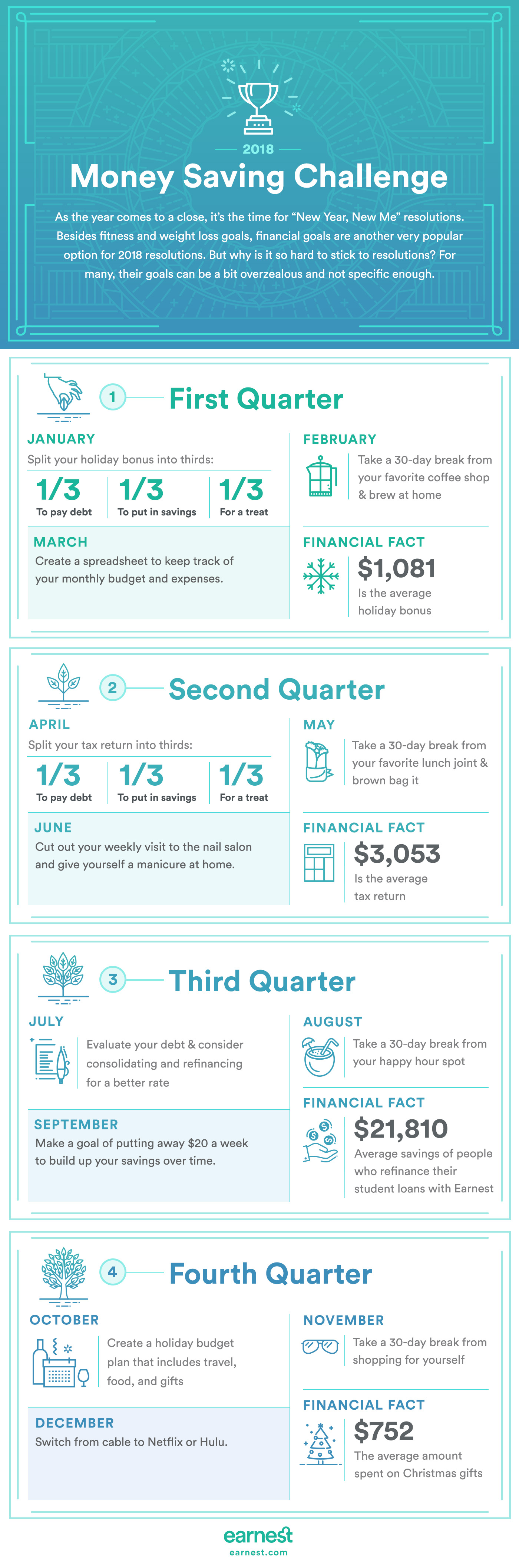
Cut down on needless expenses

An easy way to save money in the new year is to stop spending cash on things you don’t need. Cut out that daily run to your favorite coffee shop and make your own coffee before you leave for work. Do you get your nails done every two weeks? Make your salon trip exclusive for special occasions instead. Unnecessary spending habits can be broken, so cut costs where you can.

Tackle your debt

Make it a point to get your debt under control this year. If you can afford it, start paying more than the minimum required payment and pay off any interest you’ve accrued over the years. A majority of debt comes from student loans, so check out your options for refinancing. Earnest is a great option for student loan refinancing! The sooner you make a plan for repaying your debt, the better.

Set short-term goals

Don’t set yourself up for disappointment by setting a huge goal you know you can’t reach. Continue Reading…

Blue Monday: Here’s what gives us the financial blues on this saddest day of the year

Feeling the financial blues a bit today? Little wonder because today, Monday, Jan. 15th, is Blue Monday, dubbed the saddest (most depressing?) day of the year.
 Call me a masochist but I also decided this was the day to download the 2017 online version of TurboTax and at least confront the looming reality of preparing another year’s tax returns. The program said it can be used to print and file your 2017 tax return by mid-January, and that NetFile will be available as of 6 am on February  26th. How depressing is that a mere two weeks after the holidays?

But if the thought of filing your taxes doesn’t make you blue, or even the snow that’s falling as I write this, maybe the thought of credit-card bills from the holidays will do the trick. Credit Canada and the Financial Planning Standards Council today released the results of  a Blue Monday themed Financial Blues survey that revealed that 53% of Canadians are “already feeling financially blue, with the younger generations struggling.”

The Financial Blues Survey was based on a Leger poll that asked Canadians “when it comes to your finances, what makes you blue this time of year?”

Well, bowl me over with a feather: the start of another tax season didn’t make the cut in the poll, or at least the top five “standout” findings. Here’s the top candidates for feeling blue in January:

  • 20% of us have a credit-card balance larger than our savings accounts
  • Younger adults aged 18 to 44 are especially blue about finances right now: 68% of them versus just 41% for adults aged 45 or older
  • 25% of us lack the funds to take a winter vacation in the sun
  • 6% have already broken their financial new year’s resolutions
  • 21% over-spent during the Holidays

Credit Canada CEO Laurie Campbell  says that while “we are seeing a good deal of Canadians stressed out about their financial situation … the takeaway message is that there is hope. Develop a plan, tackle debt, and realize your financial potential. There are professional resources available to you, so don’t feel you need to go it alone.” Continue Reading…

How to graduate debt-free from College

By Steve Barker

(Sponsored Content)

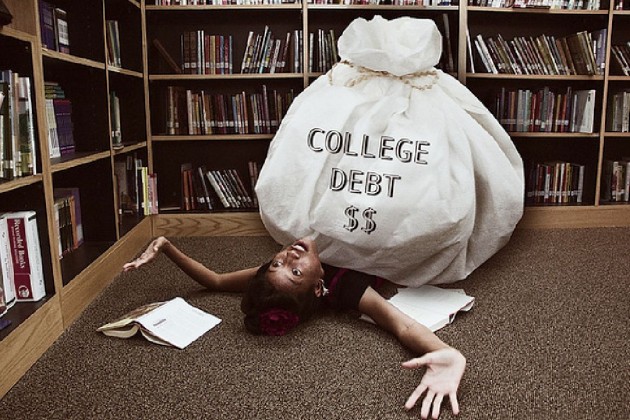
Many high school students are faced with the prospect of going into tens of thousands of dollars in debt or foregoing higher education. Today’s young people are having to look at a college education as an investment and to weigh the value of that investment against potential returns.

There are ways to stay out of debt and still earn a college degree: it just requires a little planning and patience.

Advantages of Going to College

The cost of tuition is steadily rising without the accompanying rise in income. Although there are many paths to success, a college degree does greatly increase job options, teach valuable skills, and create lifelong networks of friends and colleagues. Here are some reasons why college is still worth the cost.

  •       Increased pay: Even though incomes aren’t rising with tuition costs, college graduates still tend to make more than their non-schooled friends. College grads earn an average of 56 per cent more than high school graduates.
  •       Higher rate of employment: The job market is extremely competitive. Anything that gives you an edge should be considered. Some studies show that only 3.8 per cent of college grads are unemployed compared to 12.2 per cent of individuals with only a high school diploma.
  •       Networking opportunities: You are likely to make a lot of valuable connections while attending school. You are introduced to people with new ideas who have the potential to inspire, encourage, and challenge you. Your professors and peers may become vital connections as you enter the workforce.

Staying Out of Debt

There is more than one way to earn a diploma. Taking out student loan debt is not the only way to finance your education. Continue Reading…

10 financial lessons to share with friends

The personal finance community can be a bit of an echo chamber, reinforcing and repeating the same ideas on how to save, invest, and spend our money. This sort of tribalism can be intimidating for outsiders who are eager to learn but afraid to ask questions or know where to start, especially when it comes to more complicated topics.

The truth is not all Canadians are financially savvy. In fact, a Tangerine survey last year found that only half of Canadians consider themselves knowledgeable when it comes to personal finances.

As personal finance enthusiasts it’s our duty to move beyond this little corner of the Internet and start talking to our friends and family about money.

It’s not easy to talk in real-life about what we do with money, how much we save, how much we spend, and the foolish mistakes we make. But these are crucial conversations to help each other deal with money and the complex decisions about it that we all face.

We can start by sharing the kinds of tips and tricks that helped us build lifelong financial habits and skills. It’s what financial literacy is all about, right?

That’s why I was excited to partner with Tangerine for Financial Literacy Month and list my top 10 financial lessons to share with friends:

1.) Avoid credit card debt like the plague

It’s impossible to go through life without incurring at least some debt. I’ve had student loans, credit card debt, a car loan, line of credit, and finally a mortgage.

Carrying a balance on my credit card was by far the most harmful to my finances. Making the minimum monthly payment hardly puts a dent into the balance, and 19 percent interest ensures that balance will continue to grow.

Tackle it with the debt avalanche or debt snowball method, and once it’s gone commit to never again paying one cent of credit card interest.

2.) Track your spending

To free up that additional cash flow you need to understand how much money comes in and how much goes out every month. There’s no other way around it – how else will you know what you can afford to save?

Whether you use a mobile app, budgeting tool, or good old-fashioned Excel spreadsheet, the point is to track every transaction until you can glean some insight into how you spend your money. Use this information to make informed decisions on which areas of your budget you can cut, and where you’d like to direct any additional savings.

Related: Track your habits, save money

3.) Automate your savings

The key to building a life-long habit of saving is to make your contributions automatic and as painless as possible. Pick a day that coincides with your paycheque and set up an automatic transfer into your RRSP, TFSA, savings account, or RESP.

It’s called paying yourself first. Start with as little as $25 and increase it annually, or as your budget allows. This powerful strategy works because it treats your savings goals as ‘mortgage-like’ fixed expenses that come out of your account on a specific day.

4.) Save a percentage of your income

One rule of thumb suggests saving 10 percent of your take home pay for retirement. I say save a percentage – any percentage – of your income as long as you start with something and make it automatic.

One cool trick I learned was to bump up that percentage in tandem with a salary increase each year. So, for example, let’s say you earn $50,000 and saved 5 percent of that amount ($2,500). Then you get a 4 percent raise in the New Year, so now you make $52,000. Well, don’t just continue saving $2,500 – bump that up to $2,600 to stay in-line with your 5 percent savings rate. Continue Reading…


Make & Save: The importance of actionable Personal Finance habits

By Hellen McAdams

Special to the Financial Independence Hub

When it comes to actionable personal finance habits, earning more money and saving a good portion of it are near the top of the list. Sadly though, before you can ascend the tower of wealth, many of us need to first dig out of the basement of debt.

Escape Debt in 5 years

Did you know the average American household has approximately $137,063 in debt? (all figures $US.) That’s too much debt. But what if you were to discover it’s possible for the average household to get out from under the thumb of that kind of debt in as little as five years?

There are several ways to do this. Loan consolidation is a practice whereby you reduce the complication of managing debt by combining everything together. If you have a bunch of little debts that individually compound separately from one another, one possible solution could be to take out a small loan, pay them off, then pay off the small loan in a single payment from then on.

There are online loans of this type which can, believe it or not, be secured online, if you’re considering such.

Still, this is just a debt transition; it doesn’t truly get rid of that which you owe: it merely reduces the complexity of paying a dozen little things off in tiny increments; like cellphones, furniture, and medical bills. A better way to get your debt paid off more quickly is to downsize.

Debt Relief Strategy

This is where you have to establish good financial habits. This hypothetical revolves around $3,000 a month in earnings from the primary breadwinner of the household. That comes to $36,000 a year before taxes. Now say you’ve got $137,000 in debt hanging over your head. You need to find a way to pay that off with the money you’ve got. Continue Reading…