Tag Archives: debt

Today’s retirement reality

MarieEngen
Marie Engen, Boomer & Echo

By Marie Engen, Boomer & Echo

Special to the Financial Independence Hub

We all like to compare ourselves with our peers to see how we measure up to everyone else.

Here are some retirement statistics from the most recent Canadian Census, Statistics Canada and various surveys.

Age statistics

  • In Canada in 2014 the average age was 58.
  • The baby boom demographic, representing those born between 1946 and 1966, represents 30% of the population.
  • Within 10 years, those age 55 and over will outnumber children.
  • One in seven Canadians are now elderly and two thirds of the very elderly are women.
  • Average life expectancy is 82.5 years for women and 77.7 years for men.

Retirement statistics

  • 7% of Canadians aged 55 and over had already retired once. Of this group, 17% returned to work.
  • 48% returned to some form of work for financial reasons. The others had new, interesting job offers.
  • 23% retired initially due to personal and family responsibilities or care giving.
  • 8% retired initially due to personal health concerns.
  • 6% retired because they qualified for full pension benefits.

Continue Reading…

The 7 eternal truths of personal finance

The print edition of today’s Financial Post (June 10, page FP9) is running the first of a series of seven articles by me entitled “The Seven Eternal Truths of Personal Finance.

Eternal Truth No. 1 is Live below Your Means.

The online link is here.

Note there is also a short video accompanying the online article, and a growing number of comments below the piece.

Here is a preamble I wrote for it:

Series Rationale: One of the most experienced personal finance writers in North America is the Wall Street Journal’s Jason Zweig. As he wrote here after writing his 250th Intelligent Investor column, he confessed that there are only a handful of personal finance stories out there:

“I was once asked, at a journalism conference, how I defined my job. I said: My job is to write the exact same thing between 50 and 100 times a year in such a way that neither my editors nor my readers will ever think I am repeating myself. That’s because good advice rarely changes, while markets change constantly.”

In this seven-part series, I look back on my two decades plus of writing about money to distill it all down to these “seven eternal truths.”

As far as I know, the second instalment will run a week from now.

The ultimate guide to Investments & Debt Consolidation

IMG_0233
Darren Robinson

By Darren Robinson,

Special to the Financial Independence Hub

It’s only natural for families to pursue investment opportunities to help pay for costs such as home ownership, health care, food, transportation, entertainment and countless other things. But sometimes investments can fail and lead to heavy losses that can force a family to tap into credit more often to meet monthly financial obligations. Here is a guide for dealing with extreme financial challenges.

Risky Investments

There are many ways to invest money, but some investments are safer than others. Although the stock market can be one of the quickest paths to wealth, it can also be a quick path to asset depletion. If you buy a heavy volume of any given financial instrument, it can wipe out an investment rapidly if the security moves the wrong way.

Continue Reading…

Seniors fastest growing risk group for insolvency

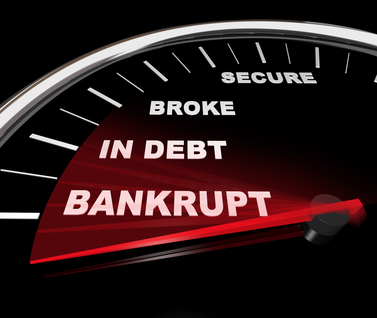
A speedometer with needle plunging down past word Bankrupt

By Jonathan Chevreau

Financial Independence Hub

While this website is devoted to Financial Independence, it’s an unfortunate fact that many people in all age brackets are so far from Findependence as to be under water financially.

Today a report entitled Joe Debtor: Marginalized by Debt is being released by Kitchener, Ont.-bankruptcy trustees Hoyes Michalos.

Among the many disturbing findings are the fact that seniors continue to be the fastest growing risk group when it comes to debt. The 2015 study shows insolvency filings by debtors over age 49 rose 30%, compared to a 27% rise in the 2013 study. The single biggest age group for insolvency is the 40s, where 28% of Canadian insolvencies occur. But those in their 50s account for 20%, those in their 60s 8% and 70-plus 3%.

DougHoyesCanadaTrustee
Doug Hoyes

In the report, Doug Hoyes writes that older Canadians are carrying debt into retirement because of debt accumulated over time to pay for living costs, family needs and medical bills, additional borrowing to keep up with post-retirement mortgages and the financial cost of carrying unsecured debt into retirement as income drops; and tax obligations from extra earned income and pension withdrawals. Continue Reading…

Helping love ones in their financial crisis

Food Relief CharityBy Peter Christopher,

Special to the Financial Independence Hub

It’s disturbing  to see loved ones undergoing financial hardships at any time of year, let alone during Easter. It may feel like you’re going through a monetary crisis yourself.

The hard reality is that while most of  will want to help friends or family members get out of a financial hole, we may be reluctant to do so at the expense of leaving our own finances in a more precarious condition. So it’s good news that there are reliable ways to guide your friends and/or family members to identify resources that could get them back on the track.

Lend them a hand

It’s often difficult to know where to seek help. To make things worse, constant strain can negatively affect thoughts and skill to solve problems. A good way to help a loved one in financial distress is to put them in touch with a center within their community. These centers may be able to help with housing, food, medical services and more.

Some communities may also offer such assistance online. Visit local community centers, houses of worship, schools and libraries to collect information on where to get help. Continue Reading…