Tag Archives: fear

There Is no greater virus than Fear

Akaisha feeling the wide-openness!

By Akaisha Kaderli, RetireEarlyLifestyle.com

Special to the Financial Independence Hub

We have a choice; living a life of fear, or one of hope and optimism.

Fear

Dwelling on fears clouds the mind.

It creates anxiety, emotional contraction, judgment of others and it becomes difficult to make a clear decision about anything. Moving forward becomes arduous because there is so much doubt. Fear sees limitation, lack of options, and darkness of mind: it’s called depression.

When we are in the middle of it, fear seems very real. What I’m talking about is not the kind of fear when someone has a knife to your throat, threatens your family, or if a wild bear is chasing you. I’m talking about the fear we manufacture in our minds in response to something that we have little control over.

Optimism

When we consider our abilities, good fortunes, and the possibilities of the future, we are able to see windows instead of walls. It’s the place where we have ideas, dreams, solutions to existing problems, and create new inventions.

Yes, currently we are in the middle of some fear-full stuff that is going on. And how you choose to see it makes all the difference.

There will be hundreds if not thousands of new businesses and inventions born out of this present crisis. Perhaps the next Amazon, eBay or Genentech will be leading us into the future. Human beings are very creative. Remember the saying “Necessity is the Mother of invention”?

This is how society, the human race and free enterprise has propelled us forward through the previous decades and centuries. Even Winston Churchill said “The empires of the future are the empires of the mind.”

A little perspective

Few of us were around in 1918 when the Spanish Flu broke out: specifically called the H1N1 virus. About one third of the global population was infected with approximately 675,000 deaths in the US. At that time the US population was 103 million making the US death rate 0.0066.

Extrapolating this out using today’s population numbers of 331 Million would mean we would have 2,185,000 deaths caused by this pandemic.

This is a big difference from the roughly 140,000 deaths today and back then during the Spanish Flu, no businesses or schools were closed.

More recently

We had the Hong Kong flu, H3N2, in 1968. Many of you were around, including us, through this period. As the name indicates this virus also originated in China and lasted into 1970. Continue Reading…

Is fear keeping you out of the stock market?

The biggest concern for many investors is the fear of losing their money. The stock markets have shown some volatility the last few weeks, and the recent screaming headlines in the financial media do nothing but encourage panic.

Some people think the latest bull market has overvalued stocks and a major market meltdown is imminent. They are sitting on their cash and waiting for the right entry point.

According to a BlackRock survey, 70% of adults aged 25 to 36 are also clinging to cash assets. Apparently, these Millennials don’t have much trust in the stock market and are afraid of another large market crash. This puts them at risk of not having enough saved to enjoy a comfortable retirement.

It’s true. Investing in equities does carry risks. Market corrections (drop of about 10%) are common. Bear markets (drop of 20% or more) will likely occur during an investor’s lifetime.

Even a reasonably diversified portfolio of stocks lost about half of its value during the 2008-2009 market crash. However, avoiding equities completely isn’t the best strategy. The stock market can be good to investors who have the discipline.

What can you do to get over your stock market fears?

1.) Educate yourself

Combat your fears with knowledge. Learn the basics: how the markets work so you can prepare yourself for future market conditions. The more you know, the less afraid you become, but avoid information overload.

Stop reading the gloom and doom reports in the financial media. Your financial education should not come from the news media. They need something to report and tend to sensationalize short-term market events to grab our attention. Just because something appears in print doesn’t guarantee that the information is correct. Look for reliable sources.

Investing magazines and books can provide useful information.

Knowledge is freely available on the Internet. Basic investing information is available at sites like Get Smarter About Money and Canadian Securities Administrators. Some social media sites, forums and financial blogs are worthwhile if written by knowledgeable authors.

Lack of confidence and second guessing yourself can paralyze your decision making. If you’re afraid of picking the wrong investments, turn to a professional for help. You could also try one of the many well-publicized model portfolios that have yielded good returns.

2.) Take a long-term investing approach

The biggest fear of investing is losing a lot of money in a short period of time.

Investing is a long-term process and is most likely your only way to reach your long-term financial goals.

Consider the benefit of investing sooner rather than later. Time is on your side.

Don’t keep monitoring your portfolio. This is psychologically hard, but don’t let short-term losses bother you too much. No one likes losing money, but it will be temporary. You’re not going to need this money to survive tomorrow, or next month, will you?

Acknowledge short-term market risks, but trust in long-term historical gains and commit to long-term investments. Continue Reading…

Another bad day on markets — try Meditation

41KxcsypMRL._SX356_BO1,204,203,200_Panicky stock markets in China are spreading to Asia and the rest of the world today. Over the weekend my Twitter feed provided links to various stories arguing the case against panic but clearly there’s extreme anxiety in the air and investors are going to do what they’re going to do.

At the Wall Street Journal, Jason Zweig described five things investors shouldn’t do right now. The New York Times advised Take some deep breaths and don’t do a thing. Here in Canada, the Globe & Mail’s Rob Carrick took a similar stance: Relax, a stock market pullback was overdue.

Deep breaths, relaxing? Sounds a bit like meditation. And that might be as valuable a thing to try right now than a belated attempt to lock the stock market barn after the horse has already escaped.

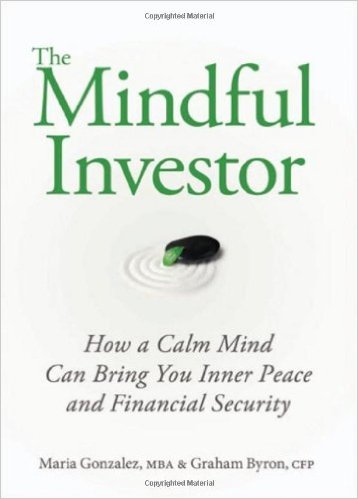
Here’s a review I did for the FP four years ago of the book illustrated to the left:  The Mindful Investor, Maria Gonzalez. The advice then was that the next time the markets crash, try to calm your mind with meditation. For a video interview I conducted with the author then, click on Mindfulness over Market Matters.

On page 152, the book specifically mentions how to deal with a stock market correction through a relaxation technique. “Once you feel calmer and more stable, you’ll be be better able to listen and make good decisions, ones that aren’t based on panic and fear.”

Of course, the more you watch the carnage through the media and web, the harder this is going to be. You might want to reread Steve Lowrie’s Hub post: Stop reacting to market noise.

Vanguard:  Consider doing nothing at all

Continue Reading…