Tag Archives: fear

Greed, Fear and Amnesia: The importance of Cycles

Image courtesy Outcome and positivemoney.org.

By Noah Solomon

Special to the Financial Independence Hub

Investment guru Howard Marks is the founder and co-chairman of Oaktree Capital Management, the world’s largest investor in distressed securities. Since launching Oaktree in 1995, his funds have produced long-term annualized returns of 19%. According to Warren Buffett, “When I see memos from Howard Marks in my mail, they’re the first thing I open and read. I always learn something.”

As indicated by the title of his book, The Most Important Thing: Uncommon Sense for the Thoughtful Investor, Marks believes that “the most important thing is being attentive to cycles.” In particular, he discusses the importance of knowing where we stand in various cycles. He contends that most great investors have an exceptional sense for how cycles work and where in the cycle markets stand at any given time. Lastly, Marks insists that investors who disregard cycles are bound to suffer serious consequences.

We live in a World of Relativism

There is a great saying about being chased by a bear, which states “You don’t have to run faster than the bear to get away. You just have to run faster than the guy next to you.”

In the context of investing, outperformance does not necessitate perfection. Success doesn’t come from always being right, but rather from being right more often than others (or from being wrong less often). Whether picking individual stocks or tilting your portfolio more aggressively or defensively, you don’t need to be right 100% of the time; you just need to be right more than others, which by definition leads to outperformance over the long-term. To this end, we have outlined some of our favorite concepts and themes which serve as guideposts for achieving this goal.

It’s all about Fear and Greed: Valuation just goes along for the Ride

The factors that drive bull and bear markets, bubbles and busts are too plentiful to enumerate. The simple fact is that more than any other factor, it is the ups and downs of human psychology that are responsible for changes in the investment environment. Most excesses on the upside and the inevitable reactions to the downside are caused by exaggerated swings in psychology.

Many investors fail to reach appropriate conclusions due to their tendencies to assess the world with emotion rather than objectivity. Sometimes they only pay attention to positive events while ignoring negative ones, and sometimes the opposite is true. It is also common for investors to switch from viewing the very same events in a positive light to a negative one within the span of only a few days (or vice-versa). Perhaps most importantly, their perceptions are rarely balanced.

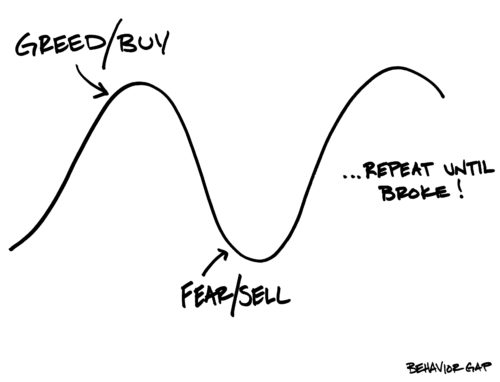
One of the most time-honored market adages states that markets fluctuate between greed and fear. Marks adds an important nuance to this notion, asserting that “It didn’t take long for me to realize that often the market is driven by greed or fear. Either the fearful or greedy predominate, and they move the market dramatically.” He adds:

Investor psychology seems to spend much more time at the extremes than it does at a happy medium. In the real world, things generally fluctuate between pretty good and not so hot. But in the world of investing, perception often swings from flawless to hopeless. In good times, we hear most people say, “Risk? What risk? I don’t see much that could go wrong: look how well things have been going. And anyway, risk is my friend – the more risk I take, the more money I’m likely to make.” Then, in bad times, they switch to something simpler: “I don’t care if I never make another penny in the market; I just don’t want to lose any more. Get me out!” Buy before you miss out gets replaced by sell before it goes to zero.

Without a doubt, valuations matter. Historically, when valuations have stood at nosebleed levels, it has been only a matter of time before misery ensued. Conversely, when assets have declined to the point where valuations were compelling, strong returns soon followed. But it is important to distinguish cause from effect. Extreme valuations (either cheap or rich) that portend bull and bear markets are themselves the result of extremes in investor psychology. Importantly, human emotions are both fickle and impossible to precisely measure. Noted physicist and Nobel Prize winner Richard Feynman articulately encapsulated this fact, stating “Imagine how much harder physics would be if electrons had feelings!”

Amnesia: The Great Enabler of Market Cycles

Another contributor to irrational investment decisions, and by extension market cycles, is the seemingly inevitable tendency of investors to engage in Groundhog Day-like behavior, forgetting the lessons of the past and suffering the inevitable consequences as a result. According to famed economist John Kenneth Galbraith, “Extreme brevity of financial memory” keeps market participants from recognizing the recurring nature of cycles, and thus their inevitability. In his book, A Short History of Financial Euphoria, he states:

When the same or closely similar circumstances occur again, sometimes in only a few years, they are hailed by a new, often youthful, and always supremely self-confident generation as a brilliantly innovative discovery in the financial and larger economic world. There can be few fields of human endeavor in which history counts for so little as the world of finance. Past experience, to the extent that it is part of memory at all, is dismissed as the primitive refuge of those who do not have the insight to appreciate the incredible wonders of the present.

Average and Normal: Not the same thing

In many ways markets resemble the swinging pendulum of a clock, which on average lies at its midpoint yet spends very little time there. Rather, it spends the vast majority of the time at varying distances to either the right or left of center. In a similar vein, most people would be surprised by both the frequency and magnitude by which stocks can deviate from their average performance, as indicated by the table below.

S&P 500 Index: Deviation from Long-Term Average (1972-2021)

Over the past 50 years, the average annual return of the S&P 500 Index has been 12.6%. The Index fell within +/- 2% of this number in only three of these years, within +/- 5% in only nine, and within +/- 10% in 22 (still less than half the time). Lastly, the index posted a calendar year return of +/- 20% of its long-term average return in nine of the past 50 years (18% of the time).

Also, when a pendulum swings back from the far left or right, it never stops at the midpoint, but continues to the opposite extreme.  Similarly, markets rarely shift from being either overpriced or underpriced to fairly priced. Instead, they typically touch equilibrium only briefly before snowballing sentiment and resulting momentum cause a progression to the opposite extreme. Continue Reading…

Tackling your Stock Market fears

By Anita Bruinsma, CFA

Special to the Findependence Hub

Investing has become more accessible to more people over the years. The emergence of mutual funds, ETFs, online brokers and robo-advisors has given pretty much everyone the means to invest. So why are so many people still reluctant to invest, and in particular, why don’t they think they can do it themselves? Judging by the people I’ve talked to the answer is: they’re scared. 

This is unfortunate and unnecessary. The investment industry has made investing look so complicated. We are led to believe that we need an MBA, a Bloomberg terminal and a proficiency in Excel modeling to invest. This is absolutely not true. Investing can be simple when you buy and hold broad-market ETFs. 

Compounding the problem are the tales of fortunes lost in the stock market, either by gambles taken or being swindled by an unscrupulous financial sales person. These horror stories, although real, are uncommon, and like many of our fears, are bigger in our imaginations than in reality. 

Investing can be simple

Have you heard of imposter syndrome? That’s when you think you aren’t talented or skilled enough to deserve your job, your income, or the accolades bestowed on you. I had terrible imposter syndrome when I was hired as an equity analyst 16 years ago. I thought everyone around me was way smarter than me when it came to investing in the stock market. 

Over the years, though, I realized that so much of what people were talking about was irrelevant, and the excessive amount of information and analysis was unnecessary. The highly-paid “experts” who came to meet with us couldn’t simply say “The stock market goes up over the long term.” Why would anyone be paid to give that simple piece of insight?

The thing is, that’s all that matters. The fact that the U.S. stock market has, historically, always recovered from dips and crashes and continued the march upward is all that matters. Don’t let all the other market-related noise distract you from this point.

Fewer decisions, better outcomes

Here’s how to de-complicate investing: don’t make predictions. The smartest investors on Bay Street don’t try to guess where the market is going: they buy their investments and hold onto them for the long term. The more decision-making you remove from investing, the better off you’ll be. This means don’t pick stocks and don’t choose when to get in and out of the market. Buy ETFs or index mutual funds that mirror the broad market, buy when you have the money, and sell when you need it.  Continue Reading…

How to handle Fear of a Market downturn

Image courtesy Kiplinger/RetireEarlyLifestyle.com

By Billy and Akaisha Kaderli, RetireEarlyLifestyle.com

Special to the Financial Independence Hub

On our latest adventure, we were on the beach in Isla Mujeres, Mexico when a lady recognized us from our website RetireEarlyLifestyle.com. After some pleasantries, she asked if we could address the fears of the market declining and how to handle it.

We appreciated that input from one of our Readers.

Previous market declines

Since the surviving the 1987 crash when the Dow Jones Industrial Average fell over 20% in one day, there have been other downturns including the recent ones of 2007-2008 and the Covid meltdown in March of 2021. We have learned from each of them.

They can be trying on one’s patience and confidence, so how is it best to handle them?

Noise, corrections and bears

First, let’s define these meltdowns.

Between a 5-10% decline in the averages is called noise and can happen at any time.

Many individual stocks have these gyrations, which is why we own the Indexes. They are more stable.

Over a 10% drop is called a correction, meaning it is wringing the excesses out of the markets. The markets are constantly being over-extended and under-extended and these 10% moves correct for those times.

If the averages drop 20% or more, it is considered to be a bear market and we tend to have these every 56 months.

On average, bear markets last 289 days or 9.6 months with an average loss of 36.34%. These can be painful for one’s financial health — or an opportunity — depending on where you are in the investment cycle.

A number of events can lead to a bear market: including higher interest rates, rising inflation, a sputtering economy, and a military conflict or geopolitical crisis. Seems we have all of these presently!

If you are in the accumulation phase and buying more shares at cheaper prices, this can be a bonus for you. However, if you are now retired and living off your investments with your account values dropping, that can be difficult to swallow.

How to calm your nerves to prevent panic selling

It’s important to note the difference between trading and investing.

Traders drive the day-to-day activity, booking profits and hopefully taking losses quickly. We investors take a longer view to ride out these cross currents of the markets knowing that — over the long run — we will be fine. Continue Reading…

Stickhandling your investing amid fear and greed

“The fishing was good; it was the catching that was bad.”
A.K. Best, fishing author.

“Stock markets are swimming in the face of two major investor emotions. They are fear and greed.”Adrian Mastracci, fiduciary portfolio manager.

All you have to do is rewind to the 2020 investment results. Especially those recorded during the months of February, March and April. They brought new meaning to volatility, in both directions.

Mention 2020 and practically every investor is glad it is in the rear view mirror. Tread carefully as those pesky markets are not known to march to your wishes.

Accordingly, I attempt to highlight some basic ideas that help in portfolio construction. Focus on expanding your knowledge, say of at least three strategies that improve your nest egg.

Each day now brings a new crowd of market optimists and pessimists. Along with various assortments of buyers and sellers. Just playback the last two weeks.

Be aware of the implications in both camps. Successful investing is about stickhandling one’s comfort zone between fear and greed.

Rules to live by

So, rule number one. No knee-jerk reactions please. Regardless of whether you’re buying or selling.

Rule number two. Markets operate on logic. Do you?

If you succeeded with these two rules, step aside and breathe. If not, rewind to rule one. The bigger question is why would you want to?

Some investors may seek to calm their fears by preserving capital. Others prefer to chase their greed by hitching onto growth wagons du jour.

A few more pessimistic data releases could drive the markets lower. Conversely, a few more ounces of optimism could propel investor confidence to higher levels. Continue Reading…

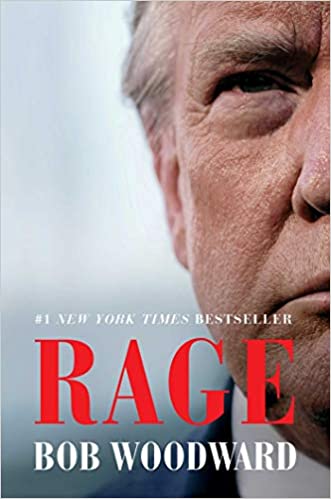
My review of Bob Woodward’s Rage: “Trump is the wrong man for the job.”

Amazon.com

This will likely be my last review of a book on Donald Trump before the November election. Hopefully, he will be swept out of power and we’ll never again have to pay attention to Trump books or anything else to do with the man.

For those who have missed my earlier reviews, we looked at several early Trump books and how it may affect investors in this blog originally published at MoneySense.ca.

Then, this summer we looked at Mary Trump’s Too Much and Never Enough (here) and then Michael Cohen’s Disloyal (here.) While we have been slowly reading John Bolton’s The Room Where It Happened, we will probably not review it.

As for Woodward, Rage is his second book devoted to Trump (the first was Fear). Woodward has previously written books on four previous presidents. Trump did not grant interviews to him for Fear but famously submitted to 17 interviews for Rage, all but one of them tape-recorded.

That in itself was the basis for various Facebook memes where the ghost of a disgraced Richard Nixon chides Trump for the idiocy of letting Bob Woodward [whose reporting famously took Nixon down] tape-record him. When the early review copies of Rage came out, the focus was almost exclusively on Trump’s early admissions (on tape, no less) that he knew Coronavirus would be very serious but that he deliberately downplayed it.

Rage, by the way, refers to the emotion Trump evokes in much of the public, notably the Liberals he seems to go out of his way to antagonize. The term comes from Trump himself, reprinted in the book’s preliminary material: “I bring rage out. I do bring rage out. I always have.”

Access to Trump both a plus and a liability

With such extended access to a long-winded Trump, Rage by necessity offers yet another platform for Trump himself to pontificate, defend and blame, as if his Twitter feed and access to the Fox News’s of the world were not enough. All told, this consumes a fair bit of space, so you get plenty of content that doesn’t add much value, such as Trump awarding himself an “A” in his handling of the Coronavirus panic; or his contention that his predecessor, Obama, wasn’t so smart or a great speaker. Meanwhile Trump insists “I went to the best schools. i did great.” As you might expect, Trump’s obsession with Obama is never far away in his Woodward interviews, as here: “Ninety percent of the things he’s done, I’ve taken apart.”

But Woodward is writing as much for posterity as for present-day readers, and no doubt future historians will pore through these interview excerpts with great interest. Continue Reading…