Tag Archives: Financial Independence

Lean FIRE (as opposed to Fat Fire)


By Alain Guillot

Special to Financial Independence Hub

I was told on Twitter that living on less than $24k per year is very frugal. Maybe it is, but I would like to explain how I live on less than $24K and I feel that I live like a king. 

(Editor’s Note: The Twitter discussion below followed Monday’s Hub post on by Myownadvisor blogger Mark Seed: Is Fat Fire realistic?)

First of all, my net worth right now is about $500,000. If we use the 4% rule, I should be able to withdraw $20,000K/year ($1,667/month) in perpetuity.  

How I live  

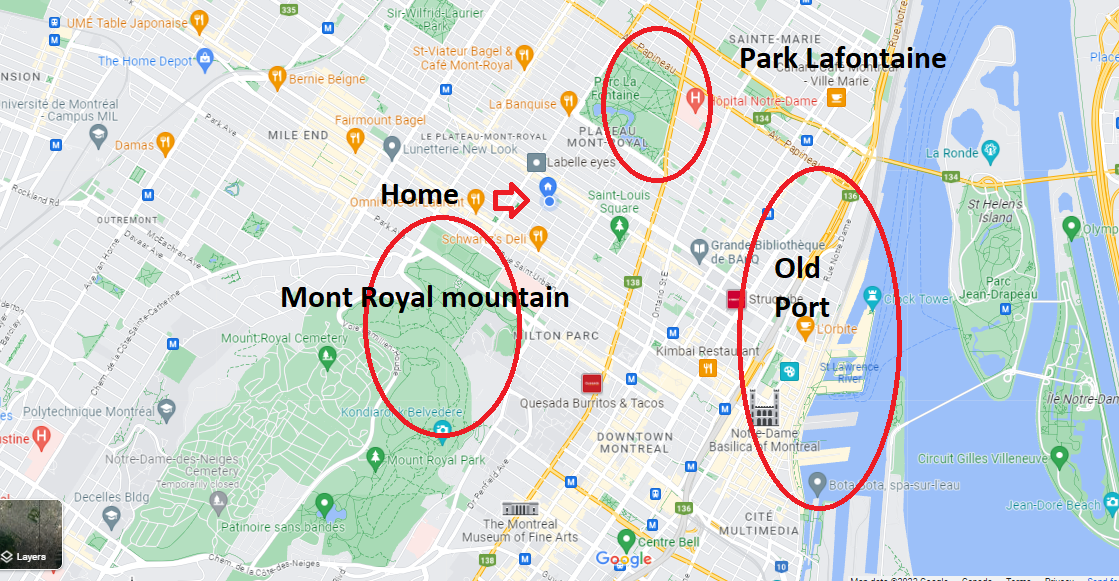
Map of Alain’s neighbourhood in Montreal

I live in one of the best neighborhoods in Montreal. It’s called “Le Plateau Mont Royal.” I have a beautiful park 10 minutes walking distance to the east, and another more beautiful park 10 minutes walking distance to the west, and I have the Old Port, 20 minutes walking distance to the south. 


Alain on Duluth Street


The street where I live is pedestrian only; it’s a cobblestone street.

Because I have been living in the same apartment for the past 12 years, my rent is low. $815/month. 

One of my small pleasures is to go downstairs, to a little park on the corner and drink a beer with my neighbors. (beer from the convenience store $2)

My apartment is what’s called a 3 ½. One bedroom, one living room, a kitchen, and a bathroom. I live on the second floor of a two floor building. 


The local supermarket

I do my groceries at a small family-owned supermarket where I have been shopping for 12 years and where I know the cashiers and the owners by first name basis. Because I follow a plant based diet, I eat 99% of the time fresh fruit and vegetables. My grocery bill hardly exceeds $10 per day ($300/month). I buy my fruits and vegetables daily. 


Continue Reading…

Is Fat FIRE realistic?

By Mark Seed, myownadvisor

Special to Financial Independence Hub


Weekend Reading - is Fat FIRE Realistic
Image Source: Pexels, Gantas Vaičiulėnas

Is Fat FIRE realistic?

Before my answer to that question, for those outside the personal finance, devout FIRE (Financial Independence, Retire Early) bubble, a primer based on what I know …

What is FIRE?

I would like to provide a universal definition from the personal finance community today but there isn’t one. There are, however, some general thoughts/themes when it comes to FIRE and those who follow the philosophy around it:

  • Financial Independence, Retire Early (FIRE) is a movement related to extreme/aggressive savings rates and investment tactics that allow individuals to retire sooner than potentially any traditional budgeting or retirement planning approach might permit.
  • When it comes to savings rates: in some circles, by saving up to 70% of your annual income, some FIRE enthusiasts aim to retire early (and live off small portfolio withdrawals from their accumulated assets).
  • When it comes to portfolio withdrawals: in some circles, by withdrawing a small % of the accumulated assets (e.g., 4% of the portfolio), said FIRE enthusiasts may expect their portfolio to last a lifetime without fear of running out of money.

The FIRE movement – new term, old concept

The FIRE movement takes direct aim at some traditional retirement ages, such as age 60, 65 or even later on but there is no consensus on what is / is not a retirement age, of course.

The theory and movement goes: by dedicating the majority of your after-tax income to savings and specifically saving for retirement, well, you could “retire” sooner than most. Probably true.

From this perspective, FIRE is not a new concept even though the moniker is somewhat newish.

I’ve written multiple times about the FIRE movement and my thoughts on FIRE.

I’ll link to those thoughts here for additional reading as well.

I’m hardly anti-FIRE; this movement/approach/philosophy has always resonated how I live for the most part:

  • To live within your means or slightly below what you make as income.
  • To save early and often.
  • To avoid long-term debt that is not used for wealth generation.
  • To optimize your investing (i.e., keep your costs low and diversified, and avoid money managers).

Several FIRE retirement variations have emerged over the years to frame a particular lifestyle expectation that could come with FIRE. I’ll rank them in order of cashflow significance although these terms also vary based on the FIRE enthusiast you’re talking to:

1. Lean FIRE

As the first word suggests, lean is a strict adherence to a minimalist lifestyle. Many Lean FIRE adherents live on $25,000 per year, or less per year. Here are a few examples:

Jacob Fisker – Early Retirement Extreme. How he used to live on just $7,000 per year. Not a typo.

There is Jessica from Financial Mechanic, who spent less than $20,000 in 2020.

In more recent years, A Purple Life, wrote about a nomadic life earlier this year, living off less than $25K USD.

These are certainly jaw-dropping low numbers …

2. Barista FIRE

Not that you have to become a barista, rather, the term is used to highlight a combination of work-life balance that can be juggled – a form of semi-retirement if you will.

Barista FIRE is a type of semi-retirement whereby you can consider part-time work or work on your own terms, and still enjoy the benefits of some income and workplace benefits. (The term was coined as such since Starbucks offers benefits to part-time workers … something to consider for your semi-retirement plans!?) Continue Reading…

My 5 picks for classic books on Financial Independence and Retirement

A book discovery service called Shepherd.com has just published a multi-book review by me about my recommendations for some of the best all-time books on Financial Independence and Retirement. You can find the full review by clicking here. Shepherd.com is a year old; an alternative to older services like Goodreads, it helps readers and authors share and discover books in various genres.

Picking just five books is of course a tricky exercise and having seen this published late in July, I soon thought of several other books I might have included as well or instead, notably David Chilton’s classic The Wealthy Barber. But it’s safe to say that with more than 2 million copies sold, that would not exactly be a ground-breaking new recommendation.

Chilton of course created a monster with the genre of the financial novel: a hybrid that combines a story and characters with an overlay of enduring financial insights and strategies for achieving financial freedom. He has spawned many imitators, such as Robert Gignac’s Rich is a State of Mind and my own Findependence Day, which is also flagged in the Shepherd reviews.

For this exercise, however, I opted to go with straight non-fiction financial books. My thinking was what books influenced me in my own journey to Semi-Retirement and Financial Independence, or the so-called FIRE movement, for Financial Independence Retire Early.

Here are the 5 books I did pick: go to the original link to get my analysis and reasons for each pick. Below I offer just a line each but each explanation is closer to 400 words so be sure to click on the original Shepherd link to get the full take on each. The five titles below each include hypertext to the Shepherd book store where you can order directly.

1.)

Your Money or Your Life: 9 Steps to Transforming Your Relationship with Money and Achieving Financial Independence

By Vicki Robin & Joe Dominguez

Probably first for most other proponents of the FIRE (Financial Independence Retire Early) movement is this classic, subtitled Transforming Your Relationship with Money and Achieving Financial Independence.


2.)

Enough: True Measures of Money, Business, and Life

By John C. Bogle

The late Jack Bogle, founder of Vanguard Group, published this excellent book in 2009. To me, the title speaks for itself. The sooner you realize you have “enough,” the sooner you can quit the rat race.


3.)

How to Retire Happy, Wild, and Free: Retirement Wisdom That You Won’t Get from Your Financial Advisor

By Ernie J. Zelinski

Edmonton-based author Ernie Zelinski is probably best known for this self-published international bestseller and several others, all on the theme of escaping from full-time employment as soon as possible.


4.)

Pensionize Your Nest Egg: How to Use Product Allocation to Create a Guaranteed Income for Life

By Moshe A. Milevsky, Alexandra C. Macqueen

This book by the famed Finance professor and a certified financial planner caters to anxious would-be retirees who do not have the luxury of having an inflation-indexed, guaranteed-for-life Defined Benefit pension plan offered by an employer.


5.)

Work Optional: Retire Early the Non-Penny-Pinching Way

By Tanja Hester

The phrase “Work Optional” describes the state of being financially independent enough that you don’t have to work for money anymore, but nevertheless choose to for reasons like having a purpose, or structure. As the subtitle suggests, it’s about retiring early without having to be a miserly penny pincher.

Timeless Financial Tips #6: Aligning your Investments with your Time Horizon

Lowrie Financial: Canva Custom Creation

By Steve Lowrie, CFA 

Special to Financial Independence Hub

I’ve spent my entire career railing against the dangers of market-timing — i.e., dodging in and out of markets based on current conditions. But there is a time when “timing” of a different sort matters. I’m talking about your investment time horizons.

Today, let’s look at how to use your personal time horizons to successfully separate today’s spending from tomorrow’s future wealth.

Spending and Investing over Time

One of the reasons we advocate for holding a diversified investment portfolio is because your investment horizons are diverse as well:

  1. For immediate spending, you’ll need cash reserves, which almost don’t count as investments.
  2. To preserve what you’ve already got and smooth out the ride, we turn to medium-term holdings such as bonds.
  3. For your long-term spending plans, nothing beats the overall staying power of owning a slice of the corporate pie, typically in the form of stocks, stock funds, or similar equity stakes in markets around the world.

On that last point, global equity markets are relatively dependable in one sense: by delivering on the success of collective human enterprise, they’ve delivered strong, inflation-busting returns in the long run. But these same markets are also quite chaotic in the near-term, with big, unpredictable price swings along the way. This means not all your dollars belong in this arena to begin with: only the ones you’re prepared to invest in for a good, long while. In other words:

Your cash reserves are for spending sooner than later. Your long-term investments are there for your future self, rather than as an ATM-like source for immediate spending.

Market-Timing vs. Financial Planning

How do you determine how long is “long-term” for your investments? Unfortunately, many investors use market-timing instead of personalized financial planning to decide when it’s time to move their money in and out of various positions. They pile into the action when markets surge and flee as they plummet. This is a timeless timing tragedy that foils the ability to preserve, if not grow, wealth over time.

Instead, use your own goals and investment timeframes to decide how much of your wealth to invest in pursuit of higher expected returns, as well as how much to shelter against the uncertainty.

  • For upcoming spending needs, your money may be best kept in cash or similar humdrum holdings. That way, it’s there when you need it. The catch is, cash and cash-like reserves aren’t expected to keep pace with inflation over time, which means your spending power gradually shrinks. So …
  • For spending that’s still years away, you’ll want to own positions that are expected to generate new wealth, rather than just maintain a status quo. That’s where the wonder of global enterprise comes in — aka, stocks. The catch here is, you must commit to keeping your future money patiently invested and ride out the downturns along the way.

Estimating your Time Horizon

Even if you’re committed to financial planning, it’s surprisingly common to underestimate how much time you’ve actually got to invest. For a couple retiring at age 65, there is a 50% chance one of you will live past age 90, which means your retirement timeline could be 25–30 years, or more. Extend it even further if you’d also like to leave a substantial financial legacy. Continue Reading…

I interview RetireEarlyLifestyle’s Billy and Akaisha Kaderli

Billy & Akaisha in Mesa, Arizona; courtesy Kiplinger

Earlier this spring, I was interviewed by Billy and Akaisha Kaderli, the globe-trotting early retirees who run the RetireEarlyLifestyle.com website and authors of several books on Early Retirement. 

You can find that interview on both our web sites: here’s the version from the Hub: RetireEarlyLifestyle.com interview on Financial Independence & the “Findependent” lifestyle.

And here is the same interview at RetireEarlyLifestyle.com.

Turnabout is fair play so today, I play interviewer and Billy and Akaisha are on the hot seat to answer.  


Jon Chevreau: What do you think of the term FIRE [Financial Independence/Retire Early)? You made it there in your early 30s but can Millennials, Gen X and GenZ expect to replicate your success, given the high cost of housing and everything else?

Billy & Akaisha: FIRE is a great marketing acronym filled with energy and intrigue. There was no such term when we left the working world in 1991, 33 years ago. There really wasn’t even the mental concept of being “financially independent” except for perhaps well-paid athletes, actors and trust fund babies.

We called ourselves Early Retirees, but we never retired from life, just from the conventional idea of working until age 65 or when Social Security kicks in. We had other plans for ourselves like travel, volunteer work, creative projects and continuous learning. We’ve always been productive and we like that feeling of pursuing our passions.

As for whether or not Millennials, Gen X and Gen Z can expect to become financially independent, we would say yes.

It’s a matter of discipline, focus, being aware of one’s financial choices, and most definitely finding a partner who is on the same financial page.

We have explained many times in our books and on our website that the four categories of highest spending in any household are Housing, Transportation, Taxes and Food/Dining/Entertainment. Pare down your personal infrastructure or modify your cash outlay in those categories and you will find money to invest towards your future life of freedom.

So yes, we say it can still be done.

JC: How many countries have you now visited around the world and how long do you tend to stay in any one location? Related question: do you maintain a home base in the United States and how long (and which seasons?) do you stay there each year?

Billy & Akaisha Karderli in Sorrento, Italy, with Mount Vesuvius in background

Billy & Akaisha: For some reason we have never cared to count the number of countries we have visited or lived in. We travel for ourselves, not to tick off boxes or to compete with other travelers.

We have visited all throughout Europe, lived in many Asian and Pacific Rim countries, visited and lived in Canada, most of the United States, all throughout Mexico, Central America and Northern South America, and have sailed throughout the Caribbean Islands.

In the early decades of our vagabonding, we’d be gone years at a time. We made trips back to the U.S. yearly to see family for a few months at a time, but then we’d get our backpacks and world maps out again and hit the road.

We utilized Geo-arbitrage long before there was a name for that hack and found it to be one of the best financial moves we have ever made.

We do still own a manufactured home in a resort in Arizona. But while on this topic, we’d like to say that living in an Active Adult Resort Community in the U.S. has been one of the most affordable and socially satisfying options for housing we have implemented.

That being said, we have many Readers and Friends who prefer to house sit all over the world and that is their gold standard of housing choice to keep costs down.

These are two examples of modifying the category of Housing to positively affect your budget.

JC:  I believe you took Social Security early. How much do you think average would-be retirees will be depending on that source of income?

Billy & Akaisha: In our case we planned our retirement as if we would not receive Social Security. We structured our portfolio to produce our needed income on its own. Now that we receive it, between dividends and SS we do not need to touch our portfolio, thus letting it grow. Continue Reading…