Tag Archives: Financial Independence

Seasonal work in Retirement

By Fritz Gilbert, TheRetirementManifesto.com

Special to the Financial Independence Hub

Have you ever thought about seasonal work in retirement?  My friend, Kirk, recently leveraged seasonal work to experience something for the first time in his life.  He became a cowboy, through a seasonal job at a Dude Ranch.

At Age 58!

You may remember Kirk, he’s visited with us before (including his thru-hike on the Appalachian Trail, his broken foot on the Pacific Crest Trail and the story of breaking his ribs when he Lived Life At The Limits on a mountain bike ride with yours truly).  This Fall, he’s heading to Nepal to do some trekking around Mt. Everest.  Interesting guy, my friend Kirk, and we can all learn something from the way he lives his life in retirement.

Today, he tells us the story of doing seasonal work in retirement at a Dude Ranch, which he did in the Spring of 2018.

The old military and corporate guy became a cowboy.  Well, that may be a bit of an exaggeration, but he did “wrangle horses” for 6 weeks at a Dude Ranch. How cool is that?

Here’s his story…

Working On A Dude Ranch

Kirk. A “FIRE Guy In His Prime”

I promised myself I would write three “potential” blog posts for my friend this year covering what could possibly be my most adventurous year since my retirement began 2 ½ years ago. Caution: I am not the spectacular writer that Fritz is; however, here is my latest adventure …

(Note from Fritz: I don’t know about my writing skills, but I do know that Kirk lives life more “on the edge” than anyone I personally know. Nepal, really? That Kirk guy is nuts!)

When I retired roughly 2 ½ years ago I decided to do away with my “LinkedIn” account. I was cleaning up some old things from my work years and didn’t think I would need a resume in my retirement life. As I started checking off things in my Dump Truck List (Buckets are no longer big enough) I started realizing that I had some skill gaps. Ultimately, I wanted to be a wrangler for a cattle drive in Montana but realized that wasn’t going to happen if I didn’t have some experience handling a horse.

I researched some possible jobs through www.coolworks.com and drafted a list of the qualifications for some of the wrangling jobs which interested me. Much to my surprise, I met them all with one exception:

I had no experience in riding a horse.

Having grown up on a farm really prepared me well for many aspects of the job, but we never had horses. How could I learn to ride a horse, handle the tack, teach the ranch’s customers, etc. if I didn’t know how to handle horses myself? While I suppose I could have paid for the experience — I am FI [Financially Independent], after all — there was something in me that kept gnawing in the deep recesses of my mind.

Thoughts which whispered, and thoughts that led to my decision to pursue seasonal work in retirement:

You have been so frugal all your life to get to FI, is this really how you want to spend your money?
Would you really be able to buy this experience or is this something you have to spend time acquiring skill, talent, and familiarity?
What other experiences do you need now in order to pursue the future adventures of your dreams?

(Note from Fritz: I like how Kirk thinks several moves ahead. Dream for your tomorrow, and identify what you should be doing Today in order to achieve your dreams. Move your life from Good To Great).

After much thought, I decided to venture out to an unknown area for me and listen to the younger crowd who said many of their wonderful experiences were as “Workaway” people.  Workaway is simply a web service that connects people who are looking for experience with people that are looking for help.  The Workaway people generally work 4 – 5 hours per day, 5 days per week in exchange for room/board and experience.  Given that I have plans to travel through Asia in the coming years, this approach could help with some international options as well. I looked into the site http://www.workaway.info and decided to give it a try.

It was somewhat difficult to determine where I would go to gain this experience.  I wasn’t sure how it would all work out, so I decided to minimize my risk by choosing a location that:

  • had good/great reviews by those who participated
  • was close so if it was horrible I could bail
  • had more than just myself as a workaway so I could learn from the experience of others

I ended up selecting a Bed and Breakfast Dude Ranch in upstate NY, only an hour away from where I grew up and where my mother still lives.  If it was a horrible experience I had a solid Plan B. I would simply bail out and stay with my mom, working around her house to complete some things on her “To Do” list.  It would also afford me the opportunity to spend time with some aunts, uncles, and cousins which I had not seen in far too long. Continue Reading…


5 surefire ways to stay out of Debt

By Gary Bordeaux

Special to the Financial Independence Hub

In the modern world, there are two types of debt: good bad and bad debt. Good debt would be considered financing something that has the potential to go up in value, like a home or a small business. Bad debt would be considered consumer debt like jewelry, designer clothes, and luxury cars. These things tend to depreciate. People typically get into trouble financially when they start going into debt with consumer goods or things they really don’t need.

1.) Create a budget

Unless you are already financially well-off, you are going to need to create a budget for you and your family. This is the single biggest way not to go into debt. Why? Because you are tracking every dollar you spend. Start out by listing your monthly income after taxes at the top of the budget, then list your expenses below that. If you don’t have a surplus of money after all your expenses are accounted for, you are either spending too much money or you are not making enough money. Whatever the case may be, adjust your budget accordingly.

2.) Quickbooks

The Quickbooks online platform by Intuit is probably one of the best online financial tools you can use for your business. In general, it is an online accounting software that helps manage your finances for you. With an easy Quickbooks online payment, you can pay people and you can receive money too. In the end, business finances can get pretty confusing. Quickbooks allows you to track your finances more easily. Also, Intuit has a budgeting app called Mint. I use Mint quite often and it tracks all my transactions and spending activity. It also tracks your budgets, monthly cash flow, and your credit score along with many other investments and other accounts.

3.) Emergency fund

Let’s face the fact that bad things happen to good people. When these setbacks occur, people need money set aside to protect themselves from debt. This is what an emergency fund can do. First, start by putting away a simple $1,000 just in case an emergency happens. Continue Reading…

How to Retire debt-free

By Laurie Campbell

Special to the Financial Independence Hub

These days, don’t be surprised to find a senior citizen standing behind the counter of your favourite fast food spot taking your order instead of a braces-wearing teen. What retirement looks like today has changed quite significantly from what it was even just ten years ago, and there’s no stopping this trend. More and more seniors are staying in the workforce, and for many of them, they have no choice.

Last June for Seniors Month, our agency, Credit Canada co-sponsored a seniors and money study that looked at the financial difficulties Canadian seniors are facing; the results, while shocking, were no surprise.

As a non-profit credit counselling agency, our counsellors are on the forefront of what’s happening when it comes to people and their financial hardships, and we are seeing a large number of people who should be starting to settle into their “golden years” still working, maybe even taking on an additional side job, just to pay off their debt, let alone get a time-share in Florida.

When we conducted our study in June 2018, it revealed that one-in-five Canadians are still working past age 60, including six per cent of those 80 and older. And while one third do so simply because they want to — which is fantastic, kudos to you — 60 per cent are still working because of some form of financial hardship, whether it’s too much debt, not enough savings, or other financial responsibilities, like supporting adult children.

The truth is the golden years have been tarnished, and I don’t know if we’ll ever get them back.

Half of 60-plus carrying some form of debt

Many of today’s retirees are living on fixed incomes, making them vulnerable to unpaid debt. In fact, our study revealed more than half of Canadians age 60 and older are carrying at least one form of debt, with a quarter carrying two or more types of debt. What’s even more alarming is that 35 per cent of seniors age 80 and older have debt, including credit-card debt and even car loans.

Staring at the problem isn’t going to help, nor is hiding from it. The best thing we can all do is to face the facts head-on and devise a plan of action that we know will work, whether it’s getting rid of any debt while building up savings, taking on a side job, delaying retirement by a few years, or all of the above.

Sizing up Government support

Before delving into the numbers it’s important to understand what income you can expect to have during your retirement. A few numbers have been compiled here as an example, but if you wanted to get more detailed information you can visit the Government of Canada website and click on the Canada Pension Plan (CPP) or Old Age Security (OAS) pages.

So, let’s get started by taking a look at 2017. Continue Reading…

Retired Money: How to avoid pre-retirement financial stress syndrome

My latest MoneySense Retired Money column looks at how near-retirees can avoid what author Patrick McKeough calls “pre-retirement financial stress syndrome.”

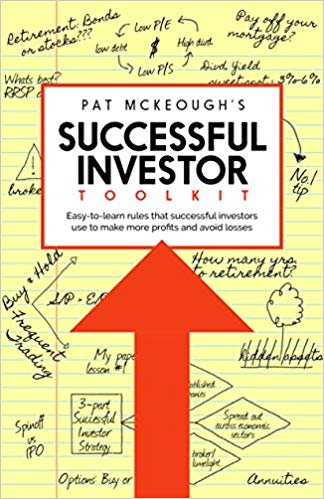
That’s a syndrome he identifies in his new book, Pat McKeough’s Successful Investor Toolkit. McKeough is a regular contributor here at the Hub and you can find the full MoneySense review of his book by clicking on the highlighted text: Investing tips for retired Canadians.

The book is a distillation of McKeough’s long investment career, honed first at The Investment Reporter, and in recent years his own firm, The Successful Investor, and its stable of newsletters. As a member of his Inner Circle and TSI Network, I have long been a proponent of his common-sense approach to investing. He is remarkably consistent in his insistence that investors of any age rely mostly on a conservative portfolio of quality dividend-paying stocks spread among the five major economic sectors (Manufacturing & Industry, Resources, Finance, Utilities and Consumer). And, he never fails to remind you, steer clear of stocks in the crosshairs of what he calls the “broker/media limelight.”

His newsletters are focused variously on Canadian stocks and U.S. and international stocks, and in recent years he has increased his coverage of ETFs.

A cure for PRFSS: Work longer or refine your spending

So what is“pre-retirement financial stress syndrome,” or PRFSS? PRFSS strikes when mature investors realize they may not have enough savings to generate the stream of retirement income they’d been counting on. While some investors are searching for one last desperate “hail Mary” gamble, McKeough advises the opposite: aiming for safer investments.

And while it may not be what some may want to hear, he suggests those suffering from PRFSS adopt one or both of these two solutions: work longer and/or refine your spending. He challenges them to “turn frugality into a game.”

With his focus on stocks, it’s no surprise that McKeough is not keen on bonds, even for retirees and those on the cusp of it. Continue Reading…

How to pay off your mortgage in 10 years

By Karren Smith

Special to the Financial Independence Hub

Owning a home without a mortgage is something of a dream for many, and an important step in financial independence. Paying off a mortgage in 10 years can seem like a massive task, but with some simple financial strategies and planning, it’s possible.

While you will need to make some sacrifices, the benefits of owning your home as soon as possible is worth it for many people. By paying off your loan more quickly, you and your family will save thousands of dollars in interest and have more money to put towards the things you love, such as overseas travel, or perhaps a second home for holidays. Owning your house can help your life become freer and more flexible. So how can you escape the shackles of your mortgage and pay off your home in 10 years?

Create a simple plan

Assuming you’re debt free, aside from your mortgage, you can make a simple plan that will help you pay off your home within 10 years. For example, let’s say you have a $300,000 loan at a 5% interest rate. If you have a single income of $95,000, you can pay off your loan in 6-7 years with $2,000 fortnightly payments.

If you’re a couple, with an income of $140,000, you can pay your mortgage off in 5-6 years with $2,600 fortnightly payments.

Of course, these numbers are just a starting point to illustrate what’s possible if you focus on paying your home off. Bigger loans will require more time or bigger repayments. Obviously, the higher your fortnightly payments are, the more quickly you’ll pay off your loan; however, at the same time, it’s important that you have enough money to cover your expenses and live comfortably. Continue Reading…