Real-Return Bonds Pay A Return Adjusted For Inflation. But When You Buy A Real-Return Bond, You Are Only Protecting Yourself Against Unanticipated Rises In Inflation.
Real-return bonds pay you a rate of return that’s adjusted for inflation, but that’s not always as promising as it seems.
When a real-return bond is issued, the level of the consumer price index (CPI) on that date is applied to the bond. After that, both the principal and interest payments are typically adjusted every six months, upwards or downwards from that base level, to compensate for a rise or fall in the CPI. In general, Government of Canada real-return bonds pay interest semi-annually, on June 1 and December 1.
Look at this theoretical example to understand how a real-return bond works
The Bank of Canada issues $400 million of 30-year bonds maturing on December 1, 2049. The bonds have a coupon, or interest rate, of 2%.
If after six months from the date of issue, the new CPI level is, say, 1% above the level of the CPI on the issue date, then each $1,000 of bond principal is adjusted to $1,010 of bond principal ($1,000 x 1.01). The semi-annual interest payment is then $10.10 ($1,010 x 2% / 2).
If after 12 months, the level is 2% higher, then the bond principal is adjusted to $1,020 ($1,000 x 1.02), and the interest payment rises to $10.20 ($1,020 x 2% / 2).
Consider these three important factors to realize benefits with real-return bonds
The price you pay for real-return bonds reflects the anticipated rate of inflation. In other words, if investors feel that inflation will rise 2% over the long term, the price of the bond will reflect that future inflation increase and its effect on the bond’s principal and interest payments. So, when you buy a real-return bond, you are only protecting yourself against unanticipated rises in inflation.
When the inflation rate falls over a six-month period, the principal and interest payments of a real-return bond fall. In times of deflation, the inflation rate turns negative. In a prolonged period of deflation, the principal of a real-return bond could fall below the purchase price. Interest payments would fall, as well.
As with regular bonds, holders of real-return bonds must pay tax on interest payments at the same rate as ordinary income. That income gets taxed at the investor’s marginal rate. In addition, holders of real-return bonds must also report the amount by which the inflation-adjusted principal rises each year, as interest income, even though you won’t receive that amount until the bond matures. That amount is added to the bond’s adjusted cost base.
Investment guru Howard Marks is the founder and co-chairman of Oaktree Capital Management, the world’s largest investor in distressed securities. Since launching Oaktree in 1995, his funds have produced long-term annualized returns of 19%. According to Warren Buffett, “When I see memos from Howard Marks in my mail, they’re the first thing I open and read. I always learn something.”
As indicated by the title of his book, The Most Important Thing: Uncommon Sense for the Thoughtful Investor, Marks believes that “the most important thing is being attentive to cycles.” In particular, he discusses the importance of knowing where we stand in various cycles. He contends that most great investors have an exceptional sense for how cycles work and where in the cycle markets stand at any given time. Lastly, Marks insists that investors who disregard cycles are bound to suffer serious consequences.
We live in a World of Relativism
There is a great saying about being chased by a bear, which states “You don’t have to run faster than the bear to get away. You just have to run faster than the guy next to you.”
In the context of investing, outperformance does not necessitate perfection. Success doesn’t come from always being right, but rather from being right more often than others (or from being wrong less often). Whether picking individual stocks or tilting your portfolio more aggressively or defensively, you don’t need to be right 100% of the time; you just need to be right more than others, which by definition leads to outperformance over the long-term. To this end, we have outlined some of our favorite concepts and themes which serve as guideposts for achieving this goal.
It’s all about Fear and Greed: Valuation just goes along for the Ride
The factors that drive bull and bear markets, bubbles and busts are too plentiful to enumerate. The simple fact is that more than any other factor, it is the ups and downs of human psychology that are responsible for changes in the investment environment. Most excesses on the upside and the inevitable reactions to the downside are caused by exaggerated swings in psychology.
Many investors fail to reach appropriate conclusions due to their tendencies to assess the world with emotion rather than objectivity. Sometimes they only pay attention to positive events while ignoring negative ones, and sometimes the opposite is true. It is also common for investors to switch from viewing the very same events in a positive light to a negative one within the span of only a few days (or vice-versa). Perhaps most importantly, their perceptions are rarely balanced.
One of the most time-honored market adages states that markets fluctuate between greed and fear. Marks adds an important nuance to this notion, asserting that “It didn’t take long for me to realize that often the market is driven by greed or fear. Either the fearful or greedy predominate, and they move the market dramatically.” He adds:
Investor psychology seems to spend much more time at the extremes than it does at a happy medium. In the real world, things generally fluctuate between pretty good and not so hot. But in the world of investing, perception often swings from flawless to hopeless. In good times, we hear most people say, “Risk? What risk? I don’t see much that could go wrong: look how well things have been going. And anyway, risk is my friend – the more risk I take, the more money I’m likely to make.” Then, in bad times, they switch to something simpler: “I don’t care if I never make another penny in the market; I just don’t want to lose any more. Get me out!” Buy before you miss out gets replaced by sell before it goes to zero.
Without a doubt, valuations matter. Historically, when valuations have stood at nosebleed levels, it has been only a matter of time before misery ensued. Conversely, when assets have declined to the point where valuations were compelling, strong returns soon followed. But it is important to distinguish cause from effect. Extreme valuations (either cheap or rich) that portend bull and bear markets are themselves the result of extremes in investor psychology. Importantly, human emotions are both fickle and impossible to precisely measure. Noted physicist and Nobel Prize winner Richard Feynman articulately encapsulated this fact, stating “Imagine how much harder physics would be if electrons had feelings!”
Amnesia: The Great Enabler of Market Cycles
Another contributor to irrational investment decisions, and by extension market cycles, is the seemingly inevitable tendency of investors to engage in Groundhog Day-like behavior, forgetting the lessons of the past and suffering the inevitable consequences as a result. According to famed economist John Kenneth Galbraith, “Extreme brevity of financial memory” keeps market participants from recognizing the recurring nature of cycles, and thus their inevitability. In his book, A Short History of Financial Euphoria, he states:
When the same or closely similar circumstances occur again, sometimes in only a few years, they are hailed by a new, often youthful, and always supremely self-confident generation as a brilliantly innovative discovery in the financial and larger economic world. There can be few fields of human endeavor in which history counts for so little as the world of finance. Past experience, to the extent that it is part of memory at all, is dismissed as the primitive refuge of those who do not have the insight to appreciate the incredible wonders of the present.
Average and Normal: Not the same thing
In many ways markets resemble the swinging pendulum of a clock, which on average lies at its midpoint yet spends very little time there. Rather, it spends the vast majority of the time at varying distances to either the right or left of center. In a similar vein, most people would be surprised by both the frequency and magnitude by which stocks can deviate from their average performance, as indicated by the table below.
S&P 500 Index: Deviation from Long-Term Average (1972-2021)
Over the past 50 years, the average annual return of the S&P 500 Index has been 12.6%. The Index fell within +/- 2% of this number in only three of these years, within +/- 5% in only nine, and within +/- 10% in 22 (still less than half the time). Lastly, the index posted a calendar year return of +/- 20% of its long-term average return in nine of the past 50 years (18% of the time).
Also, when a pendulum swings back from the far left or right, it never stops at the midpoint, but continues to the opposite extreme. Similarly, markets rarely shift from being either overpriced or underpriced to fairly priced. Instead, they typically touch equilibrium only briefly before snowballing sentiment and resulting momentum cause a progression to the opposite extreme. Continue Reading…
Investors Interested In Dividends Should Only Buy The Highest-Yielding Canadian Dividend Stocks If They Meet These Criteria—And Don’t Have These Risk Factors
Dividend yield is the percentage you get when you divide a company’s current yearly payment by its share price.
The best of the highest-yielding Canadian dividend stocks have a history of success
Follow our Successful Investor philosophy over long periods and we think you’ll likely achieve better-than-average investing results.
Our first rule tells you to buy high-quality, mostly dividend-paying stocks. These stocks have generally been succeeding in business for a decade or more, perhaps much longer. But in any case, they have shown that they have a durable business concept. They can wilt in economic and stock-market downturns, like any stock. But most thrive anew when the good times return, as they inevitably do.
Over long periods, you’ll probably find that a third of your stocks do about as well as you hoped, a third do better, and a third do worse. This is partly due to that random element in stock pricing that we’ve often mentioned. It also grows out of the proverbial “wisdom of the crowd.” The market makes pricing mistakes and continually reverses itself. But the collective opinion of all individuals buying and selling in the market eventually beats any single expert opinion.
Canadian dividend stocks and the dividend tax credit
Canadian taxpayers who hold Canadian dividend stocks get a special bonus. Their dividends can be eligible for the dividend tax credit in Canada. This dividend tax credit—which is available on dividends paid on Canadian stocks held outside of an RRSP, RRIF or TFSA—will cut your effective tax rate.
That means dividend income will be taxed at a lower rate than the same amount of interest income. Investors in the highest tax bracket pay tax of around 29% on dividends, compared to 50% on interest income. At the same time, investors in the highest tax bracket pay tax on capital gains at a rate of about 25%. Continue Reading…
It’s common for investors to be concerned about inflation because it brings to mind the high inflationary period of the 1970s that completely wrecked stock and bond returns. It’s also easy for investors to draw spurious conclusions about government debt and linking that to the hyperinflation that occurred in Zimbabwe or Venezuela. This article aims to set the record straight about inflation and let investors know how to invest during periods of high inflation.
Are we experiencing high Inflation?
Inflation is one of the biggest concerns as we near the end of the global pandemic and economies begin to re-open. Governments around the world spent record amounts to keep their citizens, small businesses, and corporations afloat over the past two years, while a majority of those still employed were able to save money thanks to an economy devoid of travel and entertainment.
The result was a significant uptick in savings rates, with Canada’s household savings rate reaching a high of 28.2% in July 2020.
All this money sloshing around on the sidelines has been and will continue to be deployed into goods and services, creating additional demand for a still strained global supply chain. Consumers are ready to dine out in restaurants, attend concerts, and engage in “revenge travel” to make up for lost time.
When that happens, prices tend to rise. Canada’s consumer price index (CPI) has been rising steadily since March 2021. The 12-month change in the CPI for February 2022 was 5.7% (Stats Can). That’s well above the Bank of Canada’s 2% inflation target, and even above their acceptable range of 1-3%.
Meanwhile, the U.S. inflation rate soared to 7.9% in February 2022. (Trading Economics).
Both the Federal Reserve and the Bank of Canada previously signalled they were willing to let the economy run a little hotter than usual to make sure we achieve so-called full employment. But both central banks are now in tightening mode, raising interest rates by 0.25% in March 2022 to kick-off a series of expected rate hikes for the rest of 2022.
It’s clear that high inflation has arrived and persisted for longer than expected. The question is what should investors do about it (if anything)?
How Investors should position their portfolio to deal with high Inflation
What exactly is an inflation hedge? In an episode of the Rational Reminder podcast, Benjamin Felix said an inflation hedge needs the following three characteristics:
It will correlate positively with inflation, including responding to unexpected inflation.
It won’t be too volatile
It will have a positive real expected return
The problem, Felix said, is that asset doesn’t exist.
Mutual funds stir up heated debates all across the internet. Fund companies sing their praises while others say they are taking you to the cleaners. It can be confusing – are they good or bad? What’s the real deal with mutual funds?
A game-changer for investors
Mutual funds democratized the stock market, making investing accessible to more people, and this was a very good thing. Before the popularization of mutual funds in the 1950s, it was more difficult to get your money invested in the stock market: you needed a stock broker to buy stocks for you and you needed a fair amount of money.
The idea behind a mutual fund is simple: collect money from a group of people and hire professional money managers to invest this pool of money into dozens of stocks, generating a return for the investors. It’s the pooling of money that is so powerful: it allows a fund to be diversified, giving investors exposure to a myriad of stocks instead of just a few.
As an individual investor, you’d need a lot of money to get that kind of diversification. And whereas a broker would charge a large commission for every trade, a mutual fund has economies of scale, making the costs lower overall. Plus, as a mutual fund investor you don’t need to know one single thing about the stock market. What a win for the masses!
The downside
So why do mutual funds get a bad rap sometimes? It’s mainly because sales practices around mutual funds have a muddied history. Investment advisors who are making recommendations to their clients about what to invest in might be influenced by sales commissions, possibly encouraging them to put their clients’ money into funds that pay them the most commission. Worse, these commissions (and other perks that used to be permitted) were not always properly disclosed to clients. Regulations have improved in this area, but sales commissions can still influence an advisor’s choice of funds.Continue Reading…


 Posted By
  Real-Return Bonds Pay A Return Adjusted For Inflation. But When You Buy A Real-Return Bond, You Are Only Protecting Yourself Against Unanticipated Rises In Inflation.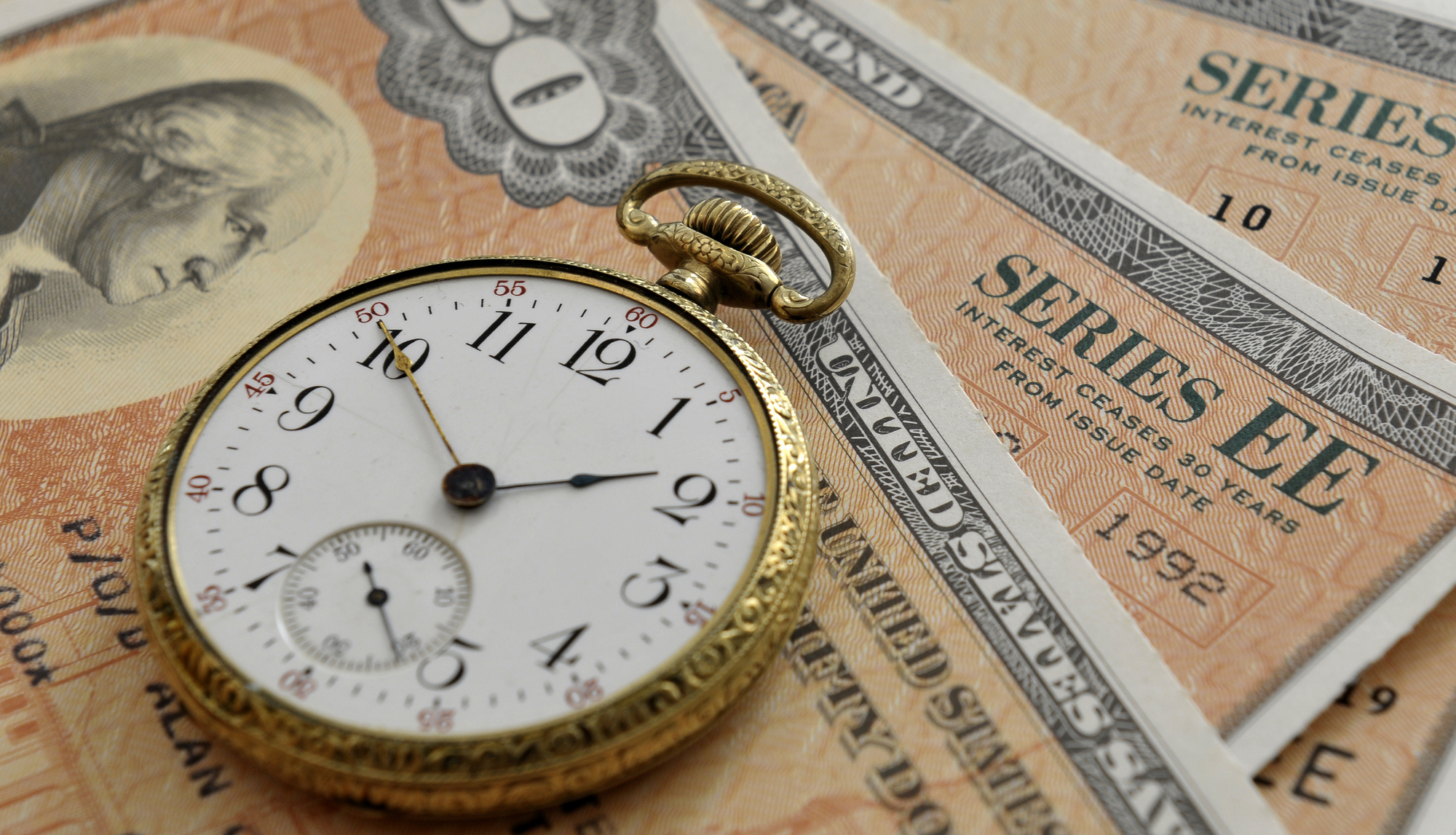
 Posted By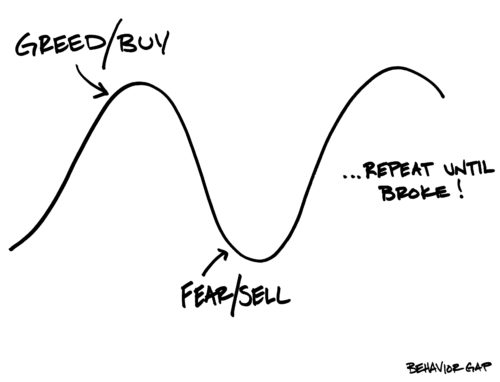

 Posted By