The 2016 Summer Olympics is just getting under way in Rio de Janeiro. One of the most compelling events is the marathon, a 42-kilometre endurance contest with roots dating back to ancient Greece. It may be that we’ve kept our interest in the marathon because it can teach us much about life – and it certainly has lessons for investors.
In fact, if you were to compare investing to an Olympic sport, it would be much closer to a marathon than a sprint. Here’s why:
Long-term perspective
Sprinters are unquestionably great athletes, and they work hard to get better. Yet their events are over with quickly. But marathoners know they have a long way to go before their race is done, so they have to visualize the end point. And successful investors, too, know that investing is a long-term endeavor, and that they must picture their end results – such as a comfortable retirement – to keep themselves motivated.
“Behold the turtle. He makes progress only when he sticks his neck out.”— James Bryant Conant, (1893 – 1978), American chemist.
Investors are on edge about the prognosis for the second half of 2016. Plenty of disarray, uncertainty and chaos is gripping stock and bond markets.
Companies will soon be reporting second-quarter earnings and future prospects. Revenue growth is the biggest challenge for companies in this environment.
The remaining central banks tools are losing effectiveness. Best to assume the second half 2016 is not a cakewalk, so be well prepared.
Some currencies have developed their own wall of worries. A sense of unease prevails as bond yields get even slimmer.
Investors may also be sticking their necks out like the turtle. Some of the risks present opportunities for the strong willed.
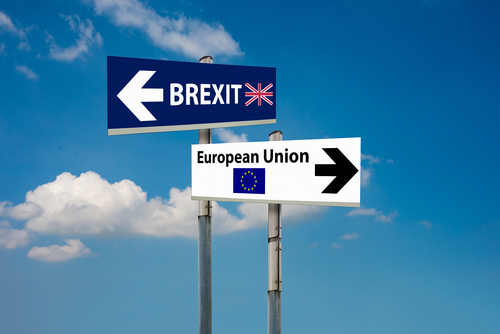
There has been a lot of concern about the financial implications of the recent UK referendum to leave the European Union (the “Brexit”).
In some respects, the referendum illustrates the worst in populous politics and how emotion can easily trump rational thought. As I am very familiar with behaviourial finance and how people make decisions, this is hardly surprising. But, rather than pass judgment on the result, let me address things from an investment standpoint in a Q&A format:
What should we be doing?
If you have a financial plan in place and your investments are structured to help you pursue that plan, the best thing is to do nothing.
If you have a plan in place but it’s no longer in step with your financial goals, then adjustments may be warranted – but only if your goals have changed, not in reaction to global financial unrest.
If you have had no financial plan, investing instead on best guesses and lucky breaks, the current climate can be your call to action: Focus on putting your own financial house in order and leave the Brexit-fussing to others.
Why has there been so much volatility in the equity and currency markets?
The result of the vote was a surprise, as the bond, stock and currency markets had priced in a “remain” vote. That is, most investors were betting that the “remain” proponents would seize the day. This goes to show that “the market” isn’t always right, and “priced in” is not a sure bet.
When the market’s best guess is wrong, a jolt occurs to adjust to reality. In this case, the reality is that the future implications of this vote remain highly unknown as well. This has created additional uncertainty, and with higher uncertainly, comes higher volatility.
This is the nature of market risks and expected rewards. Near-term volatility happens. Sometimes it happens in big, bad doses but, over time, it’s expected to dissipate into long-term growth.
Why have stock prices dropped?
A drop in general equity prices can be the result of 3 things:
Lower expectations of corporate profits or cash flows. For example, if the UK left the EU, trade barriers would go up and slow down the general UK economy, suggesting lower corporate profits in the future.
Higher discount rates. Investors demand a higher expected return to deal with the increased uncertainty, and changes in the economic landscape or regulations.
Liquidity. Whether by design or through raw panic, some market participants demand immediate liquidity. If they decide to immediately trade this asset for that asset or to exit the market entirely, the price paid to act quickly can be less than advantageous. It’s classic supply and demand.
While #2 might be somewhat theoretical, my take is that most of the volatility created by the Brexit referendum is a combination of all three, but mostly #3.
Why have stock prices dropped outside of the UK and Europe?
The markets have a way of pricing in worst-case scenarios long before they actually occur. In this case, there are those who fear that this vote will, domino-like, create some sort of economic contagion, which will spread to other parts of the world. Global markets have priced in the possibility (although again, this is far and away from being any sort of certainty).
My take is as follows: While the vote result is certainly not good news for the UK economy, and while the UK economy is big, it is not big enough to drag down the whole world’s economy. So, while global financial markets will take some time to adjust (and they may or may not do so in a neat or orderly fashion), there is as much if not more chance that this is a UK issue, rather than a broader global issue.
Should I sell now, with the hope of buying back at lower prices later?
No. I completely understand the temptation when there is increased volatility in financial markets to become more “tactical.” But ultimately, I think it is very important to consider whether you are an investor or a speculator.
If you are a speculator, the horse has already left the barn so to speak. You should have already “positioned” your investments before the vote last week based on your forecast of what might or might not have happened.
For most investors, portfolio construction is more important than portfolio positioning. This is because a retirement portfolio positioned for outrageous unexpected events will likely not be able to do its job over the long term, even if it gets an outlier right here or there.
A well constructed portfolio, on the other hand, is durable and ready for anything.
Is this a buying opportunity?
If you are an investor (which I think is the only way to go), remember that risks and uncertainties are always present in financial markets. Today it is Brexit, previously it was the slowdown in China, US government shutdown, US debt downgrade, the crisis in Ukraine, Greece, bird-flu … you name it. Tomorrow there will be something else.
It is these risks and uncertainties that create the long-term higher rates of return that have been available in equities.
Lower prices, and thus lower valuations today, mean that future expected returns should be higher. The problem is that we don’t know exactly when these higher prices will materialize, so it is very important to be patient.
If you are comfortable with this last point, then maybe this could actually represent a buying opportunity. If your personal circumstances call for holding more equity than you currently do (or more of some of the more risky types), you could be buying them at lower prices at the moment. But you’d best have big, thick blinders – to see you through the potential bumpy ride ahead.
Any final words of wisdom?
Sometimes it isn’t necessarily pleasant being an “equity investor” … but this too shall pass.
Steve Lowrie holds the CFA designation and has over 20 years of experience dealing with individual investors. Before creating Lowrie Financial in 2009, he worked at various Bay Street brokerage firms both as an advisor and in management. “I help investors ignore the Wall and Bay Street hype and hysteria, and focus on what’s best for themselves.” This blog appeared originally on his site on June 28 and is republished here with permission.
The Canadian Securities Administrators (CSA) just released its 2016 CSA Investor Education Study, an assessment of financial literacy across the country.
Some of the findings are encouraging while others are a little bit worrying.
There are clearly still key gaps in investor knowledge and behaviour. For example, while many investors rely exclusively on advisors for investment information and knowledge very few investors actually check to see that their advisor has the appropriate registrations. Some other key points:
Risk Tolerance
To begin with, findings show that more and more people seem to be paying attention to their risk tolerance, which is great! Risk tolerance is what should drive the mix of different investments that you hold, often referred to as asset allocation. Risk tolerance is driven by your need, ability and willingness to take risk and should be informed by your current financial situation as well as near and longer term financial planning goals. Risk tolerance can definitely change as your circumstances change or as you enter different stages of life so it is worthwhile checking periodically to ensure your investments are suitable for your risk tolerance.
Investment Knowledge
Survey respondents were asked to answer seven questions to assess general investment knowledge. 6 of 10 people answered 4 or more questions correctly, which is about the same as in previous surveys. 25% of respondents answered 6 of 7 questions correctly indicating a “high” level of investment knowledge.
At Mawer, we spend a great deal of time asking and answering the question: So what? A company’s share price is down 6% … so what? A central bank moved interest rates up … so what? Google re-named itself Alphabet … so what?
It’s not always an easy question to answer and often leads us to ask even more questions in an effort to develop key investment insights.
“So what?” is one of the questions that can lead us to investment action (or inaction) in our process of building well-diversified, resilient portfolios. In an effort to pass on our “so what” learnings, I interviewed our Chief Investment Officer, Jim Hall, with specific questions pertaining to his views on risks in the current environment.
Cameron Webster: Jim, we decided at the conclusion of our slow growth world discussion that we’d address technological disruption. Let’s get into the “so what?” of it. What is technological disruption?
Jim Hall
Jim Hall: It’s many things. It has happened in many industries; rail to auto, telegraph to telephone, typewriter to word processing, CD’s to online music. Of interest to me is where an innovation ends up displacing a whole industry and the ones that support it—and sometimes changes society too.
For example, take e-commerce and the sharing economy. Companies like Uber and Airbnb are changing the economy in significant ways through the application of technology. These companies are growing very fast and they are stealing business from other companies. This may lead to lower growth overall, at least temporarily. That’s the disruption. This dynamic has been around a long time. Clayton Christensen called it “disruptive innovation” and John Maynard Keynes called it “technological unemployment.” Many people have written and talked about the consequences of structural economic disruption over the years—and many are fretting about it now.


 Posted By
  By Fraser Willson