Posted By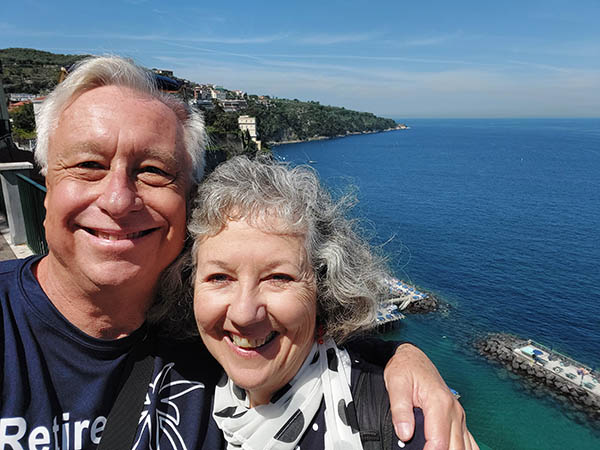
By Akaisha Kaderli, RetireEarlyLifestyle.com
Special to Financial Independence Hub
“Improvise, Adapt, and Overcome” – Marine slogan
What a year!
Every year brings new challenges that we must face. Life doesn’t stop and the best way to meet the “new” is with an open attitude and a sense of confidence. Fear doesn’t help anyone or anything.
Solid plans often break
Our Readers will sometimes say they have just a few more things to settle, a few more “I’s” to dot and “T’s” to cross before retiring. They’re waiting for the health care issue to be settled, waiting for the bonus check next year, waiting to hit “this” particular financial number, waiting for next year to sell their properties, waiting for things to mellow out in the country, waiting for inflation to go down, waiting for the market to go back up,… they’re waiting…
Personal Financial Independence was put off until this imaginary perfect time, and then finally they planned a year of travel. But BAM! One of the spouses became gravely ill with a disease that not only shook them up, but forced them to shelve all excursion plans. Or the market started pulling back giving them the willies and they lost confidence in their future plans of early retirement.
Ask yourself, “What are you waiting for and why?” Then ask yourself if you have a Plan B for these unexpected situations.
Lots of people wait until they graduate from law school, or get the degree or wait until they get married, or until they buy that perfect house, or until the kids get out of school, or they hit that magic number to retire – in order to be happy.
They live for tomorrow and forget all about the pleasures and happiness of today.
Stop settling, start living. NOW.
You’re not going to get anything in Life by playing it safe. There are no guarantees.
Lesson learned; Faith over Fear, Don’t Worry be Happy
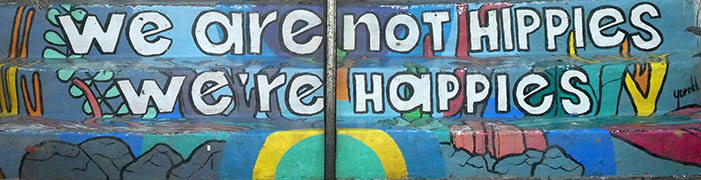
We only have control of ourselves.
I get push back on this one, sometimes. Usually it falls under the “You don’t understand what I’m going through” category.
But if you think about it, stuff happens.
We can’t control a loved one getting ill, can’t control that our children or spouse do what we prefer. We don’t have a lot of say in international peace relations. Whether our children get divorced, illness knocks you or a loved one for a loop, there’s a huge business loss or politics don’t go our way – all we have control over – is our response to the situation.
If you are feeling out of control on your moods, there are lots of tools to clarify your mind and calm yourself down and lots of services available to you. Don’t let the stress build up until you have an even worse situation happen.
Lesson Learned; Life is not in our total control – only our response to it is.
Relationships change
Relationships are cemented or lost every year. Change is part of life, and some relationships don’t move forward with us.
Once again if you think about it, when you got married, had a child, moved cross-country, got that promotion, contracted a serious illness, got divorced, retired early or hit any other life milestone, did some friendships recede?
Most likely.
Life is change and sometimes your better future lies ahead of you, without those loved people in them.
Yes, it IS difficult to let go of habits and people. We’ve all been there at different points in our lives. It’s better to process the loss and continue to move forward, creating the life of our dreams, than to become bitter and angry over the loss.
In my opinion, 2024 was a year of clarification.
What I mean is, yup. Things fall away. Sometimes it’s beloved things and people. I think this helps us to focus on what really matters to us. This is a blessing in disguise and you will be stronger for it.
Lesson Learned; As you grow, some relationships won’t make it into your future.
Fear seems ever-present
When we are afraid of something, chances are, we don’t know much about it. Our perceptions are skewed because of this.
Remember the old saying – FEAR is False Evidence Appearing Real?
Take control and choose to find out more. The knowledge you discover will give you options and open up doors for you. Question the thoughts you are thinking and the beliefs you are holding. Question the definitions you have set for yourself. Fear does not serve you in any way and will only force you to contract, limiting your options even further.
This is a choice.
You can either learn and grow or contract and suffer because of it.
Lesson Learned; Fear is related to ignorance. Choose to learn more
People retreated into perceived safety
There is no safety, there are no guarantees. And sometimes as we age, we think we’ll feel better if we just “don’t take any chances.”
Remember Helen Keller’s quote:
Security is mostly a superstition. It does not exist in nature, nor do the children of men as a whole experience it. Avoiding danger is no safer in the long run than outright exposure. Life is either a daring adventure, or nothing.
You can either live your life or live in FEAR.
Make the most of life every day. It’s later than you think!
Lesson Learned; Life is a risk every day. Manage it.
Anxiety seems to be everywhere
This is a good one, and it surprised me a bit.
Living the “life of my dreams” I hadn’t realized that I was still carrying friction and tension in assorted areas of my life. Billy and I started getting massages more often. I began going to a chiropractor, and my customary yoga became more important. We upped our exercise routine, I meditated more and I opened my mind to new information.
Anything that just didn’t “fall into place easily” or no longer worked … we dropped.
This made us feel freer and gave us more physical energy, clearing our minds.
Lesson Learned; Make things easier on yourself in any and all ways.
Don’t stop living your life
When things change beyond our control, we must find the advantages in the situation and make the most of where we are. Continue Reading…



 Posted By