All posts by Financial Independence Hub

Could Bitcoin fall to Zero, where this Crypto skeptic argues it belongs?

AlainGuillot.com

By Alain Guillot

Special to Financial Independence Hub

Every day that passes, Bitcoin gets closer to its true intrinsic value, which is $0.

During October 2025, it reached its highest delusional price of $126,198.07 USD. Today, it sits at $68,038.19 USD: approximately a 46% drop in about six months. And this is just the beginning.

Bitcoin is nothing more than a sophisticated pyramid scheme designed to take money from naive people who have seen too many get-rich-quick schemes on social media. It’s also a fantastic tool for terrorists, drug dealers, and money launderers who need to move money around.

The price of Bitcoin has been maintained by the “Greater Fool Theory.” Someone buys it because they think there is a greater fool willing to buy it later. But guess what? The world is running out of fools. It’s a huge turn-off when Bitcoin investors haven’t seen any gains during the past two years.

Bitcoin drops 46% in six month.

Bitcoin drops 46% in Six Months

The Trading Platforms are Bleeding Out

With the price decline of Bitcoin, fewer people are eager to trade it. That’s a bummer for companies that depend on gullible traders for their profits. The most obvious victims of this decline in Bitcoin trading are Coinbase and Robinhood.

Coinbase is down 54% during the last 6 month.

Coinbase operates much like an online stockbroker, except instead of stocks, users buy and sell crypto assets like Bitcoin and Ethereum.

It serves two main groups:

  • Retail investors using its app or website
  • Institutional clients such as hedge funds and asset managers

The company earns a large portion of its revenue by charging transaction fees every time someone buys or sells crypto.

This is the engine of the business, because people are trading less Crypto, the revenues are dropping quickly.

Robinhood, down 53% in part due to the decline of Bitcoin

Robinhood’s crypto business lets users buy and sell assets like Bitcoin and Ethereum directly in the app.

Unlike stocks:

  • Crypto trades are not routed via PFOF in the same way
  • Robinhood earns money through a spread (markup on buy/sell prices) and transaction-based revenue

The key point: crypto is a revenue amplifier

Crypto has historically contributed a large and highly variable share of Robinhood’s revenue:

  • In peak periods (like 2021), crypto generated 40%+ of transaction revenue
  • In quieter markets, it can fall to single digits

This makes crypto:

  • Not always the largest segment
  • But often the most volatile and cyclical driver

Why crypto matters so much to Robinhood

Robinhood’s user base skews:

  • younger
  • more speculative
  • more reactive to trends

Crypto trading fits that profile perfectly. When crypto heats up:

  • trading frequency spikes
  • new users join
  • dormant users return

When crypto declines:

  • engagement drops sharply
  • revenue contracts

When the price stops going up, the “get rich quick” crowd disappears. This creates a liquidity crisis that makes it harder for remaining holders to exit their positions without further crashing the market.

Michael Saylor’s Strategy: A Leveraged Nightmare

The most precarious domino in this collapse is Michael Saylor and his company, MicroStrategy. Saylor has famously bet his entire balance sheet on Bitcoin, but he didn’t just use cash: he used massive amounts of leverage.

The Strategy Math is Failing:

  • Average Cost: Strategy’s average purchase price is approximately $76,052.
  • Current Value: With Bitcoin trading near $68,000, Saylor is officially “underwater.”
  • The Collateral Problem: Strategy’s debt is secured by the Bitcoin itself. As the price drops, the value of his collateral shrinks.

If the Bitcoin price crash continues, Saylor will be forced to sell to meet debt obligations. Because his holdings are so massive, his forced selling would trigger a “death spiral,” flooding the market and tanking the price even further.

Strategy is now down 62% during the last 6 months.

Strategy is now down 62% during the last 6 months. I be Michel Saylor is having some sleepless nights.

Five years of Underperformance

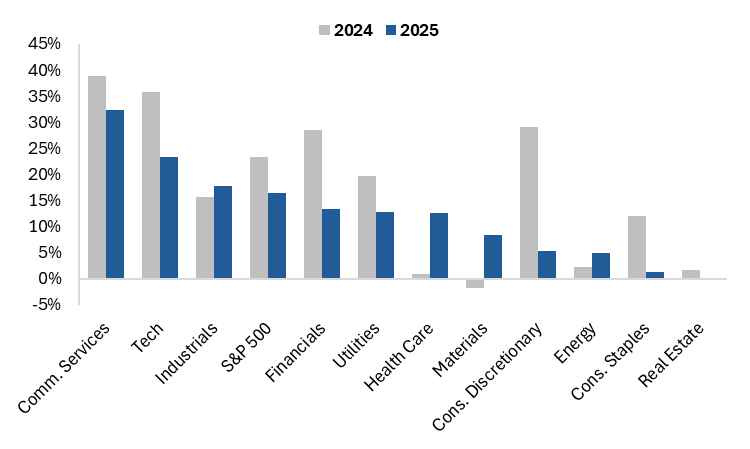
While “crypto bros” promised generational wealth, the data tells a different story. Over the last five years, Bitcoin has significantly underperformed the S&P 500.

  1. Productivity vs. Speculation: Stocks represent companies that create value. Bitcoin creates nothing.
  2. Criminal Utility: Bitcoin remains the preferred currency for tax evaders and cyber-criminals.

Why you must Get out Now

If you have any holdings in this asset class, the most rational move is to liquidate immediately. The history of financial manias shows that the final collapse happens much faster than the build-up.

Waiting for a “rebound” is a dangerous game when the largest holder in the world is facing a potential margin call. Decent people should stay away from an asset that benefits only the corrupt and leaves the average person in financial ruin.

Summary

The Bitcoin price crash is the natural conclusion of a speculative bubble that lacked fundamental utility. With Michael Saylor’s Strategy underwater and trading platforms in retreat, the floor is falling out.

Frequently Asked Questions (FAQ)

Why is the Bitcoin price crashing in 2026? The crash is driven by a lack of new buyers, high interest rates, and the looming threat of forced liquidations from major holders like MicroStrategy.

Is Michael Saylor’s company going bankrupt? While not currently in bankruptcy, the company is “underwater” on its holdings, meaning the Bitcoin is worth less than what they paid for it, creating immense pressure on their debt.

Alain Guillot is a part-time blogger and solopreneur based in Quebec. After immigrating to the province, he struggled to find work due to his limited French, which pushed him to create his own path through entrepreneurship. That journey sparked a deep interest in personal finance and investing. Today, he lives a FIRE (Financial Independence, Retire Early) lifestyle and shares thoughtful, opinionated insights on his blog, AlainGuillot.com. This blog appeared first on his blog and is republished here with permission.  


Should you Invest in Gold?

Image Unsplash

By Steve Lowrie, CFA

Special to Financial Independence Hub

Should you invest in Gold?

For most investors, no.  Gold does not produce income, has delivered inconsistent long-term returns, and is not a reliable hedge against inflation or market uncertainty. A disciplined, evidence-based portfolio built on equities and bonds has historically provided more consistent growth.

Why Gold gets Attention

I tend to get questions about gold at predictable times:

  • When gold or gold stocks have recently performed well, which triggers greed
  • During periods of political or economic uncertainty, which triggers fear

Both are emotional responses. Neither is a reliable investment strategy.

Is Gold a Good Investment when it is Performing Well?

Not necessarily.

Gold’s price is largely driven by what is often described as the “greater fool theory.” You buy it today hoping someone else will pay more for it later.

Unlike productive assets like stocks or bonds, gold does not generate income. It does not pay dividends or interest, and it does not produce cash flow. In many cases, it also comes with costs such as storage or insurance.

Your return depends entirely on price appreciation, which is unpredictable.

What has Gold’s Long-term Return looked like?

Gold has not delivered reliable long-term returns.

Over extended periods, gold’s return after inflation has been modest and inconsistent. While there have been periods of strong performance, these gains have often been followed by long stretches of little to no real progress.

In contrast, productive assets such as global equities have provided sustained long-term growth.

Investors who try to time gold’s periods of strong performance often take on additional risk and may miss out on the more consistent compounding provided by equities.

Does Gold protect against Inflation?

Not reliably.

There have been periods where gold has outpaced inflation, but there have also been long stretches where it has not.   For example, following its peak in 1980, gold experienced a prolonged period of weak performance, taking almost 20 years to recover in real or after-inflation terms.

More importantly, gold is far more volatile than inflation. Since 1970, gold has been about 10 times more volatile than inflation as measured by the Consumer Price Index.

That level of volatility undermines its usefulness as a stable hedge against rising prices.

Is Gold a Safe Haven?

This is a common belief, but the evidence is inconsistent.

Gold may perform well in certain environments, but those outcomes are unpredictable and not dependable. The idea that gold consistently protects wealth during crises is not strongly supported by data.

Much of the “safe haven” narrative is driven more by perception than by evidence.

Does Gold improve Diversification?

Less than many investors expect.

Gold and commodities do not produce income, and their returns depend on price changes. That makes their long-term outcomes less reliable than productive assets such as stocks or bonds.

A well-constructed portfolio should prioritize asset classes with positive expected returns.

Should you hold any Gold?

Only indirectly, as part of the broader market.

For Canadian investors, a material exposure to gold already exists through mining companies within the TSX Index. Unlike gold bullion, these companies generate earnings and may pay dividends. A diversified portfolio naturally includes this exposure without requiring a separate allocation.

Anything beyond that moves from disciplined investing toward speculation.

A simple framework for Decision Making

When evaluating any investment, I encourage clients to ask three questions:

  1. Does it produce income?
  2. Does it have a reliable long-term expected return?
  3. Does it improve portfolio outcomes in a measurable way?

Gold struggles to meet all three.

That does not make it useless, but it does make it difficult to justify as a core holding in a long-term portfolio.

A Real-World Observation

Over the years, I have had many conversations about gold in social settings.

They often follow a familiar pattern. A discussion about markets turns to gold, and someone becomes very passionate about it. These individuals are often referred to as “gold bugs,” and they tend to hold strong convictions about gold as a store of value or protection against the financial system.

In one conversation, I was told quite confidently that I was doing a disservice to my clients by not allocating the majority of their portfolios to gold.

What stood out was not just the conviction, but the certainty. In investing, that level of certainty is often where the risk lies.

What happened next is what matters.

Over the following decade, gold prices were largely flat. During that same period, a globally diversified portfolio delivered strong long-term returns.

The real cost was not just the lack of return from gold. It was the opportunity cost of missing the growth of productive assets.

That experience reinforced a simple truth. In the long run, evidence tends to be more reliable than conviction.

Bottom Line

Gold tends to attract attention during periods of greed and fear.

But when you step back and look at the evidence:

  • It does not produce income or cashflow
  • Its long-term returns have been inconsistent
  • It is not a reliable inflation hedge
  • Its diversification benefits are limited

For most investors, a disciplined approach grounded in evidence and focused on long-term outcomes remains the more reliable path.

Frequently Asked Questions

Should Canadians invest in gold?

For most Canadian investors, no. A diversified portfolio of equities and bonds provides a more reliable way to grow wealth and manage risk over time. Exposure to gold already exists indirectly through the broader market. Continue Reading…

True Financial Independence

By Billy and Akaisha Kaderli

Special to the Financial Independence Hub

Billly Akaisha

So you’re retired — now what? Many would say congratulations, but it doesn’t end here.

Actually, this period is the beginning of another phase of your life, and it can be as exciting as anything else you’ve done in the past. How you choose to spend your time once you no longer need the income from an ordinary job is something you seriously need to consider. Sitting around to reward yourself for work well done might be appealing at first, but once the novelty of retirement wears off, you may find yourself itching for something more gratifying. This is where the real payoffs of life come from.

When our lives are filled with work-related challenges, household duties, or health and family needs, we often have tunnel vision. Barely are there moments for conversation, and people can blur through our lives without much fanfare. We’re running on the treadmill, catching up with the TV news, and talking on the cell phone simultaneously. Hobbies take a back seat, sometimes for years. There is no down time.

The pace of retirement is less rigid. This fresh approach toward life allows us simply to sit quietly in a park or relax, leisurely having a latte in the newest coffee shop. We flip through a weekly event newspaper and notice a whole landscape of attractive options for self-expression. Discovering that there is no adequate recycling program for our town, we resolve to start one. The local school needs a drama coach, the city’s garden club wants a speaker, or the animal rescue facility is looking for a volunteer twice a week. We check our personal planner, and for the first moment in years, there’s room on our calendar.

We find this fact thrilling, and one thing leads to another.

If you are at all computer-savvy, you could help people become familiar with how to operate a computer, tablet or phone. This is a life-changing skill to those afraid of moving into the cyber world. You could coach Little League teams and discover the power and influence of service, or learn to paint on canvas and auction your work for your favorite charity.

Once you no longer need a job to pay your bills, opportunities to contribute or make extra cash will appear where you never saw them before. For instance, we’ve traded our skills as former restaurant owners to help open a Four Seasons Resort Hotel in the Caribbean Islands in exchange for dinners in their exclusive restaurant. Management then asked us to use our expertise to critique the meals and service, helping the management to prepare for soon-to-arrive tourists.

While in Mexico, as in the style of the Peace Corps, we taught the owners of a neighborhood photography shop how to make and market photos into note cards. The many travelers who visited the area eagerly bought these up, creating a side business and generating much-needed income for this local family. Continue Reading…

The Best Asset Allocation entering Retirement

By Mark Seed, myownadvisor

Special to Financial Independence Hub

The trigger for this post was some recent reading on vacation in Belize.

Image courtesy Mark Seed/myownadvisor

Our morning view from the villa in Belize, March 2026. 

With retirement just over a month away for me (with my wife already retired since 2025), I’ve been reading a bit more on this subject – more specifically, what might be an optimal asset allocation to enter retirement with – if there is one!?

I examine some options and reference some literature in today’s post, concluding with my own plan good, bad or indifferent.

First, a primer:

Asset allocation is the mix in your portfolio amongst different asset classes — primarily stocks, bonds, and cash for most — to balance risk and reward based on an individual’s goals, risk tolerance, and time horizon.

It is a central feature to portfolio management that helps minimize volatility and align investments to an investor’s personal long-term financial objectives.

That said, asset allocation can change over time, over an investor’s lifecycle and it probably should: including entering Retirement. Consider the following options:

Option #1 – Use a Constant Equity Asset Allocation

One of the simplest strategies to enter retirement with might be using a single, all-in-one, asset allocation ETF across your registered accounts (i.e., RRSP/RRIF, LIRA/LIF) – and continue to maintain that fund for years on end. 

Consider something like a “VBAL or XBAL or ZBAL and chill” approach in a 60% equities and 40% fixed income mix. The idea here is you simply sell off “BAL” units over time to fund your lifestyle at a modest withdrawal rate of 4-5% per year.

I know a few DIY investors that do this, very successfully.

I did a case study on my site about doing just that as well.

Selling off the capital you’ve accumulated is absolutely normal and fine and largely intended: why you saved money for retirement in the first place.

The challenge with this approach becomes what withdrawal rate to sell off at.

  • A withdrawal rate lower than 3-4% is likely too low over many years: your portfolio will just continue to grow and you are likely underspending in retirement.
  • A withdrawal rate in the range of 4-5% is probably just fine.
  • A withdrawal rate higher than 5-6% could put you at risk of outliving your money.
Simple solutions are great but eventually in retirement you need to get more tactical about what your portfolio can really deliver.

I’ll link to how I can help later on…

Option #2 – Use an Age-Based Equity Asset Allocation

Unlike option #1, this one is about using your age as an anchor.

Traditional retirement income planning looks like this:

Source: For illustrative purposes only. T. Rowe Price, August 2025. 

This implies the following:
  • As you accumulate assets, the portfolio is heavily weighted towards equities. As we know by now, equities deliver higher volatility associated with stocks relative to fixed income but that’s the price you pay or have to stomach for long-term gains.
  • As you age, get closer to retirement or start retirement, traditional thinking is you might follow an “age-matches your bond or fixed income” allocation formula. Traditional wisdom also says as retirement continues, the portfolio should glide-down in equities to be more conservative: with less time on your side to recover from bad market cycles.

More conventional thinking turns the tables on this below in option #3.

Option #3 – Use a Rising Equity Asset Allocation

If traditional thinking was about lower equites as you age, a rising-equity glide path is the opposite: more equities as you age throughout retirement.

Because: investing doesn’t end when you retire. 

A rising-equity glidepath has demonstrated that a portfolio that starts out conservative and becomes more aggressive throughout retirement can deliver a few key benefits:

  1. it can reduce the probability of long-term failure starting out with secure retirement spending, since
  2. higher fixed income is available to deliver the meaningful income desired by retirees by avoiding selling any equities at all during any market dips early in retirement, such that, 
  3. by naturally increasing equity exposure over time you will earn greater capital appreciation in the latter, aging years of retirement, helping to combat inflation with any increased life expectancy.

The rising-equity approach works well since if bad returns occur early in retirement (say in the first few years) the portfolio might otherwise be prematurely depleted by equity withdrawals.

So, lower up-front allocations to equities leave retirees less susceptible to a series of bad market returns for a few years. 

Here a deep dive on rising equity glidepaths:

Here are two (2) key things to keep in mind when it comes to asset allocation in retirement, at least what I think about:

1. What do you need the money for, and when?

Saving for retirement is different than saving for a single expenditure like a Belize vacation: a one-time event. Figuring out what your annual retirement spend will forever be essential to income planning.

There is little value chasing a $1.7-million retirement number if you don’t need that much anyhow….   

I’ve envisioned and therefore created a Retirement Income Map for my wife and I to forecast our first five (5) years of retirement-spending needs. Your spending may be different. That’s OK. I would recommend you figure it out though. Continue Reading…