Posted By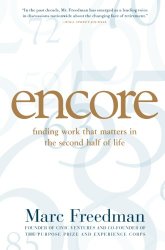
By Jonathan Chevreau
I’ve been reading several books on Encore Careers, second acts and the like. A few weeks ago, we reviewed Marc Freedman’s The Big Shift. Over a one-week break in Florida, I read Freedman’s earlier book, Encore, subtitled Finding Work That Matters In the Second Half of Life.
Last year, on our sister site, we also reviewed Stephen Pollan’s 2003 book on the same topic: Second Acts.
All these books start with the premise that the baby boom generation may end up living a lot longer than they may have once imagined, which goes double for their own children and the generations coming after them.
Work that matters
If you believe that living to 100 is a distinct possibility rather than a one-in-a-thousand outlier event, then it follows that financial planning needs to take these extra years into account. Continue Reading…