Yes, as the piece points out, Emerging Markets have been sustained more than fair share of the market carnage that has been with us — on and off — since late summer. But that, argue some sources, is the beauty of it. Buy low, sell high and all that.
Certainly, there are concerns about Emerging Market debt, but debt is a concern even among the most seemingly vibrant giant US megacap stocks. But if you want to play Emerging Markets equity ETFs, it would seem that now may at least be a time to start nibbling at Emerging Markets.
How much Emerging Markets should constitute of your total portfolio, and which ETFs to play it with, are the subject of the full column.
In the short (almost 4 minutes), Robin Powell interviews well-known American financial planner Michael Kitces about how the evolution of financial advice has moved from helping clients pick a few actively managed mutual funds that pay commissions to the advisor, to the modern holistic financial planning model that’s generally fee-based. The “Value Proposition” has shifted accordingly from merely helping clients pick funds or investments to helping clients outline their long-term goals, tax filing, retirement strategies, estate and succession planning and all the rest.
If you missed the earlier videos and accompanying introductory blogs, you can find them below:
The Hub is pleased to introduce a new writer who will be familiar to many in the financial industry. Back when I was a columnist at the National Post, I often talked to Sandy Cardy, who was a senior vice president at fund giant Mackenzie Financial Corp between 2003 and 2010. She also wrote an estate-planning novel (link in author bio below) and she was always one of the media’s top go-to sources on tax-efficient investing, retirement and estate planning. Sandy and her team were also the Mackenzie contact on these topics for the nation’s financial advisors. What she’s been doing since 2010 is the subject of her debut blog below. We look forward to being part of Sandy’s Encore Act! She says she will write for us “regularly.”
Sandy Cardy
By Sandy Cardy
Special to the Financial Independence Hub
As a leading authority on financial, tax, and estate planning, I’ve spent many years helping people grow their net worth and preserve the value of their estates.
My mantra to clients has always been “Wealth is built with returns over time.” Because sound, life-long investment strategies have the greatest impact on your financial future, I advised clients on everything from investing for their children’s education to tax efficient investment strategies, and from minimizing their income tax burden to planning for retirement.
Those are important topics, and I’m proud of the contribution I made in helping families prepare for their golden years. The need for understanding investment planning and estate planning is critical. I have always stressed how important it is to plan to have the standard of living you want in the last third of your life – when we won’t likely be getting any paychecks.
Don’t neglect to invest in Health
But three years ago, I realized that the definition of ‘wealth’ I’d been operating under was flawed. That’s when I was diagnosed with a late-stage cancer. I never saw it coming.
I ate well, exercised, and had a fulfilling career and a great family life. But I hadn’t paid enough attention to investing in my health. Continue Reading…
Politics and stock options converged this week, as the Financial Post reported in a story headlined Liberal and NDP plans to boost tax on stock options could cost taxpayers money, study finds. The study, written by University of Calgary fellow and occasional FP columnist Jack Mintz, says the proposals from the two Opposition parties would cost Ottawa money. That’s because corporations would insist that fully taxed stock compensation should be 100% deductible for the corporation, as is the case for many other countries. The NDP would like to tax stock options at 100% rather than the current 50%, but wouldn’t apply to technology startups. The Liberals would do the same but apply the tax only to option-based compensation exceeding $100,000.
Young Americans giving up on getting rich
Bloomberg BusinessWeek argues that Young Americans are giving up on getting rich. Why? Their collective rate of employment is weak and if they do have jobs, their incomes are probably depressed; so as a result their retirement nest eggs are “microscopic.” Continue Reading…
FWB TV and Findependence.TV have just posted our second video, Don’t assume Outperformance is down to Skill. The short (almost 4 minutes) video features Robin Powell interviewing University of Mannheim professor Martin Weber.
Referring to a 2014 academic paper he coauthored, titled Fooled by Randomness: Investor Perception of Fund Manager Skill, Weber explains that retail and even institutional managers often choose money managers on the basis of past investment performance. But he warns investors often confuse skill with luck.
It turns out that it’s very difficult to identify skillful managers in advance. Is it worth it if you can find one? Perhaps if the fees are low enough but generally, Weber says skillful managers turn out to be quite expensive.
Media, Advertising & Industry may have “active” bias


 Posted By
 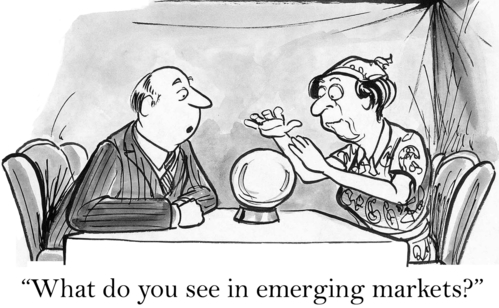 My monthly ETF column has just been published at the Financial Post, which you can find under the headline, Jonathan Chevreau: What to consider when buying Emerging Market funds.