Hub Blogs

Hub Blogs contains fresh contributions written by Financial Independence Hub staff or contributors that have not appeared elsewhere first, or have been modified or customized for the Hub by the original blogger. In contrast, Top Blogs shows links to the best external financial blogs around the world.

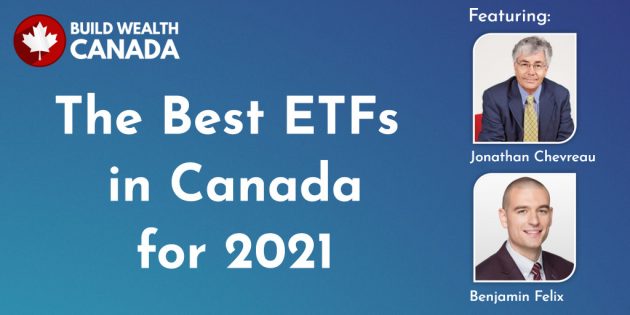
The MoneySense ETF All Stars 2021


MoneySense has just published the 9th edition of the ETF All Stars, 2021 edition. As you can read in the  overview, this amounts to the Pandemic Recovery edition. The full package is available online here. Below we summarize the main picks by category: click on the highlighted headline [in red] for each category to go to the full MoneySense commentary as well as the accompanying charts showing ETF names, ticker symbols, fees and general description.

We again had eight panelists: the same as last year, except that regular Hub contributor Mark Seed of My Own Advisor replaced departing Dave Nugent. The format consists of the eight experts “voting” on which funds to retain and which to replace, with five out of eight votes carrying the day. (I get involved only if there is a 4-4 tie.)

Since our philosophy is to retain as many earlier picks as possible — provided they still meet our criteria of broad diversification and low cost — we ended up with 52 picks this year, just two more than in 2020: 44 selections were agreed-upon winners, plus there were 8 Desert Island picks (see below).

However, there were more new additions than that might suggest, since we also dropped a few ETFs from last year, notably in the ESG and Low Volatility categories.

Canadian Equities

All five Canadian equity ETFs return: VCN, XIC, HXT, ZCN and ZLB (see the chart at MoneySense for full ETF names). However, no new funds were added: We considered adding five new names but none attracted the five-vote majority necessary.

Remember that Canadian stocks are also amply represented in the One-Decision Asset Allocation ETFs discussed below.

US equities

The panel opted to retain all seven of our 2020 U.S.-equity ETF picks, while (finally!) adding two technology ETFs and a Vanguard all-cap total market fund (VUN), for a total of ten. That makes for a crowded category but after all the US is the biggest single geographic market in the world and investors have certainly been rewarded for being there in recent years: especially in 2020.

Returning picks are XUU, iShares’ US Total Market ETF; and three low-cost plays on the S&P500 index: VFV and VSP from Vanguard, and BMO’s ZSP. There was also the returning Desert Island pick from PWL’s Cameron Passmore: Avantis US Small Cap Value ETF [AVUV.]

International and Global equities

The panel retained six of the eight international or global ETF All-stars from 2020: two from iShares (XAW and XEF), three from Vanguard (VXC, VEE and VIU) and BMO’s low-volatility pick ZLI. Two other new picks introduced in the 2020 edition didn’t make the cut this time: iShares Edge MSCI Min Vol Global Index ETF (XMW, 0.48%), and CI First Asset MSCI World Low Risk Weighted ETF (Unhedged, ticker: RWW/B).  There was also a new international Desert Island pick from PWL’s Ben Felix: Avantis International Small Cap Index Fund (AVDV).

Fixed Income

While our panel as a whole continues to take a “stay with the program” approach to its fixed-income All-Star picks, we did cut back slightly on the number of Bond ETFs this year.  Only six of the eight previous fixed-income All-star picks returned: ZAG, VAB, VSB, ZDB, XSB and VGAB. One added last year, TLT, did not return, and long-time pick BXF also did not make the cut in 2021. Continue Reading…

A discussion about Value and Small-cap Factors with Avantis Investors’ CIO Dr. Eduardo Repetto

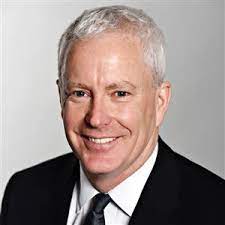
Avantis Investors’ CIO Dr. Eduardo Repetto (Link to YouTube clip is in text below)

Over the years, I’ve encountered several financial advisors who liked to use the mutual funds of Dimensional Fund Advisors or DFA, which was founded by alumni of the University of Chicago and based on research on the long-term return premiums offered by small-cap and Value stocks around the world. Even today I own a DFA International Equity fund that was a legacy of my time with a fee-only advisor: that’s generally the requirement for accessing DFA funds.

So I was intrigued when certified financial planner Mike Bayer [CFP, CIM, FCSI) asked me to help him interview two senior executives of Avantis Investors (a unit of American Century Investments) which for the past 18 months has been marketing Avantis ETFs, which take a similar approach with small-cap and value factors and are more accessible to do-it-yourself investors who can buy the ETFs at discount brokerages, just like any other ETF.

Regular readers of the MoneySense ETF All-Stars may recognize the name Avantis. As you can see here, the Avantis US Small Cap ETF [AVUV] was a Desert Island pick of PWL Capital’s Ben Felix and Cameron Passmore. We are about to publish the 2021 edition and as mentioned in the video interview also linked below, that pick is back along with another Avantis selection, which you can learn by watching the video.  In addition, Felix has just released a 15-minute video covering Avantis: https://youtu.be/jKWbW7Wgm0w

In the end, possibly influenced by the arrival of Avantis, DFA itself brought out three of its own ETFs: https://us.dimensional.com/etfs

Bios

Dr. Eduardo Repetto is Chief Investment Officer of Avantis Investors. Previously he was Co-Chief Executive Officer and Co-Chief Investment Officer of Dimensional Fund Advisors. He earned a Ph.D. degree in Aeronautics from the California Institute of Technology, an MSc degree in Engineering from Brown University, and a Diploma de Honor in Civil Engineering from the Universidad de Buenos Aires.

Phil McInnis is also a DFA alumnus, where he was Head of Portfolio Solutions. Today he is director of investments at Avantis Investors®, responsible for marketing content development surrounding Avantis’ investment approach.

Mike Bayer, CFP, CIM, FCSI, is a Toronto-based financial planner with Strategic Analysis Capital Management and blogger at Free Speech Media.

Highlights from the transcript

So without further ado, here is a link to the full interview, which runs almost an hour. However, you can click on a “transcript” link within YouTube, for those who prefer reading and skimming. Below are some highlights:

Continue Reading…

How to stay safe while trading Cryptocurrencies

Collection from different coins of crypto currency: ethereum, litecoin, bitcoin, monero, ripple.

By Emily Roberts

For the Financial Independence Hub

When you’re doing any kind of business online, we don’t need to tell you that security is paramount. While the security measures that software creators and the makers of our computers, tablets and phones are getting more sophisticated with each passing day, the techniques and scams used by cybercriminals are only matching them every step of the way.

Over the course of the last twelve months, we have all had to be even more careful as the crooks have taken advantage of the fact that people all over the world have had to conduct all their business online, and the cybercrime figures have skyrocketed.

Trading cryptocurrency is just like any other online activity involving money: you need to be extremely careful about the security measures you’re taking and any potential risks that you’re incurring. Here are a few tips to help you stay safe:

Make sure you have a Cold Wallet

If you are just getting into trading crypto then you may not be familiar with the phrases “hot wallet” or “cold wallet.” Simply put, a cold wallet is a place where you can store your currency offline, such as a drive or USB that you can disconnect. We do understand that this may seem like a slight case of overkill if you’re confident in the security measures installed on your device, but it’s always better to be safe than sorry, isn’t it?

Make sure you research and double check your leads

Things can move awfully fast in crypto, and just as in any other online trading, it can be tempting to jump on what seems like a good thing before anyone else gets there. However, you need to remember that this is an incredibly volatile market and if something seems like it’s too good to be true, then it may well be. Continue Reading…

A complete B2B SEO strategy for 2021

Photo courtesy of Pixabay.com

By Mike Khorev

Special to the Financial Independence Hub

What exactly is B2B SEO?

B2B SEO strategy comprises digital marketing tactics that aim to help B2B [Business To Business] websites to rank high for certain keywords and terms in search engines like Bing and Google. Unlike optimization for B2C [Business To Consumer], B2B optimization strategies focus on phrases and terms that key decision-makers in a company actively search for at work. This can include managers, team leads, CEOs, CTO, etc.

Why Does It Matter in 2021?

B2B SEO matters in 2021 because it’s the only form of marketing that yields compounded traffic over time coupled with long-term results. 

Here’s why: Any page holding top 10 rankings in Google carries an average age of over 2 years. It’s hard to think of any other distribution and marketing channel that can generate traffic for multiple years.

Here’s another reason: Over 53% of all website traffic across different industries is organic. For the B2B industry, the figures are even promising. Organic searches generate twice the revenue than social media or email marketing for B2B businesses. 

How B2B SEO actually works

At the heart of B2B SEO lies keyword research and understanding customer problems. After that, you have to understand 3 different parts of SEO for B2B industries: 

  • The first one is on-page SEO, which includes optimization of the site page with useful content. It also includes adding headings, title tags, meta descriptions, URLs, alt text, etc.
  • Off-page SEO focuses on link building and securing website authority.
  • Technical SEO helps with the crawling and indexing of a site by search engines. It works on the architecture of the website.

B2B SEO Strategy in 2021

Proper Keyword Research

At this point, you have to figure different queries across different stages of the sales process that people at managerial positions are using to search for similar businesses like yours. 

To get help with keyword research, you can use SEMrush. It will give you information about your target buyer persona and what kind of keywords they are using to find solutions to their pain points.

You must work on finding the most important keywords that align perfectly with different phases of a sales funnel.

In case you have trouble finding the right set of keywords to act as a starting point for your B2B research, asking these questions might help you: 

  • What problems are my target personas facing?
  • Where are they looking for the solution to their pain points?
  • How can you come up with a viable solution?
  • What are the key features of your service/product?
  • Which keywords are your competitors for organic traffic generation?

Find Top-of-the-Funnel Topics

The top-of-the-funnel topics are the most general topics that a broad range of users are searching for. As you reach the narrow end of the sales funnel, the range of topics also keeps getting smaller and narrower.

If you’re doing B2B digital marketing, it’s important that you strategically pick and write about the top of the funnel topics. These topics and keywords get several-fold search traffic than the bottom-of-the-funnel topics. If you write about the latter your outreach will be limited. Continue Reading…

 Life Insurance in Canada: Have you made the correct choice for your family? 

By Hristina Nikolovska

Special to the Financial Independence Hub

Life insurance is often something people put off until later. We understand: it’s not fun thinking about our mortality. Still, in the wake of the recent COVID-19 pandemic, it’s wise to start doing so.

You may be sure that others are. In 2017, the industry received $2.65 trillion in direct premiums. 

Not sure where to start?

In this article, we’ll give you a quick overview of the Canadian insurance market. From there, we’ll go through the questions you should ask yourself before taking out life insurance.

Current state of Canadian Life Insurance Market

Canada’s top three life insurers by assets are:

  • Manulife: Started in 1887, this giant had assets totaling CA$809.13 billion in 2019.
  • Power Corporation of Canada: Founded in 1925, PCC had assets totaling CA$23,627 million in 2020.
  • Power Financial: CA$22,286 million in 2020. 

How important is Life Insurance to Canadians?

Questions to Ask Before You Sign on the Dotted Line

How Much Coverage Do I Need?

There are a few things to consider when taking out your policy:

  • Are you the primary breadwinner? If so, you’ll need to factor income replacement into the equation. How much will it take for your family to be able to live in comfort once you’ve passed on?
  • Your financed assets: At the very least, ensure that any debt financing assets are repaid. Include the balance of your mortgage, car, and other valuable items that you’re paying off.
  • Other outstanding debt: Make provision for loans, lines of credit, and other obligations to be paid off as well.
  • Your children’s ongoing education: Hopefully, you’ll be there to see them off to college or university. If you’re not, life insurance might ensure that they’re able to attend.

Many Canadians see life insurance as a necessary purchase but underestimate the amount they require. Sit down with your partner or spouse and work out what your family’s future financial needs are.

You may, for example, wish to pay for your daughter’s wedding. Work out what your goals are for your family when you pass.

Is it a good idea to have a separate Mortgage Cover?

The finance company may insist that you cede a life insurance policy to them. These policies pay off the mortgage should you die. The finance company may offer you cheap cover, but these may not always be as good as they look.

Mortgage cover usually expires when you cancel the mortgage. It may also have a value linked to the balance in the home loan. In other words, your cover decreases as your mortgage does.

The problem with having such a highly specialized product is that it’ll cost you more in the long-term. To take out a new life insurance policy when you pay off your mortgage in 30 years will be expensive.

Should you die with these policies in place, the insurer will pay off your mortgage. There’ll be nothing left over for your family unless you have a separate policy. By sticking to one larger policy covering everything, you save on administration fees and get a better discount.

What about Funeral Cover?

Funeral cover is often unnecessary if you have sufficient life cover. It is, however, important to confirm how quickly your life insurer will pay the money out. If their claim processing takes longer than a few days, it might be prudent to have a small funeral plan as a backup.

How do I calculate how much parents will need?

Were you shocked to realize just how quickly expenses added up when your first child was born? Most people are. A good rule of thumb is to consider your current annual costs for: Continue Reading…