Hub Blogs

Hub Blogs contains fresh contributions written by Financial Independence Hub staff or contributors that have not appeared elsewhere first, or have been modified or customized for the Hub by the original blogger. In contrast, Top Blogs shows links to the best external financial blogs around the world.

3 reasons baby boomers should downsize early

By Keisha Telfer

Special to the Financial Independence Hub

For empty nesters and baby boomers who are planning for their future, this year in particular makes it worth thinking about downsizing early. Downsizing is a proactive, planned transition, leveraging the equity in your home to fund your new lifestyle and renewed purpose, and there are many benefits to having this conversation in 2021.

The key takeaway from the current market situation – driven by the pandemic – is that larger homes are in demand. Now is the perfect time to get started talking about downsizing, and here is why:

1.) Downsizing early is the new way to upsize life

Downsizing is not just a transaction, it’s a transition:  a transition to a new phase of life. Baby boomers who downsize early are able to upsize and experience life on their own terms. While selling the family home comes with its own emotional and physical hurdles, the payoffs of being able to leverage a lifetime of equity and gain years of adventure and freedom are worth it. Downsizing early means there is plenty of time to plan the transition, rather than waiting until life events make the choice for you. One of the top questions I get asked is, “When should I start thinking about downsizing?,” and my answer is “Today.”

 2.) A hot market for detached homes

The pandemic has driven young families to look for bigger homes, many of which are family homes currently owned by the baby boom generation.  Although finances are only one aspect of transitioning to a new phase in life, the increase in demand and prices for detached homes across Canada means there is an added incentive to consider it in 2021.  With the recent increase in younger families purchasing detached homes, baby boomers have the opportunity to sell their homes in a sellers’ market and come out ahead. Continue Reading…

Stickhandling your investing amid fear and greed

“The fishing was good; it was the catching that was bad.”
A.K. Best, fishing author.

“Stock markets are swimming in the face of two major investor emotions. They are fear and greed.”Adrian Mastracci, fiduciary portfolio manager.

All you have to do is rewind to the 2020 investment results. Especially those recorded during the months of February, March and April. They brought new meaning to volatility, in both directions.

Mention 2020 and practically every investor is glad it is in the rear view mirror. Tread carefully as those pesky markets are not known to march to your wishes.

Accordingly, I attempt to highlight some basic ideas that help in portfolio construction. Focus on expanding your knowledge, say of at least three strategies that improve your nest egg.

Each day now brings a new crowd of market optimists and pessimists. Along with various assortments of buyers and sellers. Just playback the last two weeks.

Be aware of the implications in both camps. Successful investing is about stickhandling one’s comfort zone between fear and greed.

Rules to live by

So, rule number one. No knee-jerk reactions please. Regardless of whether you’re buying or selling.

Rule number two. Markets operate on logic. Do you?

If you succeeded with these two rules, step aside and breathe. If not, rewind to rule one. The bigger question is why would you want to?

Some investors may seek to calm their fears by preserving capital. Others prefer to chase their greed by hitching onto growth wagons du jour.

A few more pessimistic data releases could drive the markets lower. Conversely, a few more ounces of optimism could propel investor confidence to higher levels. Continue Reading…

The pros and cons of RRSPs: What you need to know

By Allan Small

Special to the Financial Independence Hub

If there is one thing COVID-19 has not impacted, it’s RRSP season. March 1, 2021 is the deadline for contributing to an RRSP for the 2020 tax year. The question is, should you?

The basics: Anyone who files an income tax return can contribute 18% of earned income to a maximum of $27,230 for the 2020 tax year. If you have an employer-sponsored pension plan, your RRSP contribution limit is reduced by the Pension Adjustment (PA). Unused contribution room can be carried forward to use in the future.

Generally speaking, RRSPs make sense for anyone who wants and can afford to invest for the long term. Here’s why:

Pros

  • Contributions are tax deductible.
  • Earnings grow tax-sheltered within the plan.
  • You can defer tax on investment earnings and contributions to the future. This is particularly useful if you are a high-income earner and your marginal tax rate is likely to be lower in the coming years.
  • RRSPs can hold a wide range of qualified investments. For example, you can hold GICs, savings bonds, Treasury bills, bonds, mutual funds, Exchange Traded Funds (ETFs), equities (both Canadian and foreign), and income trusts in an RRSP.

Deciding what to hold in your RRSP really comes down to the same factors you have to consider when making any type of investment: your comfort level with risk, your investment objectives and your time horizon. For example, if your goal is to grow your wealth over time and market volatility doesn’t keep you up at night, then you may want to consider growth investments such ETFs, mutual funds and stocks. If you want income, then income-generating and interest-paying investments are worth looking into.

All of this said, RRSPs do have their drawbacks.

Cons

  • While you can withdraw funds from an RRSP before you retire, you will have to pay a withholding tax and you also have to report that money as taxable income to the Canada Revenue Agency.
  • The Government of Canada controls the amount of money that must be withdrawn annually once the RRSP matures. When you convert the RRSP to an Registered Retirement Income Fund, which must be done when you turn 71, you are required to withdraw a minimum amount each year starting at age 72 even if you don’t need the money.

RRSPs work best for people who can use a tax deduction and can afford to put money away for the future. Another consideration: Is your income in retirement (and therefore the marginal tax rate you’ll have to pay) going to be equal to or greater than it is during the years you can contribute to an RRSP? If this is the case, you won’t be achieving any tax savings by contributing to an RRSP. However, you could still benefit from deferring tax. The question then becomes, do you pay the income tax now or later? Continue Reading…

MoneySense: 2 articles on how Canadians can play the cryptocurrency mania

MoneySense.ca has just published two online articles on investing in Bitcoin and other cryptocurrencies. One is by me. Click on highlighted headline for full column: How to invest in Cryptocurrency (without losing your shirt.)

The other is from regular Hub contributor Dale Roberts of Cutthecrapinvesting. His MoneySense piece can be found here: Should you invest in Cryptocurrency?

My piece is the first time I’ve publicly written about crypto, although the Hub has long covered it, both positively and not so positively. Try, for example, this primer published here way back in July 2017.

The MoneySense piece recaps my personal experiments with Bitcoin and Bitcoin funds, as well as Ethereum and Ethereum Funds, going back to the fall of 2020. I sat out the original 2017 boom.

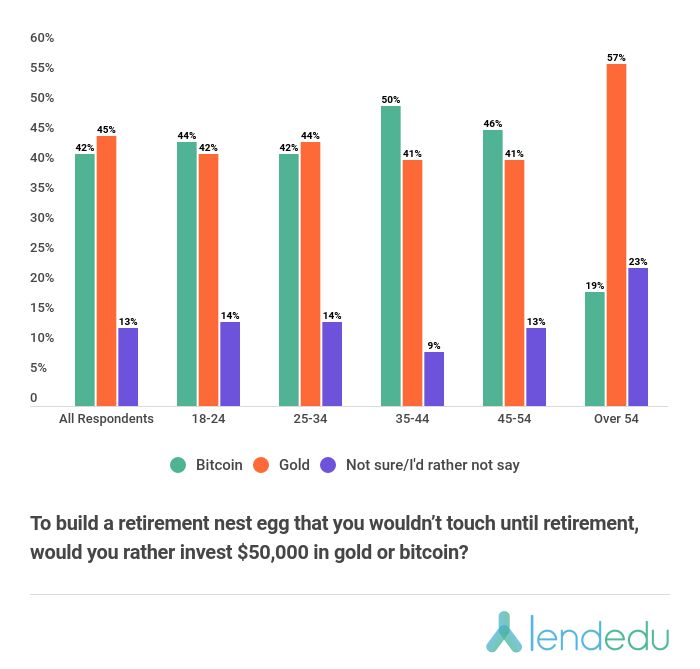
It seems to me that investors should regard this as a new asset class that should probably not exceed a few per cent of a diversified portfolio. Certainly, institutional acceptance of crypto and attention from hedge fund billionaires like Paul Tudor Jones seems to have ignited the new euphoria, buoyed in part over the frustration of minuscule interest rates and inflationary forces unleashed by endless money printing by central banks in the US and the rest of the world.

Based on the recommendation of Profit Unlimited’s Paul Mampilly, my first try was to put several thousand dollars into each of the Grayscale Bitcoin Trust [GBTC/OTC] and Grayscale Ethereum Trust  [ETHE/OTC], which I currently hold in a non-registered account.

I soon realized I wanted to hold these experimental positions in registered portfolios (RRSPs and TFSAs) so that the next time I got a double or triple — if indeed they materialized rather than comparable losses — I could book the gains with no immediate tax consequences. I soon discovered the closed-end funds of Toronto-based 3iQ Digital Asset Management:  first I tried The Bitcoin Fund [QBTC/TSX] andThe Ether Fund [QETH.U/TSX], can be held in registered accounts like RRSPs and TFSAs.

My third experiment was when Mampilly started to recommend his readers move from the Ethereum tracking ETHE to actual native ethereal or ETH (which some call Shitcoin, or poor man’s Bitcoin). He suggested buying actual “native” crypto from places like Coinbase and RobinHood, convenient for his mostly American subscribers but less so for Canadians. Continue Reading…

Banking from home and Canada’s seniors: RBC sees surge in digital & online banking by older clients


By Rick Lowes,

Vice-President, Retirement Strategy, RBC

(Sponsor content)

As the pandemic took hold in early 2020, many Canadian seniors quickly learned how to bank safely and securely from home. Now that winter is setting in, many seniors who’ve continued to use their branch through the pandemic are likely exploring these options. We’re looking forward to helping more seniors across Canada discover the simplicity of not having to go outside their home to do their banking, while resting assured their bills will be paid correctly and on time.

We’ve already heard from many of our senior clients about how pleased they are to have made the transition to online or mobile banking. An elderly client in Prince George, British Columbia who thought he could only transfer funds out of his eSavings account in person is now very happily doing online banking from home.

A senior in Burlington, Ontario – who wanted to know how he was supposed to pay his bills while the branch across the street was temporarily closed – is now paying all his bills online. And an older client in St. John’s, Newfoundland – who had fears about using a computer – couldn’t believe how easy and secure it was to do online banking, when one of our advisors walked her through the process over the phone. From coast to coast to coast, seniors like these have been engaging with our online platforms, spurred on by the realities of ongoing physical distancing.

To share some statistics of our own around what this new activity looks like, over this past year we’ve seen seniors aged 60+ increase their use of electronic money transfers by 101% and digital payments by 46%. Among seniors aged 70+ who are newer to online banking, mobile banking has quickly become their favoured channel for banking from home.

Seniors have been receiving one-on-one support from our advisors that is helping to make them more comfortable with online banking. As a result, we’ve seen that comfort level translate into empowerment and the ability to make decisions about their finances while banking from the comfort of their homes.

 Responding to Canada’s new Seniors Code

We’ve also responded quickly to ensure we had comprehensive support in place for seniors and for our employees who work with seniors, aligned with the new Code of Conduct for the Delivery of Banking Services to Seniors (“Seniors Code”). This Seniors Code guides banks in their delivery of banking products and services to Canada’s seniors. Continue Reading…