Hub Blogs

Hub Blogs contains fresh contributions written by Financial Independence Hub staff or contributors that have not appeared elsewhere first, or have been modified or customized for the Hub by the original blogger. In contrast, Top Blogs shows links to the best external financial blogs around the world.

Invest in Innovation, a driver of Wealth Creation

By Matthew J. Moberg, CPA

Franklin Equity Group (Sponsor Content)

Innovation is where wealth creation occurs. Innovation is a powerful growth engine across the global economy, and it is accelerating, in part because of the COVID-19 pandemic.

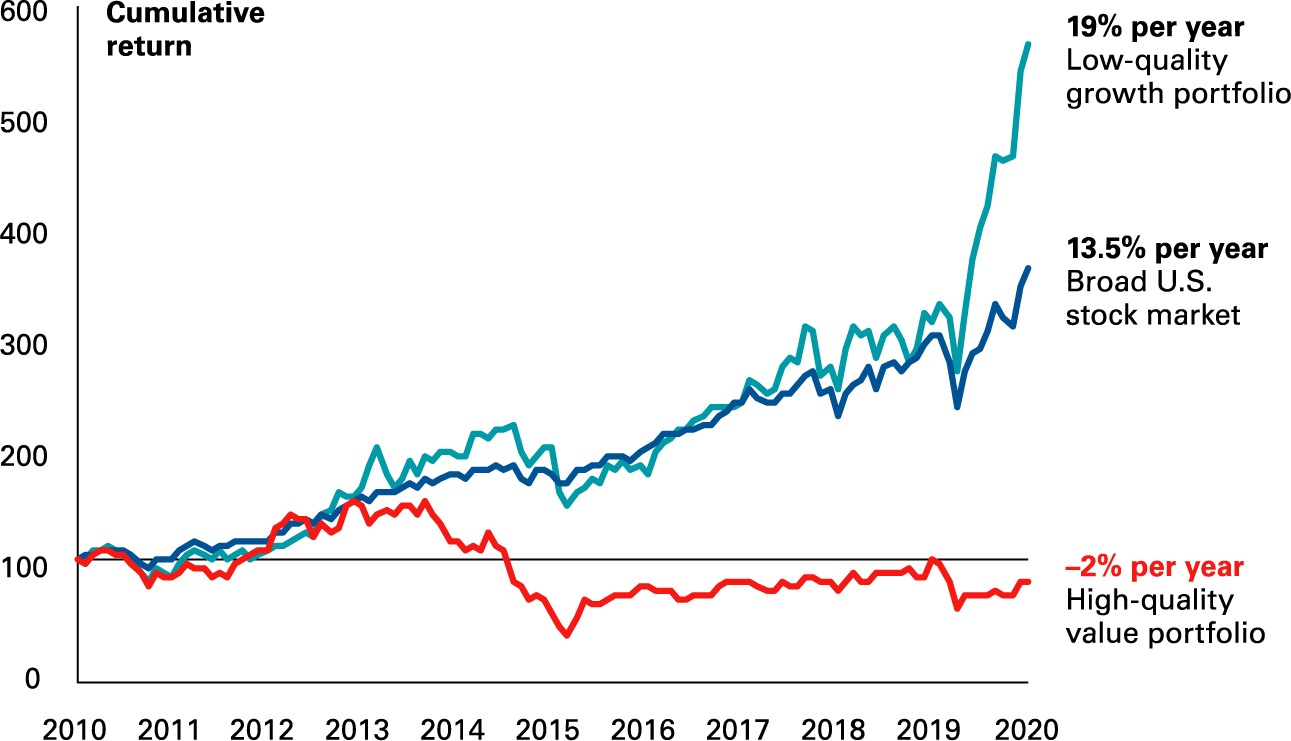
Yet innovative companies are often misunderstood and, as a result, their stocks are often mispriced. For example, Amazon.com Inc. is a prominent company that is covered widely (and held by Franklin Innovation Fund), and its stock has long been considered very expensive. Even though it is consistently viewed as expensive, Amazon’s stock has been among the best performers for investors for years, indicating to us a general misunderstanding of valuation by the market, which may seem counterintuitive for a company so well known.

Innovative companies are commonly mispriced as market participants often underestimate the duration of growth these companies can provide. Rather than seeing profits competed away in short order, many of these companies grow and generate excess profits for seven, 10 and 15 years, some even longer. Their pace of growth may also be underestimated, which affects valuations as well.

The Franklin Innovation strategy invests in growth, but the portfolio team thinks like value investors as they look for companies they believe are misunderstood and undervalued – which can lead to outperformance. Our new Franklin Innovation Fund and Franklin Innovation Active ETF (TSX: FINO) are driven by  a time-tested philosophy that innovation can be found everywhere, and that innovation ultimately drives the creation of wealth over the long term.

Key platforms of innovation

Our Franklin innovation strategy has been investing in innovation for more than 50 years, and over that time we have seen myriad technological and other advances. Our team is constantly reading and researching about what the future might hold and how these advances might develop.  As we look at our strategy today, we have identified five major platforms where innovation is creating investment opportunities across sectors, industries, markets and geographies:

Key Innovation Platforms

Global E-commerce

One of the major trends of the COVID-19 economy has been consumers shifting to e-commerce, accelerating a migration away from brick-and-mortar retailers that was already established. Estimates show that global sales in e-commerce stood at 14% in the summer of 2019;1 by May of 2020, this number had risen to somewhere between 22% and 25%.2 We also see significant opportunities in industries such as fashion, automobiles, travel, ride sharing and restaurant delivery. Other firms to consider are digital payment companies and software developers that will enable brick-and-mortar companies to have an online presence.

Genomic Breakthroughs

The amazing progress in the field of genetics is probably less well known. The cost of gene sequencing — or mapping DNA for diagnostic and curative purposes — has fallen significantly in recent years, which opens the door for further development of diagnostics and therapeutics. We are particularly interested in companies that are focused on diagnostics, gene editing and gene silencing, but opportunities with genetics may extend into agriculture and even artificial intelligence.

Intelligent Machines

Once considered the domain of science fiction, artificial intelligence and machine learning now permeate every layer of product development. The future of production will include products designed specifically for the needs of the individual customer, where efficiencies created in the design and manufacturing process, employing massive amounts of data, will enable that level customization.

New Finance

We believe access to capital is one of the fundamental differences between developed and developing countries. There are three vectors that drive access to capital: what constitutes money, efficient pricing, and methods of exchange. Bitcoin is the latest addition to what constitutes money, while data is increasingly being used to price risk, allowing for a more efficient allocation of capital. Methods of exchange are also evolving through mobile payments and digital wallets.

Exponential Data

Data underpins virtually all our investment themes. Continue Reading…

RRSP holdings on the rise even as investor knowledge about them falls

A seemingly contradictory finding about RRSP trends was uncovered by BMO Financial Group’s latest  (its 11th) annual RRSP survey, released Wednesday. While the average RRSP balance rose to $112,295 — up 3.3% over $111,929 in 2019 and 41% more than $79,492 in 2015 — at the same time Canadians’ knowledge of the benefits and features of RRSPs has fallen since 2015. And women are 18% less likely to know how much they’ll need to retire.

This comes after a pandemic year in which 12% did not contribute at all, resulting in a a 15.5% decrease in overall contribution amounts since 2019; even so contribution amounts for this year are 15.8% higher than the survey found in 2018.

The BMO RRSP Survey was conducted by Pollara Strategic Insights via an online survey of 1,500 adult Canadians  between Nov. 17th and 23rd, 2020.

Robert Armstrong

In a press release, BMO Global Asset Management Director Robert Armstrong said investors need to consider long-term factors like increasing cost of living and longer average life expectancies when planning for retirement: “With these challenges in mind, it’s encouraging to see a national increase in RRSP holding amounts.”

What’s discouraging is that while most regard RRSPs as effective retirement planning vehicles, knowledge about them has steadily declined over the last five years:

  • 71% know how to contribute to an RRSP, an 8% decrease from 2015
  • 61% know the RRSP contribution limit, but the percentage who know this has fallen 12% since 2015. (The RRSP contribution limit for 2020 is $27,230, or 18% of investors’ annual income: whichever is less. Any unused contribution room from previous years is also carried forward.)
  • Only half are aware of what investments are eligible to be held in RRSPs, a 10% decrease from 2015 and only 44%  are aware that RRSPs can hold ETFs, while 79% know that RRSPs can hold mutual fund. (Holdings can include: mutual funds, cash, GICs, stocks, bonds and ETFs.)

Because of the inherent complexities of RRSPs, Armstrong suggests professional advice is valuable to help investors meet their long-term financial goals.

Gender gap

 The study also found a gender gap in retirement planning and RRSP knowledge:

  • Among those surveyed, women are 9%  less likely to know how to contribute to an RRSP and 10%  less likely to know the difference between RRSPs and TFSAs compared to men
  • Only 62% of women know the RRSP contribution deadline (the deadline for this year is March 1, 2021) and 55% know how much they can contribute to the account, compared to 70% and 67% of men, respectively
  • Only 41% of women know which investments can be held within an RRSP
  • Women are 18% less confident than men in their retirement plans, and 18% less likely to know how much money they will need for retirement
  • Women were more likely than men not to be contributing to their RRSPs this year because of pandemic-related reasons (15% versus 9%)
  • Women are less likely to have withdrawn funds from their RRSPs before the age of 71, with 25% having done so compared to 31% of men

BMO has several programs aimed at helping women build their investing confidence:

  • BMOforWomen.com is regularly updated with content to help inspire financial confidence
  • The podcast Bold(h)er podcast features inspiring stories of women making bold moves in their careers and businesses
  • BMO investment professionals provided access to online training to promote and engage women investors and business owners in tailored, goals-based conversations

For personalized advice on meeting financial goals in general, see www.bmo.com/myplan. For RRSP information in particular, visit www.bmo.com/rrsp/ 


Debt lifts Gold

By Nick Barisheff

Special to the Financial Independence Hub

The world is awash in debt, an immense, unfathomable ocean of financial obligations. The stack of IOUs is so enormous, the balances so large, they will never be fully settled without dreadful consequences to the global economy. This tsunami of debt was unleashed in 1971, when Nixon ended the backing of the US dollar with gold.

Since 1971, US debt and gold prices have increased greatly. Traditionally, rampant increases in US debt occur when trying to pull the economy out of an economic downturn as displayed in the spikes that occurred in 2008 and 2020.

Considering the amount of debt that has already been taken on to combat the pandemic — combined with the rising uncertainty involving vaccinations and new strain variants — it can be anticipated that the worst is yet to come. As Democrats push towards passing an additional US$1.9 trillion stimulus package, governments are willing to take on previously unforeseen levels of debt to prop up the economy during the pandemic. This could lead to a promising future for the price of gold.

Manipulation of Precious Metals markets

This divergence has been caused by manipulation of precious metals. A great deal has been written about this and one of the best books on the subject is Rigged – Exposing the Largest Financial Fraud in History, by Stuart Englert.

Price manipulation never lasts, and when it ends there always tends to be a reset to inflation-adjusted levels. The biggest questions are: when and how high will gold and silver prices rise?

However, even with manipulated markets precious metals have outperformed traditional financial markets and have generated over 10% returns in all currencies over the last 20 years.

How soon precious metals rise to normalized levels depends on how rapidly governments and central banks inundate the world with debased dollars and other fiat currencies, and how quickly individuals and institutions lose faith in those increasingly worthless debt-based currencies.

The US national debt alone is nearly US$28 trillion. This doesn’t include the $159 trillion of unfunded liabilities, which brings the total to US$187 trillion or about US$480,000 per American citizen. This number also doesn’t include the $21 trillion in unaccounted federal expenditures discovered by Prof. Mark Skidmore and his economic students at Michigan State University.

Global debt hits 365% of World GDP

Global debt hit $277 trillion last year, or 365% of world gross domestic product (GDP). Public debt as a percentage of GDP has soared to unsustainable and perilous levels. The US debt-to-GDP ratio hit 136% last year. Canada’s debt-to-GDP ratio increased by nearly 80% through the third quarter of 2020, the highest rate among developed nations.

When you translate these incomprehensible and burgeoning debt totals into per capita obligations, it is obvious that they will never be repaid. They can only be inflated away.

Combined with hundreds of trillions in unfunded government liabilities, swelling debt and unregulated financial derivatives form a bottomless abyss that eventually will engulf nations and swamp the entire financial system. Little wonder that in 2002, billionaire investor Warren Buffett dubbed derivatives — which essentially are debt instruments used as collateral to take on more debt — “financial weapons of mass destruction.” At that time derivatives totaled $100 trillion, whereas today they are in excess of $1 quadrillion.

Socialists maintain public debt is acceptable when borrowing is for the common good, and Modern Monetary Theory (MMT) advocates claim unlimited government spending is not a problem. They believe governments can create an infinite amount of currency to fund social services and public works projects. They fail to recognize that debt is not wealth and increasing the currency supply decreases its value and produces price inflation.

Continue Reading…

How to age gracefully


How can you age gracefully? What exercise, diet, or wellness tips should people in their 50s follow?

To help those in their 50s age gracefully, we asked business professionals and marketing experts this question for their best wellness tips. From meditating every day to keeping up with good dental health, there are several great exercise, diet, and wellness tips that may help you age gracefully.

Here are 10 exercise, diet, and wellness tips for people in their 50s:

  • Give Yourself Permission to Take Care of Yourself
  • Mediate Everyday
  • Give Your Body What It Loves
  • Customize Your Routines
  • Focus on Mental Wellness
  • Minimal Processed Food
  • Get Some Fresh Air
  • Dental Health
  • Realistic Goals and Consistent Action
  • Low Impact Workouts

Give yourself permission to take care of yourself

Adopting healthy habits is key to a lifetime of health and wellness.  Finding ways to reduce stress such as meditation or even a walk and focus on a clean diet that energizes rather than slows you down. In addition to physical exercise, exercising your mind is key to aging gracefully. Reading often, learning new skills and information, social interaction, and even using meditation to clear your mind. Giving yourself permission to take care of you, is key! — Carol Bramson, Side by Side

Meditate every day

It may sound cliche, but meditation is the best way to age gracefully! I am a firm believer that if you want to look better on the outside, you must start on the inside. By meditating every day, you can cleanse your mind and rid yourself of the stress and negative thoughts that weigh you down. You will be surprised by how much of a difference mediation will truly have on your skin, posture, and overall glow: it is the best-kept beauty secret since ancient times. — Nikitha Lokareddy, Markitors

Give your body what it loves

Although I am not in my 50s, I have found that as I have matured, I have gotten to know myself and my body a lot better! For me, aging gracefully is all about simplicity and consistency. I know what foods my body loves, what workouts improve my physical and mental strength, and what products I can’t live without. All in all, my tip is to stick to what you know. — Vanessa Molica, The Lash Professional

Customize your routines

As someone who works in healthcare, I have a unique perspective on how you can age gracefully inside and out! Many people think that copying the workout and skincare routines of beautiful celebrities will do the trick, but the key is to customize your routines for your body. The only way to do that accurately is to consult professionals. Dermatologists, nutritionists, and trainers have the tools and knowledge to ensure that your age is nothing but a number! — Dan Reck, MATClinics

Focus on Mental Wellness

Whether that means tackling daily brain exercises or relaxing your mind on a recreational vacation, focusing on mental wellness is one critical area for people to focus on in their fifties. Keep the mind clear and fresh, because the mind leads the body. — Randall Smalley, Cruise America

Minimal Processed Food

Staying active and reducing stress are two key elements that contribute to aging well. When it comes to diet, there’s a large fixation on certain “superfoods” that are key to longevity. In reality, eating a variety of wholesome, minimally processed foods is key to keeping down inflammation in the body and aging well. Because the eyes can show acute signs of aging, opting for a safe and effective treatment like an eye lift is a great way to age with grace. — Michael Herion, Carrot Eye Center

Get some fresh air

As you get older, lots of people lose their sense of adventure and stop enjoying all the great outdoors have to offer. Regardless of whether you prefer a light hike, a horseback ride, or a day on the water fishing, get outside! Continue Reading…

Valentines Day: Is it easier to find true love or achieve financial independence?

According to Love and Money – a survey from TD exploring the financial behaviours of more than 3,000 married, in-a-relationship or divorced North Americans – half of Canadians surveyed (49%) believe it’s easier to find true love than financial success.

However, that’s not to say those Canadian couples surveyed aren’t feeling cautiously optimistic about their future financial goals.

Despite challenges from the pandemic, nearly nine in ten (88%) respondents are currently saving for something. For those already in committed relationships, the survey also reveals that for most couples (45%) it has been easy to talk about money during COVID-19.

Nearly half (49%) say the pandemic has led to more open and constructive conversations about their finances, including the need to adjust spending habits by reducing spending on non-essential items (62%) and delaying larger purchases (36%).

With Love and Money revealing that six out of ten (60%) couples surveyed are having trouble meeting their financial goals during the COVID pandemic, it’s clear that having conversations about money are critical. In fact, “not talking about money with my partner on a regular basis” is the top financial mistake noted amongst Canadian respondents.

Fortunately:

  • 77% of Canadian couples surveyed say they typically open up about their finances within the first year of their relationship: including 56% who get very candid within the first six months.
  • Among Canadian married couples and those in a committed relationship, 85% say they talk about money every month.

But even though it seems most Canadians aren’t shying away from the (financial) “talk,” the TD Love and Money survey also shows that some Canadian respondents may be more likely to ask for forgiveness than permission.

  • Among the 8% of who admit to keeping financial secrets from their partner, 62% don’t ever plan to disclose them. Canadian couples surveyed admit to hiding a secret bank account (29%) or significant credit-card debt (22%).
  • Only 53% of Canadian Millennials say they agree with their partner on what expenses constitute a ‘want’ or a ‘need’.
  • 81% of Millennials admit to making unreasonable financial decisions, and one quarter (25%) say excessive and frivolous spending was one of them.

Tying the knot: Insights from both sides of the border

As expected, walking down the aisle looks very different during the pandemic, as many North American couples deal with the impact of lockdowns, gathering restrictions and reduced income. Consequently, Love and Money reveals that of the engaged Canadian couples surveyed whose wedding planning was impacted by the pandemic, more than half (56%) either postponed or downsized their nuptials.

When it comes to the big day, the TD survey also shows:

  • 53% of Millennial respondents in Canada think it’s okay to take financial risks when planning a wedding, versus 63% in the U.S.
  • 46% of Canadian respondents say the couple should pay for all wedding expenses, versus 35% in the U.S.
  • 49% of married Canadian respondents spent less than $5,000 on their wedding and 31% spent between $5,000 and $15,000, versus 49% and 20% respectively in the U.S.
  • 14% of married and engaged Canadians and 11% of their U.S. counterparts did not buy an engagement ring nor see it as necessary.

Biggest concern is not being able to retire

In terms of financial worries, the TD Love and Money survey also reveals that the greatest financial concern among Canadians is the fear of not being able to retire. Despite this concern, only one third (32%) of Canadians say they meet with a financial advisor on an annual basis. Continue Reading…