Hub Blogs

Hub Blogs contains fresh contributions written by Financial Independence Hub staff or contributors that have not appeared elsewhere first, or have been modified or customized for the Hub by the original blogger. In contrast, Top Blogs shows links to the best external financial blogs around the world.

Are Investment Fees for suckers?

By Chris Ambridge, Transcend

Special to the Financial Independence Hub

Providing a service costs money, but paying a fee deemed as an unnecessary amount has come under attack from consumers at all levels. Think banking fees, or the perception of “hidden fees” on phone bills to brokerage and investment fees. Consumers are demanding more value and in some cases winning the battle.

There is more scrutiny on fees than ever before. Studies have shown many investors either believe they do not pay anything or have no idea what they do pay (Hearts & Wallets: Wants & Pricing — What Investors Buy & Competitive Ratings — 2016).

But everyone understands nothing in life is free and clients have a right to know what they pay.

 The long-view of investment fees  

For centuries, if an ordinary person had any liquid wealth the best they could hope for was meagre interest on their cash. Then, as the concept of companies developed, the notion of profiting from an equity investment emerged and stock exchanges were established in seventeenth century Europe to trade equities.

In Canada, much of the early development was raised in the London market, with public shares of large companies such as the Hudson’s Bay Company. The Toronto Stock Exchange (TSX) was created in 1861, and 17 years later the TSX was the second official stock exchange in Canada.

Commission-based Investing

At this time, being a stockbroker was a comfortable, genteel and very lucrative profession. By providing investors with access to markets, brokers earned fixed commissions of about 2% or more per trade. This lasted until May 1975, when negotiated commissions were introduced, leading to increased competition and a decrease in direct share ownership. Currently only 17% of the Canadian financial wallet is invested directly in stocks, down from 30% in 1990 when it was second in importance only to short-term deposits.

 Asset managers on the rise

 For less well-heeled investors, the first modern mutual fund was created in Canada in 1932. They were slow to catch on and grew very little between 1930 and 1970. However this was reversed in the 1970s when investors wanted greater stability following the oil crisis. Continue Reading…

Blockchain Revolution, Global Prosperity and Prosperium

What does the Blockchain Revolution have to do with global prosperity and what’s this new cybercurrency called Prosperium?

Let’s start with the bestselling book Blockchain Revolution, by technology guru Don Tapscott and his son Alex, a former investment banker. I recently re-read the book in preparation for a series of blogs I am doing for a cybercurrency start-up called Prosperium (http://www.prosperium.io/). Prosperium promotes and more importantly intends to generate actual community prosperity. This blog you’re now reading is the debut of that series.

My connection with the firm is through a serial entrepreneur and Canadian internet commerce pioneer named Tony Humble, who was the co-founder of Basis 100 (BAS: TSX). I have previously done business with Tony via The Wealthy Boomer magazine and website (which ran from 1999 to 2005) and later my financial novel Findependence Day, which spawned the Financial Independence Hub (where you’re reading this blog.)

We’ll look at Prosperium and its business model specifically in the follow-up blog to this, including interviews with Prosperium’s founder, Doug Coyle (shown in photo near the end of this blog). But let’s focus first on Blockchain Revolution, since the book is as its title implies a revolutionary blueprint for all things fin-tech, including cybercurrencies like the original Bitcoin and everything spawned in its wake, including Canadian-inspired firms like Ethereum and now Prosperium.

I attended the original launch of the Tapscotts’ book at the Rotman School on May 5, 2016 and you can find my review at the Financial Post and a subsequent one on the Hub. The FP review ran the day after the launch, and the headline is as good a place to kick off this second look at the book: Bitcoin and Blockchain could be the start of a bigger revolution than the Internet itself.

Don Tapscott (L) and Alex Tapscott (R). Youtube.com

Rather than repeat my points in this limited space I refer readers first to that review and then to my first Hub review of the book, which ran on June 1st, 2016. At the end you can find a link to a half-hour YouTube video produced by ThatChannel.com in which Norman Evans (the Hub’s creative director) and I interviewed both Tapscotts and some others who attended the Rotman launch.

Blockchain promises a quantum leap in global prosperity

Continue Reading…

The hardest thing about being a stock investor

Stock market investors face a difficult challenge. While long-term stock market returns are quite attractive, in the short-term returns can be quite volatile.

This volatility can be difficult to stomach at times, especially when accompanied by worrying news flow.

Adding to the angst for Canadian investors can be the volatility of the Canadian dollar, yet it makes sense for Canadians to diversify globally.  It is important from time to time to review the historical evidence to help us manage our behaviour and stick with our investment plans.  Let’s review some of the long-term evidence:

Evidence*

“Long-term stock markets returns are quite attractive”

  • The average annual return of the S&P/TSX Composite index of Canadian stocks over the 60 years between 1957 and 2016 is 9.1%
  • The average annual return of the S&P500 index of large cap US stocks over the 91 years between 1926 and 2016 is 10%
  • The average annual return of the MSCI EAFE index of developed market stocks outside North America over the 47 years between 1970 and 2016 is 9.1%
  • Exposure to small-company stocks and low-valuation stocks has led to higher performance levels than that of market capitalization weighted indices over long periods of time

“In the short-term returns can be quite volatile”

Continue Reading…

Liberal tax policy: a question for Canadian voters

The second PM Trudeau

By Trevor Parry

Special to the Financial Independence Hub

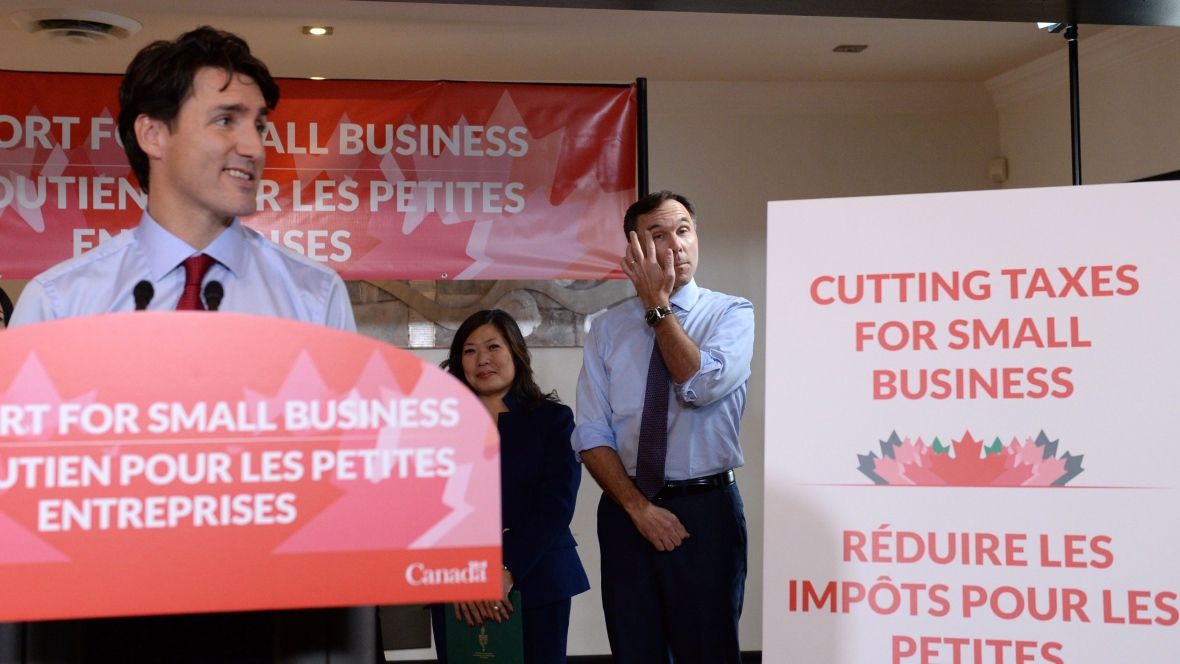
Prime Minister Justin Trudeau, in his dogged defense of what are the most fundamental tax proposals made since the report of the Carter Commission (which gave us our modern Income Tax system) claimed last Thursday that it is wrong that someone earning $50,000 a year as salary pays more in tax than someone earning $300,000 in their corporation.

Many tax professionals have dissected this ridiculous statement and could in considerable detail discuss where Mr. Trudeau was in error.  In simple terms Mr. Trudeau would have you believe that the corporate shareholder lives in a different world where they are not affected by personal taxation.

According to the Ernst & Young tax Calculator an Ontario resident earning $50,000 would pay just under 30% on their income or $8,311 in taxation. The Ernst & Young Tax Calculator can’t factor in the value of a company or government funded health benefits program or pension plan.

If we turn to the corporate tax result, an active business earning $300,000 of profit in Ontario would be subject to taxation at 15%.  We don’t need a sophisticated tax calculator to determine that this equates to $45,000.  One should be baffled.

Corporate income also attracts personal taxation

Mr. Trudeau also is comparing apples and oranges.  Does the entrepreneur who owns the business pay themselves anything? Regardless of whether they take income as salary or dividends it will attract personal taxation.   Let’s say that they took a salary of $50,000, the same as Mr. Trudeau’s downtrodden employee.  They would also have paid $8,311 in tax.

They might have had to pay themselves considerably more in order to afford an RRSP contribution, as it is highly unlikely they have a pension plan in place.  If they decided to invest that $300,000 in their corporation any income or growth on that asset would be taxed almost at the same rate as an individual and when they withdraw the money as a dividend they would pay tax at the rate of 45.3%.

Perhaps the shareholder is as malevolent as Mr. Trudeau and “Red” Billy Morneau believe and they are deducting all of their lifestyle costs, including mortgage, food, transportation, vacations, toothpaste, etc. as a corporate expense.  They would be guilty of tax evasion and the Criminal Code has provisions for dealing with that.

Continue Reading…

Retired Money: Cashing RRSP to pay off debt is a poor strategy

Should you cash in your RRSP to pay off debt? While some prospective retirees may be tempted to do so, this is one of a score of damaging financial myths, according to insolvency trustee and author Doug Hoyes.

I mention this in my latest MoneySense Retired Money column, which has just been published. You can retrieve it by clicking on the highlighted headline here: The wrong way to pay off Debt.

As I say in the article, Cashing in your RRSP to pay off debt is Myth #9 of 22 common financial misconceptions outlined in Hoyes’ new book, Straight Talk on Your Money (cover shown adjacent: we share a common publisher.)

Hoyes is particularly concerned about senior debt in Canada and how these myths can affect their retirement. Myth #10 often afflicts retired seniors: that Payday Loans are a Short-term Fix for a Temporary Problem.

Seniors racking up debt faster than other age groups

Earlier this week in the Financial Post, columnist Garry Marr reported that Seniors in Canada are racking up debt faster than the rest of the population. Over the past year, senior debt grew by 4.3%, according to a survey published Tuesday by Atlanta-based Equifax Inc. Continue Reading…