Hub Blogs contains fresh contributions written by Financial Independence Hub staff or contributors that have not appeared elsewhere first, or have been modified or customized for the Hub by the original blogger. In contrast, Top Blogs shows links to the best external financial blogs around the world.
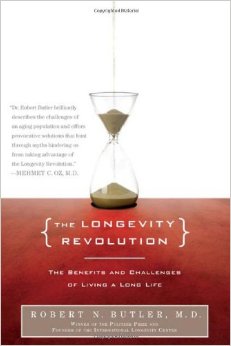
One of the most useful books I read in preparation for a recent talk I gave on longevity was The Longevity Revolution, published in 2008 by Robert N. Butler, M.D. Apart from being a Pulitzer Prize winner, Dr. Butler is also the founder of the International Longevity Centre.
The book is subtitled The Benefits and Challenges of Living a Long Life. Butler observes that in less than 100 years, human beings have made greater gains in life expectancy than it did in the preceding 50 centuries. From the Bronze Age to the end of the 19th century, life expectancy grew by only 29 years or so, from 20 to just under 50 years. But in the 20th century, Life Expectancy surged another 30 years to reach over 77.
The paradox of a downside to what should be good news
The Greatest Prospector in the World is the title of a new work of “Business Fiction” focusing on the six “secrets” of sales prospecting success. The author is Ken Dunn, CEO and Founder of Las Vegas based Next Century Publishing.
The six secrets are slowly revealed over the course of a charming tale that begins in the year 1910, a story Dunn describes in the book’s subtitle as “A Historically Accurate Parable on Creating Success in Sales, Business, & Life.”
For those who wish to skip on to the six secrets, they are laid out in the short Afterword, in which Dunn acknowledges a literary debt to Jim Stovall’s Ultimate Life Seriesand Og Mandino’s classic The Greatest Salesman in the World.
Dunn himself is no slouch in the world of sales prospecting: after an early career in police work he started businesses in property management, finance, direct sales and publishing.
You can find more at the book’s web site, www.greatestprospector.com. Also check out Dunn’s recently launched ReadersLegacy.com, which is a kind of Facebook for book lovers. In an interview in his Toronto offices, Dunn described Reader’s Legacy as “Facebook meets Amazon.” The site even features a kind of literary currency called “Lit Coins,” (reminiscent of Bit Coins).
Kenn Dunn (Twitter.com)
The 6 secrets of Sales Prospecting
I’ll reveal the titles of the secrets but you really need to read the story to get the context. As the cover image shows, it’s all about prospecting for gold nuggets.
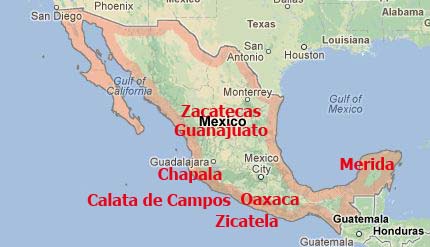
Mexico is a huge country and it’s hard to know where to go if you only have a limited time to visit this nation. Some people prefer the beaches, some might want to take advantage of the culture, history and international restaurants, and others could consider emigrating to spend their retirement years there. Below are must-see towns and cities along with useful notes to help you get an idea of what Mexico offers.
Chapala, Mexico , located in central Mexico, has the largest expat community in the world and offers lots of activities to keep one busy. If you like to play tennis, golf, bridge or get involved in garden clubs, animal rescue or theater, this lovely town with year-round spring climate is a good bet. Chapala’s location, just 20 minutes from Guadalajara’s international airport and an hour from the capitol city itself, is a good home base to travel to the beach, to the mountains, or to the States or Canada. Continue Reading…
In this summer’s series on the 7 eternal truths of personal finance, one of the articles was entitled Be an Owner, Not a Loaner, which reflects the usual financial industry advice that stocks are more likely to generate long-term investment returns than cash or bonds.
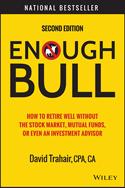
There is of course a contrary view to this eternal truth and it’s best contained in the new second edition of David Trahair’s book, Enough Bull, originally published early in 2009, right at the bottom of the financial crisis..
Trahair, a chartered accountant and author, could as easily have titled his book Be a Loaner, Not an Owner, because he’s adamant that stocks (i.e. equities), whether individual or pooled through mutual funds or ETFs, are just too risky for the average person.
The book cover includes a small image of a bull (as in a steer), so clearly the title Enough Bull is a double entendre: as in no more bullish prognostications on the stock market, as well as no more bovine excrement, whether dispensed by the animals or financial advisors.
Skeptical about the financial industry and its central belief in stocksContinue Reading…
When we launched Wealthsimple 12 months ago, investors in Canada had just two options to manage their money: Do it yourself or hire an advisor.
Doing it yourself is low cost, but overwhelming for most investors. It requires a level of knowledge, interest, and confidence to manage your life savings completely solo. Hiring an advisor is easy, but can be expensive and intimidating, even if you have a large enough balance to meet high account minimums.
At Wealthsimple, we’re building a third category: automated investing with on-demand advice. This new category combines the low costs of doing it yourself (DIY) with the real advice and sophisticated approach of a full-service advisor. We built cutting-edge technology to automate a passive investing approach and digitize the entire account opening and reporting experience. It’s convenient, allowing customers to open an investment account in 10 minutes, with no paperwork or branch visits required. And it’s not just robo-investing or robo-advice, it’s real advice delivered by real Portfolio Managers by phone, email, video chat, or text message.
So who uses an automated investment solution? Definitely not your average investor!.
What an automated investment client looks like
In an industry where 90% of clients are over 50 years old, clients of automated investment services are almost half that age. The average Wealthsimple client is a first-time investor, just starting to put money aside for both short and long-term goals. Our clients range from 19 to 89, but 80% are under 40 years old and the average is under 30.Continue Reading…


 Posted By
 One of the most useful books I read in preparation for a recent talk I gave on longevity was The Longevity Revolution, published in 2008 by Robert N. Butler, M.D. Apart from being a Pulitzer Prize winner, Dr. Butler is also the founder of the International Longevity Centre.


 Posted By