Posted By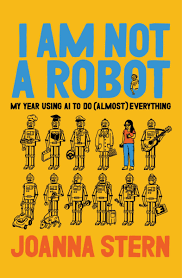
There’s an interesting new book just published called I am not a Robot: My Year using AI to do (almost) everything. The author if Joanna Stern, who was a tech columnist for the Wall Street Journal for more than a decade. As the subtitle of her book says, she spent a year using AI for almost every conceivable task in her daily life, which includes a job, raising a family and writing the book.
The book inspired me to reach out to Linked In and Featured.com to see whether Retirees could benefit from some of these ideas: both financially in order to to get to Retirement, and once there, how it could be used to spend the resulting leisure time that accrues to retirees. I know plenty of semi-retired friends who are writing books, playing around with AI music and other creative pursuits.
While my family members play around with things like Chat GPT, I confess I’ve not immersed myself in such things, although I do find AI to be an interesting theme as an investment, if only through an ETF like AIS, the VistaShares Artificial Intelligence Supercycle ETF. Its top holdings are the usual Tech/Semiconductor suspects: Nvidia, Micron, Intel, Taiwan Semiconductor, AMD, SK Hynix, GE Vernova and another 50 or so names.
The book only came to my attention via an interview with Stern by Jim Cramer in his Mad Money podcast. Cramer himself appears to be immersed in every AI tool from Claude to Grok to Gemini.
Stern certainly doesn’t think every AI app is worth the bother or expense (they’re not necessarily free). If you’re still in the workforce or a young person just getting started, there’s little doubt you’ll have little choice but to embrace this technology. As Nvidia president and CEO Jensen Huang has said, workers don’t necessarily have to fear losing their jobs to AI but they SHOULD fear losing their job to other employees who know how to use AI.
Retirement or semi-retirement is different, which is why I was curious about how AI can help retirees with their leisure and creative pursuitsa, travel and even senior dating. Ironically, and as the first source selected below points out, “Retirees have an edge most working folks don’t: time to actually learn the tools.”
Before we get to that, please not that this blog is much longer than our standard length: something like 6,000 words, because of the number of sources who responded to Featured.com (which is changing its name to Connectively.) For those who want a much shorter summary, on the order of 1200 words, please see my MoneySense Retired Money column, which went live on Friday. It’s titled Is AI the ultimate retirement hack?
For those wishing to go deeper, here are 17 responses from various experts and business owners, selected from more than 50. I’ve added subheadings so you can skim through and find the content that interests you.
Travel Planning is the Easiest Win
 Retirees have an edge most working folks don’t: time to actually learn the tools. At Local SEO Boost, I spend my days watching small business owners use AI to handle work they used to dread, and the same playbook works for personal life in retirement.
Start with finances. Tools like ChatGPT or Claude are great for plain-English explanations of a 401(k) rollover, Medicare Part B versus Advantage, or what a bond ladder actually does. I tell my own parents to paste in a confusing statement and ask “explain this like I’m new to it.” Pair that with a real fiduciary advisor for actual decisions, but AI removes the intimidation factor.
For creativity, this is where retirees can really play. Suno for music, Midjourney for visual art, ChatGPT for memoir drafting or family history projects. A retiree I know used AI to turn 40 years of handwritten travel journals into a printed book for grandkids. That’s a project that would’ve taken years and now takes weekends.
Travel planning is the easiest win. Ask AI to build a 10-day Portugal itinerary with shorter walking distances, ground-floor hotels, and shoulder-season pricing. Then have it draft emails to small hotels in Portuguese. Translation apps make solo travel realistic again.
Senior dating apps already use AI matching, but the bigger help is using ChatGPT to draft a profile that sounds like you, not like a resume. Same with first-message practice if you’re rusty after decades.
One honest tradeoff I always flag, same way I do with our SEO clients: AI is confidently wrong sometimes. Treat it like a smart intern, not an oracle. Verify medical, legal, and financial outputs with a real professional. Cross-check facts before forwarding that “amazing article” to friends.
he retirees who thrive with AI are the ones who treat it as a curious hobby, not a threat. Pick one area, spend a week playing, then add the next. — Wayne Lowry, Marketing coordinator, Local SEO Boost
“Retirement is the ultimate unlock for AI”
I’m Runbo Li, Co-founder & CEO at Magic Hour.
Retirement is the ultimate unlock for AI, and most people over 60 don’t realize they’re sitting on the best possible use case for these tools. Here’s why: AI eliminates the learning curve. The thing that used to stand between “I want to paint” and actually painting was years of skill-building. That barrier is gone.
I call this “zero-to-creative” and it’s the most underrated application of AI right now. Joanna Stern’s book captures something real about how AI reshapes daily life for working professionals, but retirees have something workers don’t: time and curiosity without a deadline. That combination is rocket fuel when paired with the right tools.
My parents ran small businesses for decades. When my dad semi-retired, I showed him how to use AI to edit old family video footage into short films, stuff he’d been meaning to do for twenty years. Within a week he was producing videos that looked like a professional editor touched them. No tutorials, no software learning curve. He just described what he wanted and iterated. That’s the pattern I see working for anyone in this stage of life.
For finances, AI assistants can now summarize portfolio performance, flag anomalies in spending, and even stress-test retirement drawdown scenarios in plain English. You don’t need to learn spreadsheets or pay an advisor $300/hour for basic analysis. For travel, tools like ChatGPT can build full itineraries calibrated to mobility needs, dietary restrictions, budget, all in seconds. For creative work, whether it’s writing a memoir, composing music, or generating art, AI is the most patient collaborator you’ll ever have. It doesn’t judge, it doesn’t tire, and it meets you exactly where you are.
The real insight is this: AI doesn’t replace human connection for retirees. It creates reasons for it. You make something, you share it, you connect. Even senior dating gets easier when AI helps you write a profile that actually sounds like you instead of a generic template.
The generation that built the internet’s infrastructure deserves to enjoy what it finally became. AI is the first technology that gets easier the less you try to control it. Just talk to it like a person and let it surprise you. — Runbo Li, CEO, Magic Hour AI
“Start with Health, because everything else depends on it.”
 At Davila’s Clinic in Weslaco, we see retirees every week, and the ones thriving in this chapter are the ones using AI as a daily co-pilot, not just a novelty. Here’s how I’d encourage near-retirees and retirees to put it to work.
Start with health, because everything else depends on it. Use AI chat tools to prep for doctor visits: type in your symptoms, medications, and questions, and ask it to organize them into a clear list you can hand to your provider. It saves appointment time and helps you remember what actually matters. Patients who walk into our telemedicine visits with that kind of prep get more out of every minute.
On finances, AI is fantastic for plain-English explanations of Medicare options, Social Security timing, RMDs, and budgeting in retirement. It won’t replace a fiduciary advisor, but it’ll help you ask sharper questions and stop feeling lost in jargon. Have it summarize your monthly statements or build a simple spending tracker.
For creativity, this is where retirees really light up. AI can help you draft a memoir for your grandkids, generate watercolor references from a photo of your garden, suggest chord progressions if you’re picking the guitar back up, or translate family letters from Spanish to English. The blank page disappears.
Travel planning is another win, ask AI to build a seven-day itinerary based on your mobility, dietary needs, and interests. It’ll flag walking distances, accessible hotels, and slower-paced options.
And yes, senior dating: AI can help polish a profile, suggest conversation starters, and even role-play a first-date chat to ease nerves.
My honest advice, treat AI like a curious assistant, not an oracle. Verify anything health, legal, or money related with a real professional. The retirees getting the most out of it are the ones who stay playful, ask follow-up questions, and bring what they learn back to people who know them personally. — Ysabel Florendo, Marketing coordinator, Davila’s Clinic
“Start with finances, because it’s the highest-stakes lane.”
 Retirees have something most working folks don’t: time to actually learn the tools properly. That’s the unlock. AI rewards curiosity, and retirement is when curiosity finally gets room to breathe.
Start with finances, because it’s the highest-stakes lane. Tools like ChatGPT or Claude won’t replace a fiduciary, but they’re incredible for stress-testing your understanding. Paste in a fund prospectus and ask it to explain expense ratios in plain English. Ask it to compare Roth conversion scenarios at different tax brackets. Ask “what questions should I be asking my advisor that I’m not?” That last prompt alone is worth a year of subscriptions.
For creativity, this is where I see the most joy. A retiree I know used AI to turn 40 years of handwritten journals into a memoir outline for her grandkids. Music? Suno will generate a song from a prompt about your wedding day. Painting? Midjourney is a sketchbook that never runs out of pages. The point isn’t to become an artist overnight, it’s to lower the friction so you actually start.
Travel is the easy win. Tell ChatGPT “I have 10 days in Portugal, I walk slowly, I love bakeries and bookstores, budget $200/day” and you’ll get a better itinerary than most agents produce. Then ask follow-ups. Have it draft your packing list. Translate menus in real time with Google Lens.
Dating, yes, really. AI is great for editing profile bios so they sound like you on a good day, not a nervous Tuesday. It’s also a safe place to practice difficult conversations before having them.
One tip from my world at Free QR Code AI: print a QR code linking to your travel itinerary, emergency contacts, or a family photo album, and tuck it in your wallet. Low-tech meets high-tech, and it’s the kind of small win that builds trust in these tools so you’ll try the bigger ones. — Melissa Basmayor, Marketing Coordinator, Freeqrcode.ai
Use AI to stay on top of Health and Medications
 One of the most practical ways retirees can use AI is to stay on top of their health and medications, and that’s where I see real, life-changing impact every day at A-S Medication Solutions.
After you stop working, your daily routine changes, but your medication routine often gets more complex. AI-powered reminder apps, symptom checkers, and medication interaction tools can be a retiree’s best friend. Tools like ChatGPT can translate confusing prescription labels into plain English, help you prepare smart questions before a doctor’s appointment, or explain what a new diagnosis really means. That kind of clarity builds confidence and adherence, which is everything in healthcare.
Beyond health, AI is a game-changer for the parts of retirement that should be fun. For finances, tools like Boldin (formerly NewRetirement) or Empower‘s AI features can model Social Security timing, Roth conversions, and withdrawal strategies in seconds, work that used to require an expensive advisor.
For creativity, retirees can use ChatGPT to draft a memoir, Suno to compose original music for grandkids, or Midjourney to turn old family photos into watercolor portraits. I’ve seen people rediscover hobbies they shelved decades ago.
For travel, AI trip planners like Mindtrip or Wonderplan build custom itineraries based on mobility, dietary needs, and pace, no more 14-hour days designed for 25-year-olds. And for dating, apps like Bumble and Match now use AI to surface better matches and even coach you through opening messages, which takes the sting out of getting back out there.
My one piece of advice: start with one tool tied to something you already care about. Don’t try to learn “AI,” learn the app that helps you book your next cruise or finally write that family cookbook. The technology disappears when the outcome matters. That’s the same principle we use when we explain complex pharmacy solutions to clinicians: lead with the benefit, and the tool sells itself. — Ydette Florendo, Marketing coordinator, A-S Medical Solutions
“Start with one real question, not the tool.”
 Honestly, the best lens I can offer on AI for retirees comes from how we think about trust and learning at Sunny Glen Children’s Home. We’ve spent nearly 90 years walking alongside people in transition, and retirement is its own kind of transition. Here’s how I’d coach a retiree to put AI to work.
Start with one real question, not the tool. If you’re sitting on a 401(k) and wondering whether to convert to a Roth, ask an AI assistant to explain the tradeoffs in plain English before you call your advisor. You’ll walk into that meeting sharper and ask better questions. We use that same principle when we explain decisions to donors and stakeholders, AI is great for turning jargon into clarity.
For creativity, treat AI like a curious co-pilot. Retirees finally have time to write the family memoir, paint, or learn guitar. Ask it to draft a chapter outline from your stories, suggest chord progressions, or critique a poem. The magic isn’t replacing your voice, it’s getting unstuck on a Tuesday afternoon.
Travel is where I’d push hardest. Tell an AI your mobility needs, budget, and the fact that you want a quiet church on Sunday morning in Lisbon, and it will build you an itinerary a travel agent would charge hundreds for.
Same for senior dating apps, AI can help you write a profile that actually sounds like you, not a algorithm-bait cliche.
Two guardrails I’d give my own parents: never paste account numbers, Social Security info, or medical records into a public chatbot, and always verify any financial or health answer with a licensed professional. We tell our older youth at the Allen House the same thing as they learn independent living, tools are powerful, but judgment and human relationships are what keep you safe.
Use AI to prepare, not to decide. That’s the sweet spot. — Wayne Lowry, Executive Director / CEO, Sunny Glen Children’s Home
“The Underdiscussed benefit isn’t time-filling; it’s mind-engaging.”

How AI can be used by retirees and near-retirees to enhance their lives? Speaking as a UK marketing-agency founder who’s watched my own parents (both recently retired) discover AI tools and use them in ways that surprised me:
The single highest-leverage use case: AI as a learning companion for the creative or intellectual interests retirement finally provides time for. Retirees have time, curiosity, and accumulated knowledge; AI tools accelerate the learning curve on any new pursuit dramatically.
The mechanic. The leisure-time problem for newly retired people isn’t usually filling hours: it’s pursuing interests at the depth retirement makes possible. Learning a new language, taking up painting, writing a memoir, researching family history, learning to play an instrument, studying a historical period. Each of these has a frustrating early phase where the learner doesn’t yet know enough to ask good questions or correct their own mistakes. AI tools collapse that early-phase friction by acting as an always-available, patient, knowledgeable companion.
Specific examples I’ve watched my parents use. Three. (1) My father uses ChatGPT to discuss historical questions during his amateur history reading: he finishes a chapter and asks the AI to summarise key debates among historians, or to explain context he wasn’t sure about. The learning depth is materially better than reading alone produces. (2) My mother uses an AI image-recognition app to identify plants in her garden during walks. The identification + maintenance information loop has made her gardening considerably more confident. (3) Both use voice-mode AI as conversational practice — engaging more with the tool than they would with a written interface.
The investment and finance use case. Retirees managing portfolios can use AI to explain unfamiliar terminology, summarise news affecting their holdings, and produce decision frameworks for portfolio adjustments. The caveat: AI shouldn’t replace financial advisors for high-stakes decisions, but for the daily understanding-and-context layer, it’s transformational.
The under-discussed benefit. Cognitive engagement. Retirees who use AI tools for learning and creative pursuits stay cognitively active in ways that retirement traditionally diminished. The benefit isn’t time-filling; it’s mind-engaging. — Christopher Coussons, Director, Visionary Marketing
Highest-adoption use cases are the ones that solve a friction the older user already feels
 Quick framing. I am not retired, and I am not a retirement specialist. I am Dane Maxwell, founder of Paperless Pipeline, a SaaS bootstrapped since 2009. We have a meaningful older-cohort customer base inside our 1,700+ brokerage customer companies (real estate brokers tend to skew older than tech founders), and I have watched the AI adoption curve play out specifically in that age band. Happy to contribute the SaaS-vendor perspective on how AI is and is not working for older users.
What I see in the AI-for-retirees-and-near-retirees use case in 2026. Three observations:
One, the highest-adoption use cases are the ones that solve a friction the older user already feels. Voice transcription, calendar management, photo organisation, document summarisation, and travel itinerary planning are the AI features that 60-plus users in our customer base actually engage with. These are not exotic. They are mundane tasks where AI removes a step the user finds tedious or technically difficult.
Two, the under-adoption pattern. AI features framed as “futuristic” or “transformational” almost universally fail in this cohort. The user does not want to be impressed by the AI. They want the result. AI features that succeed are presented as “this saves you 12 minutes” rather than “this is powered by GPT-5.”
Three, the genuinely transformative use case for retirees specifically that I think is underweighted: AI-driven companionship and conversation tools. The retiree who lives alone (a meaningful share of the 70-plus cohort) benefits from a daily structured conversation with an AI tool that asks about their day, prompts them to call their kids, reminds them of medications, and engages them on subjects they care about. The category is early, but the impact on loneliness and cognitive engagement is meaningful in the early data.
How retirees can make the most of newfound leisure with AI. One tool for daily voice transcription and writing (journalling, letters to grandchildren, life-history). One for travel planning (complex multi-stop trips). One for learning (Khan Academy, language apps, hobby tutorials). Retirees who use all three report meaningfully higher life satisfaction.
The principle. AI for retirees works when it amplifies what they already want to do. It fails when it demands they learn a new identity as a “tech user.” — Dane Maxwell, Founder, Paperless Pipeline
Retirees have “time to actually learn the tool instead of just bolting it onto a busy day.”

Retirees finally have something working folks don’t: time to actually learn the tool instead of just bolting it onto a busy day. That’s the unlock. AI rewards curiosity and iteration, and retirement is the perfect runway for both.
Start with finances, because that’s where the confidence compounds. Use a chatbot like ChatGPT or Claude to translate brokerage statements into plain English, stress-test withdrawal scenarios, summarize prospectuses, or pressure-check what a financial advisor just told you. It won’t replace a fiduciary, but it makes you a sharper client. Ask it to play devil’s advocate on your portfolio, that single prompt is worth more than most YouTube finance videos.
For creativity, this is where I see the most joy. Retirees can hum a melody into Suno and get a finished song, sketch on an iPad and have an AI suggest color palettes, or draft the family memoir they’ve been talking about for thirty years with ChatGPT acting as editor, not author. The trick is using AI as a collaborator that asks you better questions, not a vending machine that spits out generic output.
Travel planning is where AI quietly shines. Drop your mobility needs, dietary restrictions, and pace preferences into a prompt and ask for a 10-day itinerary with walking distances and restaurant reservations to book in advance. Then ask it to translate menus, customs forms, or pharmacy labels on the road.
Senior dating? Use AI to refine a profile bio so it sounds like you on your best day, and to spot red flags in messages, romance scams target this demographic hard.
One habit I’d steal from how we operate at Scale By SEO: before publishing anything AI-touched, verify the facts. Treat AI like a brilliant intern, fast, eager, occasionally wrong. Trust comes from checking the work, and that’s a skill retirees already have in spades. — Wayne Lowry, CEO, Scale By SEO
AI can serve retirees as “a creative collaborator, research assistant, travel planner, and learning companion.”
 AI has the potential to transform retirement from a period of slowing down into a phase of continuous learning, creativity, and meaningful engagement.
Beyond automation, one of the most valuable applications for retirees and near-retirees is cognitive empowerment. AI tools can simplify financial planning, summarize investment trends, personalize travel experiences, and even assist with health tracking and lifelong learning.
At the same time, generative AI is opening creative opportunities in writing, music, photography, and digital art for individuals who may never have explored those interests professionally. Research from Pew Research Center shows that older adults increasingly value technology that supports independence, social connection, and mental stimulation rather than convenience alone.
In enterprise learning environments, a similar pattern has emerged where AI becomes most impactful when it enhances confidence and curiosity rather than replacing human decision-making. For retirees, the technology can serve as a creative collaborator, research assistant, travel planner, and learning companion that helps make leisure years more intellectually active and socially connected. — Arvind Rongala, CEO, Edstellar
“AI just handles the heavy lifting, leaving you free to enjoy the retirement you’ve worked three decades to secure.”
 In my thirty years of practice, I’ve seen retirees view “new technology” with the same skepticism a seasoned judge views an unverified witness. But as Joanna Stern illustrates in I am not a Robot, AI isn’t a replacement for the human soul; it’s a high-powered paralegal for your personal life. For those entering their “Golden Years,” AI is the ultimate tool to reclaim the one asset no attorney can bill for: time.
On the financial front, retirees can use AI-driven platforms to move beyond static spreadsheets. These tools can simulate “Monte Carlo” scenarios for your retirement drawdown, helping you visualize how a sudden market dip — or a spontaneous trip to Tuscany — affects your longevity of funds. It turns the “black box” of wealth management into a transparent conversation, ensuring you don’t outlive your capital.
But the real magic happens in the “leisure” sector. Stern’s year of AI immersion shows us that these tools are creative catalysts. If you’ve always wanted to write a memoir but have “blank page syndrome,” an AI can act as your ghostwriter-assistant, helping you outline chapters from your old journals. In art and music, AI can bridge the “technical gap,” allowing someone with arthritis or limited mobility to compose symphonies or generate breathtaking digital canvases.
For travel, AI is like having a personal concierge who actually knows your budget and back health. It can stitch together complex itineraries that avoid long walks and find the best “early bird” legal-eagle specials in cities you’ve never visited. And in the world of senior dating? AI can help draft a profile that is authentic yet polished, acting as a digital “wingman” to navigate the sometimes-daunting world of online connection.
My professional advice? Don’t treat AI like a robot; treat it like an intern. You are still the Principal Attorney of your life: you provide the wisdom, the direction, and the “final signature.” AI just handles the heavy lifting, leaving you free to enjoy the retirement you’ve worked three decades to secure. It’s not about being a robot; it’s about being a more empowered human. — Lyle Solomon, Principal Attorney, Oak View Law Group
“AI works brilliantly for retirees who treat it like a curious assistant.”
 I’ve watched my own parents start using AI in ways I didn’t expect, and it’s been genuinely interesting.
My mom uses ChatGPT to plan travel now. She’ll spend an evening asking it about temple routes in northern India, getting suggestions, refining them. Stuff she’d previously rely on a travel agent for. The information’s better and she enjoys the back-and-forth more than browsing brochures.
She also uses it for writing. She journals more than she used to because Claude helps her sort through her thoughts when she gets stuck. It’s not replacing her writing, it’s unblocking her on the days she’d otherwise stop.
The pattern I see is that AI works brilliantly for retirees who treat it like a curious assistant. The trap is when people use it as a search engine and lose patience. Best use I’ve seen is creative or exploratory, where there’s no wrong answer and the process itself is the point. — Nirmal Gyanwali, Founder & CEO, WP Creative
AI is “a phenomenal health partner” for Retirees
 One angle retirees overlook with AI: it’s a phenomenal health partner, and that directly shapes how much of your leisure time you actually get to enjoy.
As a marketing coordinator at The Family Doctor in Tucson, I see retirees every week who want to travel more, paint more, date more, hike more, and the limiter is rarely money or curiosity. It’s energy, mobility, and chronic conditions creeping up unnoticed.
Here’s how I’d put AI to work in retirement:
Finances and admin: Use AI to summarize Medicare supplement options, decode pharmacy pricing, and build a simple monthly budget. Pair that with a Direct Primary Care membership, our flat monthly fee removes insurance billing surprises, so AI can actually model your real healthcare spend.
Travel: This is huge. Ask AI to build a 14-day Portugal itinerary with walking distances, elevation, and rest days built around your knees. Then bring that itinerary to a travel medicine visit, we handle vaccines, altitude prep, and travelers’ diarrhea kits so the trip doesn’t end in a foreign ER.
Creativity: AI is a patient collaborator. Draft a memoir chapter, generate guitar chord progressions in your key, or get art prompts based on photos from your garden. Low stakes, high dopamine.
Dating and social: Use AI to polish a profile, suggest conversation starters, or research a new partner’s hometown before a first date. Confidence goes up.
Health literacy: Before any appointment, ask AI to translate lab results or list questions to ask your doctor. We actually love this, our visits run 20 to 60 minutes, and a prepared patient gets more out of that hour than anyone.
The throughline: AI handles the friction, so retirees can spend energy on the living. Pair it with a doctor who picks up their own cell phone, and the runway gets a lot longer. — Ydette Macaraeg, Part-time Marketing Coordinator, The Family Doctor
“People don’t lack interests later in life, they lack the patience for the friction …”
 I build in the longevity space, so I spend a lot of time thinking about the active second half of life, and I’d argue the highest-value use of AI for near-retirees isn’t admin, it’s as a curiosity engine that lowers the barrier to starting things.
The pattern I see is that people don’t lack interests later in life, they lack the patience for the friction, the research, the logistics, the learning curve that sits between “I’d like to” and “I started.” That friction is exactly what these tools dissolve. Want to learn an instrument, plan an ambitious trip, finally sketch the small business you always meant to, or get fit in a way that suits your body now? AI can compress the daunting setup into a first step you’ll actually take.
Most advice frames AI for this group defensively, scam protection and reminders, which is useful but small. The bigger prize is offence, not defence.
The principle: the point of more time isn’t to manage it, it’s to fill it. AI is most valuable when it removes the friction between intention and action. — Neill David Watson, Founder, APMZEE
“AI lowers the barrier to creativity. People who never considered themselves artists, musicians, or writers can now experiment with ideas quickly and discover talents they didn’t know they had.”
 One of the biggest misconceptions about AI is that it’s only useful for people trying to work faster. In reality, retirees may have even more to gain because AI can help them explore interests, learn new skills, stay connected, and tackle projects they’ve never had time for before.
I’ve seen retirees use AI as a travel planner, research assistant, writing coach, language tutor, and even a creative collaborator. Someone interested in family history can use AI to organize genealogy research. An aspiring writer can use it to brainstorm memoir ideas. Hobbyists can use it to learn photography, painting, music composition, gardening, or woodworking. AI can act like an endlessly patient guide that’s available whenever inspiration strikes.
Financially, AI can also help retirees better understand investing concepts, compare retirement strategies, summarize market news, and explain complex financial topics in plain English. Of course, important financial decisions should still involve qualified professionals, but AI can make people more informed and confident participants in those conversations.
What’s especially interesting is how AI lowers the barrier to creativity. People who never considered themselves artists, musicians, or writers can now experiment with ideas quickly and discover talents they didn’t know they had. Retirement often creates something many people haven’t had in decades: time. AI can help turn that time into exploration rather than passive consumption.
I think Joanna Stern’s core insight applies beyond the workplace. AI isn’t just a productivity tool. It’s a capability amplifier. For retirees and near-retirees, that can mean richer hobbies, more meaningful learning, better travel experiences, stronger social connections, and more confidence navigating a rapidly changing world. — Justin Belmont, Founder & CEO, Prose
“AI is a tool, not a replacement for judgment. Use it to ask better questions, then trust experienced humans for the work that actually matters.”
 One area where I’ve seen AI genuinely help retirees and near-retirees is around the home itself. At Accurate Home and Commercial Services in Conroe, we work with a lot of homeowners who are downsizing, aging in place, or finally tackling the projects they put off for 30 years. AI tools are quietly making those decisions easier.
For folks rethinking their space, I tell them to use AI chatbots to draft questions before they call an inspector or contractor. A retiree who’s never had to evaluate a foundation report can paste it into an AI tool and get plain-English explanations. That levels the playing field. When they call us about a TAS/ADA accessibility review or an IECC energy audit, they already know what to ask, and the conversation is sharper.
For creative pursuits, I’ve watched clients use AI to design garden layouts, mock up paint colors for a room before our handyman crew shows up, or write the family history they always meant to write. One gentleman used an AI image tool to visualize a wheelchair-accessible bathroom remodel for his wife, we then built it. That’s the best use case I’ve seen: AI as the brainstorming partner, professionals as the executors.
On finances, near-retirees can use AI to model “what if I sell the rental property” scenarios or compare insurance quotes, though I’d always pair it with a human advisor for the final call. Same logic we use with customers: AI gives you a fast first draft, a licensed pro gives you the accountable answer.
For travel and dating, AI itinerary planners and profile editors save hours. Just remember it can hallucinate, verify addresses, prices, and people.
The way we explain tradeoffs to customers applies here too: AI is a tool, not a replacement for judgment. Use it to ask better questions, then trust experienced humans for the work that actually matters. — Belle Florendo, Marketing coordinator, My Accurate Home and Commercial Services
“Retirees can now have something close to a personal CFO in their pocket.”
 Joanna Stern’s book is really aimed at the still-working crowd, but the retiree use case is arguably even more compelling: and frankly more underserved. At MintWit, I write a lot about how people in or near retirement can stretch both their money and their quality of life, and AI touches both of those dimensions in ways that weren’t possible even two years ago.
On the financial side, retirees can now have something close to a personal CFO in their pocket. Tools like ChatGPT or Claude can help someone stress-test a withdrawal strategy, decode a Medicare supplement plan, or simply ask “am I on track?” in plain English: without paying $400 an hour for a financial planner every time a question comes up. That’s a genuine equalizer for people who aren’t working with large wealth management firms.
But the leisure angle is what I find most exciting. Retirement is often sold as the finish line, but a lot of people arrive there and wonder what to do with the next 20-30 years. AI can be a creative collaborator: helping someone finally write their memoir, compose music, paint with AI-assisted tools, or plan an ambitious multi-country trip without spending weeks on logistics. For seniors re-entering the dating world after a loss, AI can even help craft a thoughtful profile or work through conversation starters without the awkwardness of asking a grown child for help.
The bottom line: AI lowers the barrier to doing things retirees always said they’d get around to “someday.” Someday is now. — Scott Brown, Founder, MintWit
 Posted By