Reviews

We review books that deal with everything from financial independence topics to politics, and anything in between. We may sometimes stray into films and music if there is a “Findependence” angle.

Retire Retirement?

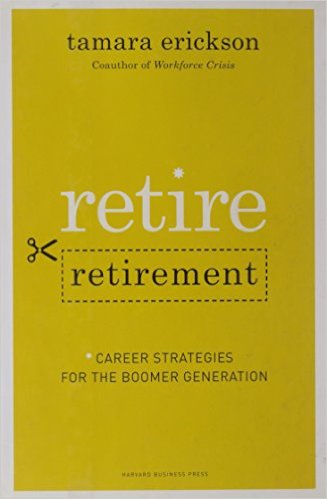
41a03oj1QIL._SX325_BO1,204,203,200_The notion of “retiring retirement” or at least the term Retirement is coming more into vogue these days as more baby boomers reach the traditional ages of the old-fashioned “full-stop” retirement.

The current edition of Bloomberg Businessweek magazine has a piece titled “Watch out, Boomers, Here Comes 70,” noting that millions of baby boomers around the world are turning 70 this year.

In the U.S. that means they will come up against the Required Minimum Distribution (RMD) rules on IRAs and 401(k)s, with many forced to pay taxes on those forced withdrawals. Canadian retirees with Registered Retirement Income Funds (RRIFs) are in a similar boat by the end of the year they turn 71. (By the way, I’m preparing a Special Report on RRIFs later this month, and welcome input from professionals with expertise here.)

Of course, the Boomers don’t appear set to leave the workforce quietly. In researching my portion of my own upcoming book (Victory Lap Retirement), I came across a 2008 book by Tamara Erickson titled Retire Retirement, subtitled Career Strategies for the Boomer Generation.

Demography favors Boomers’ third phase of work life

Continue Reading…

Tax Filing: DIY or Hire a Professional?

hr-officeBy Robb Engen, Boomer & Echo

Special to the Financial Independence Hub

We’re right in the middle of tax season, and while some keeners have already filed, Canadian taxpayers have until May 2nd to submit their personal taxes for 2015. The deadline to file taxes for those who are self-employed is June 15th.

There aren’t very many strategies for individuals to save on taxes these days and so most tax planning is fairly straightforward. That’s why for many years I filed my taxes using basic tax preparation software.

My tax situation wasn’t complicated. Just a standard T4, plus my RRSP contribution, a bit of student loan interest to deduct, and maybe some tuition credits when I was going to school.

It was no big deal filing taxes on my own – and it got even easier (and cheaper) as the software became more sophisticated. In fact, tax preparers like H&R Block started offering free software last year and will continue to do so this year by download at hrblock.ca.

More Money, More (tax) Problems

But as I started earning extra money through my online business it became clear that I needed some expert guidance to figure out whether it made sense to incorporate my business. Continue Reading…

Closure of Hulbert Financial Digest a loss for all investors

Mark_J._Hulbert_cropHere’s my latest Financial Post blog, which puts a Canadian spin on the announcement late last week that after 36 years, the influential investment newsletter ranking service is shutting down. Click on this headline: ‘A loss for all investors’: The Hulbert Financial Digest says goodbye.

As the blog notes, there aren’t too many Canadian investment newsletters but two of the majors had one or two newsletters that often did well in the Digest.

Here is Hulbert’s Wikipedia entry.

The good news is that Hulbert continues to be a columnist at MarketWatch.com. Check out his recent opinion piece, entitled Don’t be fooled by a bear-market rally in stocks.

Indexers are terrible at indexing

Cartoon Humor Concept Illustration of Couch Potato Saying or Proverb

Despite all of the evidence that low-cost passive investing outperforms actively managed portfolios, many investors still cling to the belief that an active approach can help steer them through turbulent times in the market.

Even investors who have taken the plunge into index funds and ETFs can’t help themselves when faced with uncertainty. Emotions take over, as do our instincts to tinker with our investments to try and optimize performance.

Earlier this month, Dan Bortolotti updated the investment returns from the ever-popular Canadian Couch Potato model portfolios.

Despite Dan’s best efforts to explain that these new and simplified portfolios should be used as part of a long-term investment strategy, the overwhelming number of comments from readers suggests that it’s nearly impossible for indexers to simply set-it and forget it.

Continue Reading…

Behavioural Finance: Coping with Losses

Depositphotos_65204705_s-2015By Aman Raina, Sage Investors

Special to the Financial Independence Hub

In the 20-plus years I have been investing, I have yet to meet or work with anyone who enjoys losing money.

I’ve met people who have lost money (yours truly included) and I can’t say it gives anyone or myself great satisfaction. We spend all of our time trying to make investment decisions that will be successful.

Unfortunately and it’s nobody’s fault, we don’t spend enough time understanding what losses mean and how they can impact our future decision making beyond the tangible reduction in our RRSP or TFSA broker account.

In my previous post, I discussed a concept involving the Endownment Effect that Richard Thaler observed in his book, Misbehaving: The making of behaviorial economics. According to Mr. Thaler, the Endowment Effect feeds into a general discussion on how we behave when it comes to losing and making money. Conventional thinking suggest that because we don’t like losing money that we will tend to take less risk to minimize loss and conversely take more risk when we are making money.

Losses “hurt” more than “gains” provide pleasure

Continue Reading…