Victory Lap

Once you achieve Financial Independence, you may choose to leave salaried employment but with decades of vibrant life ahead, it’s too soon to do nothing. The new stage of life between traditional employment and Full Retirement we call Victory Lap, or Victory Lap Retirement (also the title of a new book to be published in August 2016. You can pre-order now at VictoryLapRetirement.com). You may choose to start a business, go back to school or launch an Encore Act or Legacy Career. Perhaps you become a free agent, consultant, freelance writer or to change careers and re-enter the corporate world or government.

Work Optional: Retire sooner to live your best life

By Vicki Peuckert Cook

Special to the Financial Independence Hub

If you’ve spent any time reading about personal finance lately, you’ve likely heard about the “FIRE” movement. FIRE means Financial Independence – Retire Early.

Suze Orman got headlines by announcing she hated the FIRE movement (but she changed her position a few weeks later.) While Clark Howard “FIRE’d” before it ever became a popular thing to do. (If you think “retire early” doesn’t pertain to you, I strongly urge you to keep reading!)

Whether you agree with people who want to retire early in their 30s or 40s or not, it’s not hard to support the idea of becoming financially independent. Making work optional at some point so you can choose how to live your best life makes good sense.

Tanja Hester and her husband, Mark Bunje, left their careers behind to retire early (at ages 38 and 41) after reaching financial independence. Tanja’s new book, Work Optional – Retire Early the Non-Penny-Pinching Way teaches you how to get there too: no matter when you start or what age you’ll be when you leave work for the last time.

Retiring Is about your life, not just your money

It’s hard to think about retirement without focusing on money. After all, retiring without a solid financial plan – especially retiring early – is a recipe for disaster.

Tanja clearly explains what a bad idea it is to think you can just get back into the workforce if you run out of money in retirement. Her conservative advice is to Make Your Plan Bulletproof by diversifying your “magic money” sources.

Tanja doesn’t just tell you what to consider. She provides action steps and detailed information on ways to shore up your finances before quitting your day job for good.

What I really love about Work Optional is how Tanja embeds the importance of financial planning within retirement life planning. She redefines money as a tool to “help you live your best life as soon as possible.”

This helped me think about early retirement less as a race to get done with work but as a path to defining “living” according to your own terms.

Work Optional is organized in 3 main sections:

  • Determining what kind of life will thrill you
  • Creating a conservative financial plan to be able to live that life
  • Adapting to live your best “post-work” life

You can see that crafting and living your retirement dreams bookend the part of retirement planning most people really focus on: money. But Tanja doesn’t let you skip the tough questions you need to answer in order to transition to living the retirement you want.

She knows there is more to it than money, and she asks you to dig deep and engage with the most critical person in your retirement planning: YOU.

You have to do more than read

If you’re on this site, you probably listen to podcasts and read plenty of articles, blog posts, and books focused on personal finance. When I started on my own FIRE journey, I read everything I could find. Even with all of the information I had, I was still hesitant to act.

Did I really understand what I was reading? What if I missed something and made a mistake? Did new information come out that would help with my retirement planning? Continue Reading…

When did Retirement Income Planning get so complicated?

By Ian Moyer

(Sponsor Content)

Retirement planning used to be easy: you simply applied for your government benefits and your company pension at age 65. So when did it get so complicated?

Things started to change in 2007 when pension splitting came into effect. While we did have Canada Pension Plan (CPP) sharing before that, not too many people took advantage of it. Then Tax Free Savings Accounts (TFSA) came along in 2009. At first you could only deposit small amounts into your TFSA, but in 2015 the contribution limit went to $10,000 (it’s since been reduced to $6,000 per year). Accounts that had been opened in 2009 were building in value, and the market was rebounding from the 2008 downturn. Registered Retirement Savings Plan (RRSP) dollars were now competing with TFSA dollars and people had to choose where they were going to put their retirement money.

In 2015 or 2016 financial planners suddenly started paying attention to how all of these assets (including income properties) were interconnected. There were articles about downsizing, succession planning, and selling the family cottage. This information got people thinking about their different sources of retirement income and which funds they should draw down first.

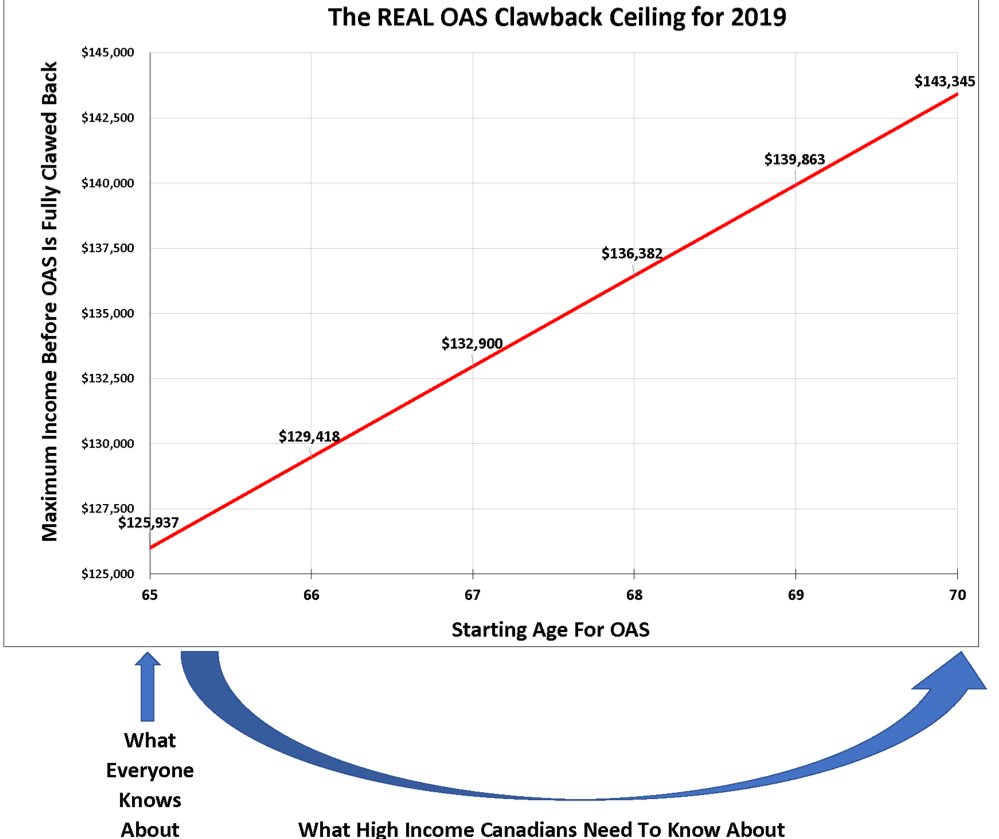
Of course there is more to consider, such as the Old Age Security (OAS) clawback. When, where, and how much could this affect your retirement planning? People selling their business are often surprised that their OAS is clawed back in the year they sell the business, even if they’re eligible for the capital gains exemption. Not to mention what you need to do to leave some money behind for your loved ones. Even with all this planning, the fact that we pay so much tax when we die is never discussed, although the final tax bill always seems to be the elephant in the room. We just ignore it, and hope it’ll go away.

Income Tax doesn’t disappear at 65

Unfortunately, income tax doesn’t disappear at age 65, and you need time to plan ahead so you can reduce the amount of tax you pay in retirement. A good way to do this is to use a specialized software that takes all your sources of income and figures out the best strategy to get the most out of your retirement funds. Continue Reading…

Is the FIRE community full of hypocrites?

By Fritz Gilbert, RetirementManifesto.com

Special to the Financial Independence Hub

It’s interesting how much controversy the FIRE (Financial Independence Retire Early) movement seems to cause in our society.  Personally, I find it a fascinating topic and view the discussion generated by the FIRE community as valuable to everyone working toward retirement, whether they’re in pursuit of early or traditional retirement.  I’m encouraged by the FIRE community and feel that ANYTHING that makes more people aware of the need to save for their retirement is a good thing.

For the record, I’m a fan of FIRE.  

However, is it right to accept the movement without question, or should we take some time to think comprehensively about FIRE and attempt to determine if there are some “gaps” in the strategy that warrant discussion?  It’s always good to question things, so today we’re going to do just that.  We’re still a land of Free Speech, and we’d be wise to leverage that Freedom for a more complex discussion around important issues.  Money and Retirement are certainly important issues.

So …

Let’s have some fun.  Let’s challenge ourselves.  Let’s learn to keep our minds open.

Let’s look for gaps in the FIRE movement.

I recently had one of the most comprehensive comments I’ve ever received on this blog.  As you’ve likely guessed, it was regarding the FIRE movement.  Given the quality of the comment, I’m dedicating this post to answering the issues raised.

Phil raises the questions about FIRE respectfully and they deserve a thoughtful response. Is FIRE hypocritical? Today, my thoughts… Click To Tweet

Regardless of where you are on your journey to retirement, I trust you’ll find some value in the discussion.

The comment which generated this post was in response to my article titled “What the FIRE Movement Is All About – In One Word”.  The reader, Phil, prefaced his comment with a generally favorable view of the FIRE movement, including a few comments I’ve summarized below:

  • Darrow Kirkpatrick and others ” have had a big and, largely, positive impact for me and my family.”
  • “To be clear, I find nothing wrong with trying to improve people’s financial literacy and promote a culture of frugality.”

However, Phil soon moves into the “meat” of his comment with this statement:

“ …After being on my own FIRE journey for 4+ years, I have developed some serious reservations about what I am reading these days…”  Phil

Turns out that Phil has been a member of the FIRE community for 4 years!  My curiosity peaked as I continued to read his words.  Here’s a member of our community, and he’s raising some questions.  “Hmmm, this could be interesting,” I thought as I continued to read his words.

What followed was this statement:

However, FIRE bloggers are ignoring some serious issues with their collective community and their message. Click To Tweet

Phil follows this claim by writing 4 well-thought-out concerns about the FIRE movement.  Given his tone, I took his comments seriously, and have spent some time thinking about the issues he’s raised.

I challenge you to do the same.


4 questions about FIRE

Phil’s comment, respectfully raised, has merit.  In an effort to look more critically at the FIRE movement the points he makes deserve to be considered.  In our culture of increasing “Political Correctness,” it bothers me that folks aren’t open to exploring ideas that contradict their own. Personally, I love to look at arguments that don’t fit the conventional narrative.  What I like in particular about Phil’s arguments is that he has been a self-professed member of the FIRE community for 4+ years.  In full transparency, I consider myself a member of the FIRE community, having retired at a (by society’s standards) relatively young age of 55, though “older” than most in the world of FIRE.

If Phil has questions, perhaps others do as well.  Let’s air it out.  Let’s look for gaps.  Let’s discuss the issues.

Arguments which contradict our narrative make us think. Thinking Is Good. Challenge your brain, and learn to think through alternative ideas. Click To Tweet

Today, I’m going to look objectively at the 4 questions Phil raises.

My approach for each question will be the same:

  • Phil’s Comment: I will copy each of the issues Phil’s raised verbatim from his comment.
  • What’s The Point? I will summarize what I believe are the main points raised by Phil “What’s The Point.”
  • My Thoughts: I will provide my thoughts on the topic raised.
  • Subjective Score:  Where I’ll rate my agreement with the validity of the comment (100% = Total Agreement)

With that, let’s challenge our brains …

1.) We should be skeptical of FIRE bloggers

Phil’s comment:

“FIRE bloggers are “lifestyle influencers,” and merit the same level of skepticism as anyone in this game. Most FIRE-bloggers monetize their blogs and so are sellers of a product, a product that should be evaluated objectively. I’m sorry, but the general defense that FIRE can be anything you want it is not accurate. Every single FIRE-blogger is selling the idea that financial independence and a lifestyle of much less work or no work will improve your happiness significantly. The reality is that this may not be true for everyone. I applaud Chris Mamula, Sam Dogen, Joe Udo and others who have written about the downsides of this lifestyle: depression and loss of purpose. JD Roth has been willing to write about the down-side of the FIRE-blog community and people should read his posts.

Unfortunately, many other bloggers refuse to acknowledge this. The fact is that most research into the psychology of happiness in the past several decades has shown that people are actually more happy when producing than when consuming. The simple fact is that remaining productive is difficult for many people outside the context of a standard career. FIRE bloggers should talk more openly about this.”

What’s The Point? Phil raises three issues in his first comment:

  1. We should be skeptical of the motives of FIRE-bloggers who are attempting to monetize.
  2. FIRE-bloggers promote the idea that less work will improve your happiness; it may not be a reality.
  3. Research indicates that people are happier when productive, and that may be harder outside a career.

My Thoughts: In my view, the most valid point raised is the question of happiness after FIRE is achieved (I also agree we should always be skeptical of folks trying to “sell us something,” but don’t see that as a major flaw in the FIRE movement.  I think it’s also fair to mention that there are likely more FIRE followers who don’t blog than do.  While this comment questions the blogging element of FIRE, it’s not fair to throw the non-bloggers under the same bus).

But, more importantly, on to the “happiness” question:

As I was moving toward retirement, I did a lot of research on the topic of happiness after retirement, which I summarized in my post “Will Retirement Be Depressing”. For the record, I agree with Phil that this element of early retirement is not covered to the extent that it should be.  Having said that, I also provide some suggestions on how to ensure you’ll avoid some of the traps that cause depression in retirement in the post mentioned above.

I’ve implemented those steps, and I’ve found my retirement to be anything but depressing.  I agree more should be written about the topic, and agree with Phil that this is a valid point regarding the FIRE movement.  Too many folks focus on the financial side of early retirement, but true happiness requires an equal (or greater) focus on the “non-financial” aspects of retirement.  I suspect we’ll see a natural shift as more of the FIRE bloggers achieve RE.

(For the record, this is why I’ve been writing a larger % of my posts about the “soft” side of retirement.  Now that I’m in retirement, I realize the importance of the non-financial topics in achieving a great retirement.  I also realize it’s not covered to the same extent as the financial side, so I’m doing my part to rectify the situation.)

Subjective Score: 80%   Skepticism is good, and there should be more written about the “softer” side of happiness post-RE.

2.) FIRE as a Marketing scheme

Phil’s Comment:

FIRE bloggers are too much like multi-tiered marketing sales people.

Blogger: “You should save a lot of money to retire early.”
Reader: “Why?”
Blogger: “It will give you freedom to pursue more creative pursuits.”
Reader: “Like what?”
Blogger: “Blogging. Take my course!” Continue Reading…

Retired Money: Work Optional and the FIRE movement

My latest MoneySense Retired Money column looks at the so-called FIRE movement: (an acronym for Financial Independence/Retire Early), as well as a new book by a FIRE blogger titled Work Optional. You can find the full column by clicking on the highlighted headline here: How “Work Optional” can fit into your Retirement Plan.

You’ll see that regular Hub blogger Doug Dahmer — founder of the Retirement Navigator planning software — has been using the phrase Work Optional for at least five years, even though the new book of that name was just published in January 2019. It’s a useful phrase that describes the kind of thing Mike Dark and I refer to as Victory Lap Retirement in our jointly authored book of the same name.

There are many ways to describe this phase, but generally it refers to a period after full-time employment. FIRE proponents often declare that they “retired” in their 30s or 40s but of course most of them do not spend the next half century doing absolutely nothing. They really create encore careers based on self-employment, and often build businesses based on book-publishing, blogging and public speaking, wherein they reveal “how they did it.”

Victory Lap and Findependence

To some extent this very website does a similar thing, focused as it is on Financial Independence, or my contraction of it, Findependence. Continue Reading…

10 keys to picking the best Canadian income trusts and REITs

Canadian income trusts have always involved far more risk than most investors realize. This is why we’ve recommended so few of them in the past.

Income trusts are a type of investment trust that holds income-producing assets. Their units trade on stock exchanges, but they flow much of their income through to unit holders as “distributions.”

On January 1, 2011, Ottawa imposed a tax on distributions of income trusts. The new tax put income trusts on an equal tax footing with regular corporations.

Virtually all Canadian income trusts then converted into conventional corporations. But some are still out there: mostly real estate investment trusts (REITs).

Investing in trusts — and in particular oil and gas trusts — was risky, as the businesses that underpinned them needed steady cash flow. But that could stagnate during economic downturns. At the same time, we believed that investors should have looked for trusts with low capital expenditures and mature businesses.

More about Canadian Income Trust taxes

Canada offers special tax treatment for Canadian income trusts. When they flow their income through to their unitholders, they don’t pay much if any corporate tax. Investors pay tax on most of the distributions as ordinary income (although some distributions qualify as a tax-free return of capital).

Ottawa feels the income-trust business structure is appropriate for real estate investment trusts, or REITs, so it has exempted REITs from the income-trust tax.

Real estate investment trusts resemble Canadian income trusts, but with a key difference: REITs invest in income-producing real estate, such as office buildings, shopping centres and hotels. (We cover a number of carefully selected income trusts and real estate investment trusts in our Canadian Wealth Advisor newsletter.)

Regardless of whether or not they have converted, the basic tests we use to ferret out good investments and reject bad ones still apply, not only to Canadian income trusts, but to other types of investments, as well.

Keep “Investment Inputs” in mind when judging income trusts, or any investment

In evaluating investments, many investors focus on what we’d call “investment outputs,” such as earnings, dividends, cash flow, return on equity, sales growth and so on. These are all important, of course, but you shouldn’t focus on them to the exclusion of what you might call “investment inputs.”

Investment inputs are harder to work with than investment outputs, since it takes a judgment call to determine their risk or value. To give you a better idea of what we mean, here are 10 keys to picking the best Canadian income trusts and real estate investment trusts. We look each before recommending any income trust: Continue Reading…