Once you achieve Financial Independence, you may choose to leave salaried employment but with decades of vibrant life ahead, it’s too soon to do nothing. The new stage of life between traditional employment and Full Retirement we call Victory Lap, or Victory Lap Retirement (also the title of a new book to be published in August 2016. You can pre-order now at VictoryLapRetirement.com). You may choose to start a business, go back to school or launch an Encore Act or Legacy Career. Perhaps you become a free agent, consultant, freelance writer or to change careers and re-enter the corporate world or government.
While taking a break from the sun and surf, relaxing in my hotel room in a tiny beach town on Mexico’s rugged Pacific Coast, my cell phone rang.
“Howdy, Beautiful!” my friend of four decades shouted from snow country, thousands of miles away. “Been watchin’ your website for years and I read all your stories. Love ‘em. But I thought you were retired!”
How many times over the twenty-plus years since we left the conventional work force have we heard that challenge? Our responses have ranged from surprised silence to justification of our volunteer work, to just laughing out loud.
We run a popular website, photograph our travels and share our lifestyle adventures with people like you. Some think that by doing this, we have somehow become unfit to call ourselves “retired.”
Once findependent, you’re free to choose how to spend your time
Today I would like to pose this question to you: “Once you leave the mainstream labor-for-paycheck world and become financially independent, aren’t you free to choose what you do with your time? When is something considered work, and when are you pursuing a passion?” Continue Reading…
Billly and Akaisha Kaderli, RetireEarlyLifestyle.com
By Billy and Akaisha Kaderli
Special to the Financial Independence Hub
All your ducks are in a row. You have saved and carefully invested for years, and the personal discipline is about to pay off.
So why is there apprehension in the bottom of your belly? Let’s be honest. There is risk involved, and the future no longer seems certain or familiar.
“What if I forgot about something?,” you think, and start going over every plan you have made.
No one likes to admit straight out that they are afraid of retirement. Why, that sounds silly! But changing your life from one of being focused on work duties, raising a family, paying bills, and receiving that dependable paycheck every week to one of the virtually unknown has its own set of stresses. You’re being dishonest if you say it’s not a big leap mentally, emotionally, or financially.
Sometimes you have to take a leap of faith
Lack of confidence often underlies questions disguised as logistics on how to retire. Sometimes, one must simply take the leap of faith, making a companion of the ever-present question “What if?”
If you have spent your whole life building security and providing that same security the best you could for your family, then stepping into the unknown world of retirement is like jumping off a cliff. Even if you’re as prepared as you think you are.
Sure, we can distract ourselves with dreams of endless golf, or margaritas on an exotic beach somewhere, but when it’s quiet, we find ourselves looking over our shoulders, wondering whether some forgotten component is lurking just out of sight.
“What if I run out of money?.” you whisper to yourself.
Perhaps your personal fear mongering nemesis is health care in retirement, your portfolio balance or even something as simple as boredom. There can be great comfort gained from all of one’s time being planned out months in advance.
To expect retirement to be free of hitches or snags is unreasonable. There are no guarantees in life. None of us knows what the future will bring, and this is true whether you’re working or retired.
In our experience, how to contend with the fear factor in all its guises is an important point worth addressing. Fear keeps us on the defensive, often preventing us from taking positive action or noticing opportunities and the support that surrounds us. Let it be said that if you are afraid, it is more difficult on all fronts to have a successful retirement.
“What if … ?”
The “What If” syndrome is all-pervasive. It attaches itself to every aspect of your life. However, living life through the eyes of fear only amplifies that uncertainty. If you wait for that perfect time to do something, you may discover that it never arrives. Looking back over your life, you might see all of the missed opportunities for great adventures and memory-making that you set aside in your pursuit of that ever-elusive feeling of security.
So what do you do? Fear never leaves us, but the fortifying of our confidence helps us to cope. Find ways to transfer your talents and abilities to your new life. If you must, make a list of your strongest traits. Enumerate your interests and the ways you can best satisfy them.
Check out the phone book, the local library, or your weekly event newspaper for groups to join, ongoing education classes being given, or chances to volunteer somewhere that lets you offer your expertise in something. Exercise. Stay connected to society. Try something new. Following these suggestions will bring strength to your new life, expand your mind, and build up your spirit. From here, you will gain much-needed self-assurance, making it easier to surmount any obstacles you may encounter in your retirement.
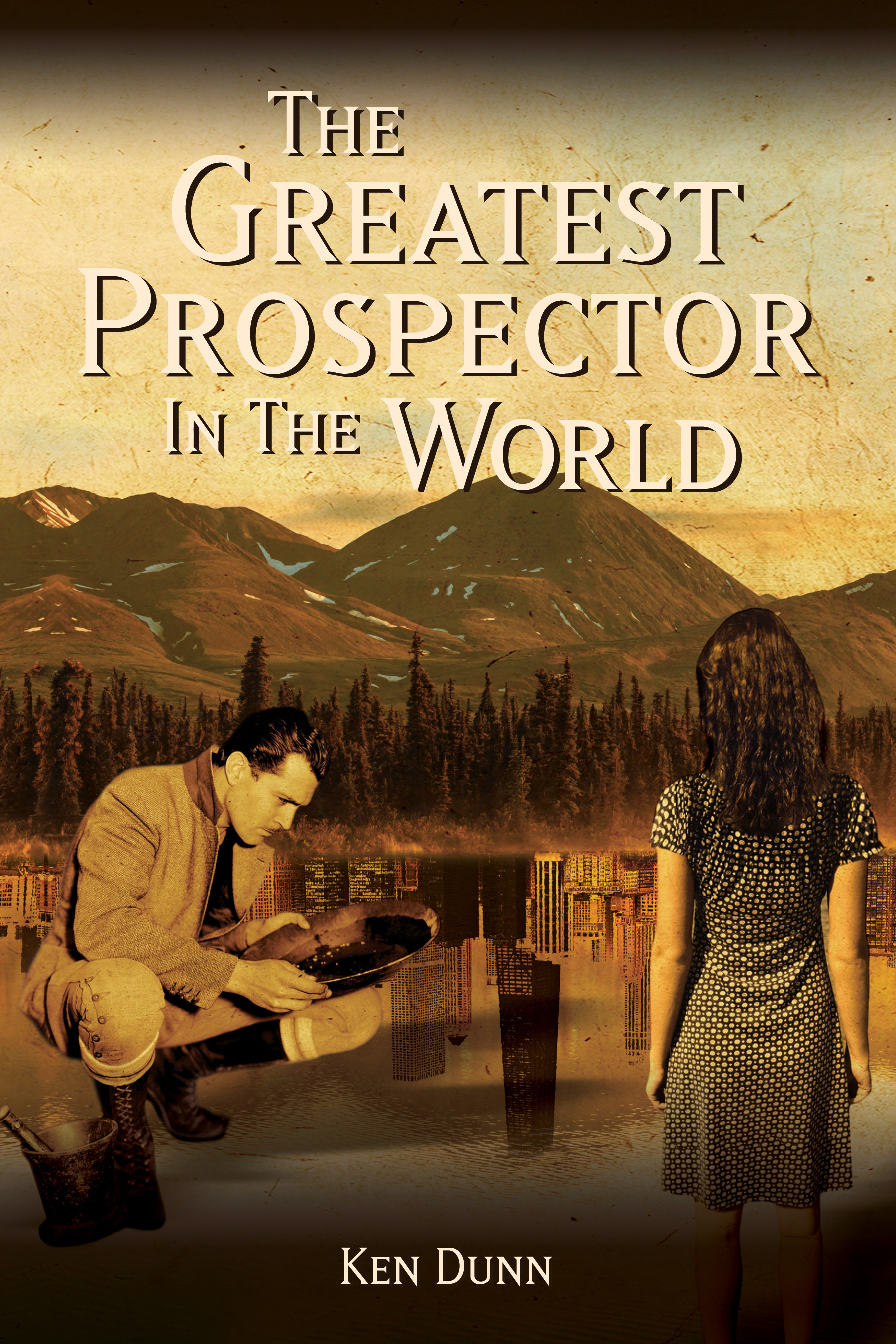
The Greatest Prospector in the World is the title of a new work of “Business Fiction” focusing on the six “secrets” of sales prospecting success. The author is Ken Dunn, CEO and Founder of Las Vegas based Next Century Publishing.
The six secrets are slowly revealed over the course of a charming tale that begins in the year 1910, a story Dunn describes in the book’s subtitle as “A Historically Accurate Parable on Creating Success in Sales, Business, & Life.”
For those who wish to skip on to the six secrets, they are laid out in the short Afterword, in which Dunn acknowledges a literary debt to Jim Stovall’s Ultimate Life Seriesand Og Mandino’s classic The Greatest Salesman in the World.
Dunn himself is no slouch in the world of sales prospecting: after an early career in police work he started businesses in property management, finance, direct sales and publishing.
You can find more at the book’s web site, www.greatestprospector.com. Also check out Dunn’s recently launched ReadersLegacy.com, which is a kind of Facebook for book lovers. In an interview in his Toronto offices, Dunn described Reader’s Legacy as “Facebook meets Amazon.” The site even features a kind of literary currency called “Lit Coins,” (reminiscent of Bit Coins).
Kenn Dunn (Twitter.com)
The 6 secrets of Sales Prospecting
I’ll reveal the titles of the secrets but you really need to read the story to get the context. As the cover image shows, it’s all about prospecting for gold nuggets.
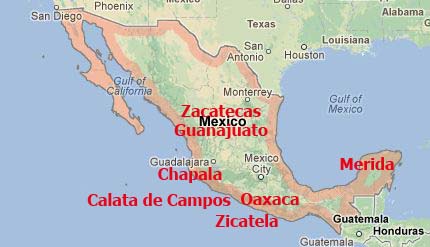
Mexico is a huge country and it’s hard to know where to go if you only have a limited time to visit this nation. Some people prefer the beaches, some might want to take advantage of the culture, history and international restaurants, and others could consider emigrating to spend their retirement years there. Below are must-see towns and cities along with useful notes to help you get an idea of what Mexico offers.
Chapala, Mexico , located in central Mexico, has the largest expat community in the world and offers lots of activities to keep one busy. If you like to play tennis, golf, bridge or get involved in garden clubs, animal rescue or theater, this lovely town with year-round spring climate is a good bet. Chapala’s location, just 20 minutes from Guadalajara’s international airport and an hour from the capitol city itself, is a good home base to travel to the beach, to the mountains, or to the States or Canada. Continue Reading…
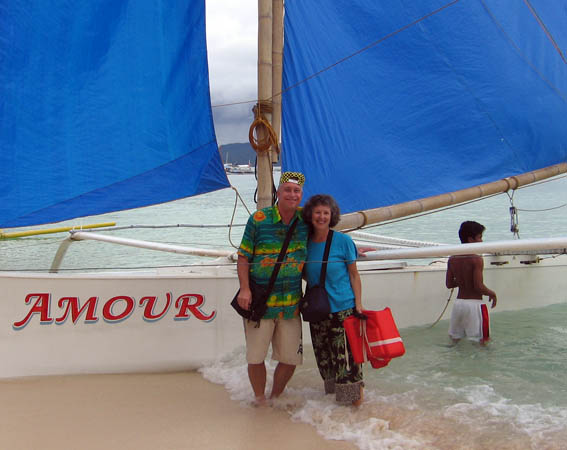
Billy and I have been on the road meandering through continents for over two decades. While we like to think of ourselves as spry, flexible and ready to take on the world, truth is, we are no longer twenty or thirty years old. Traveling at our age of 63 presents challenges that we didn’t have when we were younger. Energy levels have changed and our bodies require different comforts in order to feel well.
If you are in your fifties and sixties with active wanderlust, independent journeying is still possible. Take advantage of what we have learned over the years.
The Importance of Sleep
The value of sleep is a priority that we protect, since its absence is felt for the next day or two – creating havoc in moods, energy level and even decision making. Whenever possible, we no longer take red-eye flights. Air travel has become more complicated in recent years and it’s enough to handle the new requirements, the lines, and the disorientation of time zones without adding severe sleep schedule interruptions. Besides, what’s the rush? Continue Reading…


 Posted By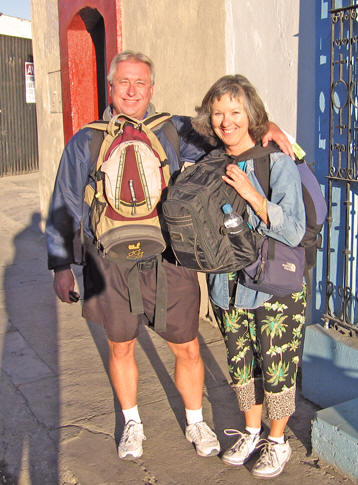

 Posted By